Last week, General Motors unveiled an entire portfolio of about a dozen electric vehicles that it plans to sell in the next four years. At the event, we had the chance to speak with Mary Barra, GM’s chief executive. We asked Barra about EV profitability, regulations, and the big-ness of most of its upcoming electric vehicles.
Any legitimate EV development program starts with the batteries that make electric vehicles go. So when General Motors (GM) yesterday laid out its multi-brand, multi-segment EV strategy — for getting to 1 million EV sales per year asap — it presented the company’s flexible Ultium battery system as the key.
General Motors held an EV-unveiling event today that was unprecedented in the volume and range of zero-emission vehicles intended for production. Instead of showing a single new model, or one aspect of electric-propulsion technology, the company fanned out its entire upcoming portfolio using all four of GM’s existing brands: Chevrolet, Cadillac, GMC, and Buick.
Mark Reuss, GM’s president, said, “Everything you see here is real.”
General Motors announced today that it will add 3,500 EV chargers to its facilities in the US and Canada. This represents a tripling of workplace charging at GM plants and offices. Daniel Flores, manager of communications at GM, said, “Charging is free for GM employees and will continue to be free.”
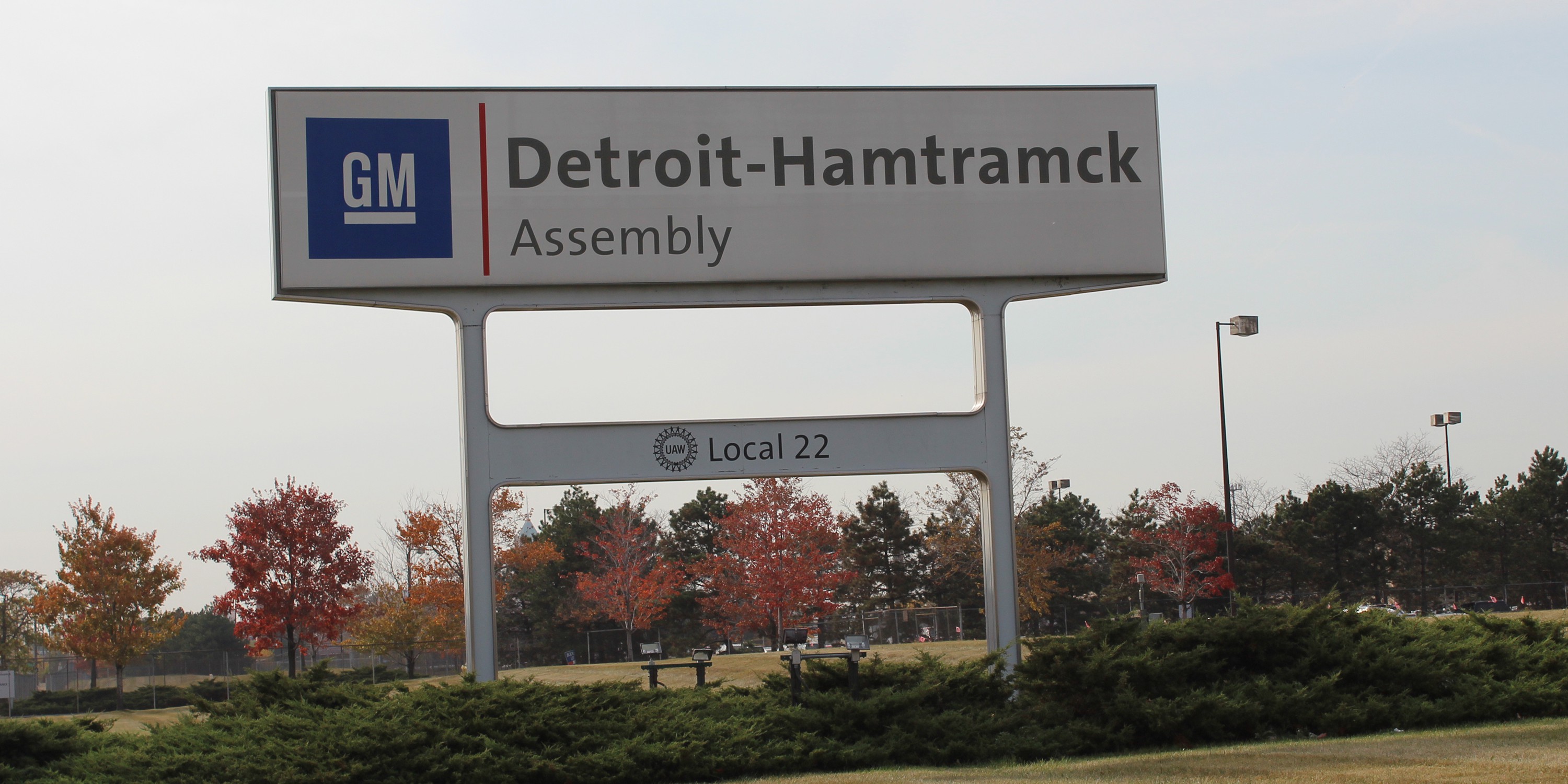
Last Thursday, the body of the last Chevrolet Impala inched down the assembly line at GM’s Detroit-Hamtramck plant. Employees gathered around the car, snapping pictures of the final internal-combustion vehicle to be made at the storied Detroit plant. It will roll off the assembly line this week.
On a recent trip to Detroit, we spent a few minutes with Tim Grewe, GM’s director of battery cell engineering and electrification strategy. The company has a robust and expanding battery-cell R&D program and testing facility. At the same time, GM announced a new joint venture with LG Chem to build an Ohio-based battery gigafactory with 30 GWh of annual capacity.
General Motors will be relying on Grewe and his team to deliver battery solutions for the GMC Hummer EV and a growing list of future GM electric vehicles. Here’s an edited version of our interview with Grewe.
General Motors president Mark Reuss penned a missive on CNN’s website titled, “Electric Cars Won’t Go Mainstream Until We Fix These Problems.” This title conveys three things:
Electric vehicles have big problems
They’re not suitable for the “mainstream,” aka most people, and
GM will fix (future tense) these problems, and normal people should just stand by until GM says so.
Below we deconstruct this corporate PR hit piece and take a look at who it’s coming from.
Two weeks ago, Toyota sided with the Trump administration’s bid to bar California from setting its own fuel-efficiency and zero-emission rules. The next day, on Oct. 29, former U.S. Labor Secretary Robert Reich, tweeted, “Toyota, goodbye. The environmental goodwill you’ve built by pioneering hybrid cars has vanished in your choice of Trump over California. #toyotatrump.” And the Toyota-Trump boycott was started.
Today is a big day for car companies jumping on the electric bicycle bandwagon. First Elon Musk dropped a bombshell saying Tesla might build an electric bike, and now GM electric bicycles are on the horizon too.
For the second year in a row, Tesla tried to pass a bill sponsored by Senate Majority Leader Bob Duff, D-Norwalk in Connecticut, to allow the sale of electric vehicles directly to consumers without having to go through the franchise dealerships model. Last week, the bill SB3 was in consideration and awaiting a vote in the state Senate, but it is now officially dead following an impressive lobbying campaign led by GM and the local dealership association.
The electric automaker is currently entrenched in several battles over its business model of selling directly to consumers without a third-party dealership. While it is not an issue in most of its markets, Tesla is not allowed or under restrictions to sell its cars in several states including Arizona, Michigan, Texas, Connecticut, Utah and West Virginia. Expand Expanding Close
GM announced that the company will add a second shift and 1,200 jobs at its Detroit-Hamtramck assembly plant. GM builds 5 models on a single assembly line at Detroit-Hamtramck including the plug-in hybrids Chevrolet Volt and Cadillac ELR. Expand Expanding Close
GM CEO Mary Barra made a series of announcement today about the “future of personal mobility”, most notable of which a new plan for autonomous Chevy Volt to be available to GM employees to drive on private property next year.
A fleet of 2017 Volt equipped with GM’s self-driving technology will be made available in late 2016 for GM employees to reserve through a new car-sharing app and drive around the company’s Warren Technical Center campus in Michigan. Expand Expanding Close
Over the weekend we reported that GM pushed the nationwide release of the 2016 Volt to next year and would only sell the car in CARB states in the meantime. Yesterday the company confirmed to Auto News that they simply don’t plan on releasing the 2016 model outside of their top EV markets, which coincidentally are mainly CARB states. Instead the company will release the 2017 version early for a nationwide launch. Expand Expanding Close
This is a great listen if you want to know the history behind the NUMMI plant in Fremont California where Tesla currently builds its cars. But this is about its past life, the only mention of Tesla is literally the last word.
[youtube=https://www.youtube.com/watch?v=WsIxo4lSrsY]
Every time I hear about the 2016 Volt, I can’t help but think how much nicer it is than the current one across a lot of different areas (from the Chicago Motor show above). The problem is that we’re quite a long time from the new one being on sale so Chevy has to sell the “old one” which is going to be a hard slog.
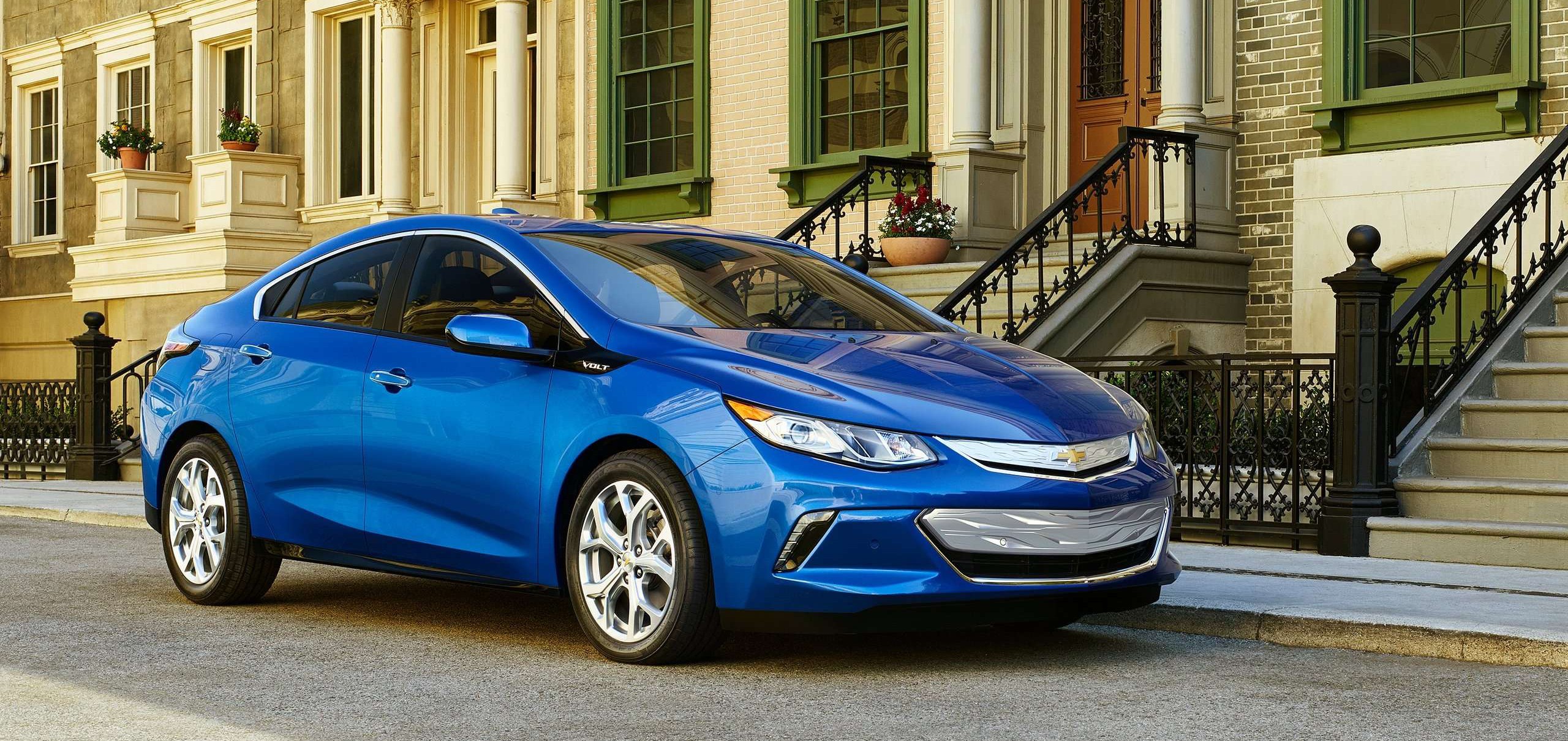
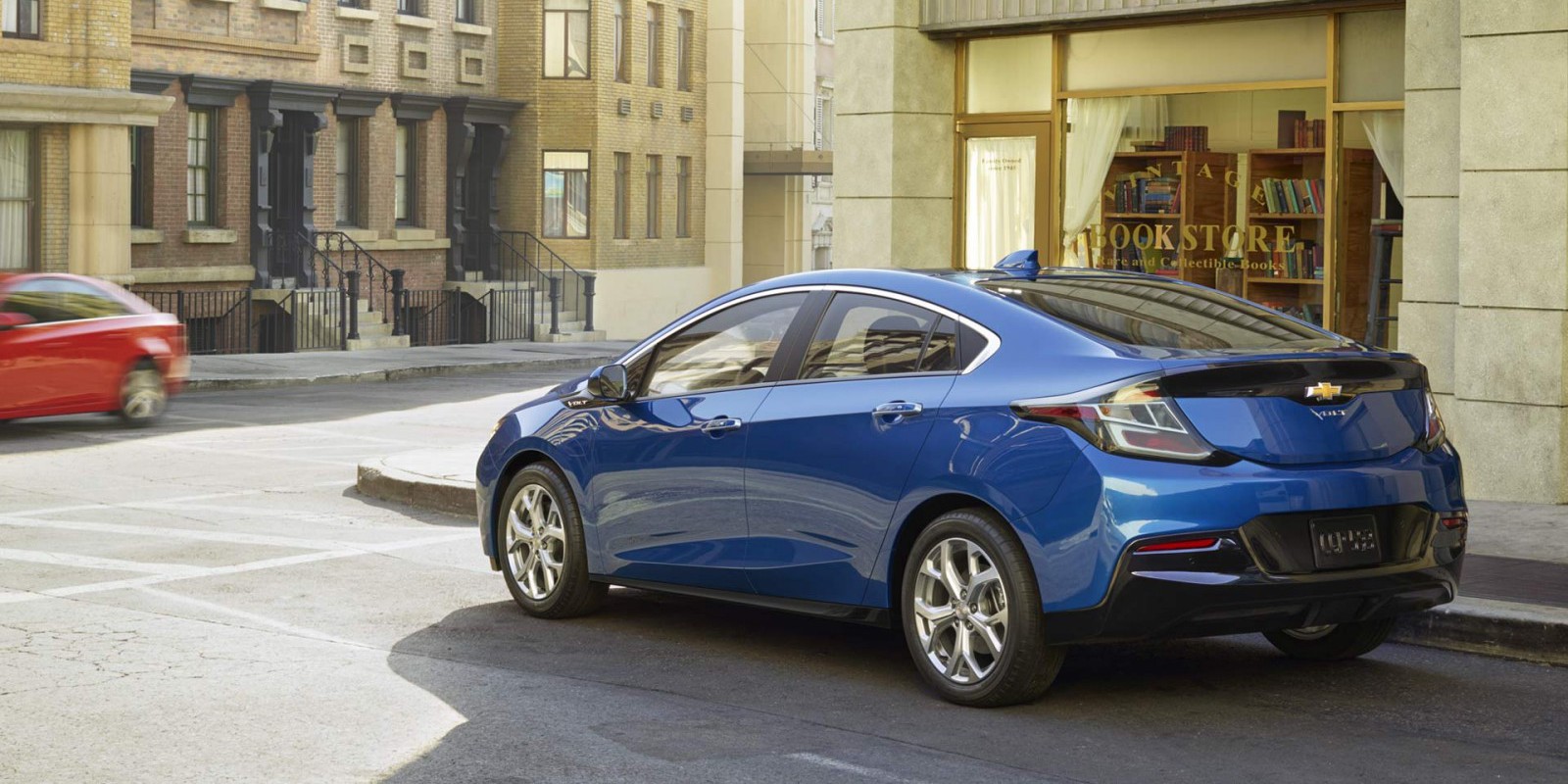
GM/Chevy detailed its next generation Volt today with some nice surprises though they are pretty vague in their assessment.
Some factoids:
80% off all Volt customer trips are EV only.
New battery capacity will increase by 20% on a volume basis when compared to the original cell, while the number of cells decreases from 288 to 192. The cells are positioned lower in the pack for improved (lower) center of gravity and the overall mass of the pack has decreased by almost 30 pounds (13 kg).
20 million battery cells have been produced for the more than 69,000 Chevrolet Volts on the road today with industry-leading quality levels of less than two problems per million cells produced
Many owners are exceeding the EPA-rated label of 35 miles of EV range per full charge, with about 15 percent surpassing 40 miles of range.
Current generation Volt owners have accumulated more than 600 million EV miles
2 motors replace 1 motor and 1 regen. The two-motor drive unit operates approximately 5 to 12 percent more efficiently and weighs 100 pounds (45 kg) less than the current system.
1.5L range extender motor will be more efficient as well
GM will manufacture the Volt battery pack at its battery assembly plant in Brownstown, Mich.
Range estimates will be given at NA auto show in Detroit on January
So not too many specifics but one would think all of these updates would make the Volt an even more appealing package. More room in the back would have also come in handy. If we take the 20% more power in the battery pack combined with the weight reduction and more efficient motors at face value, the Volt may approach 50 miles on electricity.
The question now is who is going to buy the current version (Osborne effect)?
Press Release follows:
Next-Generation Chevrolet Volt Features All-New Voltec Propulsion System for More Efficiency
Debuting in 2015, new model will have increased EV range
It has more torque (over 400ft/lbs) than a Ferrari 458 Italia and can hit 60 miles per hour in 7 seconds flat.
Did I mention it is essentially free if you currently spend $10/day on gasoline?
The Spark EV starts its life in Changwon, South Korea where gasoline and electric sparks are built by GM Korea, which was once known as Daewoo. But the heart of the Spark comes from America. GM is building the permanent magnet motors in Maryland, and instead of LG batteries made in Korea (like the Volt) GM is using American-made batteries courtesy of B456 (formerly A123. I’m not making this up). For reasons we don’t understand, GM isn’t “doing a CODA” and shipping cars sans-drivetran to America for assembly. The plant in Maryland ships the batteries and drivetrain to Korea, GM Korea inserts it in the car and ships the completed unit back to the USA.
Anyway, here’s a great review. I have no idea how they keep these in stock. Chevy please send these outside of California and Oregon. Money quote:
Power is supplied by a 560lb, 21.3 kWh lithium battery pack located where the gas tank is in the gasoline Spark. As with the Chevy Volt, GM is taking the cautious path to battery preservation equipping the pack with an active heating and cooling system. That’s a stark contrast to the Nissan Leaf which uses a passive cooling system. Thanks to the lightest curb weight in the group (2,989lbs), the Spark scores 82 miles of EPA range and the highest efficiency rating of any EV to date. Depending on the weight of my right foot, my real world range varied from 70-100 miles.
A nice option for a truly impressive little EV car. However 20 minutes for every 80 miles of drive time doesn’t really let you take long trips (vs 20 minutes for 170 miles on the Tesla Model S.
It would also have been nice if Chevy was compatible with Nissan/Toyota/Mitsubishi’s CHAdeMO Fast DC chargers so the companies could blanket more the the country with compatible chargers. Expand Expanding Close
You knew Fox News was going to stage a takedown of Tesla at one point or another. Here is Lauren Fix’s interview on the Tesla Fires (above).
‘Interviewer’: “…Something about Tesla Cars that cause them to blow up”? Just … No
Fix: “supposedly a piece of metal that supposedly punctured the battery box” All facts. Seattle fire: Metal into the underside of the battery box at highway speeds. What would happen if it hit a gas tank?
Fix: “NHTSA didn’t investigate”. They did. They found no reason to push forward and the car acted like expected.
“After reviewing all available data, the NHTSA has not found evidence at this time that would indicate the recent battery fire involving a Tesla Model S was the result of a vehicle safety defect or noncompliance with federal safety standards,” the agency said in a statement.
Fix: “I assume they offered him a deal on a new car”. No. Published reports say the Seattle driver happily bought another one with the money he got from his insurance
Fix: “If this were Ford, GM, Toyota…[Congress] they would call them on the carpet and basically and draw and corner them” There are hundreds of vehicle fires every day. I don’t think that Congress acts on every one of them?
Fix “Something happened in a hit a wall but here wall on a regular combustion car your car is not likely to blow up” Actually the car did a lot more than bust through a wall. It was called an extreme accident where the vehicle travelling well over the speed limit experienced a violent crash with low wall after it jumped curb and went airborne. The driver walked away without any permanent injuries.
Fix: “There’s hundreds of people that complain; many many of these owners are happy because they’re environmentalists they want to be cool” There are quite a bit of owners who are speed freaks and who love havin a 7-seat sports car that is quiet and requires no maintenance. Motor Trend and Consumer reports must be crazy.
Yes, it is a sloppy, stupid takedown but unfortunately there are a lot of ignorant and elderly people who watch Fox and actually consider it to be a source of information. The oil industry is a hundreds of billions of dollars per year industry. These attacks will only grow more prominent in the coming years.
Introduced with pricing today and shipments in January, the $75,000 ($68K after Fed Tax Cred) car will have almost identical specs as the Chevy Volt in 35 miles in EV mode and 300miles on gas. That’s actually worse than the Volt’s upgraded 40 EV miles – probably due to the slightly higher performing engine on the Caddy. It even appears to have the same T-shaped battery going through the middle of the car as the Volt which makes it barely capable of seating of 4 people. Trunk space is listed at a comical 10.5 cubic feet which is about a third of the Tesla Model Sbefore you consider the “Frunk”.
The ELR is a two door which probably lends itself better to the 2+2 seating that the 4-door Volt has currently.
As for performance gains, there is no listed horsepower but the 295 lb-ft compares favorably to the 273 lb-ft. torque listed or the Volt. But, as a sad comparison, the sub-$20,000 Chevy Spark 100% electric vehicle produces 400lb-ft of torque so that $75K Caddy is likely going to get smoked by a $20K hatchback with over twice the amount of EV battery made by the same company.
I’m in full agreement with Ed Kim, vice president of industry analysis at AutoPacific Inc., who on Friday tweeted: “A Volt with a Cadillac body and badge for Tesla Model S money? Is GM on crack?”
A Volt with a Cadillac body and badge for Tesla Model S money? Is GM on crack? http://t.co/jBGKLjN1mj
The Volt is a great car but GM isn’t going to have any kind of success taking it into the Tesla price category without significantly upgrading the batteries and motor and bringing some more innovation to the table. This is embarrassing.