We are kicking off the new year at Electrek with extensive coverage of everything electric vehicle related at CES in Las Vegas this week.
There might be a few surprises, but we made a quick list of the main events, especially the new electric cars debuting at the show, so you can have a good idea of what’s coming in the EV industry in the next few days: Expand Expanding Close
Google’s self-driving car initiative has been gaining momentum over the past year, but now it looks like the company has at least one more big piece of news up its sleeve. According to a report from Yahoo Autos, Google and Ford are planning to announce a joint venture to build self-driving cars.
While there have been long-running theories that Google plans to operate a fleet of self-driving cars as an Uber/Lyft competitor, rather than selling them directly to consumers, a Bloombergpiece sounds rather definite about it. The paper also says that the project will be spun off into its own Alphabet company.
Google Inc. plans to make its self-driving cars unit, which will offer rides for hire, a stand-alone business under the Alphabet Inc. corporate umbrella next year, a person briefed on the company’s strategy said […]
The fleets – which would include a range of large and small vehicles – could be deployed first in confined areas like college campuses, military bases or corporate office parks, the person said.
The idea of initial use in ‘confined areas’ (read: not public roads) could potentially accelerate the introduction of the service … Expand Expanding Close
Just as the Climate-focussed COP21 conference in Paris is drawing to a close, Google has expanded its Project Sunroof tool to cover more metro areas across the US. If you’re thinking of installing solar panels on your home roof, you can now check Project Sunroof in a number of metro areas in California, Massachusetts, Arizona, New York, New Jersey, Nevada, Connecticut, Colorado and North Carolina. Although no specific cities have been mentioned in the announcement, it’s safe to assume that any major cities in those states should now be covered…
Google has said that its goal is to reach widespread distribution of its self-driving car by 2020, but Chinese search giant Baidu might beat the Mountain View company. Today, Baidu, often referred to as the “Chinese Google” announced that its self-driving car successfully completed its first route through Beijing.
Tesla launches in Mexico this week by opening a “Pop-up” store in the Mexican capital and we learn that the company hired Google’s longtime brand and communications manager for Latin American markets, Ricardo Blanco, to lead Tesla’s communications and marketing in the country. Expand Expanding Close
Google has announced its largest ever purchase of renewable energy to power data centers across the U.S., Sweden and Chile, reports The Washington Post. The new projects, mostly wind-powered, add a massive 842 megawatts of green energy, which Google claims is the largest investment ever by anyone other than a power company.
The investment brings Google’s total renewable energy capacity to 2 gigawatts, which is equivalent to the total energy output of the Hoover Dam. Google has pledged to power its entire operations from green energy by 2025, and Re/code reports it was 37% of the way there prior to this deal. That suggests this deal ought to take the company to around 60%.
Google publishes a report for its self-driving car project once a month, and today — appropriately — the company published the report for November. Today’s report is notably unexciting, but it does mean the end of a two-month streak of the cars being accident-free. That said, the accident that Google details in this report is barely an accident…
Once again, Google wasn’t at fault in yet another fender-bender:
A vehicle approaching from behind came to a stop and then rolled forward and collided with the rear bumper of the Google AV. The approximate speed of the other vehicle at the time of impact was 4 MPH. The speed of the Google AV at the time of impact was below 1 MPH.
Other than this minor accident, which bumps the total number of accidents the cars have been involved in to 17, there’s not much new here. The cars have now driven a total of 1,320,755 autonomous miles, and 955,771 manual miles. The total number of Lexus cars on the road is the same, but there are now 30 prototypes out and about.
You can read the full report for yourself at Google’s website.
Some parts of Google’s self-driving car are still mysterious, but slowly more pieces of that mystery are being uncovered. One mystery, in particular, has been the inside of the car. While Google has allowed dozens of journalists, random lucky souls, and Google employees (of course) to ride in the car, only on very few occasions have we been able to see the inside. The company specifically told journalists not to take pictures of the inside at an event earlier this year, and we barely got a glimpse into a very early prototype in Google’s “A First Drive” video last summer. Now, with a couple of patents Google has received, we’re getting a more detailed look inside for the first time… Expand Expanding Close
Update: A source close to the company tells us Rose is not working on Google’s car project. We are also hearing that he might have been let go at Tesla.
Robert Rose has an impressive resumé as a software engineer. He worked at HP while completing his MS in Electrical and Computer Engineering at Oregon State University. He then developed award-winning PSP games at Sony such as Syphon Filter: Dark Mirror and Resistance: Retribution.
In 2009, he moved to California to be the lead software engineer for SpaceX’s first Falcon 9 and Dragon flight. He quickly became Director of Flight Software, a position he held until July 2014. After a brief stint at machine learning firm Vicarious, he joined Tesla last May to lead the Autopilot team into the release of v7.0 update, which enabled ‘Autosteer’ and ‘Auto Lane Change’.
According to his LinkedIn profile, Rose left Tesla right after the release of the Autopilot in October and a month later, we learn that he joined Google. Expand Expanding Close
Up to June of this year, Google’s self-driving cars had yet to be at fault in any accidents, and it seems that record has held true over the last few months. Of the dozen or so accidents up to that point, the majority had happened when the self-driving car wasn’t even moving, and the rest occurred when Google’s safety drivers were in control of the vehicles.
Unfortunately, in the months after Google released the first report, Google’s cars continued to see a couple of accidents per month. But that trend has come to an interesting halt recently. As we’ve learned thanks to Google’s recently-published October report, the self-driving cars have now gone more than two months without a single accident… Expand Expanding Close
Tesla has a new CFO, and he’s coming to the electric car maker from Google. Jason Wheeler is currently VP of Finance at the Mountain View company, and he’s joining Tesla next month via a transition with current CEO Deepak Ahuja overseeing. This comes five months after Ahuja confirmed at Tesla’s 2015 Annual Shareholders Meeting that he would be retiring…
Tesla just released its Q3 earnings report, and the company’s stock is up around 10% in after-hours trading. Google is one of Tesla’s biggest competitors in regards to future autonomous vehicle prospects, but it’s clear that the motor company has been a bold poacher of other large Silicon Valley companies’ employees. It appears that Google clearly isn’t excluded.
Google releases a report about its self-driving car project every month, and now the company has released October’s numbers. There’s not much new information this time around, but numbers like miles driven in both autonomous and manual modes have obviously increased. Interestingly, while the number of self-driving cars on the road has stayed the same, the number of cars on the road in Austin, TX has decreased… Expand Expanding Close
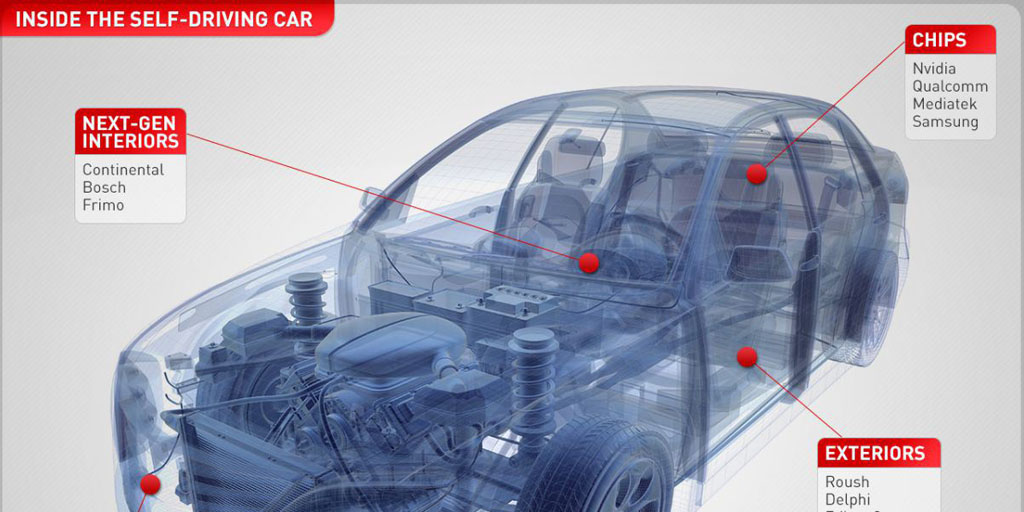
While it seems near-certain that Google plans a full-scale commercial rollout of its self-driving cars, and that Apple has serious plans for a competing vehicle of its own, neither company is likely to manufacture the cars itself. As a recent opinion piece argued, actually manufacturing a car is massively complex undertaking.
Both Google and Apple will therefore be looking for partners to pull together different elements of the car, and Re/code has put together an interesting look at the most likely candidates. Though the piece is focused on the Apple Car, the analysis applies to Apple, Google and Tesla alike … Expand Expanding Close
Google’s driverless car project has been long in the making. The company lead development in the field since 2009 and as of September 30, they have accumulated 1,210,676 miles on autonomous mode through 2 fleets: one in Mountain View, CA and one Austin, TX. Google’s latest official comments on the timeframe of the project suggested a commercialization of the technology around 2020, but a consultant on Google’s driverless team revealed that the vehicle could be ready in less than 3 years… Expand Expanding Close
Tesla CEO Elon Musk held a press conference a couple of days ago to explain the Autopilot features included in the company’s 7.0 software update, but LIDAR, one of the remote sensing technologies that Google uses in its self-driving car, also came up briefly. Elon Musk had some bold comments about to use of LIDAR in autonomous vehicles, in response to one inquiry from a WSJ reporter, which questioned whether the Model S would need more sensors for greater levels autonomy… Expand Expanding Close
Starting on January 1st, Ontario will become the first province in Canada to open its roads to testing of automated vehicles, according to a recent report (via CBC). The province will allow testing of self-driving cars (Google has been a pioneer in the space with both its Lexus models and its smaller, prototype EVs), as well as “related technologies,” starting on January 1st 2016… Expand Expanding Close
Google’s self-driving cars may have an impressive safety record – having never caused an accident in more than a million miles of driving on public roads – but the company admits that their ultra-cautious approach can make them a little unpredictable and annoying to other drivers, reports the WSJ. Examples include taking a very wide approach on turns, and braking at the slightest sign of danger.
The cars are “a little more cautious than they need to be,” Chris Urmson, who leads Google’s effort to develop driverless cars, [said]. “We are trying to make them drive more humanistically” …
Last month we wrote a first look at Tesla’s much-anticipated v7.0 software update with new ‘Autopilot’ features expected to be released later this year. Today we learn that Tesla released the second version of its beta v7.0 update to early access testers.
For previous releases, Tesla was able to update the beta fairly quickly for a wide-release just weeks after the original release to testers, but v7.0 being highly sensitive safety-wise, the beta testing process is taking longer than usual. Expand Expanding Close
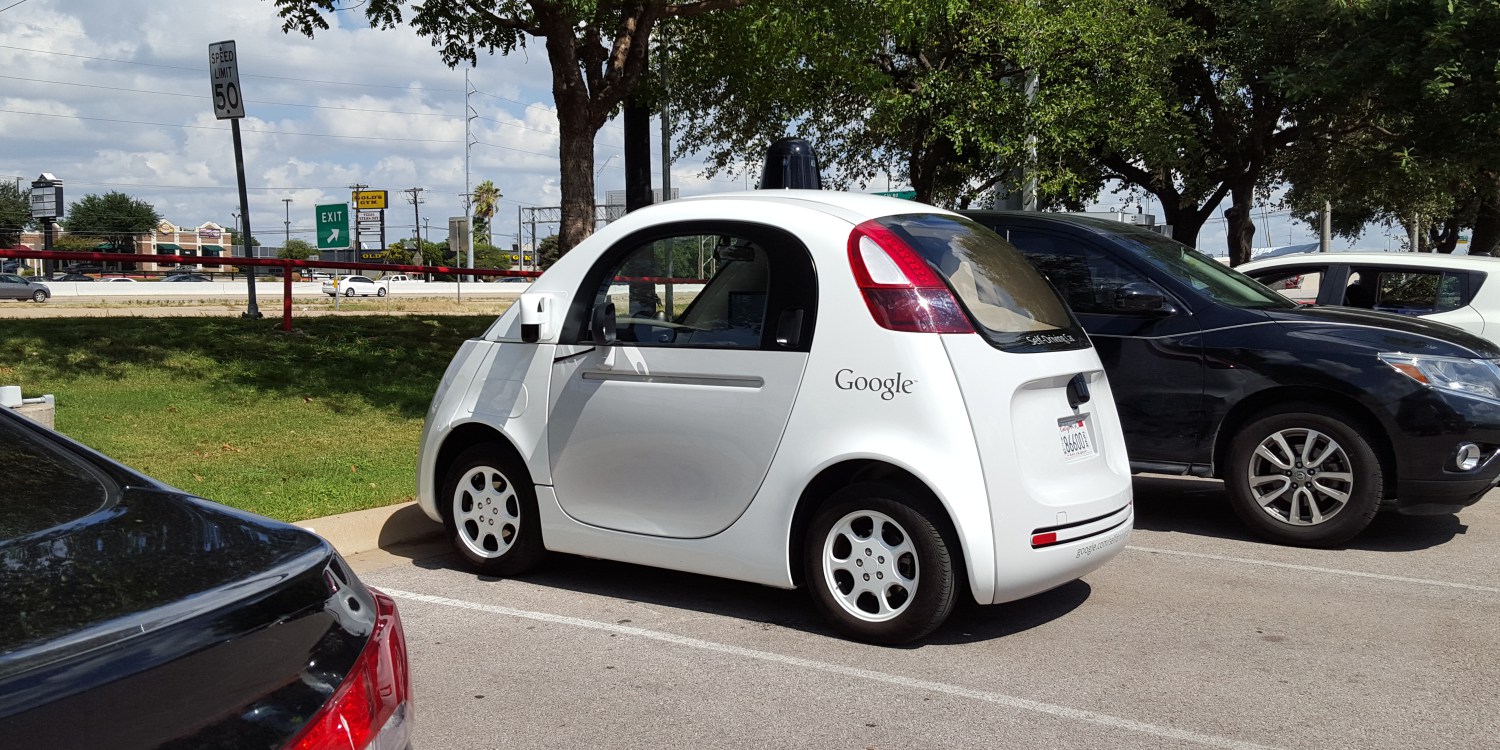
When Google originally showcased the newer low-speed “cute-mobile” self-driving car, it mentioned a goal of having about 100 of them on the road for testing within a couple years. Now, as the company is bringing its low-speed electric prototypes to Austin a year later, Sarah Hunter, head of policy for Google [X], has revealed that the company is expanding production of the cars (via The Guardian). Hunter says that Google is now producing at least a “few hundred” and hints at a potential future of mass-production… Expand Expanding Close
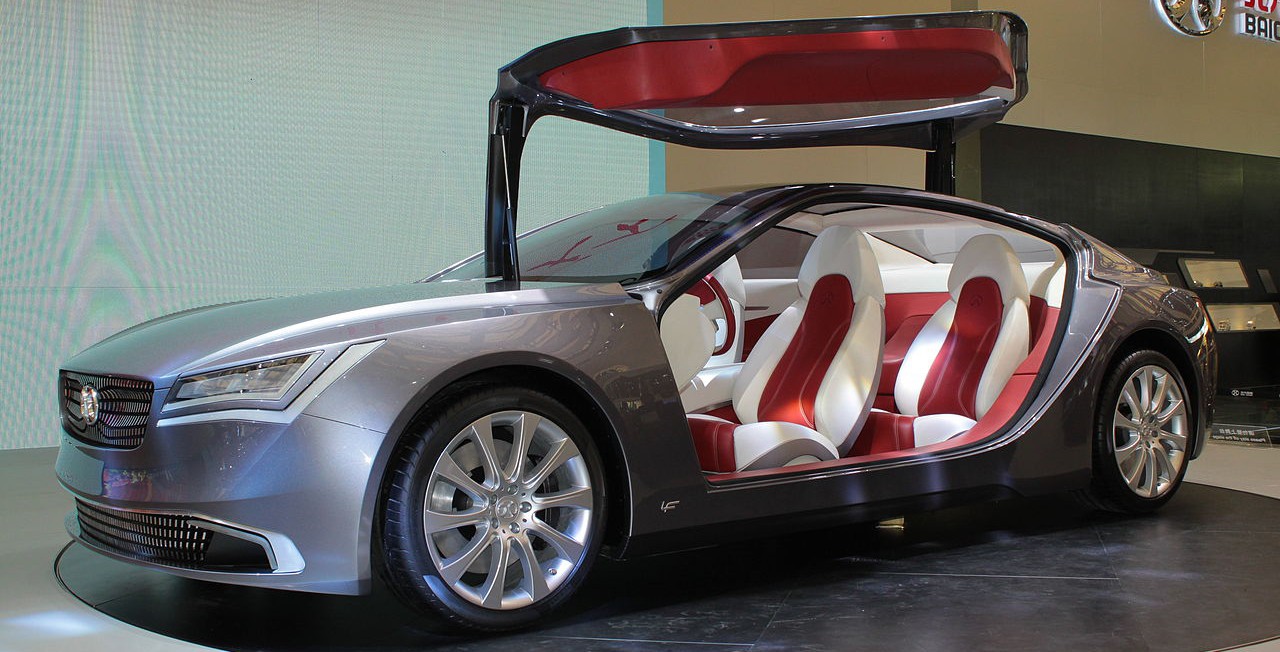
The Chinese auto giant Beijing Automotive Industry Holding Co, through its Beijing Electric Vehicle Co subsidiary, opened a research and development center in Silicon Valley. The center will be dedicated to electric vehicle research.
In its current “launch phase”, the R&D center has just over 20 employees and the company expects them to develop “4 to 6 models per year”. Expand Expanding Close
Chris Evans was until recently the head of Google’s Project Zero, a team of hackers employed full-time by Google to find zero-day vulnerabilities on not only their own products, but any software that could affect Google’s users. Today, Evans announced that he will soon join Tesla Motors to lead its security team. Expand Expanding Close
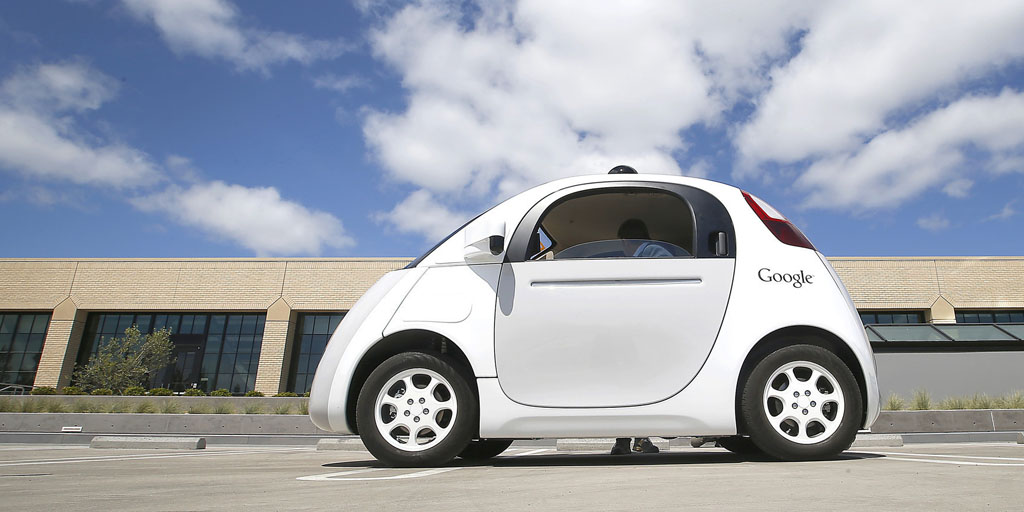
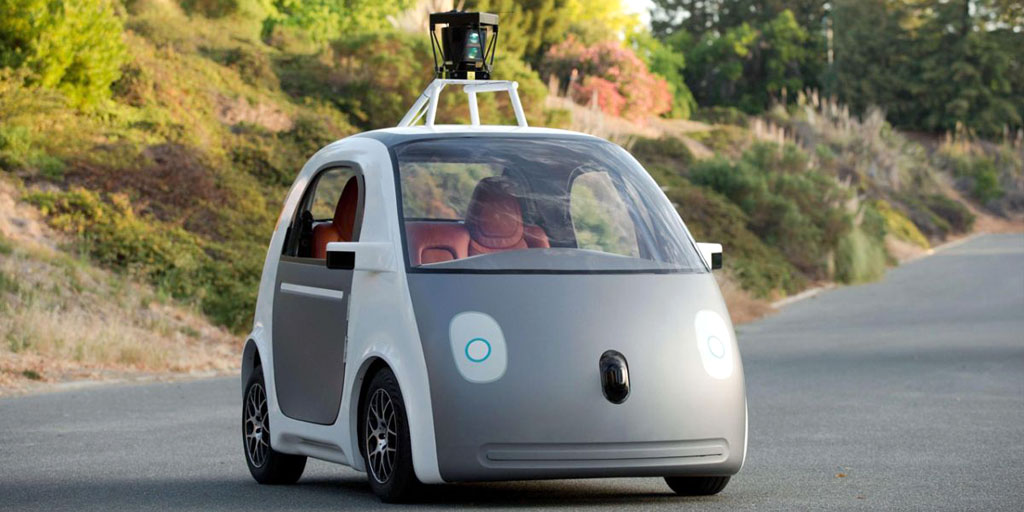
Google is currently operating a fleet of Lexus SUVs retrofitted with their self-driving technology – these cars were recently being tested in Austin – but Google is also testing a fleet of prototypes developed in-house from the ground up (picture above). The company’s different approaches to the car business can get confusing and adding to the confusion, according to documents recently obtained by the Guardian, the company created a wholly owned subsidiary to operate their car business – Google Auto.
There are a lot of different reasons for a large corporation to create a subsidiary, but with this being a first for a project coming out of the Google X division, for example the company didn’t create a subsidiary for Google Glass, it raises a few questions. Expand Expanding Close
Google’s fleet of self-driving Lexus cars have notched up a total of 140,000 miles on public roads, and the company is now ready to begin road-testing its first purpose-built autonomous cars.
We first saw the cute-looking cars almost a year ago, when the company explained that they were not intended to ever make it to public sale. Their purpose is to see how people respond to a next-generation driverless car before later seeking partners to actually bring the technology to market.
We learned earlier this week that Google’s existing Lexus fleet has been involved in three low-speed accidents, none of them the fault of the car, but the company still isn’t taking any chances in this latest phase … Expand Expanding Close