Electric Vehicles
Get the best local deal from Electrek
Powered By



Honda, like most other major automakers in Japan and Korea, is still very much invested in fuel cell hydrogen powertrains, which has resulted in little development in battery-powered vehicles.
While the company is apparently not ready to give up on fuel cell, they announced plans to “strengthen the development” of battery vehicles and that they will unveil a new electric vehicle this autumn.
Expand
Expanding
Close
Just as Texas was shutting the door on Tesla over their direct sale model last week, they relaunched their $2,500 electric vehicle rebate to spur EV adoption.
While it’s good news for EV buyers in general, Tesla buyers are not likely to have access to the program since its going through dealerships, which Tesla is not allowed to operate in the state.
Expand
Expanding
Close

The argument that electric vehicles are just as polluting as gas-powered vehicles because they consume electricity produced from coal plants has been looming over electric vehicles for a long time.
It has been debunked on a few occasions and while there are places where the grid is so dirty that it doesn’t make a big difference whether someone drives an electric car or a very efficient gas-powered car, most of the US electric grid is clean enough that it doesn’t come close to the efficiency of electric cars.
As the grid gets cleaner, thanks to solar, wind, hydro and other renewable energy sources, the electric car’s advantage is increasing every day and the latest data shows that it’s not even a contest anymore.
Expand
Expanding
Close
Electric vehicle sales keep increasing at an impressive pace in Canada to a point that they are now representing a meaningful percentage of overall car sales.
During the first quarter 2017, electric vehicle deliveries reached a record high of 1,474 units (BEVs and PHEVs) – up 68% over the same period last year.
Expand
Expanding
Close
Electric vehicle sales are closely followed by auto industry analysts who are trying to predict when they will surpass internal combustion engine sales.
Morgan Stanley’s analysts are the latest to share their prediction in a new report today. They predict that more electric vehicles will be sold in 2040 than gas-powered cars.
Expand
Expanding
Close
Last year, we reported on how electric vehicle investments were on track for a record high in 2016 after years of record lows following the bankruptcy of a few startups, namely Fisker, Coda, A123, and Better Place.
CB Insight has been tracking EV investments and confirmed the record year in 2016, but it projects a significant slow down in 2017 again.
Expand
Expanding
Close
Denmark announced the phasing out of its tax break for electric vehicles starting in 2015, which caused Tesla’s sales to surge to an all-time high in the country, but they have been virtually non-existent since then and all electric car sales have crashed.
To highlight the impact, 1,300 electric vehicles were sold in Denmark in 2016, while Tesla delivered 1,300 vehicles in December 2015 alone.
The government has now announced that they are walking back some of the changes in order to boost back EV sales for at least 5,000 more vehicles.
Expand
Expanding
Close
It’s hard to believe for someone like me who spend most of his time researching electric vehicles, but simple awareness of electric vehicles and their qualities is still the biggest barrier to EV adoption.
It is becoming clearer than ever today when looking into the results of a new survey of 158,000 people – mostly young new drivers who are studying for the driver license tests. Surprisingly, 70% of them said no to electric vehicles.
Expand
Expanding
Close
Edmunds, the auto research firm, came up with a grim report titled “Elimination of federal tax credits likely to kill U.S. EV market”. They title says it all. They predict that electric vehicle sales in the US will crash when the main automakers making electric vehicles will run out of the federal credits.
They are mainly coming to this conclusion based on a case study of what happened to electric vehicle sales in Georgia after they ended their own state program for electric vehicles. At least, they are acknowledging that upcoming vehicles, like the Tesla Model 3, could still bring EVs to a wider audience without the tax credit.
Expand
Expanding
Close
We reported earlier this year on the cities of Los Angeles, San Francisco, Seattle and Portland, Ore., sending a request for information (RFI) to automakers for an electric car order of 24,000 vehicles.
It would have become the biggest electric car order ever, but several more cities have since joined the effort and they are now looking for 114,000 electric vehicles.
Expand
Expanding
Close
The city of San Francisco has not been shy to use its building codes to try to accelerate the deployment of sustainable energy. Last year, it required new buildings to have solar panels installed on the roof and this year, it will try to accommodate electric vehicles by using a similar approach.
Expand
Expanding
Close
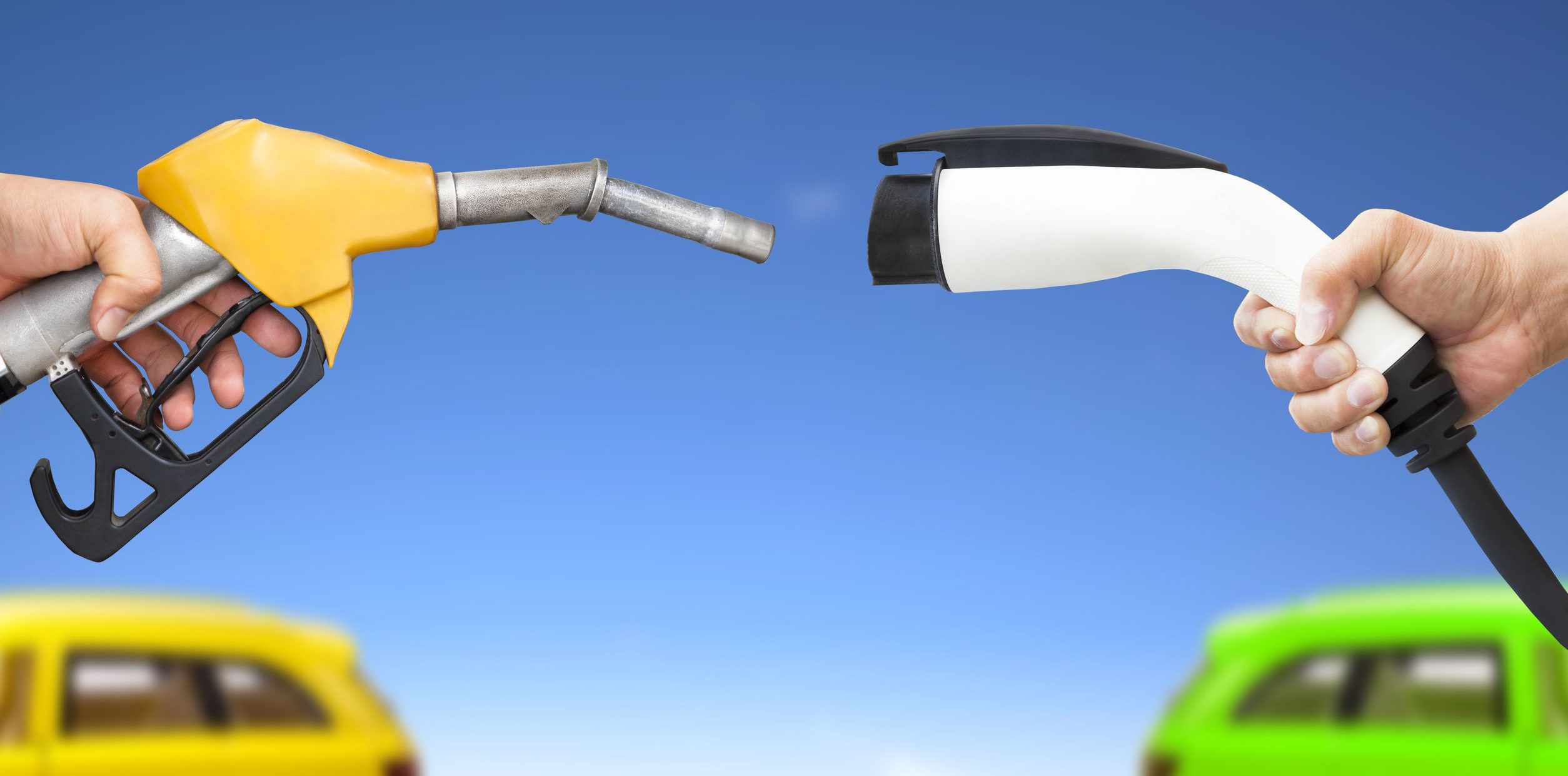
The biofuel and oil industries, which were both heavily subsidized over the years, are now working together to lobby against electric vehicle incentives under the pretext that they are seeking “a level playing field”.
Their respective main lobbying groups made the announcement this week.
Expand
Expanding
Close
A lot of electric vehicle charging networks in Europe operate only in specific countries, which can make it hard for electric vehicle drivers to road trip across borders. A solution has been introduced today to make European electric travel easier.
Today, five of the biggest network operators announced the ‘Open Fast Charging Alliance’, which “will enable roaming to create a premium network of fast chargers all over Europe”, according to the new group.
Expand
Expanding
Close
Electric vehicles had a breakout year in the UK in 2016 and the market is off to a good start in 2017. Battery-powered vehicles are starting to represent a more significant portion of the total new vehicle sales in the country – it reached a record of 4.2% share of new vehicle registrations last month.
Expand
Expanding
Close

A bill passed in Michigan in 2015 is about to kick in, making being a vehicle owner in the state more expensive than ever. The bill, which is part of a road-funding package proposed by Gov. Rick Snyder, will see cost increases across various facets of vehicle ownership, from annual registration fees to gas prices.
Those projected to be the hardest hit are people who own multiple vehicles and those who own fuel-inefficient vehicles, but while this may seem like good news to green vehicle owners, the bill is also introducing a surcharge on electric and hybrid vehicles for as much as $235…
Expand
Expanding
Close
The state of California reached the milestone of a quarter million plug-in electric vehicles on the road since the resurgence of EVs in 2010. With 30 different electric vehicles available in California due to its ZEV mandate, the state is able to grow its EV fleet significantly faster than the rest of the US.
Expand
Expanding
Close
The Obama Administration announced today a new series of initiatives to accelerate deployment of electric vehicles and charging infrastructure. The main announcement is the creation of 48 national EV charging corridors on 25,000 miles across 35 states.
The announcement follows another series of initiatives announced earlier this year by the White House to boost electric vehicle adoption in the US by unlocking $4.5 billion in investments.
Expand
Expanding
Close
It might sound like an obvious thing to most people, electricity is cheaper than gas, but I find that people are not really aware of the electricity rate discrepancy around the US and the world. It’s understandable. Who has time to track electricity and gas prices outside of your own market? Plugless has time and did it.
The company came up with a neat study looking at gas prices and electricity rates – without taking into account time-of-use rates where available – in each state over the last year and came to the conclusion that electric vehicles are cheaper to fuel in all 50 states.
Expand
Expanding
Close
After coming to the realization that they would need a mandate for all cars to be zero-emission by 2030 if they want to comply with the goals set by the Paris agreement to curb climate-warming emissions, Germany’s upper house of parliament gained approval for pushing a Europe-wide mandate to stop gas-powered car sales by 2030, according to German magazine Der Spiegel.
Expand
Expanding
Close
With Jaguar’s recent announcement of their Formula E ‘I-type’ race car and one of their electric ‘F-Pace’ SUV prototypes being spotted in the wild, the UK-based company continues to be in EV news this week, this time with some reports about detailed information on the all-electric compact SUV, unofficially dubbed the ‘E-Pace’, that is now expected to hit the market in 2018.
A new research report from Lux Research looked into the projected growth of the battery sector for electric vehicles (BEVs and PHEVs) and concluded that the market will rise to $10 Billion in 2020 with six large carmakers led by Tesla accounting for 90% of the demand.
Expand
Expanding
Close
The International Energy Agency (IEA) is out with its Energy Technology Perspectives report (via Carbon Brief). The agency compiled data from the automotive industry and determined that the world’s electric vehicle fleet surpassed the 1 million cars mark last year. Out of the 15 technology sectors to combat carbon emissions followed by IEA, the agency says that the EV sector is the only one on track for deployment.
Expand
Expanding
Close
It looks like Germany is about to become the first major country to set an official deadline for a ban on gas-powered cars. India recently confirmed that it is evaluating a scheme for all its fleet to be electric by 2030 and both the Dutch government and the Norwegian government are discussing the possibility to ban gas-powered car sales and only allow electric vehicle sales starting also by 2025.
But while the Netherlands and Norway are fighting over the technicalities, a senior government official in Germany confirmed they will impose a mandate for all new cars registered in the country to be emissions free by 2030.
Expand
Expanding
Close
This week, Daimler announced its plan to transition to greener technologies over the next few years. The company laid out release schedules for several new hybrids, plug-in hybrids, fuel cell vehicles, and all-electric vehicles across all its brands.
The plan is a little all over the place but we try to summarize it below and if that’s not enough for you, you can dive into the full press package further down.
Expand
Expanding
Close