Yesterday, the Wall Street Journal published an article titled “Tesla Offers Slight Glimpse Into Model 3’s Status”. The article is based on yesterday’s filings with the SEC about Tesla’s upcoming shareholders meeting. The only new information we have about the Model 3 from these documents is that Tesla didn’t complete the alpha prototype of the Model 3 in the last 4 months. I don’t think this is the best way to look at this information.
In their last 10K filing published February 26th, Tesla estimated the completion of the Model 3 alpha prototype as “probable of achievement”. The completion of the prototype is a milestone for Elon Musk’s CEO stock compensation plan and Tesla needs to disclose the probability of achieving the milestones in order for shareholders to estimate potential stock compensation expenses.
Late last year, Tesla announced the Roadster 3.0, an update for Tesla’s first model that will include a new 70KWh battery pack. The new pack combined with an upgraded body is expected to allow for a range close to 400 miles.
Details about the timeframe for this update were unclear until now. Elon Musk, Tesla’s CEO, confirmed via Twitter that the update should be available to Roadster owners in August this year after safety validation in July.
@bonnienorman New Roadster battery should complete safety validation by end of July, so likely available in August
Earlier today, Tesla filed their notice with the SEC for their 2015 annual shareholders meeting to be held on June 9th. In these filings, Tesla is required to review transactions with related parties. Elon Musk, CEO of Tesla Motors, is Chairman and an important shareholder of SolarCity. Therefore Tesla needs to publicly acknowledge transactions between the two companies.
Tesla recently confirmed in an email to investors that their announcement on April 30th will indeed be a home battery system and an energy storage system for utilities. It has been known for a while that Tesla was testing these home battery systems through SolarCity. In the same filings last year, the company confirmed approximately $1.6 million in revenue from SolarCity during fiscal year 2013 for the sales of stationary batteries.
Today, Tesla confirmed that the revenue from SolarCity for stationary batteries went up to $2.7 million for the fiscal year 2014.
According to Rod Lache from Deutsche Bank, if SolarCity were to reach their goal of 1 million customers by 2018 and if Tesla would equip half of their customers with home battery systems, Tesla could generate $1.5 billion of revenue through 2018 from SolarCity. Tesla made $3.2 billion in revenue last year.
Tesla is going to make a home battery announcement on April 30th. It will be a big deal. But it isn’t hard to find some of the details on the batteries Tesla is going to offer. Analysts, like above^ are claiming to have “secret info” on the announcement: Tesla secretly tested its battery solution with 300 customers.
But that info and much more is available on Solar City’s website. In fact, Tesla’s Home Batteries including pictures and lots of details are all hidden in plain sight:
Tesla will announce a consumer battery pack for running a house in the coming months
Yes, we’re going to do — we’re going to unveil some of the Tesla home battery consumer battery that will be for you using and people’s houses or businesses, fairly soon. We have to design and it should start going into production probably about six months or so. We’ll probably got to wait to have sort of product availing it’s probably in the next month or two. It’s really great. I’m really excited about it.
If you’ve talked to Solar City, they may have provided you with the specs of Tesla’s prototype battery:
Tesla will certainly announce some new innovations that perhaps differentiate them from other batteries. Being able to Supercharge your Model S at home would be nice. Perhaps a Webb/App controller with some novel uses would be good.
I’d like to see it compared against home generators which cost a lot more, even before considering the savings against time of use metering in power. We’ll be on hand on the 30th to see what is on offer.
In case you missed it, Elon Musk was a guest star on tonight’s episode of The Simpsons. In an episode titled “The Musk Who Fell To Earth”, the Tesla CEO comes to Springfield where he helps transform Homer’s hairbrained schemes into innovative ideas. Overall, the episode was good, though hardly an instant classic. Still, there were a few well thought out gags not to mention some tongue-in-cheek jabs about Musk’s brilliance and perhaps some subtle references to Tesla’s financial stability. A few of the highlights can be seen below.
Here we see Mr. Burns meeting Elon Musk for the first time.
In a corporate world often teeming with bland political correctness, Elon Musk, whether you love him or hate him, is a breath of fresh air. Not afraid to call it like he sees it, whenever Musk delivers a talk or sits down for an interview — or even a Reddit AMA — it’s always a good idea to listen closely.
Most recently, Musk on Tuesday spoke at the Automotive News World Congress event in Detroit where the Tesla CEO touched on a wide array of topics.
Of particular interest were Musk’s comments on the highly anticipated Model 3. Though a few years away, the Model 3 remains Tesla’s big bet to bring electric cars into the mainstream. Moreover, the potential success of the Model 3 is the big bet that multitudes of investors are banking on.
According to Musk, the Model 3 remains on track for a 2017 release and the company remains optimistic that it will be able to sell approximately 500,000 vehicles (of all models) per year by 2020. Looking even beyond that, Musk relayed that the company has plans to up production to “at least a few million a year” by 2025.
Silicon Valley automaker Tesla Motors will be making “a few million cars” by 2025, enigmatic CEO Elon Musk said in Detroit today.
That would make the company about the size of BMW today.
That’s an ambitious goal, to be sure, but Musk didn’t get to where he is today by thinking small.
Of course, a key, if not the most important, variable in the Model 3 equation will be cost. If Tesla really wants the Model 3 to be a mainstream hit, it will have to be priced much lower than the premium, yet still wildly successful, Model S.
On that note, Musk earlier today said that the Model 3 will be priced at around $35,000 without any tax credits. If Tesla is, in fact, able to reach that pricepoint thanks to economies of scale via the in-progress Gigafactory, the Model 3 would be well positioned to have a discernible and sweeping impact on the auto industry. What’s more, by the time 2017 rolls around, Tesla’s network of superchargers will be even more ubiquitous and the positive word-of-mouth praise surrounding the Tesla brand will be even stronger. Note that the average price of a new car in 2013 checked in at about $32,000, thus making the Model 3 an attainable purchase for many.
While we still don’t have a clue as to what the Model 3 will look like, Musk noted in a recent Reddit AMA that it “won’t look like other cars.” Meanwhile, Tesla lead designer Franz von Holzhausen has said that it’s the coolest thing he’s ever worked on. Intriguing, to say the least.
Musk also added that the Model 3 “will be way different from any other car on the road”, albeit in a way “that’s really useful and just doesn’t feel like a weird-mobile.”
On a related note, Musk also touched on the potential for Tesla to work with franchise dealers, something the company has avoided like the plague for years. Arguably, for Tesla to truly have a mainstream hit with the Model 3, it will need to rely on franchises due to logistics alone.
… Musk said he was open to partnerships with retailers to sell Tesla vehicles, but not until after the company no longer has production bottlenecks.
“Before considering taking on franchised dealers, we also have to establish (more of) our own stores,” he said. Musk said “we will consider” franchising “if we find the right partner.” He did not elaborate, but said Tesla “is not actively seeking any partnerships” with other manufacturers “because our focus is so heavily on improving our production” in Fremont.
With the Model 3 hopefully just two years away, the next big item on Tesla’s radar is the impending launch of the Model X. Though already delayed, Musk reiterated that the vehicle is on target for a Summer 2015 launch.
Great interview, not much new however if you follow Tesla and its CTO into the energy industry. Some interesting bits:
Why did Tesla act differently? For a start, it does not think of itself as a carmaker. “I see us more as an energy-innovation company,” says Jeffrey “JB” Straubel, the firm’s chief technology officer, and one of the co-founders of Tesla, along with Elon Musk, the chief executive. “If we can reduce energy-storage prices, it’s the most important thing we can do to make electric vehicles more prevalent,” says Mr Straubel. “Add in renewable power and I have a direct line of sight towards an entire economy that doesn’t need fossil fuels and doesn’t need to pay more to do it.”…
Mr Straubel met Mr Musk, a freshly minted multimillionaire from the sale of his PayPal digital-payments company to eBay. “One lunch was the beginning of what eventually became Tesla,” says Mr Straubel. “We spent most of the meal talking about electric aeroplanes. But as we were wrapping up, I said I was working on a fun crazy project with cars, trying to build a lithium-ion battery pack that could last 1,000 miles.”…
“Most other companies do not believe that battery volume will grow as fast as it’s going to,” Mr Straubel counters. “They don’t understand the tight linkage between cost and volume. We’re at this crossing-point where a small reduction in cost is going to result in a ridiculously big increase in volume, because the auto industry is so big.”…
“No one wishes we could come up with a technology that makes today’s chemistry obsolete more than me,” says Mr Straubel. “We could sell more cars at a lower price. But we’re not waiting.”
In case you missed it, Elon Musk sat down for an interview with GQ Magazine last week where the Tesla CEO commented on a random smattering of interesting tidbits.
While much of the interview treads on familiar ground, such as Tesla opening up their patents and Musk’s general thoughts on the state of the car industry, there are a few nuggets worth highlighting.
For instance, Musk talks briefly about development of the Tesla Model S P85D:
This is a halo car for Tesla. We didn’t do it from the beginning because it adds complexity, and we already had enough fish to fry just making a car that worked. But it was always something we expected to do. We wanted to position it as the fastest in order to change the public mindset. It had to be something dramatic. And getting those few extra 10ths of a second was hard.
As for consumer interest in Tesla’s highest-end model, it appears that the problem is supply more so than demand, certainly an enviable problem to have. Speaking to that, Musk notes that “demand for the P85D is off the charts.”
With respect to the highly anticipated Model 3, Musk noted that Tesla is hoping to get the sticker price down to just half that of the Model S, a goal which precipitated development of the gargantuan Gigafactory in Nevada.
We need the Gigafactory because there currently isn’t enough battery cell capacity for a high-volume, pure electric car at any price. The Model 3 is 20% smaller than the Model S, so the battery pack can be just 80% of the size, but we’re aiming for a 50% price reduction from the S, so we need the factory to make it affordable.
Musk is certainly a colorful personality, and the interview is well worth checking out in its entirety. Again, you won’t find too much new information to digest, but the story provides a good background of Tesla’s goals and Musk’s strategy to bring said goals to fruition.
The Model X is coming. No, really, it is. Despite some delays, Tesla earlier this week sent out an email reassuring reservation holders that the hotly anticipated Model X will begin shipping to customers with pre-orders sometime during the third quarter of 2015.
Of course, anytime a highly anticipated product — whether it be a smartphone or a car — is subject to delays, the rumor mill starts churning, often times taking us down a path completely soaked with idle speculation.
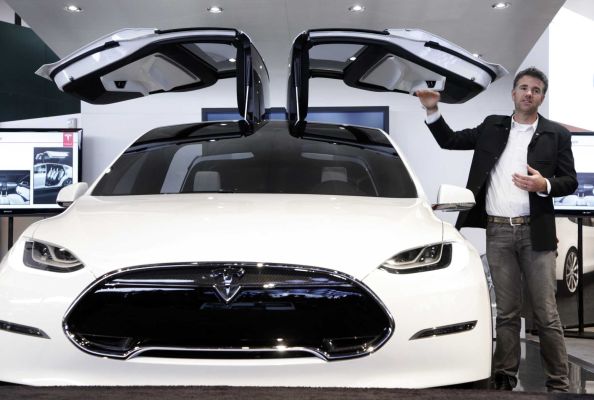
Such was the case with the Model X earlier this week when an analyst from none other than Morgan Stanley issued a note to investors articulating that engineering difficulties with the Model Xs’ Falcon Wing doors are likely behind the vehicle’s delay. Naturally, some folks took the report and ran with it, leading some to start wondering, “Is there any chance the Model X won’t come with Falcon Wing doors?”
In a word, “No.”
But don’t take my word for it. In an effort to nip such rumors in the bud, Tesla CEO Elon Musk took to Twitter early on Wednesday to dispel any notion that the Model X would be doing away with its, dare I say, iconic doors.
Rumors about canceling Falcon wing doors are false. At Tesla, the production car will always be better than the show car.
Yesterday, we unveiled the world’s first dual electric motor production car and announced that new safety and autopilot hardware is standard on every new Model S.
Conventional all wheel drive vehicles distribute power to the wheels from a single engine driving a complex mechanical transmission system. By contrast, Dual Motor Model S, which comes with either the 60 kWh or 85 kWh battery, has a motor on each axle, digitally and independently controlling torque to the front and rear wheels. The result is unparalleled control of traction, with instantaneous response to the motors giving drivers precisely controlled performance in all conditions. With its digital torque controls and low center of gravity, Dual Motor Model S has the most capable road holding and handling of any vehicle ever produced.
Where gasoline-powered all wheel drive cars sacrifice efficiency in return for all weather traction, Tesla’s Dual Motor propulsion system actually increases efficiency while delivering exceptional traction and control in slippery conditions. By precisely splitting the delivery of current from the battery to each motor, the Model S 85D and 60D actually gain an additional 10 miles of highway driving range compared to their rear motor Model S counterparts.
Consistent with our mission, we also wanted to demonstrate that an electric car can soundly beat gasoline cars on efficiency and pure performance. The Model S P85 already outperforms gasoline-powered cars in the same class with its ability to deliver 100 percent of peak torque from a standing start. We combined our new front drive unit and our P85 rear motor with the objective of outperforming one of the greatest supercars of all time, the McLaren F1. With P85D’s 0 to 60 mph performance of 3.2 seconds, we have succeeded.
The P85D combines the performance of the P85 rear motor with an additional 50 percent of torque available from our new front drive unit. The result is the fastest accelerating four-door production car of all time – while remaining one of the most efficient cars on the road. That’s a combination that can only be achieved by an electric car. Not only is the P85D a match for the McLaren F1, but it also doesn’t need a professional driver to achieve optimum performance. Just plant your foot and go.
Customers can order a Dual Motor Model S today. Deliveries of P85D begin in December for North America, to be followed 85D and 60D in February. Deliveries to Europe and Asia will follow in the months afterwards.
New Safety Features and Autopilot
The launch of Dual Motor Model S coincides with the introduction of a standard hardware package that will enable autopilot functionality. Every single Model S now rolling out of the factory includes a forward radar, 12 long range ultrasonic sensors positioned to sense 16 feet around the car in every direction at all speeds, a forward looking camera, and a high precision, digitally controlled electric assist braking system.
Building on this hardware with future software releases, we will deliver a range of active safety features, using digital control of motors, brakes, and steering to avoid collisions from the front, sides, or from leaving the road.
Model S will be able to steer to stay within a lane, change lanes with the simple tap of a turn signal, and manage speed by reading road signs and using active, traffic aware cruise control.
Our goal with the introduction of this new hardware and software is not to enable driverless cars, which are still years away from becoming a reality. Our system is called Autopilot because it’s similar to systems that pilots use to increase comfort and safety when conditions are clear. Tesla’s Autopilot is a way to relieve drivers of the most boring and potentially dangerous aspects of road travel – but the driver is still responsible for, and ultimately in control of, the car.
The Autopilot hardware opens up some exciting long term possibilities. Imagine having your car check your calendar in the morning (a feature introduced in Software v6.0), calculate travel time to your first appointment based on real time traffic data, automatically open the garage door with Homelink, carefully back out of a tight garage, and pull up to your door ready for your commute. Of course, it could also warm or cool your car to your preferences and select your favorite morning news stream.
The introduction of this hardware is just the first step for Autopilot in Model S. We will continue to develop new capabilities and deliver them through over-the-air software updates, keeping our customers at the forefront of driving technology.
Other Product Updates
Our commitment to continuous improvement extends to other features of Model S, and we have recently made several updates to the car, including:
Seat comfort improvements and taller headrests for whiplash protection
Improvements for a quieter cabin
Wider rear door opening
Electrically opening, self-closing charge port door on Dual Motor Model S
Increased visor size and larger vanity mirror
Parcel shelf and front trunk cargo net now standard
Air ionizer and carbon filter for cabin air purity
Updated steering column
Updates to Alcantara interior trim, such as wrapped roof bow and top pad
I’m very excited to announce that I’m going to be going to LA for the Tesla D event launch and will be liveblogging it as it happens. Come back here Thursday evening at 7PM for all of the excitement.
At this point it would seem that the new version could include AWD with Dual motors which would make it great for the upcoming Winter. We’ll know in a few short days.
Surely there had to be a better way? Personally, I’ve never wanted for much of this but I’ve also never had cars that had these features in the past either. Full ad pasted below: Expand Expanding Close
OSAKA — Panasonic has reached a basic agreement with Tesla Motors to participate in the Gigafactory, the huge battery plant that the American electric vehicle manufacturer plans to build in the U.S. Tesla aims to begin the first phase of construction this fiscal year. The plant would start making lithium-ion cells for Tesla cars in 2017. The automaker is shouldering the cost for the land and buildings. Panasonic likely will invest 20 billion to 30 billion yen ($194-291 million) initially, taking responsibility for equipping the factory with the machinery to make the battery cells. An official announcement on the partnership will come by the end of this month. Capacity at the Gigafactory will be added in stages to match demand, with the goal of producing enough battery cells in 2020 to equip 500,000 electric vehicles a year. The total investment is expected to reach up to $5 billion, and Panasonic’s share could reach $1 billion. The Japanese company owns a stake in Tesla and currently makes the batteries for Tesla cars. In a contract reworked in October 2013, the two agreed that Panasonic would supply Tesla with 2 billion battery cells between 2014 and 2017.
The partnership wasn’t ever a secret or really ever in doubt. Panasonic, I think, spent some extra time negotiating better terms. Both company’s stocks are spiking on the news.
There is a lot of interesting info from a talk that Elon Musk gave at the CPUC last week. Of particular note, Musk gave some spec estimates for the mass market “Model E” vehicle expected to be released in 2017 with batteries coming from the Gigafactory. In the video above he says the car will have a 200 mile range and be 20% smaller than the Model S. Therefore the battery will need to have about 80% of the energy of the current Model S (Musk’s words). To be clear, since Tesla uses the constant sized 18650 cells (and looks to continue to do so) physical size and Watt-hours are fairly constant.
So given that a 60kWh Model S has a range of around 200 miles (EPA 208), that means that the Model E would need to have a battery around 80% the size of the Model S or 48kWh.
That’s still about double what leading ‘mass market’ electric cars have today. The Chevy Spark EV, with a range of 82 miles has a 21.3 kWh battery. The Nissan LEAF which has a 75 mile EPA range rating has a 24 kWh battery. The Chevy Volt has a 16kWh battery while the BMW i3 is 18.8.
Tesla cancelled its $49,000 40kWh battery Model S before it got an EPA estimate but most guesses were that it would get around 150 miles. Add another 8kWh to the battery and take off 20% of the overall car size and 200 mile range seems doable.
Musk also mentions that besides the 20% drop in price, he expects economies of scale and other innovations to drop the price another 30% on the battery alone helping to get the Model E to around 50% the cost of the Model S at $35,000.
Panasonic Corp is inviting a number of Japanese materials suppliers to join it in investing in a U.S. car battery plant that it plans to build with Tesla Motors Inc, with investment expected to reach more than 100 billion yen ($979 million), the Nikkei reported.
The plant, expected to go on-stream in 2017, will bolster Panasonic’s supply of lithium-ion batteries to the U.S. electric-car maker.
Last week, Tesla shed some light on its plans for building a lithium-ion battery plant, or “giga factory,” that will cut battery costs and allow the company to launch a more affordable electric car in 2017. However, it said at the time that further details would be announced this week.
The U.S. plant, which will handle everything from processing raw materials to assembly, will produce small, lightweight batteries for Tesla and may also supply Toyota Motor Corp and other automakers, the Nikkei said.
Battery costs have been a major stumbling block to widespread electric car adoption in the United States, according to analysts. Tesla’s giga factory will lower costs by shifting material, cell, module and pack production to one spot.
In Tesla’s earnings conference call last week, Chief Executive Elon Musk said the electric car maker expects to build the factory with more than one partner, but a “default assumption” was that Panasonic, as a current battery cell partner, “would continue to partner with us in the giga factory.”
“The factory is really there to support the volume of the third generation car,” Musk said on the call. “We want to have the vehicle engineering and tooling come to fruition the same time as the giga factory. It is already part of one strategy, one combined effort.”
The pieces are starting to come together. The biggest question now is how Tesla funds the other $4B in costs. Will it issue more stock? Will it bring in some very rich partners like Apple? On that note we go to last week’s earnings call for more color on that: Expand Expanding Close
No battery ‘gigafactory’ information yet but here’s the PDF. Notable is the $30,000-$35,000 base model price of the Gen 3 vehicle. Tesla’s traditionally only been able to hit the high side but so long as Federal Tax Credits are still around in 3 years, it should be a great deal especially with Tesla type specs. Expand Expanding Close
Tesla had resolved a trademark issue that had long prevented the company from using “Te Si La” – the Chinese name best known among Chinese consumers, which Tesla wanted to use in China. “We went to court and we won,” she said. “The court has given use right to use the name, which is why you see the Chinese name in our store now.” The name had been registered by a local businessman who had refused to give up the trademark. The U.S. company had started offering its popular Model S sedans in China, but with no Chinese language name.
Tesla’s billionaire co-founder and chief executive officer, will travel to China in late March to inaugurate the company’s entry there, he said in a phone interview.
For Tesla, “it could be as big as the U.S. market, maybe bigger. I don’t want to get overexcited about it,” Musk said yesterday. “Even without building there locally, it’s always going to be the second-biggest market after the U.S.”
After a rocky start ramping up Model S assembly in 2012, Palo Alto, California-based Tesla surprised analysts and investors this month when it said fourth-quarter deliveries were 20 percent above its target. Musk, 42, has pinned his goal of selling hundreds of thousands of electric autos annually to a global strategy in which China, Europe, Japan and other markets bolster its U.S. business.
If all goes well, Model S shipments to China can match U.S. sales by 2015, Musk said. “It’s not my firm prediction — it’s more like a low-fidelity guess.”
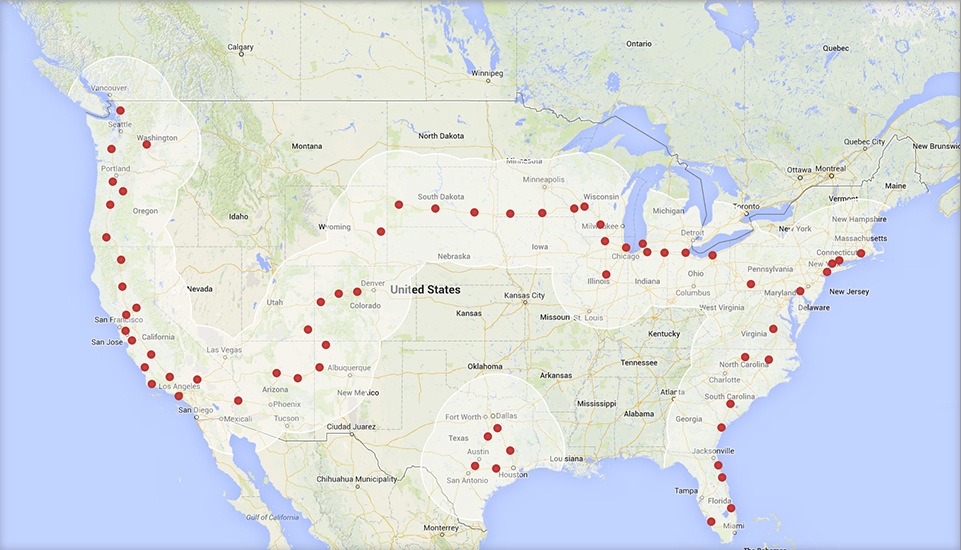
Tesla updated the Supercharger map again this morning and it now appears that all of the major gaps on the east coast (Savannah,Georgia) and the biggest cross country (Macedonia, OH, Wyoming) have been filled and it is now theoretically possible to drive a Tesla from Vancouver BC to San Diego California to Boston Massachusetts down to Miami Florida. Theoretically…if you are very easy on the accelerator.
Tesla hasn’t officially announced the milestone yet because that 302 mile Wyoming-Colorado jump is probably too big to drive without some range extending mode happening. The imminent Cheyenne, WY station should cut this to 164 miles. Also the altitude climb here is significant.
Musk said they were looking for a US state where the factory was going to be built and would announce plans at next month’s Q4 earnings call. He also said Tesla would be partnering with ‘other companies’ on the plant. Here’s why I think Tesla will partner with Solar City and Panasonic on the plant:
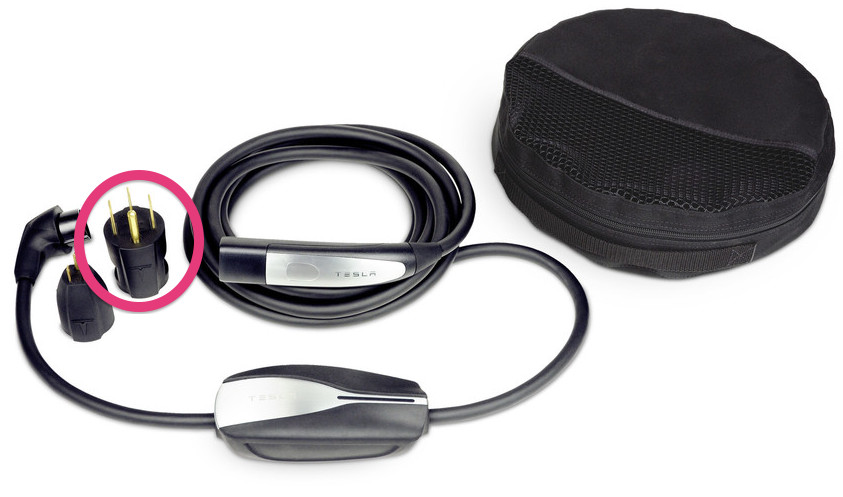
Oh lordy. The press has gotten ahold of a lunker with its latest TESLA RECALL! meme. Unfortunately for the sensational, Tesla has already announced (last week) that it would be replacing the NEMA 14-50 adapters on its built-in charging cables (pictured above, circled). It also issued a software update that would step down charging if it had detected thermal resistance. Here’s the official letter (PDF).
The charger connectors, which tether Tesla-issued cables to wall outlets, will be mailed out in the next two weeks, Chief Executive Officer Elon Musk said in an interview today.
“These are very rare events, but occasionally the wiring isn’t done right,” Musk said. “We want people to have absolute comfort, so we’re going to be providing them with an upgraded adapter.”
Tesla fell 2.6 percent to $143.72 at 12:20 p.m.
Tesla also upgraded the Model S firmware last month to prevent cars from drawing too much power from inadequate wiring.
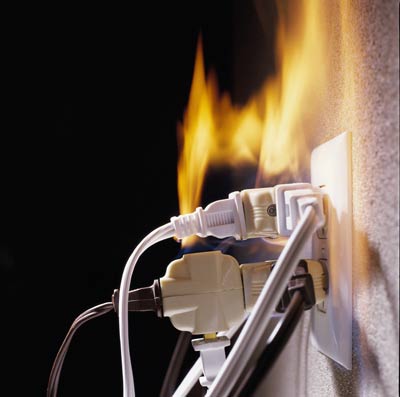
At first blush, you might be thinking (as I had) that this is silly. My house is wired properly so I shouldn’t ever have issues like the person in California whose garage caught on fire after a short in the wiring in November.
But what if you go to a vacation rental or visit the family/relatives for a weekend. Can you be sure that the electrician that did their wiring was competent?
Good on Tesla for covering this; ‘Short sighted’ on investors for seeing this as a sign of weakness and not strength.
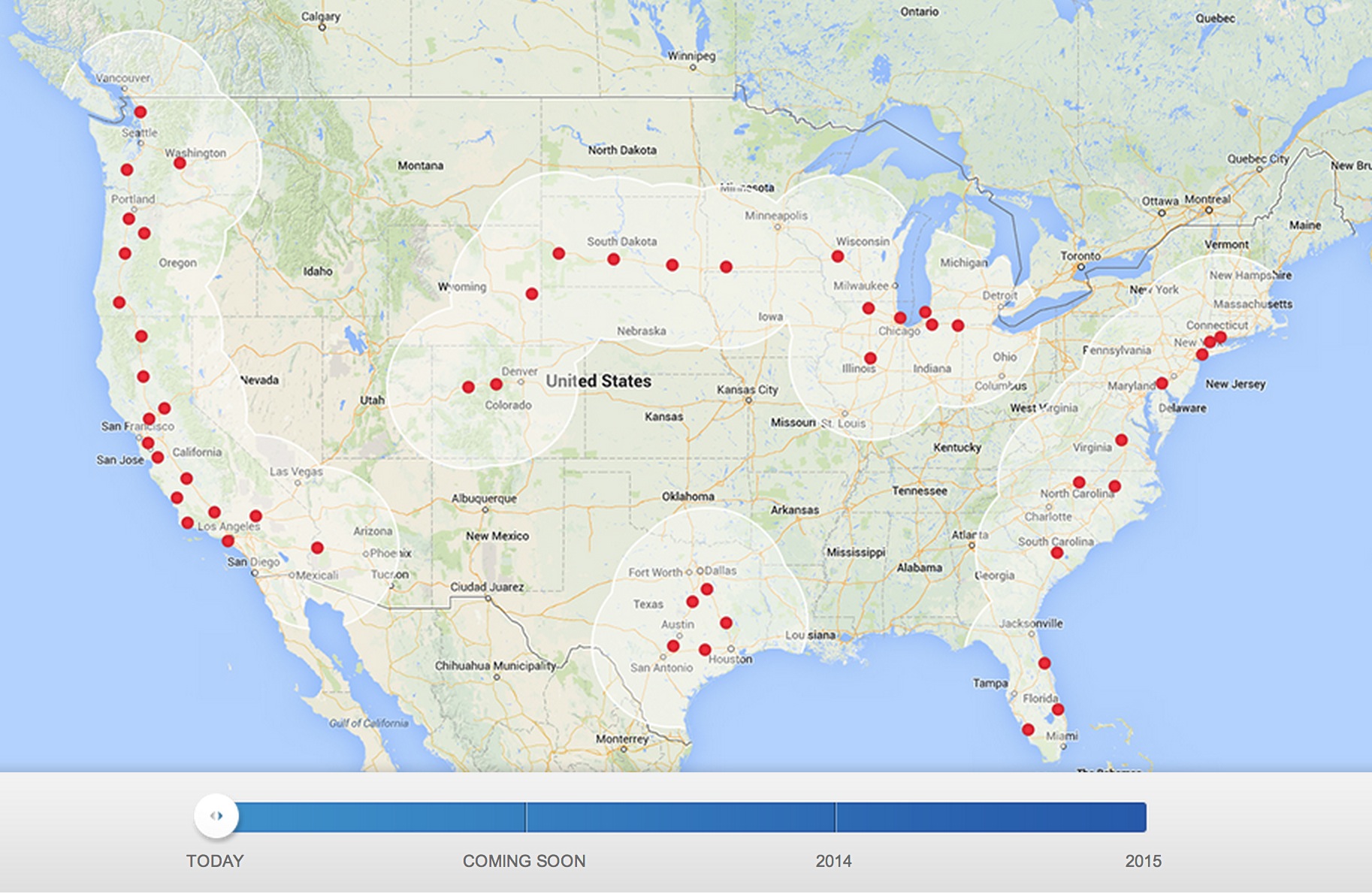
What you are looking at above is the state of the Tesla Supercharger network on The last day of 2013/first day of 2014. Tesla counts 50 Superchargers in the US (1 per state!) and another 14 in Europe. While Elon Musk originally planned to take his family on a Christmas holiday across the country, there are still some rather big holes to fill.
Those holes all fall in the “coming soon” category and if you take a look at this helpful 3rd party map, you can see a lot of the country is still being built.