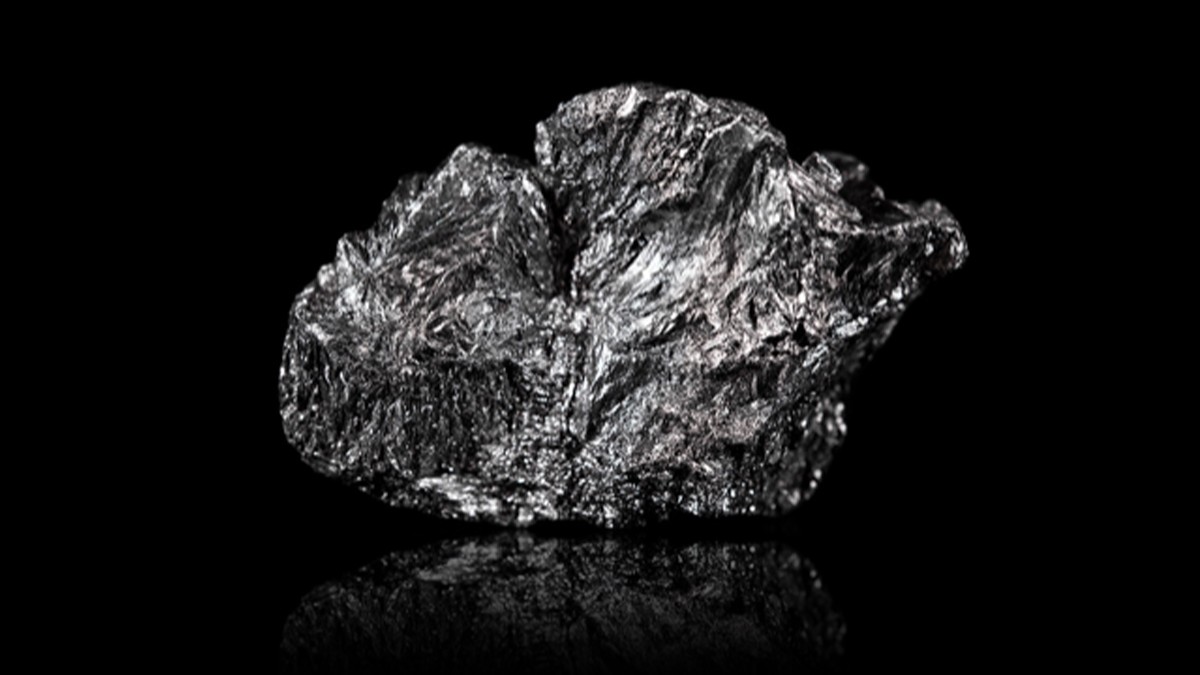
The US Department of Energy’s (DOE) Loan Programs Office has announced a conditional commitment to lend up to $107 million to Syrah Technologies for its Syrah Vidalia Facility in Vidalia, Louisiana. The facility produces a finished natural graphite-based active anode material (AAM), a critical material used in lithium-ion batteries.
KORE Power is now ready to build the first lithium-ion battery factory wholly owned by a US company.
UnderstandSolar is a free service that links you to top-rated solar installers in your region for personalized solar estimates. Tesla now offers price matching, so it’s important to shop for the best quotes. Click here to learn more and get your quotes. — *ad.
President Joe Biden will today authorize the use of Title III of the Korean War-era Defense Production Act (DPA) to rapidly step up US production of minerals for electric vehicle and storage batteries.
Graphex Technologies has entered into an exclusive non-binding memorandum of understanding (MOU) to form a joint venture with Emerald Energy Solutions to construct and operate a graphite processing facility in Michigan.
Big-battery manufacturing is ramping up to power EVs, but what will we do with the batteries when they’re dead? There’s a lot of money going into battery recycling companies, but equally important is how those companies actually procure the batteries in order to recycle them. Electrek spoke with Leo Raudys, the CEO of Call2Recycle, about how the Atlanta-based company closes the loop between producers, consumers, and recyclers and makes it easier to get dead e-mobility batteries into recyclers’ hands.
Most of the materials required for batteries and other clean energy technology are dirty to mine. They’re also mostly controlled by China. Can a recycling technology startup change that?
Electrek spoke with Megan O’Connor, cofounder and CEO of Nth Cycle, a Beverly, Massachusetts-based developer of a recycling technology that extracts critical metals from batteries for a second life, about how to enable a clean, domestic, and streamlined supply of critical minerals for the clean energy transition. Nth Cycle’s technology was developed at Harvard and Yale universities.
In April, Nth Cycle received $3.2 million in seed funding led by Boston-based clean energy venture capital company Clean Energy Ventures.
StoreDot, an Israel-based electric vehicle extreme fast charging (XFC) battery startup, today announced that it has advanced technology that extends the life span of batteries, making them highly effective not only during the vehicle life span, but also for second-life applications.
In what it claims is a “world first,” British Lithium has produced lithium at pilot scale from the mica in granite in its new government-backed pilot plant near Roche in Cornwall, England.
The lithium-ion batteries found in most modern EVs and hybrids tend to lose energy capacity as they cycle (get charged, get spent, and get re-charged). That happens because small bits of lithium can be cut off from the battery’s electrodes during the charging process. But, a team of DOE and Stanford scientists say they’ve been able to make this “dead” li-ion reconnect, partially reversing the unwanted loss of energy capacity and extending lithium battery life by 30%.
As the electric car revolution ramps up, so does the need for critical minerals used in batteries, such as graphite. According to Benchmark Mineral Intelligence, there will be a global graphite deficit starting in 2022, and demand from the battery sector is expected to rise 30% annually until 2030. The US has no manufacturing plants that can supply automotive-grade graphite at scale. Meanwhile, China controls 84% of the global supply. Electrek spoke with Don Baxter, CEO of Ceylon Graphite, about how graphite is used in EVs, the supply chain issue, and how EV battery manufacturers can successfully source the vital mineral.
Researchers have developed a prototype lithium-ion battery that uses water as an electrolytic solution. The water replaces a flammable organic solvent.
More than 1 million electric vehicles are now driving on US roads. What will happen when those cars go out of service? The plan is to recycle their batteries.
StoreDot, an Israel-based electric vehicle battery startup, today claimed that it has become the first company to produce silicon-dominant extreme fast charge (XFC) cells for electric vehicles on a mass production line.
Amsterdam-headquartered global auto manufacturer Stellantis and South Korean battery maker LG Energy Solution announced a joint venture on October 18 to produce battery cells and modules for North America. Now Stellantis has today announced yet another battery production partnership, with Samsung SDI.
StoreDot, an Israel-based electric vehicle battery startup, today announced that it will open an R&D innovation hub in the US to speed up the development of solid-state batteries.
Scientists have taken another step toward making Li-ion battery recycling economical.
The “world’s largest” floating wind farm is being planned off the coast of Scotland.
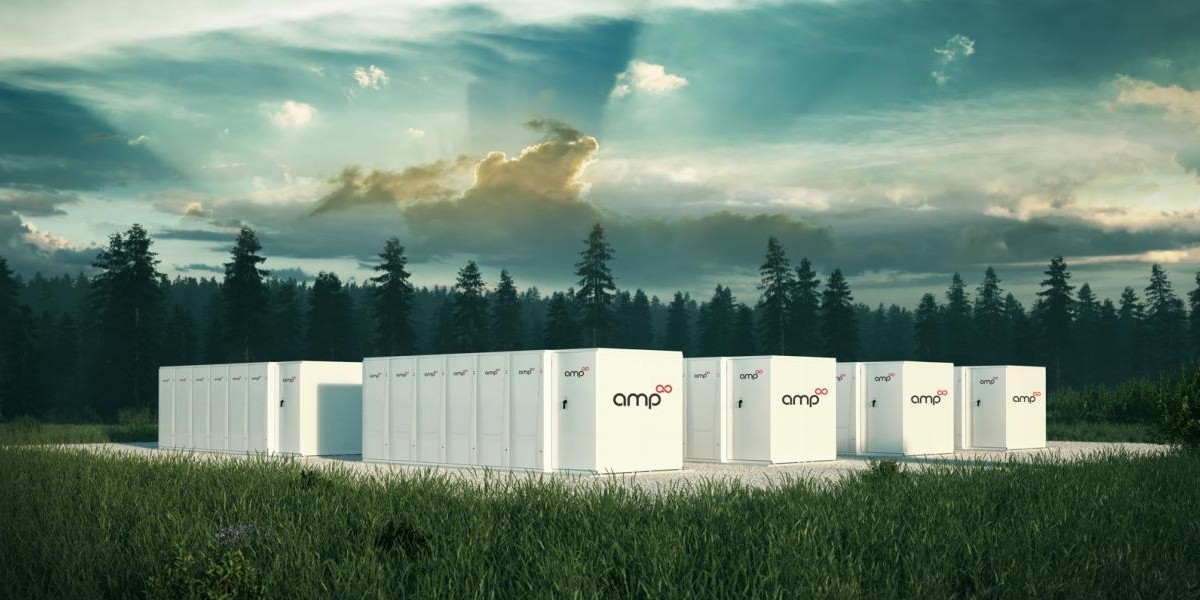
Canadian clean energy company Amp builds a microgrid for a Native American tribe.
UnderstandSolar is a free service that links you to top-rated solar installers in your region for personalized solar estimates. Tesla now offers price matching, so it’s important to shop for the best quotes. Click here to learn more and get your quotes. — *ad.
Two Arizona-based companies team up to produce batteries and convert truck fleets to electric.
US hydropower generation is forecast to decline 14% in 2021 as a result of drought.
UnderstandSolar is a free service that links you to top-rated solar installers in your region for personalized solar estimates. Tesla now offers price matching, so it’s important to shop for the best quotes. Click here to learn more and get your quotes. — *ad.
In the UK, two electric vehicle manufacturers, academics, and a battery analytics specialist company are collaborating on an electric vehicle battery research program designed to predict battery life span – and they say they’ve succeeded.
Lithium-ion battery development and production is rapidly escalating worldwide, yet there’s no standard when it comes to battery designs, materials, and chemistries. And that affects the ability to recycle Li-ion batteries – a vital final stage of their life cycle. But this may be about to change in the US.
Denmark’s and Scandinavia’s largest offshore wind farm was inaugurated yesterday.
A judge denies another bid to halt excavation at the largest-known lithium resource in the US.
UnderstandSolar is a free service that links you to top-rated solar installers in your region for personalized solar estimates. Tesla now offers price matching, so it’s important to shop for the best quotes. Click here to learn more and get your quotes. — *ad.
Zambian president-elect Hakainde Hichilema won a landslide victory in the country’s election last week, beating the incumbent, Edgar Lungu. Hichilema’s plan is to ramp up mining in particular to jump-start Zambia’s economy – and provide the rapidly growing electric vehicle battery industry with crucial cobalt and copper.
Current US battery production falls woefully short in the face of rapidly growing demand for electric vehicle and storage batteries.
The US has only a small number of domestic, large battery manufacturing factories, including Tesla’s Gigafactory that operates in partnership with Japan’s Panasonic. And just last week, KORE Power announced it will build the first lithium-ion battery factory wholly owned by a US company, in Arizona.
Both innovation and domestic battery production needs to scale quickly and efficiently, and the battery skills gap, among other things, need to be tackled in order to do that. Electrek spoke with Dr. Greg Less, technical director at the University of Michigan Battery Lab, about what the US needs to do to meet that demand.