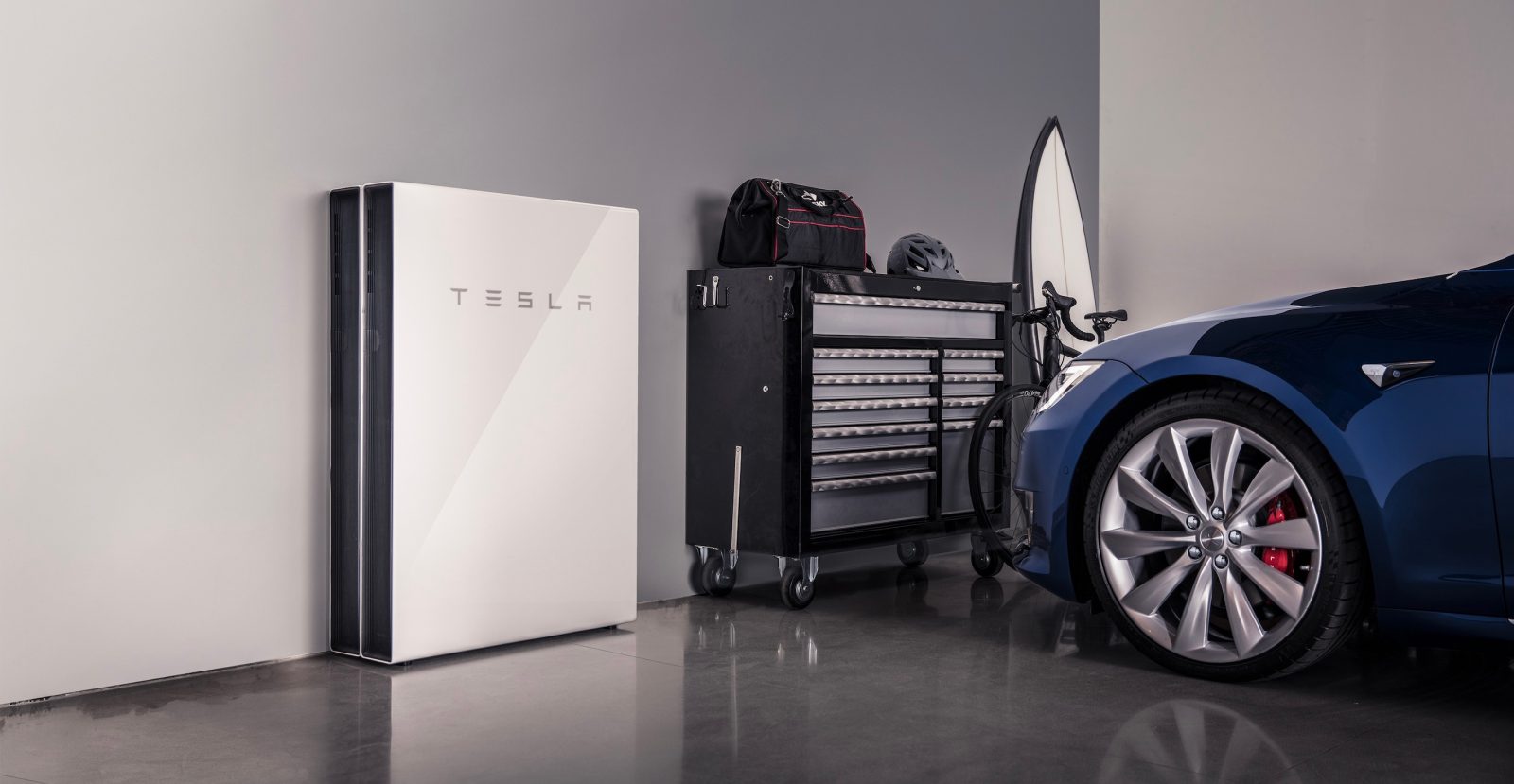
A newly introduced renewable energy megaproject combining multiple storage technologies is being billed as the world’s largest, and it looks to make its home in central Utah.
House Democrats are making a push for clean energy tax incentives, and a new proposed bill would expand the scope of energy storage installations that are eligible for the investment tax credit (ITC).
Yesterday, Saturday 13th, in South Australia the Tesla battery at Hornsdale Power Reserve was paid AU$1,000/MWh (USD$790/MWh) to absorb excess electricity from the power grid. The battery owners will later be able to sell this energy also.
Xcel Energy, electricity utility of Colorado, received a batch of bids whose medians were 2.1¢/kWh and 3.6¢/kWh for wind and solar power plus energy storage, respectively. The pricing was released in the public version of the ‘2017 All Source Solicitation.’
The world’s previous low for solar plus storage was a 4.5¢/kWh project in Arizona.
Florida Representative Holly Raschein has sponsored a new bill in the Florida Legislature to fund a $10 million pilot program installing solar panels and energy storage at strategic public facilities to keep them up and running during critical events and natural disasters.
The program would start on July 1, and run for a single year. The Florida Solar Energy Center (FSEC) will administer and report on the outcomes, with potential expansion.
On January 3rd, New York governor Andrew Cuomo delivered a state energy storage target of 1500MW via the private market by 2025 and has put up $260 million in state money to help drive the investment.
In the annual “State of the State” address, varying proposals – from combating MS-13, to cleaning up the Hudson River, to expanding clean energy jobs – were delivered to start the new year. The energy storage target delivered seems to be an extension or culmination of prior state legislation requiring targets be set.
The California Independent System Operator (CAISO) – the group that manages 80% of the electricity used in California – has begun showing utility-scale batteries charging and discharging into the power grid via their website.
By resolution, due to a natural gas emergency, the State of California requested large-scale battery based energy storage projects be attached to the grid at the end of 2016, early 2017. Now we get to watch the systems – some that we covered – do their job.
A vanadium/mining industry PR firm has visited the site of an in development 200MW/800MWh vanadium flow battery in Dalian, China and noted that site work is ongoing. They also stated that most of the product that will fill the site – the vanadium batteries – is already built in the manufacturer’s nearby factory.
This battery is currently the largest planned chemical battery in the world, and part of a Chinese government investment to spur the technology.
NY Governor Cuomo has signed into law a bill (AB 6571) directing the state’s Public Service Commission to develop an Energy Storage Deployment Program, including a storage procurement target for 2030.
New York now becomes the fourth US state to have energy storage targets/mandates. California and Oregon have a mandate in place, while Massachusetts has set a law that dictates a target to be finalized shortly. South Australia turned on the world’s largest lithium ion battery just yesterday.
Arkup, the “avant-garde life on water” company, has designed a new luxury home that integrates solar on the roof and a newly approved lithium ion marine battery system. The main selling features are that it can rise with sea levels via jacks, withstand extreme weather, move as a regular electric propelled boat, and provide it’s own water plus – of course – electricity.
In Tesla’s Q3 2017 earnings report, they gave an update on their ‘Tesla Energy’ division. They highlighted being on track to meet the 100-day deployment deadline of the 100MW/129MWh energy storage project for South Australia. Mention was made of the work being done in Puerto Rico in the aftermath of Hurricane Maria – ‘solar panels, Powerpacks and hundreds of PowerWalls.’
Additionally, Tesla – at multiple points – pointed toward a future of more revenue from energy generation and storage. 11% of the quarter’s revenue came from the Tesla Energy division.
Electrical grid complexity has increased immensely. Recently, weather damage and intermittent renewable energy production have increased the dynamics that must be managed in a large power grid. In order to address that, the Dutch company Alfen is currently field testing their new ‘cellular smart grid’ solution in Lelystad, the Netherlands.
They have developed a combination of energy storage and finely tuned algorithms to help make electrical grids more resilient and to reduce their downtime.
Four Swiss universities came together to build the US Department of Energy’s 2017 Solar Decathlon overall winner. Eleven teams competed over the course of two years to build a home taking into account modern global demands of “reliability, resilience, and security.”
The Swiss schools – École Polytechnique Fédérale de Lausanne, School of Engineering and Architecture Fribourg, Geneva University of Art and Design, and the University of Fribourg – scored perfect 100’s in energy, architecture and engineering categories.
Reality is, that most people who want solar power on their home actually want energy storage as well. We want energy storage because if the grid goes down, we want our house to run smoothly – day or not, sunny or cloudy. Additionally, many of us hold onto the dream of disconnecting from The Man.
At SolarPower International 2017 it was clear that the solar+energy storage hardware market – SolarEdge, Sonnen, BYD, Kehua, Outback, Hauwei, Schneider and others – are almost ready (or in terms of Sonnen/SolarEdge/Schneider – ready today) to serve the home energy demands of the broader population.
Electrek Green Energy Brief: A daily technical, financial and political review/analysis of important green energy news.
Amish phone booths – McKenna trained a local high-school physics teacher to do installations. About 50 of them are off the grid. One lights up the gazebo in the local cemetery; others are phone booths meant especially for the Amish. Since religious principle dictates no electricity at home, they rely on the booths as a crucial link to the outside world. The article is really about solar power in Trump voting areas, but the Amish piece caught my attention. Solving problems with solar.
Most energy industry watchers saw the growth of energy storage to be inevitable in order to support renewable energy growth and to stabilize the grid, but deployment had been slow until now.
Several new projects coming online during the first quarter 2017 made it the first significant deployment of energy storage in the US to date: 234 megawatt-hours of energy storage. Expand Expanding Close
As I reported on the new offshore wind strategy by the United States yesterday, Scotland was busy welcoming the beginning phase of the world’s first, and largest underwater tidal energy farm which will be placed off the north coast of Scotland. The first out of the four planned turbines sits at a height of 49 ft, 53 ft in diameter and over 40,000 lbs with a capacity of 1.5 megawatts (MW).
On May 26, 2016 – “U.S. Rep. Mike Honda (D-Silicon Valley, Calif.) introduced H.R. 5350, the bipartisan Energy Storage for Grid Resilience and Modernization Act. Honda was joined by Reps. Chris Gibson (R-NY), Tom Reed (R-NY) and Mark Takano (D-CA).” The purpose of the legislation is to clarify that energy storage industry receives a 30% tax credit equivalent in nature to what the Renewable Energy industry gets. The 30% Solar Power Tax Credit, is credited with being one of the major drivers for the solar power installation boom in the United States.