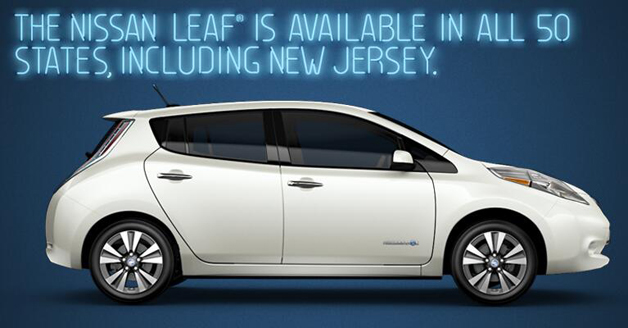
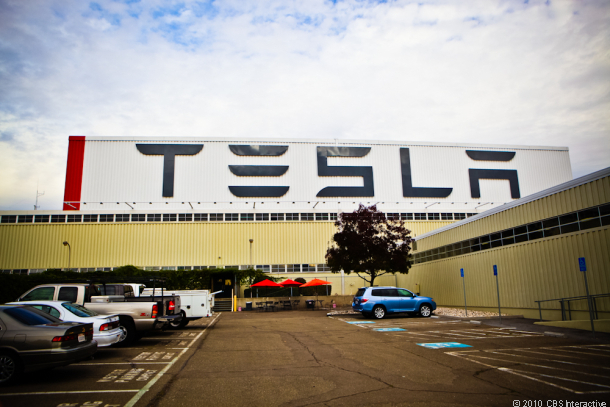
After Tesla lost in New Jersey, Nissan’s social Media Team Tweeted the “dickish” image above from the Leaf account according to ABGreen. They quickly realized the folly of their ways and deleted it and perhaps someone was straighend out (the door?) over the matter.
I mean we’re all in this together and rising waters raise all ships and all that, right? Expand Expanding Close
Panasonic Corp is inviting a number of Japanese materials suppliers to join it in investing in a U.S. car battery plant that it plans to build with Tesla Motors Inc, with investment expected to reach more than 100 billion yen ($979 million), the Nikkei reported.
The plant, expected to go on-stream in 2017, will bolster Panasonic’s supply of lithium-ion batteries to the U.S. electric-car maker.
Last week, Tesla shed some light on its plans for building a lithium-ion battery plant, or “giga factory,” that will cut battery costs and allow the company to launch a more affordable electric car in 2017. However, it said at the time that further details would be announced this week.
The U.S. plant, which will handle everything from processing raw materials to assembly, will produce small, lightweight batteries for Tesla and may also supply Toyota Motor Corp and other automakers, the Nikkei said.
Battery costs have been a major stumbling block to widespread electric car adoption in the United States, according to analysts. Tesla’s giga factory will lower costs by shifting material, cell, module and pack production to one spot.
In Tesla’s earnings conference call last week, Chief Executive Elon Musk said the electric car maker expects to build the factory with more than one partner, but a “default assumption” was that Panasonic, as a current battery cell partner, “would continue to partner with us in the giga factory.”
“The factory is really there to support the volume of the third generation car,” Musk said on the call. “We want to have the vehicle engineering and tooling come to fruition the same time as the giga factory. It is already part of one strategy, one combined effort.”
The pieces are starting to come together. The biggest question now is how Tesla funds the other $4B in costs. Will it issue more stock? Will it bring in some very rich partners like Apple? On that note we go to last week’s earnings call for more color on that: Expand Expanding Close
It has more torque (over 400ft/lbs) than a Ferrari 458 Italia and can hit 60 miles per hour in 7 seconds flat.
Did I mention it is essentially free if you currently spend $10/day on gasoline?
The Spark EV starts its life in Changwon, South Korea where gasoline and electric sparks are built by GM Korea, which was once known as Daewoo. But the heart of the Spark comes from America. GM is building the permanent magnet motors in Maryland, and instead of LG batteries made in Korea (like the Volt) GM is using American-made batteries courtesy of B456 (formerly A123. I’m not making this up). For reasons we don’t understand, GM isn’t “doing a CODA” and shipping cars sans-drivetran to America for assembly. The plant in Maryland ships the batteries and drivetrain to Korea, GM Korea inserts it in the car and ships the completed unit back to the USA.
Anyway, here’s a great review. I have no idea how they keep these in stock. Chevy please send these outside of California and Oregon. Money quote:
Power is supplied by a 560lb, 21.3 kWh lithium battery pack located where the gas tank is in the gasoline Spark. As with the Chevy Volt, GM is taking the cautious path to battery preservation equipping the pack with an active heating and cooling system. That’s a stark contrast to the Nissan Leaf which uses a passive cooling system. Thanks to the lightest curb weight in the group (2,989lbs), the Spark scores 82 miles of EPA range and the highest efficiency rating of any EV to date. Depending on the weight of my right foot, my real world range varied from 70-100 miles.
No battery ‘gigafactory’ information yet but here’s the PDF. Notable is the $30,000-$35,000 base model price of the Gen 3 vehicle. Tesla’s traditionally only been able to hit the high side but so long as Federal Tax Credits are still around in 3 years, it should be a great deal especially with Tesla type specs. Expand Expanding Close
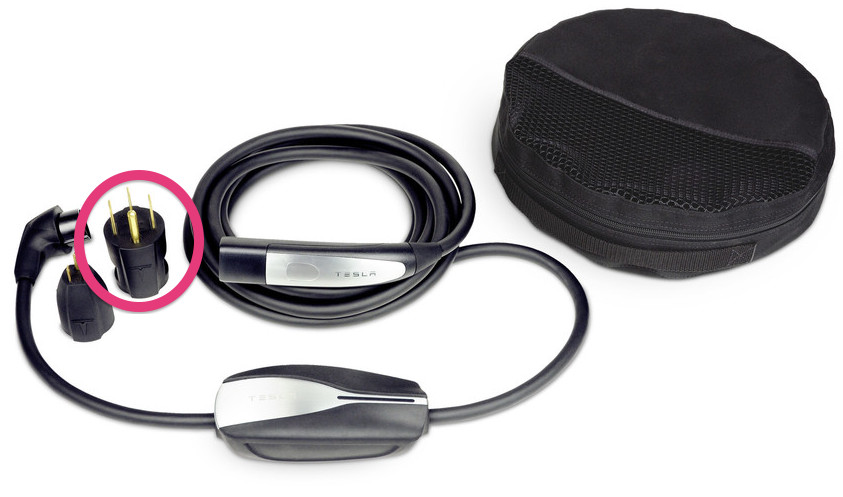
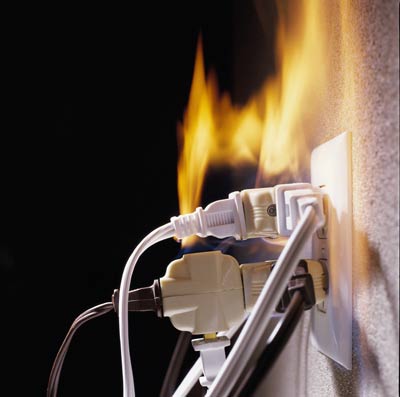
Oh lordy. The press has gotten ahold of a lunker with its latest TESLA RECALL! meme. Unfortunately for the sensational, Tesla has already announced (last week) that it would be replacing the NEMA 14-50 adapters on its built-in charging cables (pictured above, circled). It also issued a software update that would step down charging if it had detected thermal resistance. Here’s the official letter (PDF).
The charger connectors, which tether Tesla-issued cables to wall outlets, will be mailed out in the next two weeks, Chief Executive Officer Elon Musk said in an interview today.
“These are very rare events, but occasionally the wiring isn’t done right,” Musk said. “We want people to have absolute comfort, so we’re going to be providing them with an upgraded adapter.”
Tesla fell 2.6 percent to $143.72 at 12:20 p.m.
Tesla also upgraded the Model S firmware last month to prevent cars from drawing too much power from inadequate wiring.
At first blush, you might be thinking (as I had) that this is silly. My house is wired properly so I shouldn’t ever have issues like the person in California whose garage caught on fire after a short in the wiring in November.
But what if you go to a vacation rental or visit the family/relatives for a weekend. Can you be sure that the electrician that did their wiring was competent?
Good on Tesla for covering this; ‘Short sighted’ on investors for seeing this as a sign of weakness and not strength.
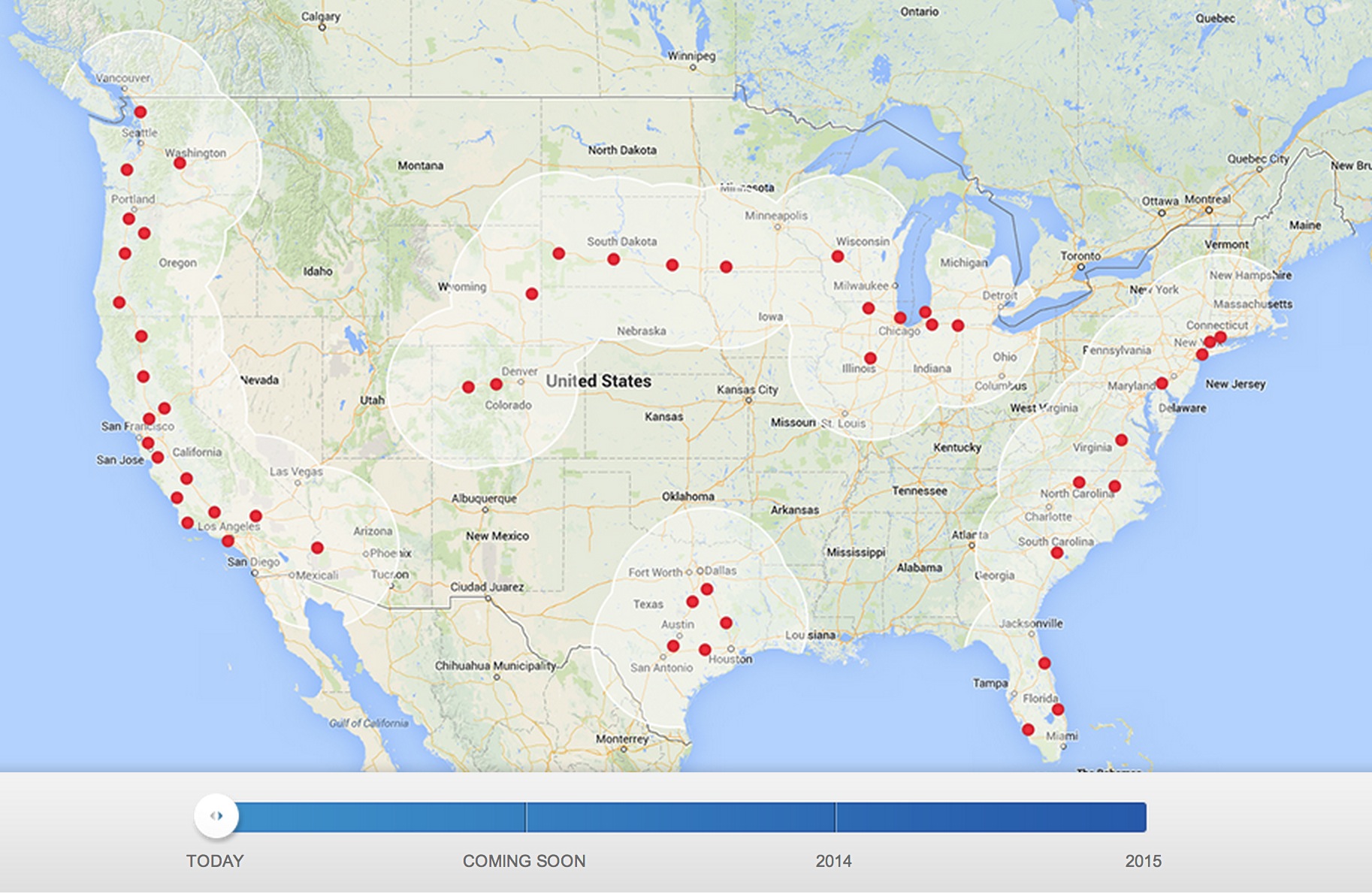
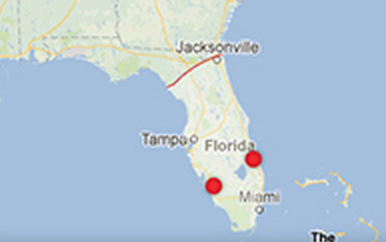
What you are looking at above is the state of the Tesla Supercharger network on The last day of 2013/first day of 2014. Tesla counts 50 Superchargers in the US (1 per state!) and another 14 in Europe. While Elon Musk originally planned to take his family on a Christmas holiday across the country, there are still some rather big holes to fill.
Those holes all fall in the “coming soon” category and if you take a look at this helpful 3rd party map, you can see a lot of the country is still being built.
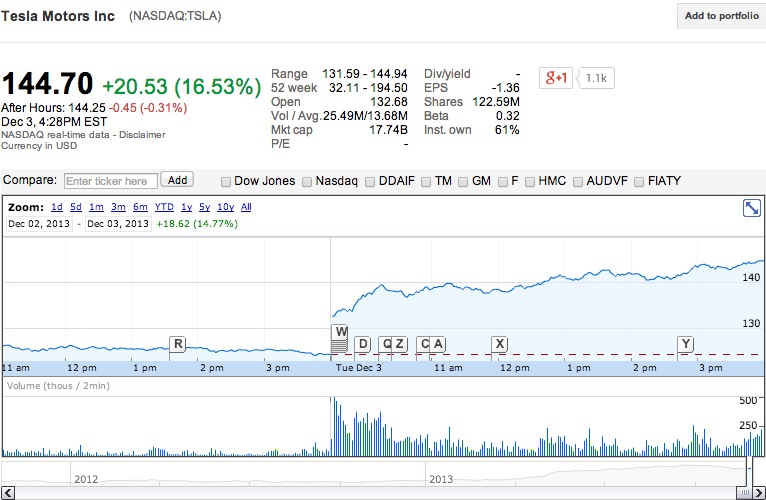
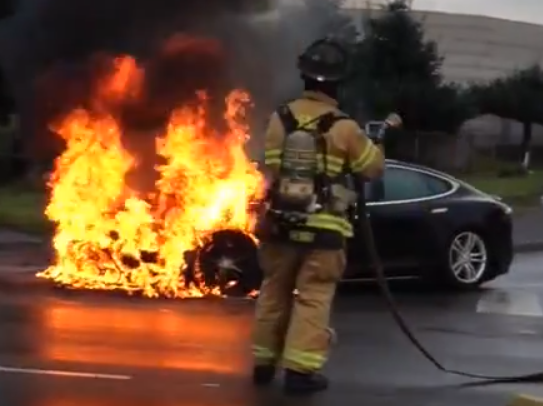
Last night after the market closed Tesla disclosed that the German Federal Motor Transport Authority (KRAFTFAHRT-BUNDESAMT) cleared Tesla of manufacturer-related defects in the three fires in recent months. “Therefore, no further measures under the German Product Safety Act [Produktsicherheitsgesetz (ProdSG)] are deemed necessary.”
The assumption on Wall Street is that if the German Motor Transport Authority cleared Tesla, so would the NHTSA. German automotive standards are generally considered more stringent (and efficient) than that of the US.
Analysts jumped on the news and dialed the stock up. The market responded with a 20 point gain after opening up 6 points and steady growth throughout the day.
Mission seems like the Tesla of motorcycles as president Mark Seeger stops by with his groundbreaking halo product, the limited production RS superbike. Only 40 of these will be assembled by hand in the USA but clearly there is a market for these if things go well.
Perhaps the hardest part? Convincing motorcyclists that they don’t need to be obnoxiously loud. Expand Expanding Close
Not much not to like here. How does $27,500 go for a $199/month lease? Add in the $7500 tax credit. I’ll be interested to see how low that 82 mile range gets in the winter – oh you can only get on in California and Oregon which have mild winters so we’ll have to wait awhile and see. Expand Expanding Close
A curved section that fell off a semi-trailer was recovered from the roadway near where the accident occurred and, according to the road crew that was on the scene, appears to be the culprit. The geometry of the object caused a powerful lever action as it went under the car, punching upward and impaling the Model S with a peak force on the order of 25 tons. Only a force of this magnitude would be strong enough to punch a 3 inch diameter hole through the quarter inch armor plate protecting the base of the vehicle.
Interesting that this is written by Elon Musk (with some help likely) and he actually turns the tables at the end:
The nationwide driving statistics make this very clear: there are 150,000 car fires per year according to the National Fire Protection Association, and Americans drive about 3 trillion miles per year according to the Department of Transportation. That equates to 1 vehicle fire for every 20 million miles driven, compared to 1 fire in over 100 million miles for Tesla. This means you are 5 times more likely to experience a fire in a conventional gasoline car than a Tesla! For consumers concerned about fire risk, there should be absolutely zero doubt that it is safer to power a car with a battery than a large tank of highly flammable liquid.— Elon
The post also includes an email from the driver – who is also an investor – who can’t wait to get behind another Tesla shortly (a loaner is on the way). Expand Expanding Close