[youtube=https://www.youtube.com/watch?v=iJcgbiGaw4A]
This video caught everything.

Founder, Publisher, and Editorial Director of the 925, LLC publications.
Seth Weintraub is an award-winning engineer, journalist, and publisher who won back-to-back Neal Awards from 2007–2010 during his three-plus years covering Apple and Google at IDG’s Computerworld.
From 2010-2011, Weintraub covered all things Google for Fortune Magazine, amassing an impressive rolodex of Google contacts and a love for Silicon Valley tech culture.
It turns out that his hobby – the 9to5Mac news site – was always his favorite, and in 2011, he went full time adding his Fortune Google followers to 9to5Google, in addition to adding the style and commerce component of 9to5Toys gear and deals site. In 2013, Weintraub bought one of Tesla’s first Model S EVs off of the assembly line, which began his love affair with electric vehicles and green energy — this, in turn, became Electrek in 2014. To cover the burgeoning world of drones and UAVs led by China’s DJI, DroneDJ was born in 2018, and then more recently, Connectthewatts and SpaceExplored were launched to cover connected fitness and space.
From 1997-2007, Weintraub was a Global IT director and Web Developer for a number of companies, with stints at multimedia and branding agencies in Paris, Los Angeles, New York, Sydney, Hong Kong, Madrid, and London before becoming a publisher/writer.
Seth received a bachelor’s degree in Industrial and Systems Engineering from the University of Southern California with a minor in Multimedia and Creative Technology in 1997. In 2004, he received a Master’s from NYU’s Tisch School of the Art’s ITP program.
Weintraub is a licensed single-engine private pilot and a certified open-water scuba diver, and he spent over a year backpacking to 60 cities in 23 countries. Whatever free time exists is now guaranteed to his wonderful girlfriend, Alana, and two amazing sons.
More: About.me. BI 2014 profile.
Tips: seth@925.co, or llsethj on Threads/BlueSky or link at top of page.


[youtube=https://www.youtube.com/watch?v=iJcgbiGaw4A]
This video caught everything.
Great interview, not much new however if you follow Tesla and its CTO into the energy industry. Some interesting bits:
Why did Tesla act differently? For a start, it does not think of itself as a carmaker. “I see us more as an energy-innovation company,” says Jeffrey “JB” Straubel, the firm’s chief technology officer, and one of the co-founders of Tesla, along with Elon Musk, the chief executive. “If we can reduce energy-storage prices, it’s the most important thing we can do to make electric vehicles more prevalent,” says Mr Straubel. “Add in renewable power and I have a direct line of sight towards an entire economy that doesn’t need fossil fuels and doesn’t need to pay more to do it.”…
Mr Straubel met Mr Musk, a freshly minted multimillionaire from the sale of his PayPal digital-payments company to eBay. “One lunch was the beginning of what eventually became Tesla,” says Mr Straubel. “We spent most of the meal talking about electric aeroplanes. But as we were wrapping up, I said I was working on a fun crazy project with cars, trying to build a lithium-ion battery pack that could last 1,000 miles.”…
“Most other companies do not believe that battery volume will grow as fast as it’s going to,” Mr Straubel counters. “They don’t understand the tight linkage between cost and volume. We’re at this crossing-point where a small reduction in cost is going to result in a ridiculously big increase in volume, because the auto industry is so big.”…
“No one wishes we could come up with a technology that makes today’s chemistry obsolete more than me,” says Mr Straubel. “We could sell more cars at a lower price. But we’re not waiting.”
[tweet https://twitter.com/UVEK/status/540091397307908096]
[youtube=https://www.youtube.com/watch?v=c1g2DRrwtz4]
[youtube=https://www.youtube.com/watch?v=pAFptrSuw7E]
You’d think for $55,000 they could do without Lead Acid batteries.
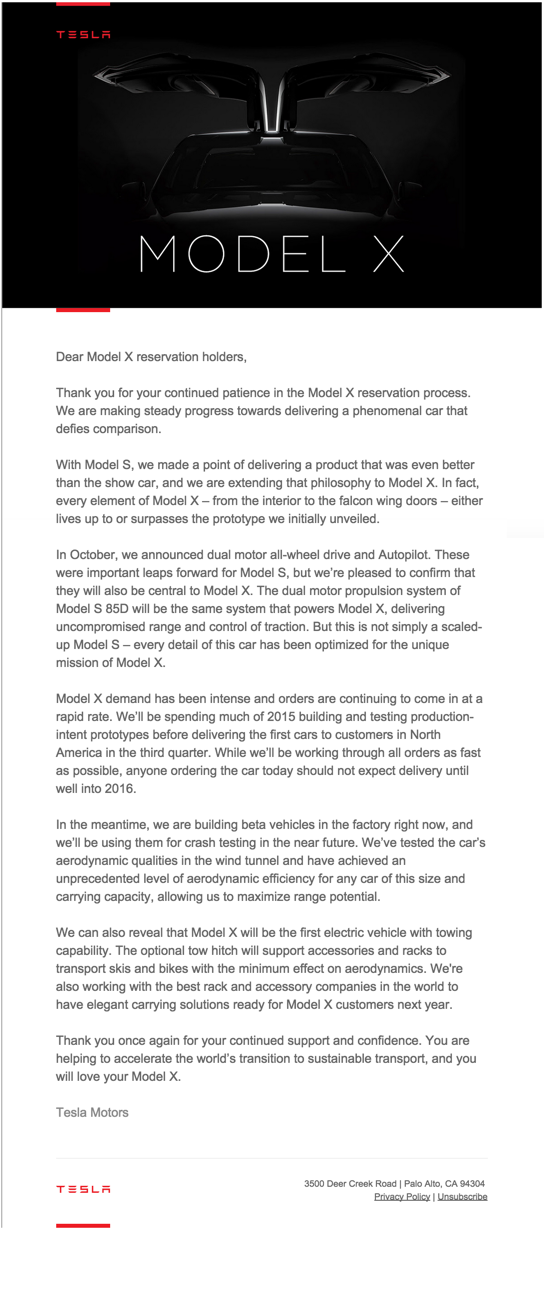
Not much new but holy hell, when is Tesla going to deliver this thing?!
Text below the fold:
Expand
Expanding
Close
The video above would appear to verify that and the speed can obviously increase with more quantity of batteries to charge but I can also say that I’ve charged at over 300KW/h for a long time in my 60 where this seems to fall off of 300KW pretty quick.
One would think that there would be a 85/60 or 42% speed increase solely from a hardware standpoint.
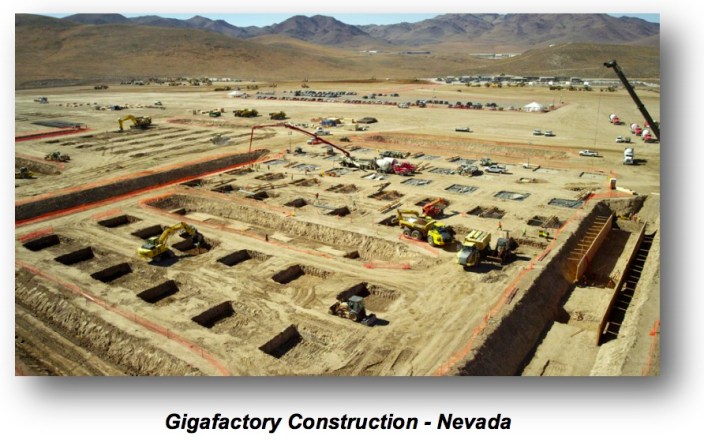
Long read from Fortune about the selection of the Reno Nevada site. Long story short: Nevada’s package and the quick work and willingness of a brothel-owning politician and businessman sealed the deal.
Still, the victory came at an eye-popping price, generating criticism in the press. Nevada is paying more than $200,000 for each of the 6,500 direct jobs the gigafactory is supposed to create. “I read Nevada’s incentive package,” says former New Mexico Gov. Bill Richardson, who negotiated with Tesla for its first assembly plant. “They literally handed over Reno and Las Vegas, lock, stock, and barrel.” Richardson is quick to add, in a rueful comment that captures the bind that states find themselves in, “I probably would’ve done the same thing as Governor Sandoval. It’s a lot of jobs in a recessionary period. You create a new kind of economy in your state.”
For his part, Musk noted that Nevada hadn’t even offered the biggest package (San Antonio would claim that title). Low costs and high speed had carried the day, he said. “It’s a real get-things-done state,” Musk declared. “The biggest single factor was time to completion.”
By November, when Musk discussed the deal on an earnings call, he sounded exasperated with continued condemnation of the terms he had extracted from Nevada. Calling the deal a “super-good idea” for the state, he said the criticism “kind of bugs me. I thought we got an okay incentive package, given the scale, but not a super-huge one.”
[slideshare id=41322076&doc=ghosnauto-broadband-141109193954-conversion-gate01-video]
Sometimes it is easy to forget Nissan’s brave Leaf move predated Tesla’s Model S and pioneered the modern electric car industry
[youtube=https://www.youtube.com/watch?v=ooAAnZIgj8o]
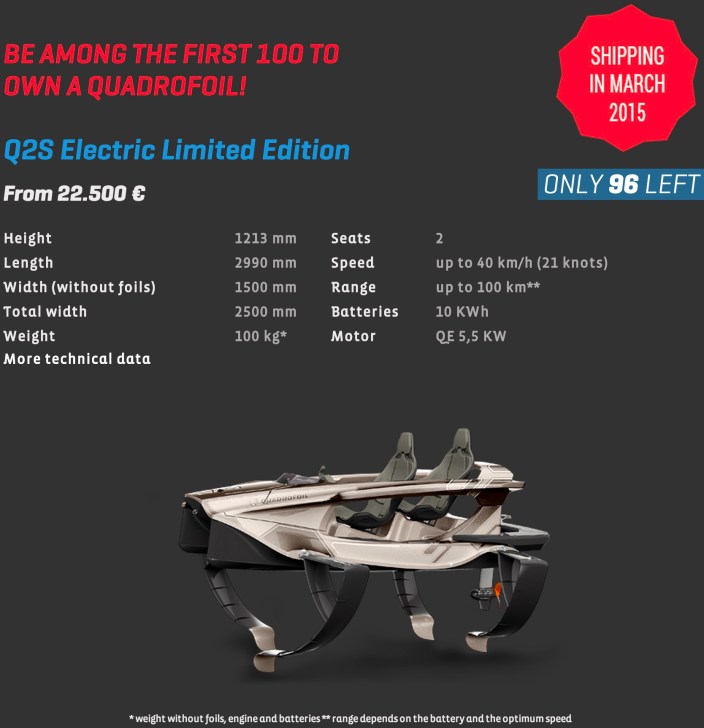
I’m very much liking this idea. The specs aren’t insane: 100km on a charge, 28mph top speed but very livable and the price is definitely right at €22K. Can’t wait to read an independent review or better yet, send me one to try out!
 Tesla Motors – Third Quarter 2014 Shareholder Letter PDF File
• Highest ever quarterly deliveries at 7,785 vehicles, despite factory shutdown in July
• Highest ever peak deliveries in a single day of 907 vehicles
• Majority of Q3 deliveries in North America; 65% increase in NA Sept 14/Sept 13
• Dual Motor and Autopilot introductions further accelerate Model S demand
• Model S orders and deliveries alone expected to increase by 50% in 2015
• Reducing number of Model S options to ramp production faster
Notably, toward the end of the letter, this on the Model X (emphasis mine) Update from the earnings call: Model X delayed until Q3 2015
Work continues on the finalization of Model X with the testing of Alpha prototypes and initial builds of the first Beta prototypes. Model X powertrain development is almost complete with the early introduction of Dual Motor drive on Model S. We recently decided to build
in significantly more validation testing time to achieve the best Model X possible. This will also allow for a more rapid production ramp compared to Model S in 2012.
TSLA Shares are up in after hours trading.
The European auto safety agency, the NCAP, gave Tesla’s Model S almost as glowing marks as the Model S achieved when tested by NHTSA in 2013. In a post on the Tesla Blog, Tesla notes:
We’re pleased to announce that the Tesla Model S has received a maximum-possible 5-star safety rating from the European New Car Assessment Programme (Euro NCAP).
Model S is one of just a few cars to have ever achieved a 5-star safety rating from both Euro NCAP and the U.S. National Highway Traffic Safety Administration (NHTSA). Additionally, Model S is the only car this year to have achieved both a 5-star Euro NCAP rating and 5 stars in every NHTSA subcategory, including frontal impact, side impact, and rollover. Only two other cars have earned the same recognition since 2011 (when NHTSA introduced its latest rating scheme).
The reason so few models achieve 5-star ratings in both Europe and the U.S. is that each program places emphasis on different safety aspects in the assessment process. NHTSA emphasizes structural and restraint safety, with a deep focus on how well the vehicle can withstand and absorb the energy of an impact while protecting its occupants. It is also primarily concerned with adult occupants. On the other hand, Euro NCAP assesses a wider range of scenarios, including tests for child and pedestrian safety. Unlike for NHTSA, active safety is also an important part of Euro NCAP’s 5-star requirement. Every year, the European organization raises the standard for a 5-star rating to account for technological advances in the industry.
[youtube=https://www.youtube.com/watch?v=q-mVR4F7tfY&start=2461]
RIP Tom Magliozzi
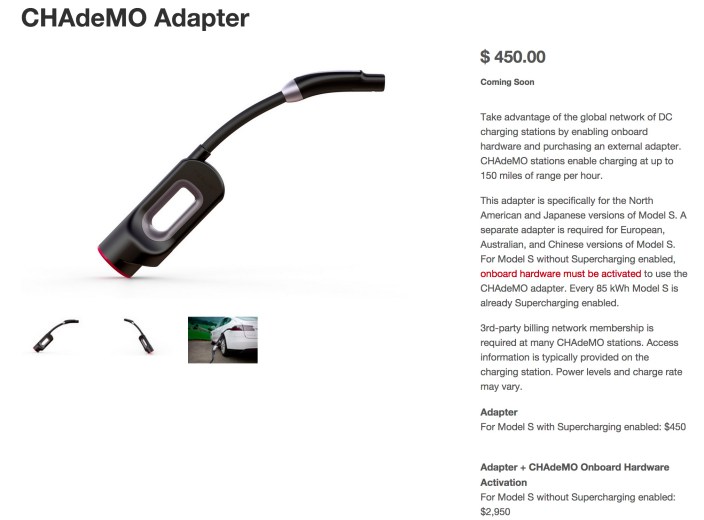
We’ve seen Tesla’s CHAdeMO adapter in the wild and it might soon be hitting the streets. The Tesla Motors Shop now has the adapter, with the same “Coming Soon” designation but with a drastically reduced $1000 $450 price tag. That means there is some movement on the product and you might actually be able to buy one soon.
The one we saw a few months ago was working well but our tipster said that because of the variances between CHAdeMO stations it was still being tuned.
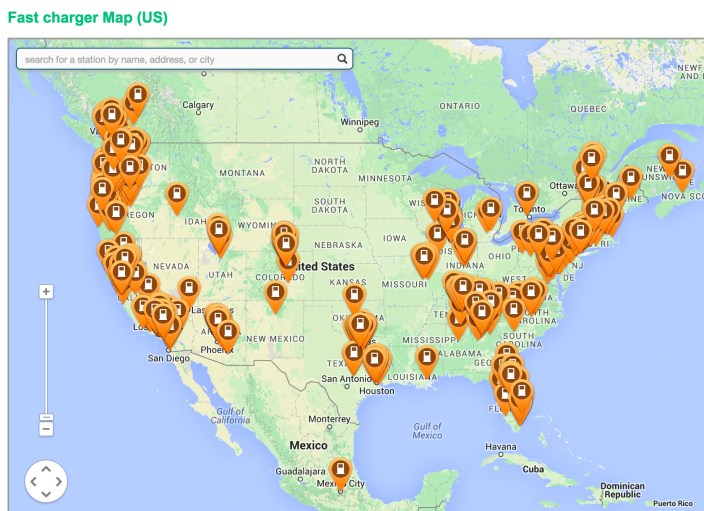
Tesla launched in Japan last month where CHAdeMO stations are plentiful. But as you can see from the map of CHAdeMO adapters from the standard body’s site, they are also plentiful and growing in the US.
CHAdeMO is the official DC fast charging option used by Nissan for the Leaf and a few other Japanese electric car manufacturers. As of October 7th, 2014, the CHAdeMO Association web site states that there are 2,129 DC Quick Chargers installed in Japan, 1327 in Europe, 731 in the USA and 54 elsewhere
Tesla charging times vary depending on the amperage on the stations but the fastest will approach the speeds of Tesla’s Superchargers.
@llsethj correction. Just rechecked:118 mi/hr 351v 105a. So halfish SC speed. May be faster elsewhere, we shall see.
— PlugShare (@plugshare) April 10, 2014

[tweet https://twitter.com/chevyvolt/status/527171154143096832]
GM/Chevy detailed its next generation Volt today with some nice surprises though they are pretty vague in their assessment.
Some factoids:
So not too many specifics but one would think all of these updates would make the Volt an even more appealing package. More room in the back would have also come in handy. If we take the 20% more power in the battery pack combined with the weight reduction and more efficient motors at face value, the Volt may approach 50 miles on electricity.
The question now is who is going to buy the current version (Osborne effect)?
Press Release follows:
[youtube=https://www.youtube.com/watch?v=y13jbl7ASxY&start=4450]
Great talk by Tesla/SpaceX Elon Musk given at MIT this month. Most of the talk is about SpaceX but the Q&A hit some points on Tesla (and the Hyperloop). At 1:14:10 (queued up above) Musk lays out his future vision of the Superchargers which would be built around solar or renewable power sources and a battery backup that would not only be carbon neutral but also be able to avoid grid downtimes and outages.
Even more interesting for me is Musk’s recent obsession with AI and the singularity. I say recent but it seems to have started publicly with this tweet in August:
Worth reading Superintelligence by Bostrom. We need to be super careful with AI. Potentially more dangerous than nukes.
— Elon Musk (@elonmusk) August 3, 2014
Since then, just about every opportunity he’s gotten, he’s brought up his fear of AI and the Singularity.
This video is no different. When asked a question about AI at 1:07:25, Musk goes real serious-like – like he’s “seen some shit”
Musk: I think we should be very careful about artificial intelligence. If I were to guess like what our biggest existential threat is, it’s probably that. So we need to be very careful with the artificial intelligence. Increasingly scientists think there should be some regulatory oversight maybe at the national and international level, just to make sure that we don’t do something very foolish. With artificial intelligence we are summoning the demon. In all those stories where there’s the guy with the pentagram and the holy water, it’s like yeah he’s sure he can control the demon. Didn’t work out.
Questioner: So I’ll take it there’ll be no HAL9000 going to mars?
M: Heh. HAL 9000 would be easy to deal with in comparison to the AI he’s talking about. It’s way more complex… it’d put HAL9000 to shame. That’s like puppy dog.
Then he’s asked another question about telecommunications and he’s not listening. He’s still thinking about AI and is clearly a little shaken and needs to be asked again.
I’d like to imagine Musk had a HAL9000 moment with one of his advanced prototype Tesla Model S head unit stacks or something. Like “Elon, wouldn’t you rather run over those people who don’t own Teslas?”
That this fear is coming from a man like Musk, who has seen and executed the future better than almost anyone is a bit rattling. He’s even advocating for government control and oversight which seems strangely uncharacteristic for an entrepreneur like Musk.
Hopefully, he’s just read too much science fiction :\
Expand
Expanding
Close
PALO ALTO, Calif., October 20, 2014 – Tesla announces that it will post its financial results for the third quarter ended September 30, 2014, after market close on Wednesday, November 5, 2014. At that time, Tesla will issue a brief advisory release containing a link to the Q3 2014 Shareholder Letter, available on the company website. Tesla management will hold a live question & answer webcast at 2:30pm Pacific Time (5:30pm Eastern Time) to discuss the Company’s financial and business results and outlook.
What: Tesla Motors, Inc. Q3 2014 Financial Results Q&A Webcast
When: Wednesday, November 5, 2014
Time: 2:30pm Pacific Time / 5:30pm Eastern Time
Shareholder Letter: http://ir.teslamotors.com
Webcast: http://ir.teslamotors.com (live and replay)
Approximately two hours after the Q&A session, an archived version of the webcast will be available on the Company’s website for a period of one year.
Tesla Motors Inc. began taking online orders for its Model S electric car in China today, joining General Motors Co. and Volkswagen AG in selling vehicles through Alibaba Group Holding Ltd.’s online shopping mall.
Buyers can place a 50,000-yuan ($8,200) deposit for the electric car through Alibaba’s Tmall.com, according to Tesla China spokeswoman Peggy Yang. “Tmall offers us an opportunity to reach out to general customers,” she said by telephone.
So much for kicking the tires.
Nice Freakonomics show this week. (Transcript)
@elonmusk Picking up my Model S today!!! I hope it's all charged up so I can make it back home 😉 #dontwanttogetstuckinthemiddleofnowhere
— Comedian Ben Bailey 🚕 aka Cash Cab Guy (@RealBenBailey) October 17, 2014
I’ve said it before and I’ll say it again: You can measure your state government corruption level by how they deal with Tesla. Michigan citizens, your government (yet again) has failed you.
On October 1, the Michigan Automobile Dealers Association succeeded in passing a bill that is harmful to consumers. The bill, HB5606, was originally a single amendment to existing law designed to ensure that the car dealers can tack additional fees on to the purchase price for all vehicles (from any manufacturer) sold in Michigan. Such fees have a controversial history, are generally regarded with skepticism and have been the subject of consumer concern in other states.
Not content with enshrining their ability to charge consumers dubious fees, on the last day of the legislative session, the dealers managed to make a last-minute change to the bill in an attempt to cement their broader retail monopoly. Using a procedure that prevented legislators and the public at large from knowing what was happening or allowing debate, Senator Joe Hune added new language in an attempt to lock Tesla out of the State. Unsurprisingly, Senator Hune counts the Michigan Automobile Dealers Association as one of his top financial contributors, and his wife’s firm lobbies for the dealers.
Just about everyone is pressuring the governor to veto the bill. Read this piece in the Detroit Free Press.
Perhaps Tesla should set up a state ranking list where it concisely lists the states that bar “American engineered and manufactured, clean electric cars”. Something like a Wall of Fame/Shame.
As a precedent, the Economist has the Big Mac Index where economies/currencies are ranked by the cost of a Big Mac.
THE Big Mac index was invented by The Economist in 1986 as a lighthearted guide to whether currencies are at their “correct” level. It is based on the theory of purchasing-power parity (PPP), the notion that in the long run exchange rates should move towards the rate that would equalise the prices of an identical basket of goods and services (in this case, a burger) in any two countries. For example, the average price of a Big Mac in America in July 2014 was $4.80; in China it was only $2.73 at market exchange rates. So the “raw” Big Mac index says that the yuan was undervalued by 43% at that time.
Tesla should also skip the North American Auto Show in Detroit in January in protest. By any measure, they’ve proved they can draw a crowd and internet interest with their recent D event in LA.