Author

Avatar for Seth Weintraub

Seth Weintraub

Founder, Publisher, and Editorial Director of the 925, LLC publications.

Seth Weintraub is an award-winning engineer, journalist, and publisher who won back-to-back Neal Awards from 20072010 during his three-plus years covering Apple and Google at IDG’s Computerworld.

From 2010-2011, Weintraub covered all things Google for Fortune Magazine, amassing an impressive rolodex of Google contacts and a love for Silicon Valley tech culture.

It turns out that his hobby – the 9to5Mac news site – was always his favorite, and in 2011, he went full time adding his Fortune Google followers to 9to5Google, in addition to adding the style and commerce component of 9to5Toys gear and deals site. In 2013, Weintraub bought one of Tesla’s first Model S EVs off of the assembly line, which began his love affair with electric vehicles and green energy — this, in turn, became Electrek in 2014. To cover the burgeoning world of drones and UAVs led by China’s DJI, DroneDJ was born in 2018, and then more recently, Connectthewatts and SpaceExplored were launched to cover connected fitness and space.

From 1997-2007, Weintraub was a Global IT director and Web Developer for a number of companies, with stints at multimedia and branding agencies in Paris, Los Angeles, New York, Sydney, Hong Kong, Madrid, and London before becoming a publisher/writer.

Seth received a bachelor’s degree in Industrial and Systems Engineering from the University of Southern California with a minor in Multimedia and Creative Technology in 1997. In 2004, he received a Master’s from NYU’s Tisch School of the Art’s ITP program.

Weintraub is a licensed single-engine private pilot and a certified open-water scuba diver, and he spent over a year backpacking to 60 cities in 23 countries. Whatever free time exists is now guaranteed to his wonderful girlfriend, Alana, and two amazing sons.

More: About.me. BI 2014 profile.

Tips: seth@925.co, or llsethj on Threads/BlueSky or link at top of page.

New Chevy Volt looks nice but how are they still selling the old one?

Site default logo image

[youtube=https://www.youtube.com/watch?v=WsIxo4lSrsY]
Every time I hear about the 2016 Volt, I can’t help but think how much nicer it is than the current one across a lot of different areas (from the Chicago Motor show above). The problem is that we’re quite a long time from the new one being on sale so Chevy has to sell the “old one” which is going to be a hard slog.

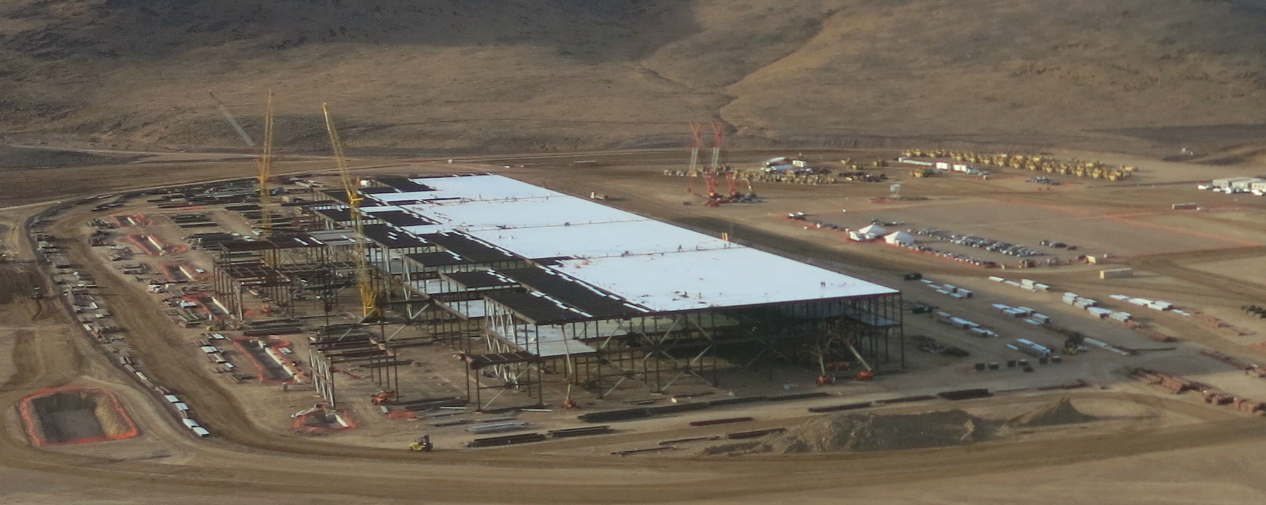
Drone imagery of Tesla Gigafactory shows rapid build, Musk agrees on Twitter

Site default logo image


Amazing how fast this thing is going up. Sause.
Also over the weekend Tesla CEO Elon Musk had some words for the reports which said that the Gigafactory build was slowing.

Tesla’s 10K warns that modifying the car could compromise safety, Directors indicate otherwise

Site default logo image

From Tesla’s 10K:

If our vehicle owners customize our vehicles or change the charging infrastructure with aftermarket products, the vehicle may not operate properly, which could harm our business.

Automobile enthusiasts may seek to “hack” our vehicles to modify its performance which could compromise vehicle safety systems. Also, we are aware of customers who have customized their vehicles with after-market parts that may compromise driver safety. For example, some customers have installed seats that elevate the driver such that airbag and other safety systems could be compromised. Other customers have changed wheels and tires, while others have installed large speaker systems that may impact the electrical systems of the vehicle. We have not tested, nor do we endorse, such changes or products. In addition, customer use of improper external cabling or unsafe charging outlets can expose our customers to injury from high voltage electricity. Such unauthorized modifications could reduce the safety of our vehicles and any injuries resulting from such modifications could result in adverse publicity which would negatively affect our brand and harm our business, prospects, financial condition and operating results.

Then you have Elon Musk’s brother and Tesla Board member Kimbal 3 weeks ago: ‘

Taking apart my Model D. Going gangsta, baby!

Image below if Instagram gets deleted:


Expand
Expanding
Close

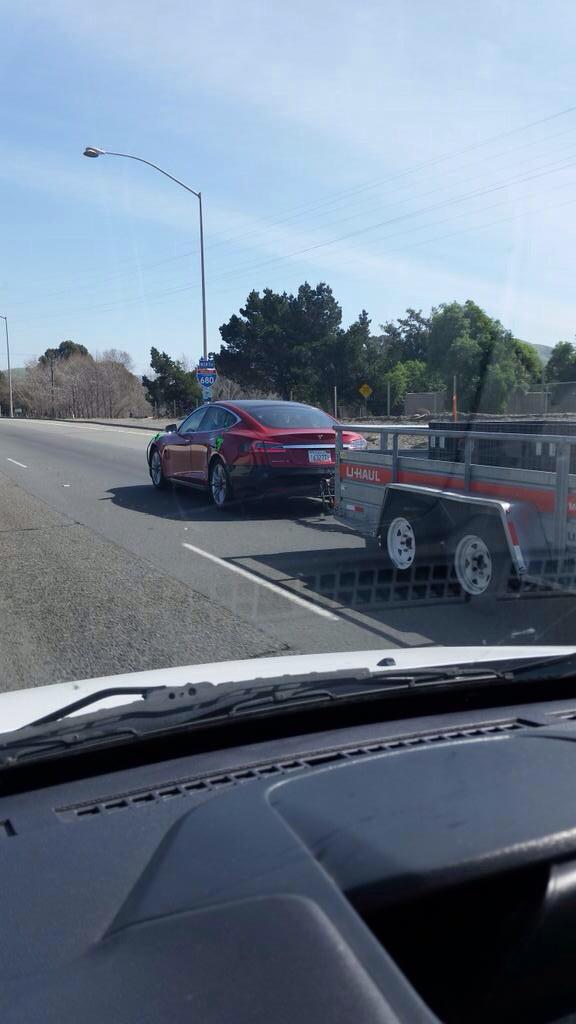
A Tesla Model S towing some solar panels that can recharge it (slowly)

Site default logo image

I recently began working at a company that makes mobile solar generators. Although car chargers have not been a big market for us, I was able to convince management to do a photoshoot with a family friend’s beautiful P85. (a great excuse to drive one of my favorite cars up and down Highway 1 between pick-up and drop-off) The trailer itself can pump out 13.5 kw/h of sun juice everyday and stores it in a large 30 kw/h forklift battery so the car can be charged at any hour of the day. Due to the mobile nature of the unit, no permit is required and it can be used to charge your car as soon as it comes off the hitch. For more information visit http://www.mobilesolarpower.net/ms-series/

This is probably a good example why car companies aren’t in a hurry to put solar panels on cars. Just not enough surface area. If that trailer could hold about 10 of those 9x25W panels and had much lighter lithium batteries, we’d be in business.

Ford will also announce a Tesla Model 3 competitor soon – 200 mile range, sub $40K price

Site default logo image

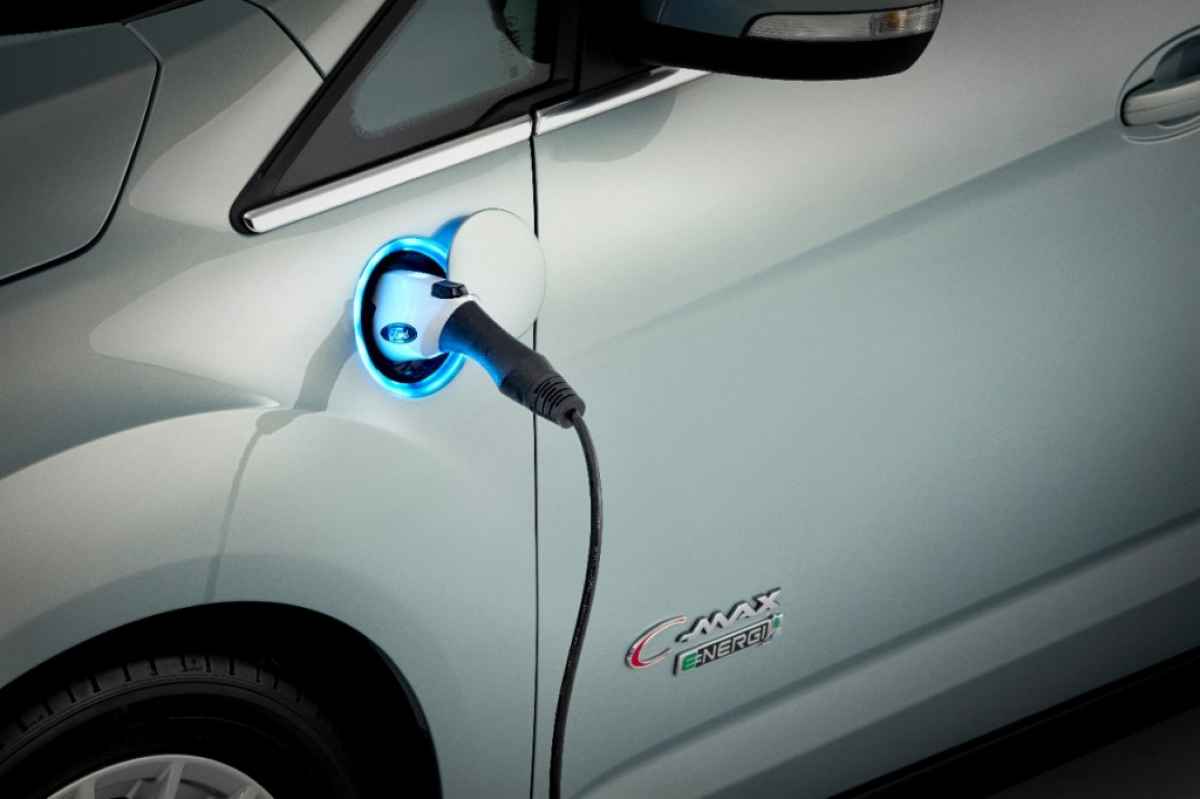
ford-c-max-solar-energi-concept-at-ces-2014_100451298_l

Automobile Mag reports that Ford will get into the long range car game, extending its Energi plug-in/hybrid line

Ford will unveil a 200-plus-mile capable electric vehicle designed to compete with the Chevrolet Bolt later this year, AUTOMOBILE has learned. Scant details are available, and it is unclear whether Ford will bring a long-range full electric to market by 2017, the year General Motors plans to launch the Chevy Bolt. But the Ford competitor serves as reassurance that the age-old rivalry between the two mainstream American brands goes beyond pony cars and pickup trucks, and extends to green cars.

Two things jump out at me: There is going to a huge need for lots of efficient batteries and a lot of fast charging stations needed in 2017. Who is best positioned for this new need?

Another Tesla Model X prototype sighting, this time in White on CA280

Site default logo image


The last time we saw the Model X it was a black one on the road in NorCal. A few weeks before that it was doing some doughnuts at Hawthorne Airport. I imagine the sightings will get more common as we approach a mid-year launch.


Expand
Expanding
Close

Tesla is putting ICE supercars to shame

Site default logo image

[youtube=https://www.youtube.com/watch?v=Ug-7s6IiHGI&feature=youtu.be]

Sure, the Tesla Model S P85D got smoked in the end but even with the engine revved, it beat the Lambo Aventador off the line and to ~30MPH and 3rd gear from what it looked like.

Seems like game over for ICE supercars in my opinion if a 7 seat sedan can beat one of the best off the line with engines revved. Imagine if Tesla (or another maker) decided it wanted to double up the small engines, batteries and tires just for fun?

Best Easter Egg ever? Tesla Model S control panel shows James Bond’s (now Elon Musk’s) Underwater Lotus

Site default logo image

Musk bought the Lotus at auction and it now sits at Tesla’s headquarters and apparently does double duty as model for easter eggs. This one appears to be part of the suspension control panel.

https://www.youtube.com/watch?v=9mnZZMXi8L8&feature=youtu.be

WSJ says electric vehicles lose value faster than ICE vehicles but ignore subsidies, falling EV prices

Site default logo image

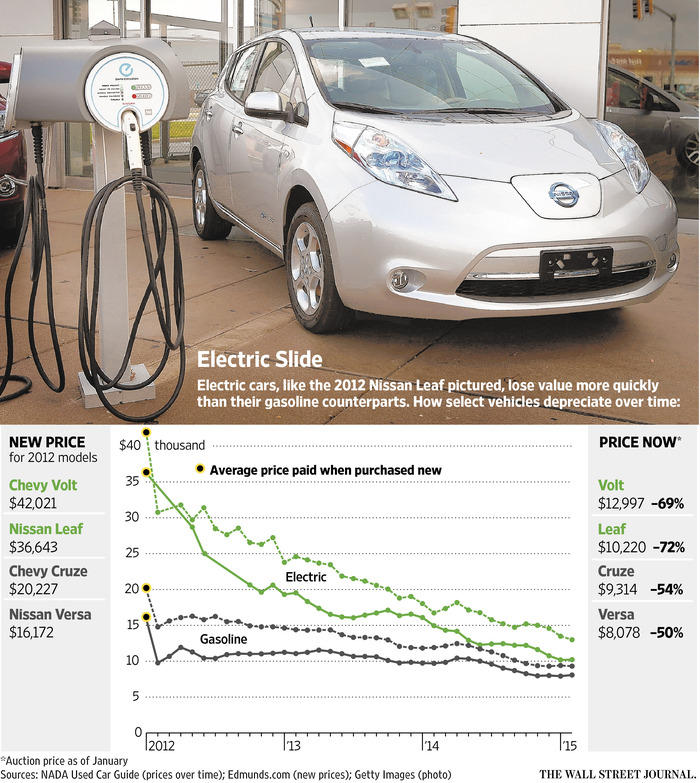
Electric-vehicle-prices-WSJ

Kind of a strange story today from the WSJ today. In a post a Titled “Resale Prices Tumble on Electric Cars, Tax credits on new models, worries about battery life undercut efforts to peddle used Nissan Leaf” the Wall Street Journal doesn’t read its own headline.  Take $7500-$10,000 off the price of the Electric car to start with since it has been a federal subsidy since electric cars began being offered in 2012.  That Chevy Volt was really a $34K car to buy new. That Leaf was under $30K.

No one ever paid $42,021 for a Chevy Volt. Ever.

Then factor in that prices of electric cars have dropped as demand and therefore production has increased. A new 2015 Nissan Leaf is now $21,000. That’s the same price as the Chevy Cruze above. Used prices are going to drop accordingly.

Sure temporary price drops in gas haven’t helped electric vehicle sales (as well as the perception of long term battery capacity drops) but the graph and premise above from the WSJ is misleading and curious. 
Expand
Expanding
Close

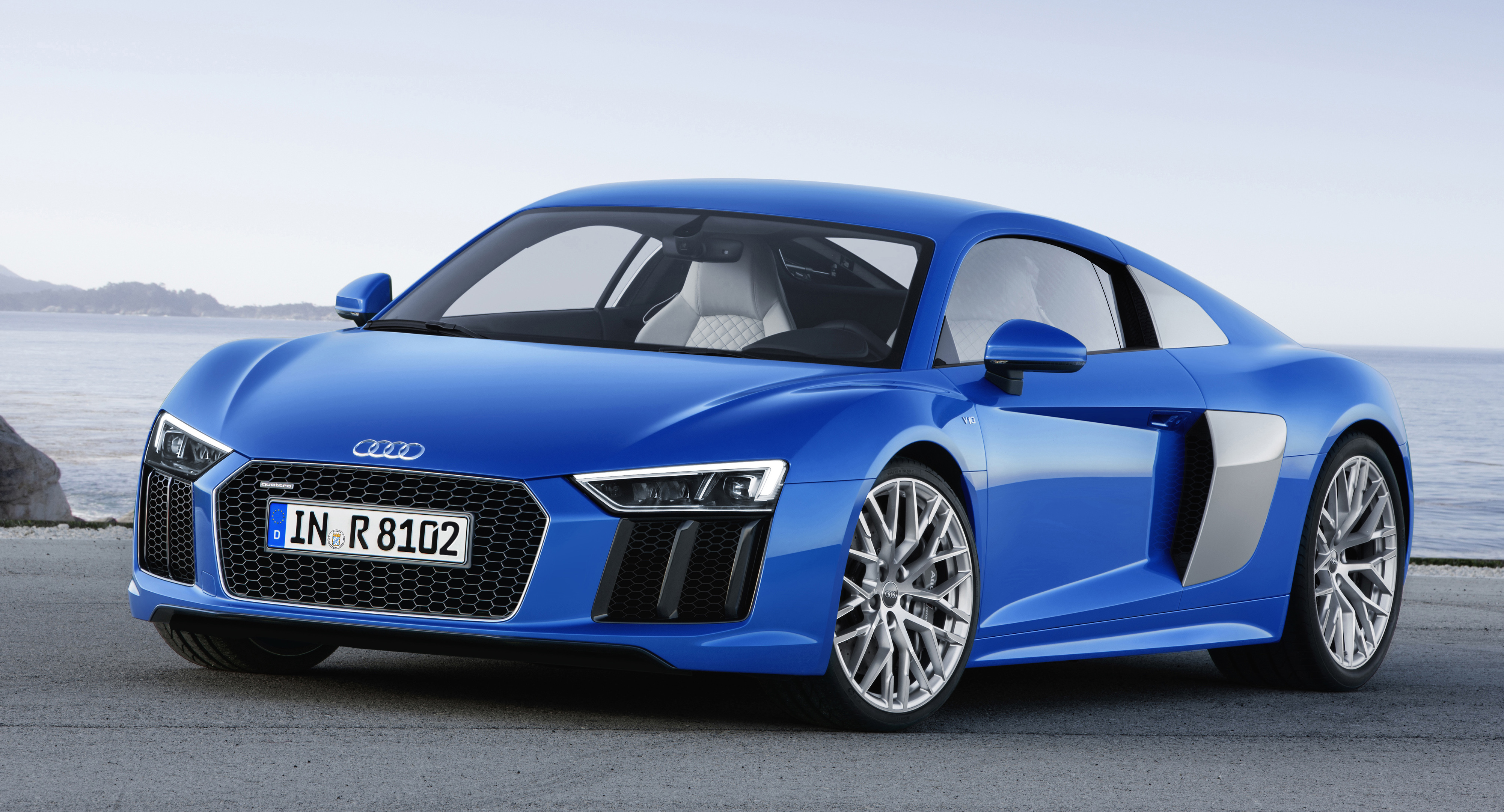
Audi’s R8 e-Tron will have a bigger battery (92kWh) than Tesla’s Model S (85kWh) but mostly a stunt

Site default logo image

Audi R8 V10

Audi just announced some of its eTron R8 specs and detail nuts like me will note some pretty impressive numbers starting at the huge 92kWh battery that has 7kWh more storage than Tesla’s top end option. Tesla has said on numerous occasions that it *could* build a bigger more dense battery in the same space (perhaps as a later upgrade), but hasn’t because of cost constraints.

Also the e-Tron has a Drag coefficient of .28 — .04 higher than the Model S. It should be noted that the e-Tron is a theoretical sports car and the Model S is a 7 seat family sedan that has been on the road for almost 3 years. But Audi clearly is keeping a lot of the petrol edition’s drag-inducing air intakes for the electric edition.

That takes a toll on range with the Audi sports car tallying just under 280 mile range compared to the Model S 85D range of 285 miles. The e-Tron’s speed is also a bit behind Tesla with a reported 3.9 second 0-62 and top speed of 130. That’s almost a full second behind the P85D and 20 mph slower. Torque is also impressive, but still far behind Tesla.

On the other hand it looks like a sports car inside and out which will certainly appeal to some folks.

But for Tesla, this is a win. Audi’s just announced R8 doesn’t beat Tesla’s 3 year old Model S in any relevant space with speed or range and holds 5 fewer passengers.

Relevant from press release below:
Expand
Expanding
Close

Chinese Tesla owner goes straight to the source to charge Model S

Site default logo image


I shouldn’t have to tell you that this type of action is extremely dangerous and likely won’t work with the high power going through industrialized power lines. But in less organized parts of the world, smart people have to make due with what is available.

It appears s/he’s got some sort of transformer there at the end to step down the power to 240V but, again, obviously not for the newbies. Via Weibo

New Tesla factory floor images show P85Ds being built [Gallery]

Site default logo image

These were taken from the LATimes review of the P85D which found it similar to other reviews.

The car’s neck-snapping hole shot stuns passengers. Mashing the accelerator from a dead stop can induce dizziness, loss of breath and heart palpitations. One passenger briefly shed tears. Others giggled uncontrollably.

The story here are the high quality images including access to the rotor diagnostic room. The author does make a good point about Tesla’s growing inability to meet its own deadlines. I think this is probably Musk calibrating his reality distortion field.

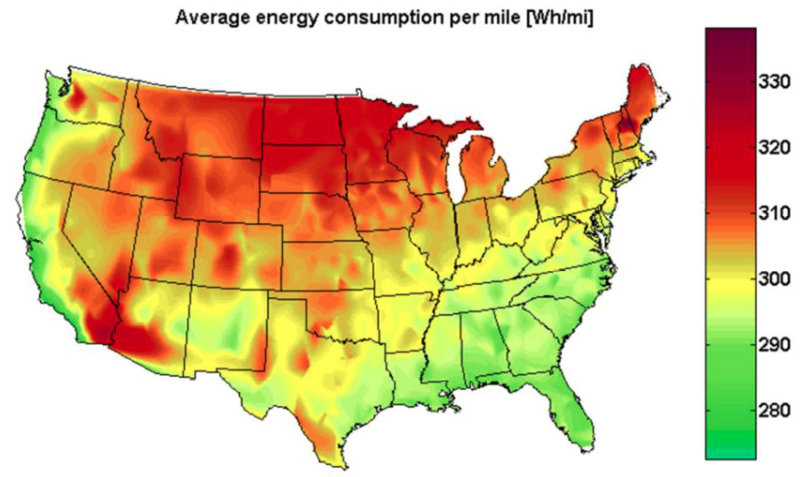
Average Wh/mile readings from all over US show temperate warm climates excel, extremes lag

Site default logo image

watt-mile-US

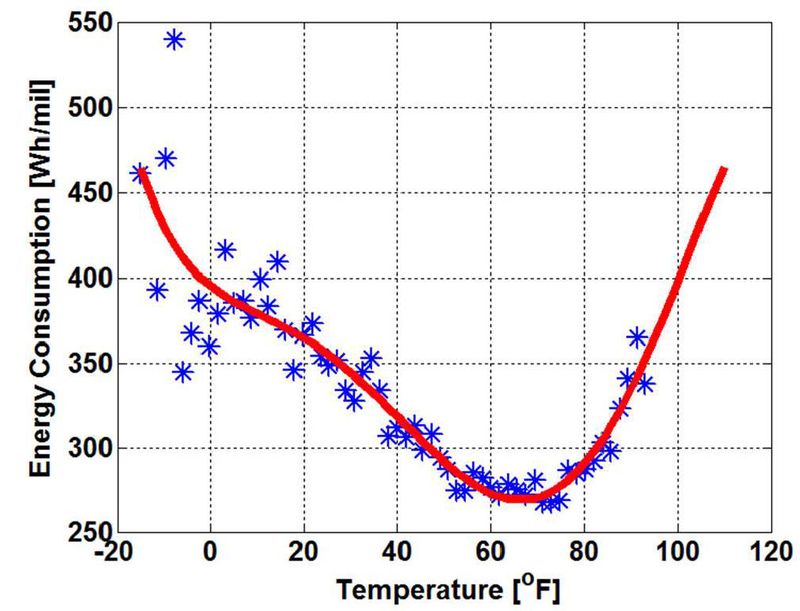
In a new paper in the ACS journal Environmental Science & Technology, Tugce Yuksel and Jeremy Michalek at Carnegie Mellon University have shown the average energy usage per mile of electric cars across the US.  You’ll note that warm but temperate climates like the California Coast and the Deep South especially Florida fare the best. Very hot desert areas like Arizona don’t do well because of the energy required to cool off bith the batteries and cabin. The North does poorly because batteries lose power as weather gets cooler.  Below, a Nissan Leaf efficiency is graphed at different temperatures which illustrates this disparity more clearly. The optimum range for operation is between 45 and 82 degrees where the 300W/mile threshold is beaten.

nissan-leaf-watt-mile

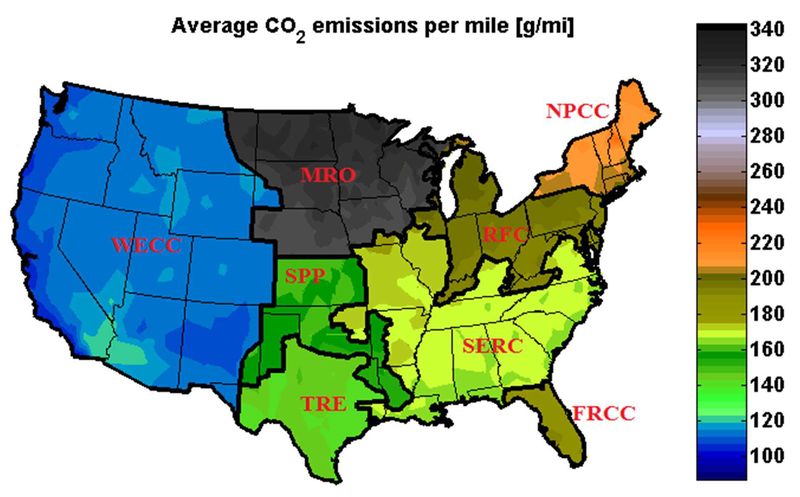
This all translates to CO2 emissions obviously and with the West making their energy much cleaner, they produce about 1/3rd the CO2 emissions as the north Midwest which is basically one big coal plant. In fact, that area’s energy is so CO2 intensive that running an electric car there (assuming you don’t have your own solar/wind) rivals the CO2 emissions of a fuel efficient car like a Prius.

The big takeaway is that moving to electric cars isnt enough. The grid also needs to move to cleaner power like wind and solar.

coal-energy-co2-usage-electric-cars-energy-usage
Expand
Expanding
Close

Analyst: Electric cars will cost less than internal combustion within a decade

Site default logo image


gigafactoryq4ruuo0The main differentiator will be battery economies of scale exemplified by Tesla’s Gigafactory which is now under construction outside of Reno

Electric car Analysts are often wrong but since Deutsche Bank analyst Rod Lache’s thinking lines up with mine, I’m going to go ahead and post this from Quartz on the price gap between electric cars and internal combustion within a decade.

There are two factors that could close the cost gap: The first is that battery prices are expected to drop by more than half to $100 per kilowatt hour—not because of a scientific leap, but due to engineering improvements and economies of scale, particularly at Tesla’s “gigafactory.” The second factor is that combustion engines will get a lot more expensive, Lache says. US gasoline efficiency standards, which require that light vehicle fleets average 54.5 miles a gallon by 2025, will incur added costs of $2,000 to $2,600 per vehicle. That will raise the total cost of a typical drive train—an engine, transmission, and fuel and exhaust system—to $7,000 to $7,600 per vehicle in the United States, he writes.

By comparison, using the $100 per kilowatt hour cost that Deutsche Bank expects, a 47 kilowatt-hour battery pack capable of taking a car 200 miles on a charge only would cost about $5,400. When you add in the electric motor, the entire power train would rise to $6,100—a price advantage of almost $2,000 over a combustion car.

Keep in mind this is without the cost of fuel which Electric already is an order of magnitude better than petroleum  – it costs about $1 to let the huge Tesla Model S go 100 miles so “cheap gas” isn’t even close.

Also electrics are way faster, cleaner, quieter, take less space, don’t stink are less combustable, upgradable…I could go on and on. It is no wonder that smart companies like Apple and Google are jumping into this pool.

Top Gear’s Jeremy Clarkson makes trivial car charging look like rocket science

Site default logo image

Where to begin? Top Gear, which is famous for sabotaging its Tesla Roadster review so badly it got sent to court, got its hands on a BMW i8 which is barely an electric car to begin with. It has about a 20 mile range on electric alone and electric horsepower similar to a Toyota Prius.

Our hero, the aging Clarkson, pulls up to an Electric charger and then begins fumbling with cables like he’s just come directly from the stone age. He then feigns a frustrated “stupid” scream. When he finally is able to plug in the female to the male charger cable he has difficulty getting the charger to turn on. Then when he gets back to the car, he realizes his battery, like his moral character is empty.

Good thing he has gas. A lot of it.

Tesla Gigafactory to start operations earlier than expected in build up to the Model 3 –in 2016

Site default logo image

Some great news seemingly through Panasonic relayed by Nikkei. Tesla’s Gigafactory will open for business in a year and will start making batteries for the Model 3 in 2017. That’s an optimistic timetable for Tesla which is getting a reputation for missing its timetables.

Tesla, Panasonic to bring battery plant online sooner

OSAKA — A battery plant that Tesla Motors is building with Panasonic in the U.S. state of Nevada will begin operations in 2016, earlier than initially planned, a Tesla official said here Friday.

The American electric-car manufacturer apparently wants to secure a supply of batteries fast on expectations of strong demand for a lower-priced vehicle due out as early as 2017.

The plant’s launch will be accelerated to bring down production costs through economies of scale, said Kurt Kelty, who oversees battery technologies at Tesla.

The new facility will make high-output lithium-ion batteries for the Tesla Model 3, which will be priced half as high as other models. Plans call for getting domestic and foreign parts and materials suppliers to build production facilities on the grounds. Tesla has made progress in selecting suppliers, according to Kelty.

Panasonic has a stake in Tesla and supplies the U.S. company with battery cells for electric vehicles. The Nevada plant is expected to cost up to roughly 500 billion yen ($4.16 billion), with Panasonic shouldering 150 billion yen to 200 billion yen.

(Nikkei)