In the Electrek Podcast, we discuss the most popular news in the world of sustainable transport and energy. In this week’s episode, we discuss Tesla’s latest Robotaxi grift, Volvo EX60 being a beast, Aptera in danger, and more.
Just as Tesla investors were getting excited about a potential rollout of Full Self-Driving (Supervised) in its second-largest market, China has reportedly shut down Elon Musk’s latest timeline.
According to a new report from Chinese state media, Musk’s claim that FSD would be approved “next month” is simply “not true.”
This feels like a case of “Elon time” meeting China’s no-nonsense.
Aptera Motors has announced the pricing of a new $9 million public offering, and the terms are putting significant pressure on the stock today. The solar electric vehicle startup is issuing shares at $2.00, a steep discount to yesterday’s closing price of $2.41, as it races to secure capital for production.
Tesla has officially removed Basic Autopilot as a standard feature for new Model 3 and Model Y orders in North America, effective immediately. The move forces buyers to subscribe to the $99/month Full Self-Driving (Supervised) package to access lane-keeping capabilities that were previously free.
It appears to be a somewhat desperate move amid demand and profit headwinds.
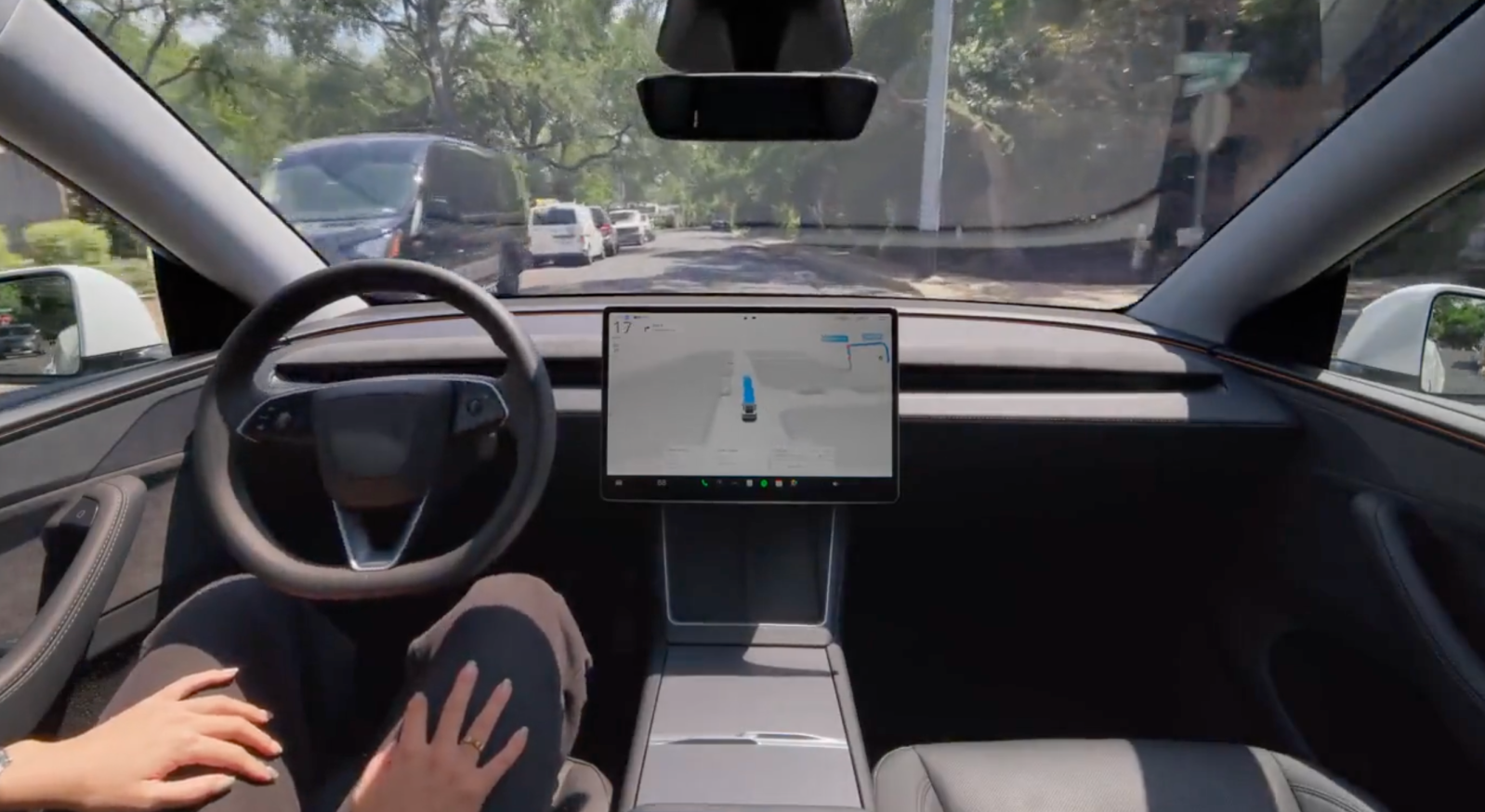
Earlier today, Elon Musk announced on X that Tesla had “just started Tesla Robotaxi drives in Austin with no safety monitor in the car.” Tesla’s stock immediately jumped over 4% on the news. Headlines across the financial press celebrated the milestone.
There’s just one problem: it appears to be another game of smoke and mirrors. The Robotaxi cars spotted without “safety monitor” were all being followed by a trailing black Tesla supervising the “driverless” Robotaxi.
It means Tesla didn’t “remove the safety monitor”, it just moved them to a vehicle behind them.
Tesla has started offering Robotaxi rides without a safety monitor in Austin, Texas. After yet another set of missed timelines and a full decade of broken promises, Elon Musk is finally getting a version of the “win” he has been desperately seeking. But considering the alarming crash data we have and the evidence of heavy remote monitoring, should we be excited or terrified?
Lemonade has launched what it calls “Autonomous Car Insurance”, a first-of-its-kind product that slashes rates by approximately 50% for Tesla owners when Full Self-Driving is engaged. It’s a bold bet on FSD technology, and it significantly undercuts the discount offered by Tesla’s own insurance product.
It again shows the difference between what Tesla claims and delivers regarding autonomous and assisted driving.
Tesla has published a new patent that describes a way to squeeze more performance out of its aging HW3 self-driving computers. While the technology is interesting, nothing points to it actually enabling Tesla to deliver on its long-standing promise of unsupervised self-driving on HW3 vehicles.
In 2016, Tesla announced that all vehicles produced thereafter would become capable of “Full Self-Driving” — at one point, CEO Elon Musk even specified “level 5 self-driving,” which means capable of driving anywhere, anytime, under any condition.
A new report confirms that Tesla has reduced its workforce at Gigafactory Berlin by roughly 1,700 employees over the last year. The cuts come despite the plant manager repeatedly denying any staff reductions were taking place.
Tesla is once again telling customers that the window to transfer their Full Self-Driving (FSD) package to a new vehicle is closing at the end of the quarter. While the automaker is framing this as the “last” chance, the history of this program suggests it is being used more as a quarterly demand lever than a hard deadline.
But how does the move to “subscription only” play into this?
John Krafcik, the former CEO of Waymo, is doubling down on his criticism of Tesla’s self-driving strategy. In new comments, he is going after the hardware itself, specifically Tesla’s insistence on a “vision-only” approach.
One of the godfathers of autonomous driving argues that Tesla’s FSD has a “bad case of myopia.”
Elon Musk took to X today to announce that the design for Tesla’s next-generation self-driving computer, the AI5 chip, is “almost done” – 6 months after he announced that it was “finished.”
The CEO also made a wild claim about accelerating Tesla’s chip development to a 9-month cycle for future generations, starting with AI6.
In the Electrek Podcast, we discuss the most popular news in the world of sustainable transport and energy. In this week’s episode, we discuss Tesla to stop selling FSD, Canada and EU to slash Chinese EV tariffs, the battery that could change the world, and more.
Hyundai’s Boston Dynamics has hired Milan Kovac, Tesla’s former senior vice president and head of the Optimus humanoid robot program, as a group adviser and outside director.
The move is a major blow to Tesla’s humanoid robot ambitions and a significant coup for Hyundai, which is clearly serious about dominating the nascent humanoid robot market.
In a massive shift in North American trade policy, Prime Minister Mark Carney announced today a new “strategic partnership” with China that effectively reopens the Canadian border to Chinese electric vehicles.
The move marks a significant departure from the United States’ hardline protectionist stance and could bring affordable EV options like the BYD Seagull to Canadian roads as early as this year.
Rivian (RIVN) has officially started rolling out validation units of its highly anticipated R2 electric SUV from its factory in Normal, Illinois. CEO RJ Scaringe shared the news, confirming that the company is on track for customer deliveries in the first half of the year.
Tesla is reportedly offering discounts on unsold Model Y inventory in India as the automaker faces a “letdown” in the major auto market following its official launch last year.
Tesla has released a new video giving us a closer look at its massive lithium refinery in Corpus Christi, Texas, and confirming that the facility has officially started production.
Donut Lab lit the EV and energy storage industry on fire last week with its announcement of a 400 Wh/kg solid-state battery cell that can last for 100 years. At face value, if true, we are looking at the single most disruptive announcement in the history of the electric vehicle industry and energy storage as a whole.
We aren’t just talking about a better motorcycle battery. If the claims of a 5-minute charge, 100,000-cycle life, and ~400 Wh/kg energy density are accurate and scalable, as Donut Lab claims, this is the holy grail of energy storage.
Battery breakthrough announcements generally don’t catch fire like this, but Donut Lab’s did because it said that the cell was already in production and will be in a production vehicle, Verge’s electric motorcycle, this quarter. It gave credibility to the claim, pushing everyone to report on it.
Now, we have interviewed Donut Lab’s CEO and investigated the technology. At this point, it looks like either this battery changes the world within the next 3 months, or it will make the CEO look like a fool. In this article, we discuss the impact of the battery, whether real or not, as well as clues about the secret sauce behind its chemistry.
Tesla is officially killing the option to purchase its Full Self-Driving (FSD) package upfront. CEO Elon Musk announced today that the automaker will stop selling FSD as a one-time option and will instead only offer it as a monthly subscription.
It marks a massive shift in Tesla’s strategy for the software, which Musk has famously claimed for years would become an “appreciating asset.”
As a potential reversal of a significant policy implemented just over a year ago, the Canadian government is reportedly in advanced talks with China to remove or significantly reduce the 100% tariffs on Chinese electric vehicles.
The reversal comes as Prime Minister Mark Carney looks to stabilize trade relations with Beijing while navigating an increasingly hostile trade war initiated by the Trump administration against… well, everyone.
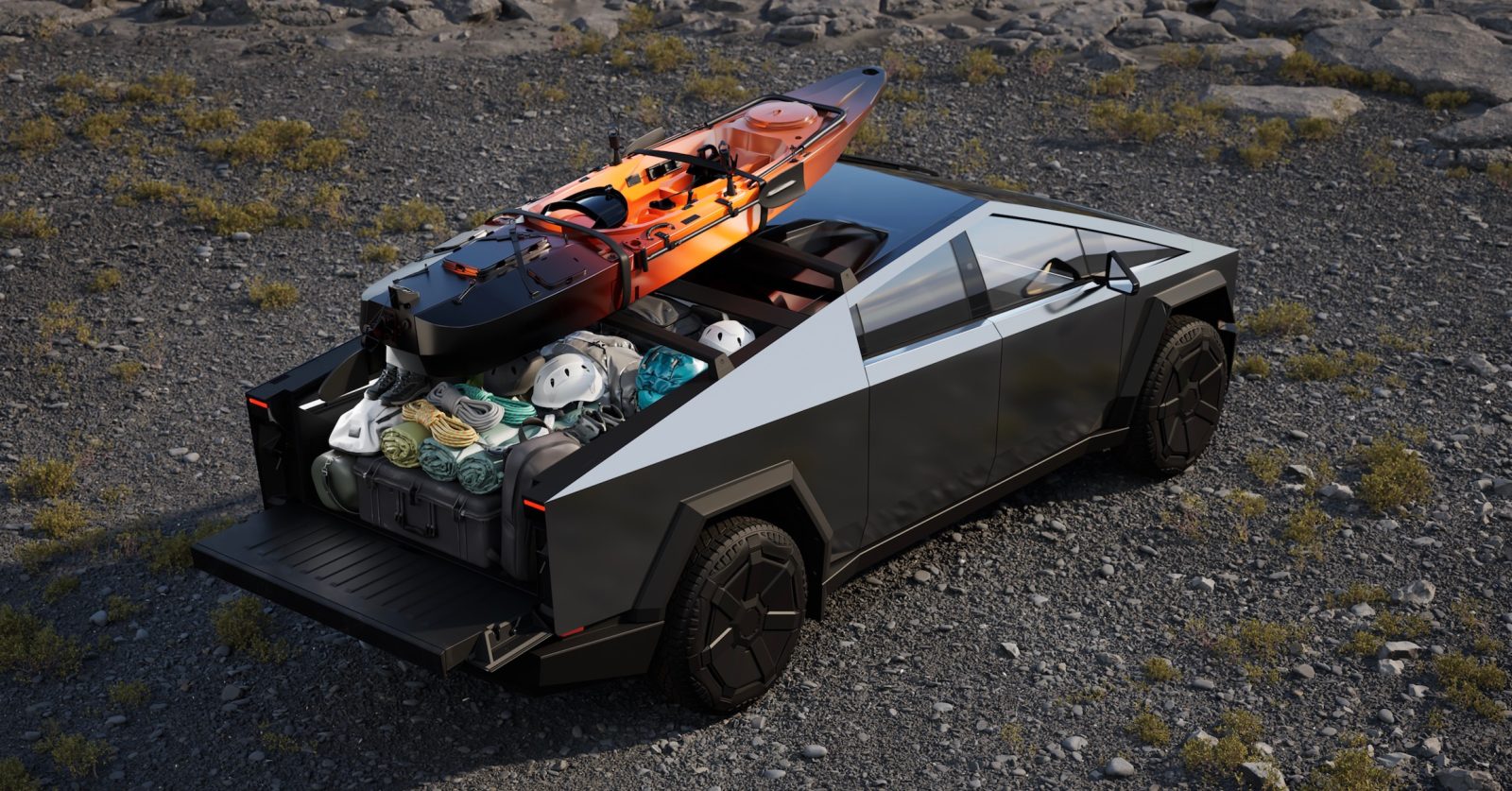
The Tesla Cybertruck program is in shambles. The latest data indicate production is running at roughly 10% of its planned capacity. Meanwhile, the Ford F150 Lightning outsold the Tesla Cybertruck in 2025 and was then canceled for not selling enough.
Tesla has granted Tom Zhu, its Senior Vice President of Automotive and one of the most critical executives at the company, a massive new stock option package covering over $226 million worth of shares.