

Between increasingly extreme weather, rising electricity demands, and the rapid expansion of data centers, energy independence is starting to look less like a talking point for doomsday preppers and more like sound planning. That shift in thinking is driving more homeowners than ever towards solar-plus-battery energy solutions like the industry-leading Tesla Powerwall – but Powerwall isn’t the only game in town, anymore.
Maybe you’re avoiding Tesla products because of Elon Musk’s political antics, or maybe it’s Tesla’s recent recalls that have given you pause, or maybe you just want to see what else is out there. Whatever the reason, there are more compelling home battery options than ever – and they’ve got enough high-tech features packed into ’em that keeping the lights on in a storm might be the least interesting thing they can do.
As I was putting this list together, I realized there were plenty of ways for me to present this list. “Best batteries ..?” Too opinion-based. “Cheapest batteries ..?” Too much research and a quick descent into Temu-grade nonsense. In the end, I went with the same solution I’ve been using on my 0% EV financing lists: alphabetical order, by brand.
Anker SOLIX X1
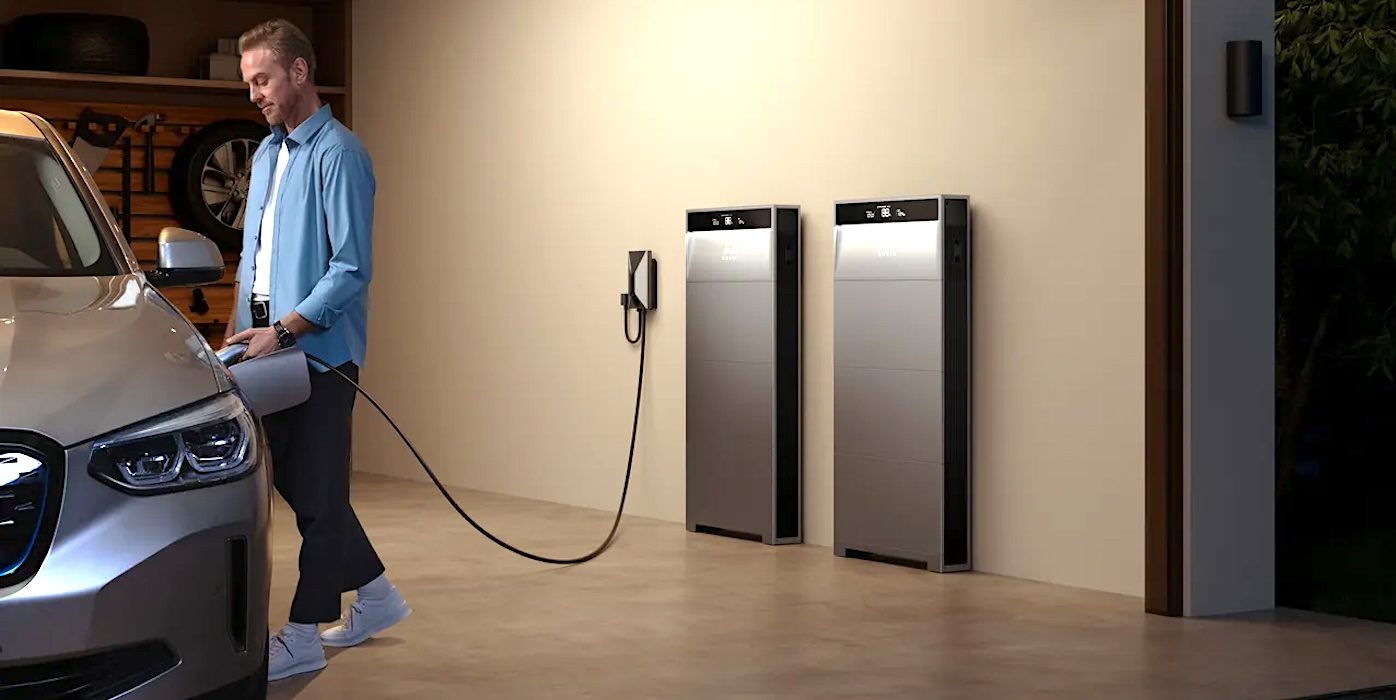
The Anker SOLIX X1 is built to be highly modular. Starting out with a relatively modest 5 kWh of energy storage from a single low-profile LiFePO4 battery, the X1 system allows owners to stack storage and scale up all the way up to 180 kWh. That flexibility makes it a particularly interesting option for homeowners who are sold on the concept of a home battery but not quite sure how far down the rabbit hole they want to go. With Anker SOLIX X1, they can meet their most critical needs on day one, and build up to a system that can support their wants later.
The X1 also adds some thoughtful backup features, including automatic storm preparation and a 20 millisecond automative switchover time, while its IP66-rated weatherproof enclosure and 10-year warranty are reassuring for something that’s supposed to sit outside and keep your house running when the grid doesn’t.
BLUETTI EP800
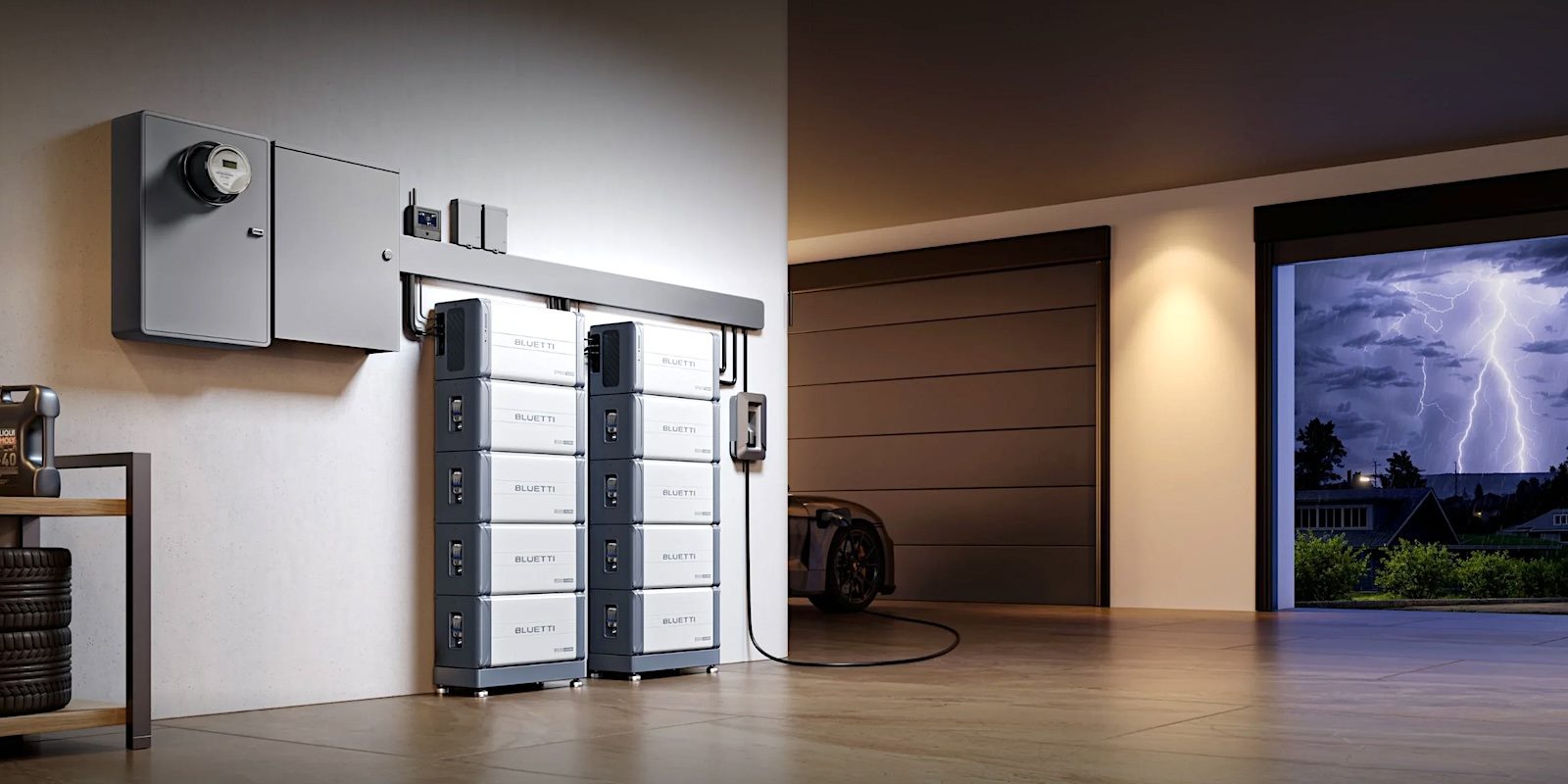
The portable power experts at BLUETTI have put together another modular home battery system built around the company’s EP800 inverter and modular B500 battery packs. A basic two-battery configuration provides 9.92 kWh of storage, while additional packs can push total capacity to nearly 40 kWh and 7.6 kW of output.
The EP800 can work with rooftop solar panels or microinverters, but BLUETTI designed it to also be able to charge from the grid during cheaper off-peak hours, stockpiling that energy for when rates rise. That means you get backup power and time-of-use savings without needing rooftop solar, making the EP800 a compelling case for renters or homeowners who aren’t quite ready to make the jump to a full solar-plus-storage system.
Enphase IQ Battery 5P

If you’re looking for a one-brand solution for EV charging and whole-home battery backup but don’t want to be “locked in” to GM or Tesla’s ecosystem, Enphase offers a full line of battery solutions that might be what you’re looking for.
Described as a full off-grid system, Enphase batteries let homeowners power their homes without a utility connection, even for extended periods. It works by combining the Enphase IQ Battery 5P with IQ8 series microinverters with Sunlight JumpStart, and a third-party standby AC generator.
“Energy systems developer Enphase Energy is providing an even more holistic approach to managing home power usage with the introduction of new EV charger technology called the IQ line,” wrote Scooter doll, when the brand first introduced its EV charging solutions back in 2023. “The Enphase IQ is Wi-Fi enabled and integrates seamlessly into a customer’s existing home system that can be controlled with your phone.”
FranklinWH aPower S
Fans of the Tesla Powerwall often point to its sleek, integrated design as one of the things that’s most appealing about it. The FranklinWH aPower S takes a similarly clean, minimalist approach, packing the battery and inverter into a single unit and simplifying installation. Each aPower S unit stores 15 kWh of usable energy and can deliver up to 10 kW of continuous power, while multiple aPower batteries can be combined for larger homes or higher energy needs.
The aPower S can also be wired into existing solar installations and be controlled virtually as part of a larger VPP scheme, making it a particularly flexible option for homeowners who already have solar and simply to add storage to their existing solution.
We got a chance to speak with FranklinWH CEO Gary Lam about the scalability of his home battery solutions. You can check out that episode, above.
GM Energy Home System
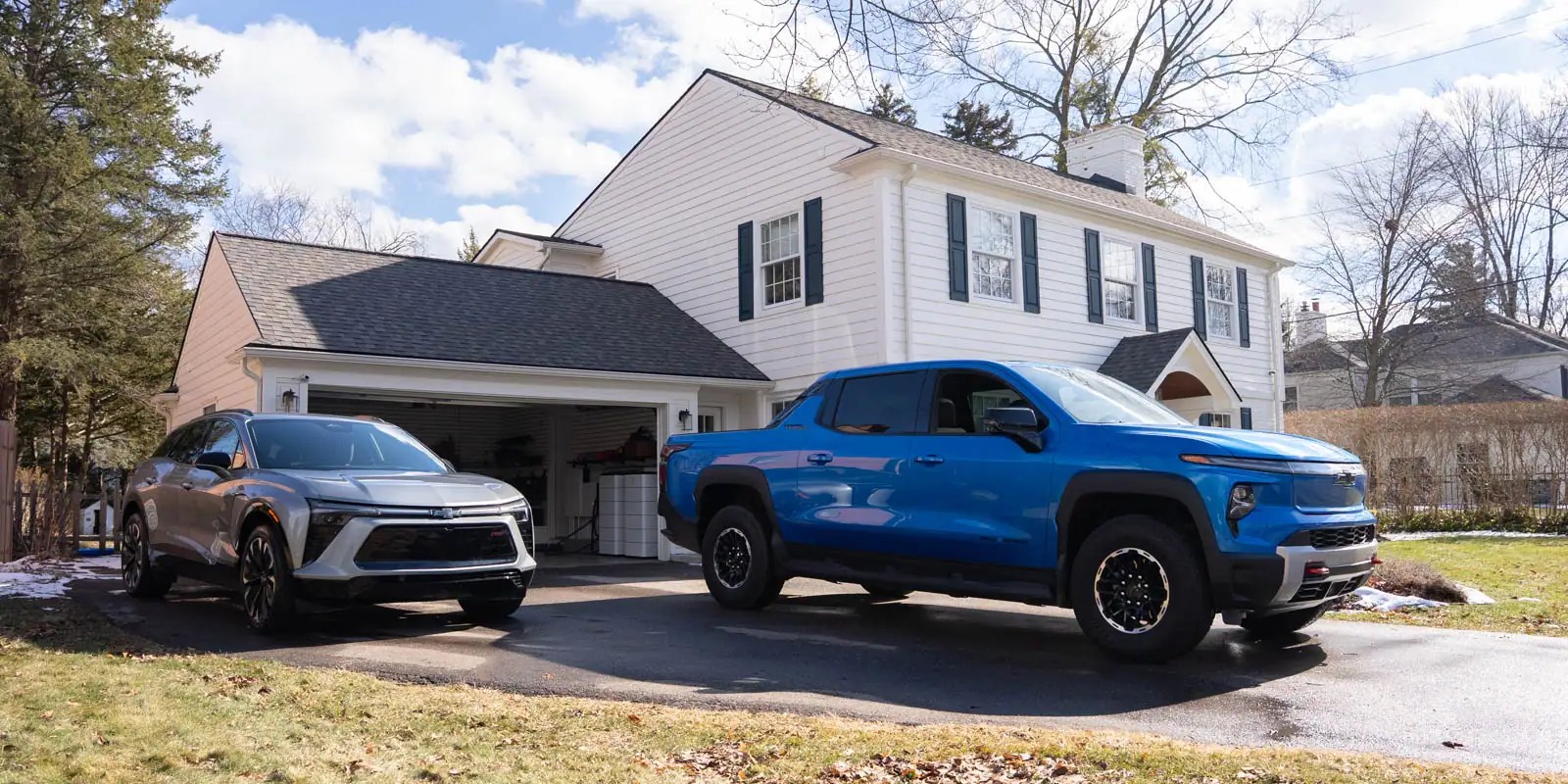
Arguably the most fully integrated EV + battery backup + solar option out there, the GM Energy Home System promises to do everything a conventional home solar battery does, plus the ability work seamlessly with your GM EV to provide even more flexibility and energy independence – whether that means using the electric fuel stored in your EV to hold out that much longer in an emergency, or using the energy stored in your home’s solar battery to power an escape in your electric Chevrolet is up to you.
GM Energy and GM’s car dealers list Qmerit as their installation partner. They’re great, but if you already “have a guy,” you can order the 10.6 kWh Home System directly from GM Energy’s website for as little as $11,897 (as I type this).
Sigenergy V2X
As some of the earliest and most enthusiastic EV adopters, Tesla fans have also been among the loudest advocates for using the energy stored their cars’ batteries to back up their homes — or even the grid itself. Unfortunately for them, the slow-selling Cybertruck is the only Tesla vehicle that officially supports bi-directional charging. If you’re one of the many Model 3 and Y owners frustrated by those delays, there’s good news: those vehicles are now capable of V2H charging thanks to an “impressive” Powerwall competitor, Sigenergy.
The good news doesn’t stop with the Tesla cars, however. The Sigenergy V2X also works with a number of popular EV models over the DIN70121 protocol, and several VW/Audi/Porsche and Mercedes-Benz models over the ISO15118-2 protocol.
Our Editor-in-Chief, Fred Lambert, recently went on a Sigenergy deep dive with Sylvain Juteau, President of Roulez Electrique, and came away deeply impressed with the system. I’ve included the video, above, and you can read more about the system itself at this link
Villara VillaGrid+
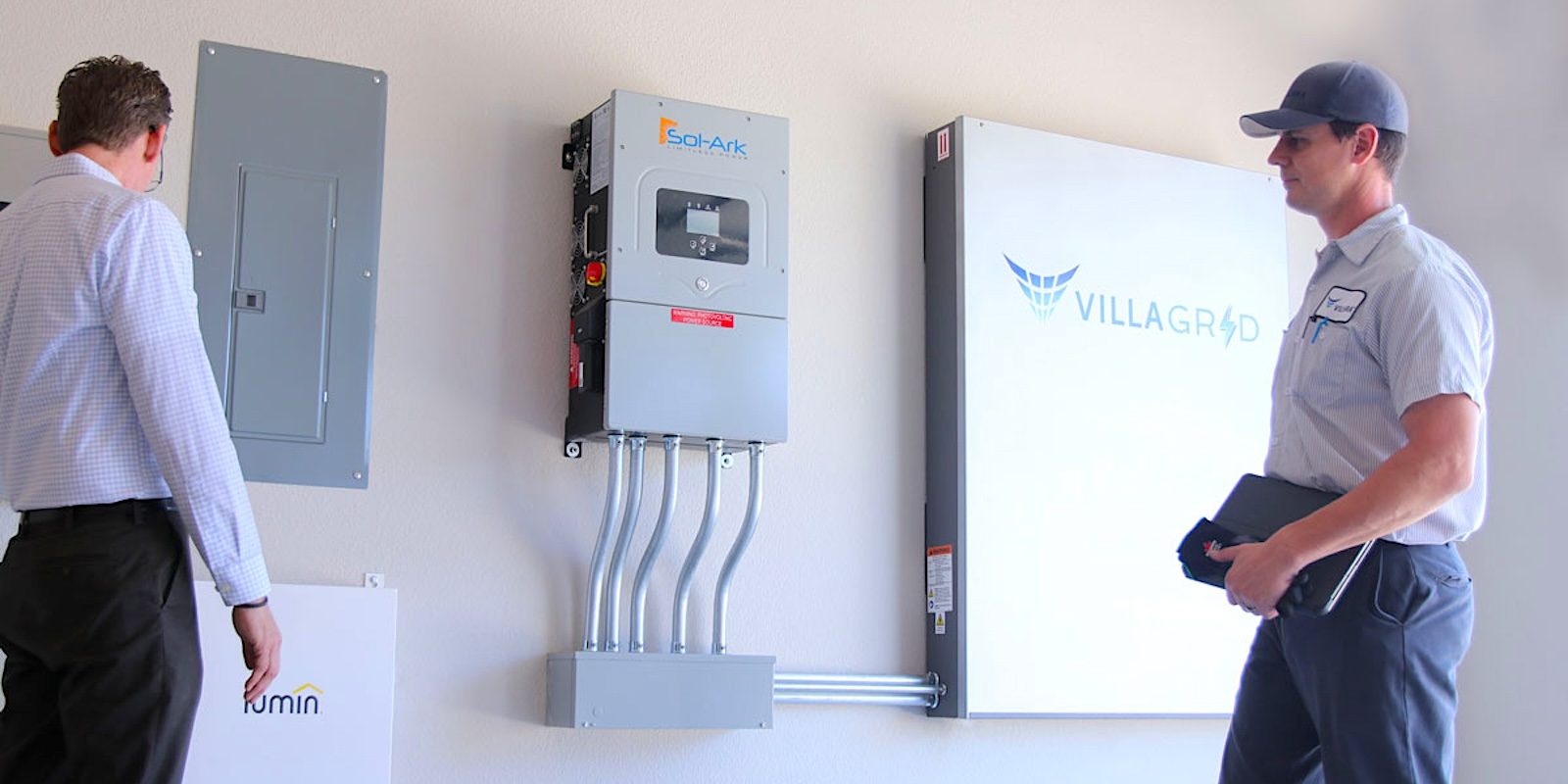
I’m not an electrician, a chemical engineer, or someone who’s researched thousands of home battery installations. That’s why this isn’t a “best batteries” post, after all – but our friends and solar industry experts at EnergySage, though? They’re all three of those things, and they really, really like the Villara VillaGrid+.
“The Villara VillaGrid+ stands out as the best battery on the market, scoring highest in EnergySage’s rigorous Equipment Rating System, explains EnergySage’s Kristina Zagame. “That said, (the Villara VillaGrid+) is not necessarily the best Tesla Powerwall alternative. It’s a very different (and much pricier) battery.”
What makes the VillaGrid+ worth the price premium? According to Zagame, it all comes down to the battery’s lithium-titanium-oxide, or LTO chemistry. “Unlike more traditional lithium-ion batteries, LTO has better recharge capabilities for longer life cycles, and doesn’t contain any carbon, which makes it extra safe. The downside is you’ll definitely shell out more money upfront for the VillaGrid+.”
Top comment by joegoesbananas
I have a triple-Powerwall and solar setup installed by Tesla, and I highly recommend buying an alternative product. The Tesla batteries themselves aren't the problem, it's their inverter/gateway design. We are on our second inverter (already also dying; first one lasted less than a year), and our second gateway. Tesla designed the inverters with zero airflow. There is a small fan inside and a tiny grill, but the grill is at the bottom, is comically small, and the fan doesn't point at it, so no hot air can escape. The fan screams while it recirculates trapped scorching air until the inverter repeatedly turns off due to overheating, and eventually fails completely. You have to prop the cover open if you don't want to lose DC power sources every time the weather goes over 95 degrees (and my unit is north-facing and is completely shaded). When your system dies, expect at least a month before they will fix it, and that's after they ignore you, argue with you, don't call back, make you do the same troubleshooting steps multiple times, etc. For a system that one buys to reduce worry and stress, our Tesla Powerwall system has caused us an awful lot of worry and stress.
That extra money will also buy some additional peace of mind, as Villara backs its LTO batteries with a 20-year warranty compared to Tesla Powerwall and its (and just about everyone else’s) 10-year deal. I couldn’t find a price, but Villara’s other products, like VillaGrid 5.75 kWh battery, come in at nearly double the Powerwall’s per kWh cost.
YOU MIGHT ALSO LIKE:
- It’s time to start recommending some Tesla Powerwall alternatives
- Home solar in rural America: a storm just took out your power, now what?
- Home solar in rural America: how much battery do you need to run a well pump?

If you’re considering going solar, it’s always a good idea to get quotes from a few installers. To make sure you find a trusted, reliable solar installer near you that offers competitive pricing, check out EnergySage, a free service that makes it easy for you to go solar. It has hundreds of pre-vetted solar installers competing for your business, ensuring you get high-quality solutions and save 20-30% compared to going it alone. Plus, it’s free to use, and you won’t get sales calls until you select an installer and share your phone number with them.
Your personalized solar quotes are easy to compare online and you’ll get access to unbiased Energy Advisors to help you every step of the way. Get started here.


FTC: We use income earning auto affiliate links. More.





Comments