
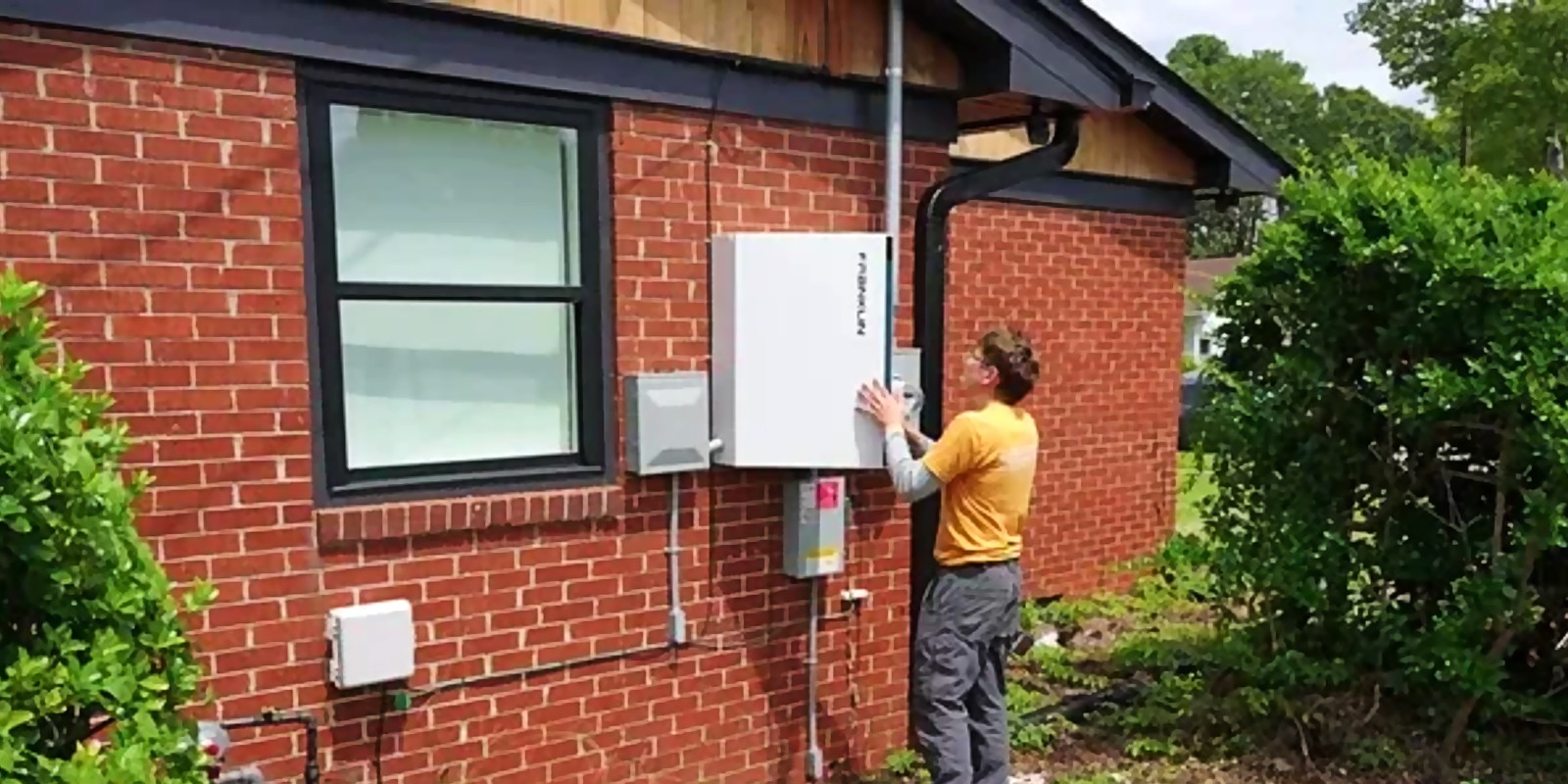
Ava Community Energy’s SmartHome Battery program is offering income-qualified North California residents up to $6,000 in up front incentive cash to install a FranklinWH smart battery and connect it to the utility’s virtual power plant (VPP).
For the uninitiated, a virtual power plant (VPP) enables utilities to tap into grid-connected batteries when electricity demand peaks, helping prevent outages and reduce strain on the grid without the need to build new, typically gas-fired “peaker” power plants. Homeowners benefit from backup power during outages, while utilities gain access to a more flexible, more affordable distributed energy resource, making home battery tech a rare win-win for consumers.
Now, income-qualified Ava Community customers enrolled in California’s California Alternate Rates for Energy (CARE) or Family Electric Rate Assistance (FERA) programs can get up to $6,000 in up front incentives when they enroll a FranklinWH energy storage system in the utility’s VPP program.
“SmartHome Battery was created to give residential customers more access to solar and battery storage while supporting grid reliability,” explains Howard Chang, CEO of Ava Community Energy. “Adding FranklinWH Systems as an approved provider advances our goals of expanding access, delivering reliable backup power, and creating a simple homeowner experience.”
Under terms of the program, customers can choose how much of their battery capacity to share with the grid (40, 60, or 80%), while “saving” the rest for themselves. Market-rate customers opting to share 80% of their 15 kWh FranklinWH aPower battery would be eligible for ~$1,080 upfront at market rates, while CARE/FERA customers would be eligible for the higher amount, plus ~$36 per month in ongoing payments (at $3 per committed kWh).
Electrek’s Take

A larger backup battery like a Tesla Powerwall or FranklinWH (for “Whole Home”) aPower can do a lot more than keep your refrigerator running and your laptop charged up. In addition to being able to handle just about anything you use on a daily basis, they’ll power computers, TVs, fans, lights, and more for hours, or even days (if you can keep the HVAC off).
More capability means more choices, and a home solar + battery system like these can store enough power to turn your electricity buy into a Costco run, allowing you to stock up on electrons when the utility is practically giving them away, storing them in your garage freezer battery, and using them when the utility decides to price them higher. The end result isn’t just lower utility bills, it’s increased predictability in your monthly budget, and more control over an expense that most people consider out of their control – but that level of control, along with the rest of energy landscape, is rapidly evolving.
“As the residential energy market continues to evolve, homeowners are looking for new ways to maximize the value of their energy investments,” says Vincent Ambrose, CCO of FranklinWH. “Virtual power plant programs like SmartHome Battery help create that value while supporting a more reliable and sustainable grid.”
SOURCE | IMAGES: FranklinWH, via PR Newswire.

If you’re considering going solar, it’s always a good idea to get quotes from a few installers. To make sure you find a trusted, reliable solar installer near you that offers competitive pricing, check out EnergySage, a free service that makes it easy for you to go solar. It has hundreds of pre-vetted solar installers competing for your business, ensuring you get high-quality solutions and save 20-30% compared to going it alone. Plus, it’s free to use, and you won’t get sales calls until you select an installer and share your phone number with them.
Your personalized solar quotes are easy to compare online and you’ll get access to unbiased Energy Advisors to help you every step of the way. Get started here.


FTC: We use income earning auto affiliate links. More.




Comments