
More than 1 in 4 cars sold around the world in 2025 are expected to be EVs, according to a new report from the International Energy Agency (IEA). And if EVs stay on track, they could make up over 40% of global car sales by 2030.
The IEA’s Global EV Outlook 2025 report, released today, shows the electric car market is still charging ahead, even with some bumps in the road. Despite economic pressures on the auto sector, EV sales hit a record 17 million in 2024, pushing their global market share past 20% for the first time. That momentum carried into early 2025, with EV sales jumping 35% in Q1 year-over-year. All major markets saw record-breaking Q1 numbers.
China continues to lead the EV race by a wide margin. Nearly half the cars sold there in 2024 were electric. That’s over 11 million EVs – more than the entire world sold just two years earlier. EV adoption is also booming in emerging markets across Asia and Latin America, where sales shot up by more than 60% last year.
In the US, EV sales grew about 10% year over year, with electric vehicles now making up over 10% of all new car sales. Meanwhile, Europe’s EV sales hit a plateau. As government incentives started to taper off, the continent’s market share held steady at around 20%.
“Our data shows that, despite significant uncertainties, electric cars remain on a strong growth trajectory globally,” said IEA executive director Fatih Birol. “Sales continue to set new records, with major implications for the international auto industry.”
One of the main drivers is lower prices. The average cost of a battery electric car dropped in 2024, thanks to increased competition and falling battery prices. In China, two-thirds of EVs sold last year were cheaper than their gas-powered counterparts, and that’s without subsidies. But in markets like the US and Germany, EVs are still pricier up front: around 30% more in the US, and 20% more in Germany.
Still, EVs win when it comes to operating costs. Even if oil drops to $40 per barrel, it’s still about half as expensive to charge and run an EV at home in Europe than to drive a gas car.
Top comment by Jilles van Gurp
New cars tend to be bought by people or organizations that drive a lot for work. Older cars drag the average miles driven per car down. You can expect EVs to start dominating what you see on the roads a lot sooner than some of the statistics would suggest. The number of miles driven for EVs will be higher than ICE cars.
There are two things at play here:
Money is a big driver for purchase decisions for work fleets. Think taxis, lease cars, semis, etc. As soon as the numbers say EVs are cheaper to own and operate, most of those will be electric. That's already the case for a lot of lease cars in Europe. It's a no-brainer for fleet owners.
The advantages of owning an EV accumulate if you drive more. Somebody that doesn't drive a lot will see less benefit. Somebody that drives 100K miles a year (6-7x the average) would need ~4000 gallons of fuel to drive that distance every year. Also repairs and maintenance become a big factor for such cars. EVs have less moving parts. The savings could run in the thousands of $ per year per car.
Anything that is driven for work will be used much more intensively than whatever some socker mom in a suburb doing her daily school run drives. Or some old pensioner with a old clunker on their driveway.
What you see on the road is not the average car but the most intensely used cars. The median car is very different than the average car. Total EV miles driven vs. ICE miles driven is going shift dramatically a lot sooner than the market shares suggest.
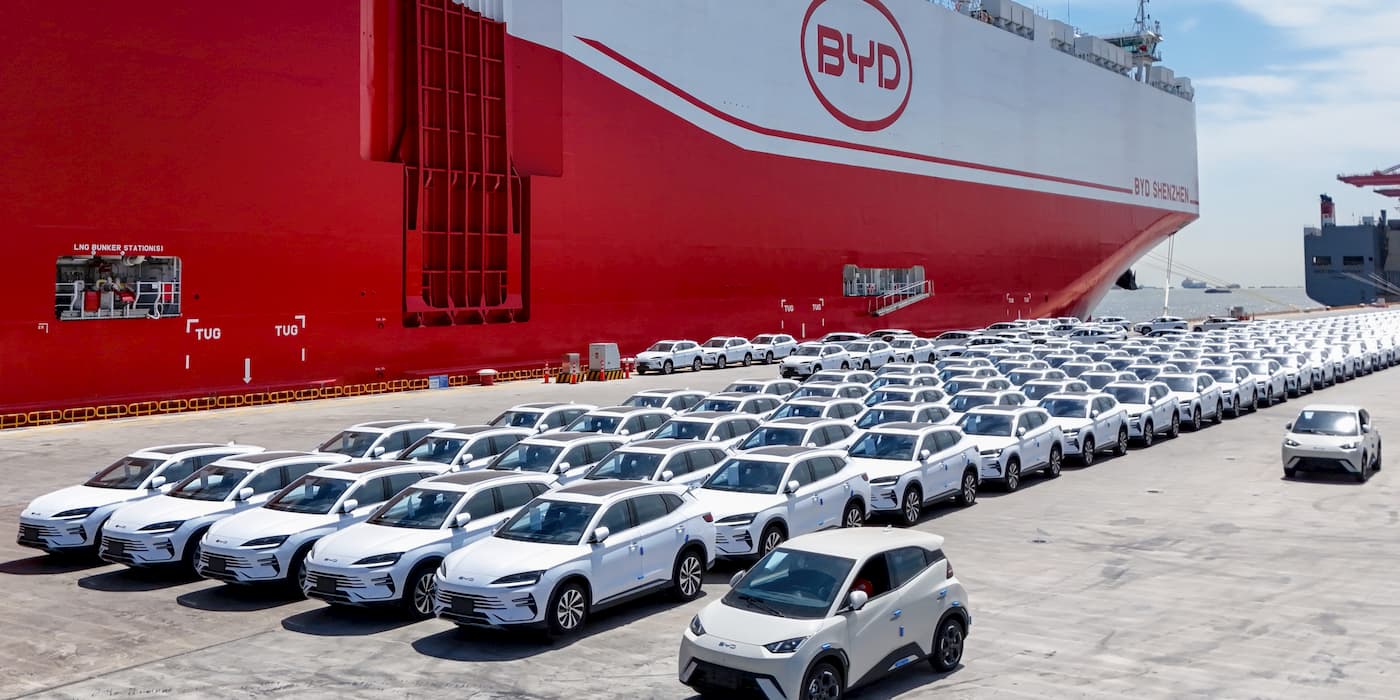
The report also notes the growing role of Chinese EV exports. About 20% of all EVs sold globally last year were imported. China, which produces over 70% of the world’s EVs, exported 1.25 million of them in 2024. These exports have helped push down prices in emerging markets.
And it’s not just electric cars that are on the rise. Electric truck sales jumped 80% globally last year, now making up nearly 2% of the truck market. Most of that growth came from China, where some heavy-duty electric trucks are already cheaper to run than diesel, even if the upfront cost is higher.

f you live in an area that has frequent natural disaster events, and are interested in making your home more resilient to power outages, consider going solar and adding a battery storage system. To make sure you find a trusted, reliable solar installer near you that offers competitive pricing, check out EnergySage, a free service that makes it easy for you to go solar. They have hundreds of pre-vetted solar installers competing for your business, ensuring you get high quality solutions and save 20-30% compared to going it alone. Plus, it’s free to use and you won’t get sales calls until you select an installer and share your phone number with them.
Your personalized solar quotes are easy to compare online and you’ll get access to unbiased Energy Advisers to help you every step of the way. Get started here. –trusted affiliate link*


FTC: We use income earning auto affiliate links. More.



Comments