
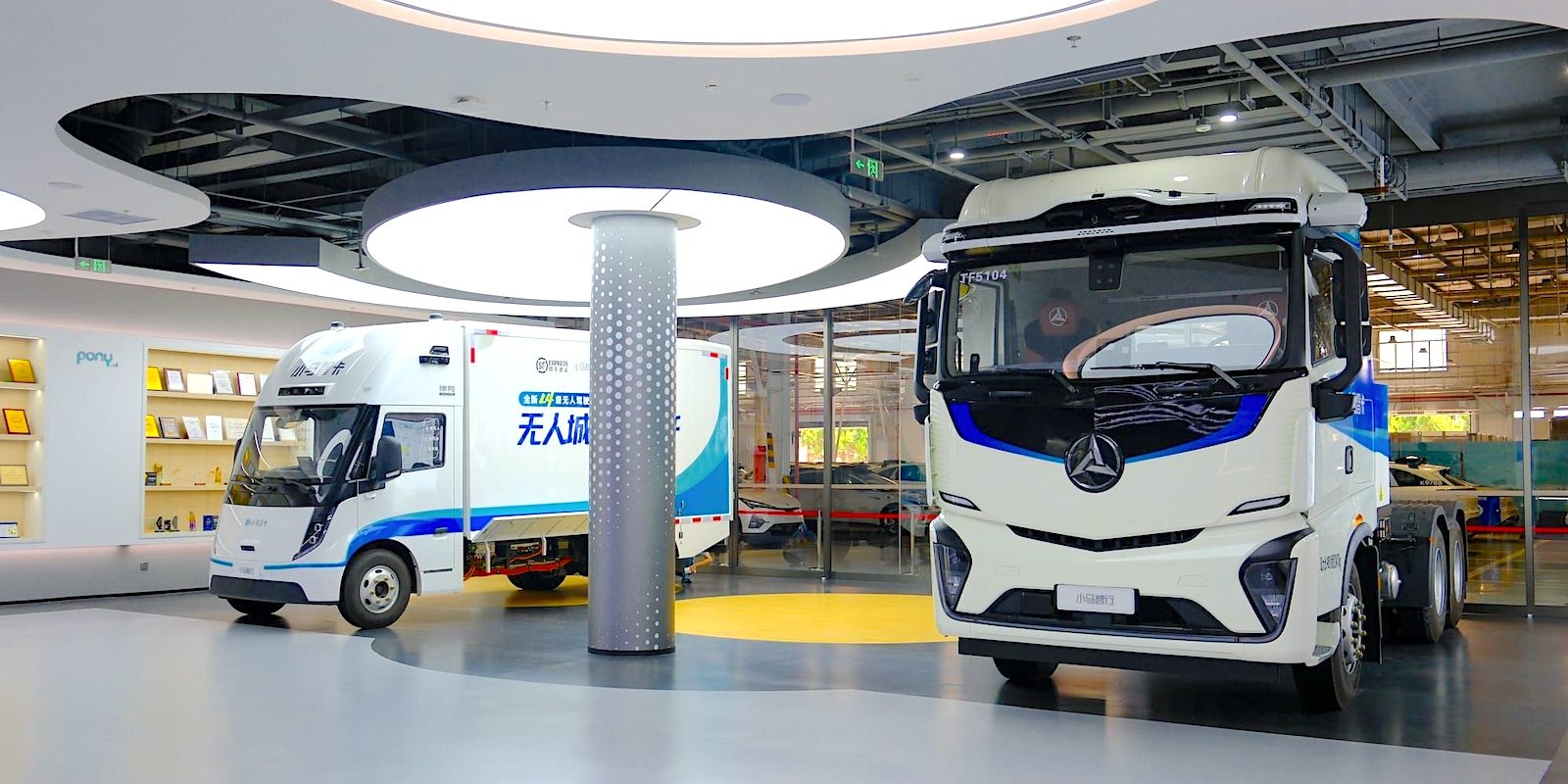
Chinese autonomy experts Pony.ai are planning to put 1,000 autonomous electric commercial trucks to work by 2027, but it’s the company’s plans to put 100,000 self-driving trucks on the road by 2030 that’s making headlines.
Thought not particularly well-known in the US, Pony.ai has been developing autonomous trucks in China and the Middle East since 2018. Those first hand-built prototypes were succeeded by modular units as the company inched closer to automotive-grade series production through a variety of partnerships with established medium- and heavy-duty truck brands and now, nearly a decade later, they seem ready to make the leap to regular production of self-driving on-road trucks with partner brand SANY. They’ve even figured out the breakdown:
Over the next two to three years, Pony.ai expects 500 to 1,000 Gen-4 autonomous heavy-duty trucks to be deployed across three primary scenarios in China: long-haul freight, bulk commodity transportation and port logistics. Pony.ai also expects light-duty trucks to scale faster, with a longer-term goal of reaching 100,000 L4 autonomous light-duty trucks by 2030.
Longtime Electrek readers (and TSLA shareholders, frankly) will be quick to point out that goals are one thing and actual deliveries are another. To their credit, Pony.ai issued a number of caveats in their forward-looking statements.
“The targets reflect several developments coming together,” reads Pony’s official press release. “A more mature autonomous driving system, lower hardware costs, automotive-grade redundant vehicle platforms and deeper collaboration with vehicle manufacturers and logistics operators.”
Scaling and saving
The company says its latest, fourth generation heavy-duty truck has cut autonomous driving hardware costs by about 70% compared with the previous generation – and they’ve proven it out already on more than 200 trucks deployed since November 2025. Since then, the Pony.ai self-driving electric semi trucks have handled more than a billion tonne-kilometres of freight. That’s almost 685 million short-ton-miles to you and me, with Pony.ai Robotruck-driven revenue exceeding $10M in Q1 2026 alone (up more than 30% YoY).
Those cost savings, combined with a proven revenue stream and the cooperation of an international truck brand, mean the timing is right for launch.
“We had been waiting for the right moment,” explains He Xing, Vice President of Pony.ai and Head of the company’s Robotruck business. “Our truck technology had already reached a high level, but the cost of building an L4 Robotruck remained high. The reduction in ADK costs benefited both heavy- and light-duty trucks. That is why we did not rush into large-scale production earlier.”
Production of Pony.ai’s Gen-4 heavy-duty trucks is reportedly now underway, with the first customer deliveries set to happen “in batches,” with small-scale deployments across several use cases scheduled throughout the rest of 2026.
The truck, itself
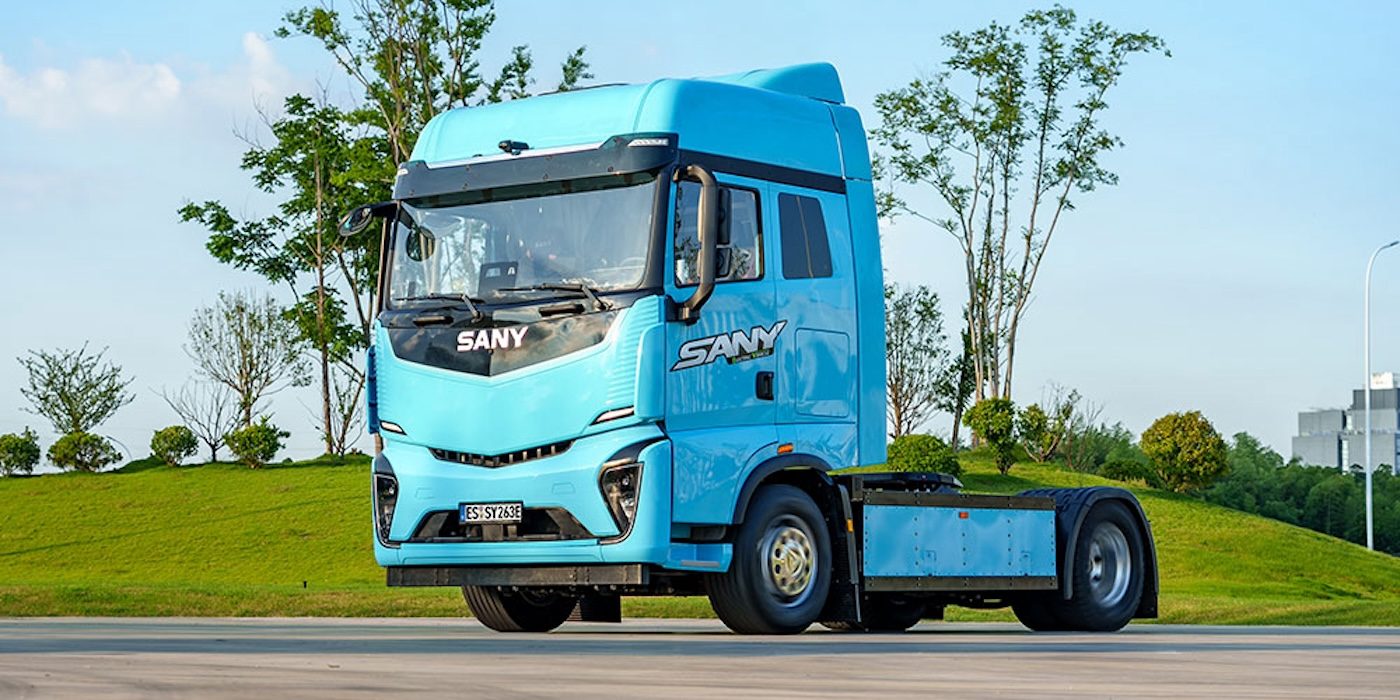
The Pony.ai truck is expected (by me) to be based on SANY’s e263 4×2 electric semi tractor, above. That truck features a dual-motor eAxle rated at 420 kW continuous (~560 hp) and 730 kW (~975 hp) of peak power. That motor gets its electrons from a 636 kWh LFP battery pack built on SANY’s 800V electrical architecture.
The truck currently charges on a 400 kW CCS connection, with MCS charging set to be available in the coming months. And – yes, SANY very much is in the battery-swap business, but that’s not the truck being shown in the forward-looking announcements.
SOURCE | IMAGES: Pony.ai.

If you’re considering going solar, it’s always a good idea to get quotes from a few installers. To make sure you find a trusted, reliable solar installer near you that offers competitive pricing, check out EnergySage, a free service that makes it easy for you to go solar. It has hundreds of pre-vetted solar installers competing for your business, ensuring you get high-quality solutions and save 20-30% compared to going it alone. Plus, it’s free to use, and you won’t get sales calls until you select an installer and share your phone number with them.
Your personalized solar quotes are easy to compare online and you’ll get access to unbiased Energy Advisors to help you every step of the way. Get started here.


FTC: We use income earning auto affiliate links. More.





Comments