
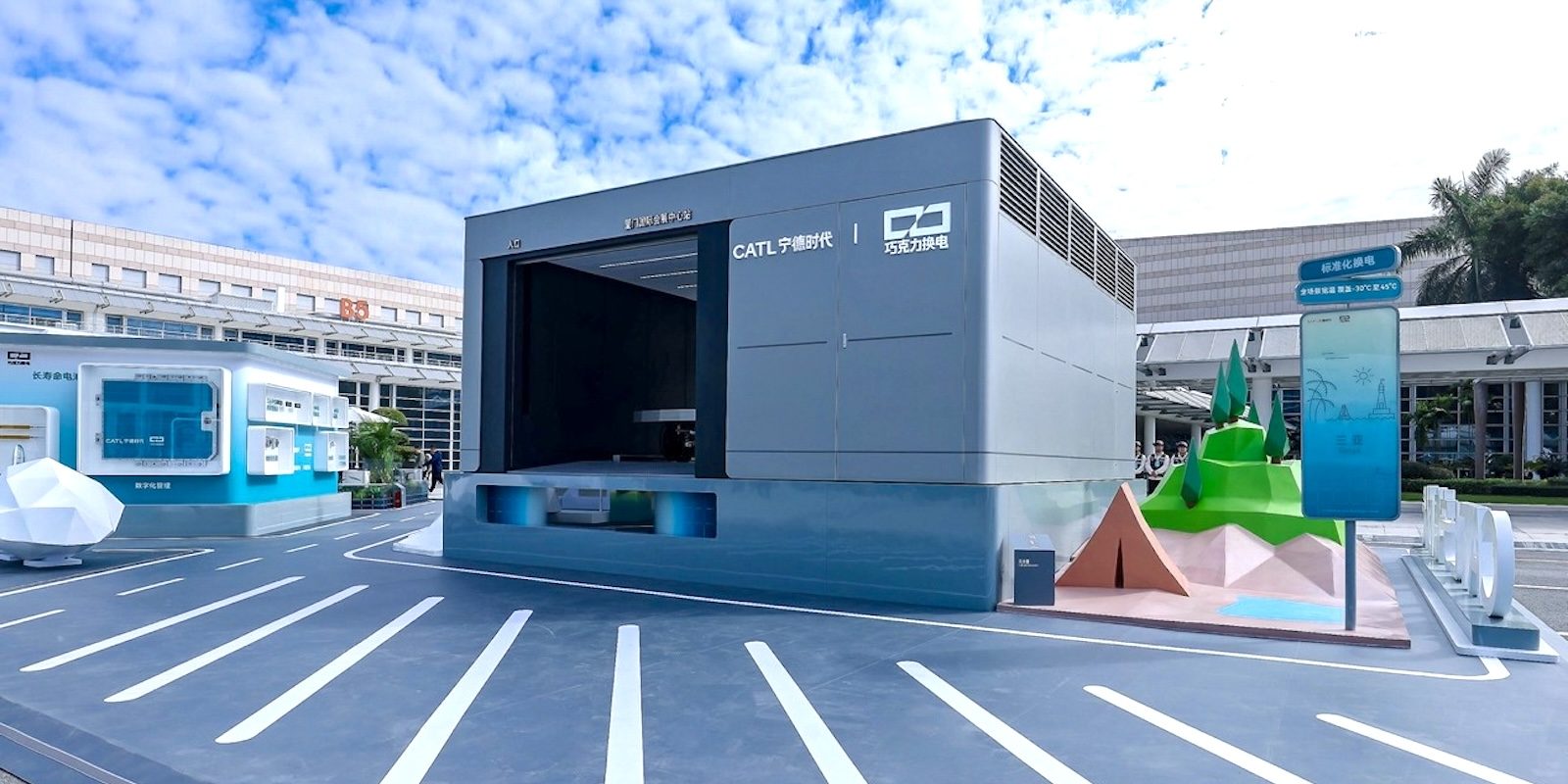
Huawei’s smart car business is signing on to CATL’s battery swap network, giving the world’s largest battery maker another heavyweight partner for a technology most of the industry wrote off a decade ago.
Yinwang, the Huawei-controlled automotive unit also known as Newcool, signed a strategic cooperation framework with CATL and its swap subsidiary CAES on Monday. CATL’s Choco-swap network already counts 2,520 stations across about 200 Chinese cities.
What Huawei and CATL agreed to
According to Yinwang’s statement, reported by Reuters, the deal covers both swappable battery packs and the station network. CATL says the focus is on vehicles running Huawei’s Qiankun smart driving systems, which would be made compatible with Choco stations.
The new partnership is betting heavily on automation. CATL wants to link the car, the station and the cloud so the vehicle works out when it needs energy, based on its battery status and the driver’s habits, then finds a station, drives in on its own and lines itself up for the swap. CATL quotes 99 seconds for the swap itself.
CATL chairman Robin Zeng and Jin Yuzhi, Huawei senior vice president and Yinwang CEO, attended the signing.
The new partnership looks serious, but the announcement left out a few key details. No vehicle models, launch date or service areas were announced. It’s a framework agreement, and those don’t always turn into products.
Who’s behind Yinwang? Huawei owns 80% of it, with Seres and Changan’s Avatr holding 10% each. Seres builds AITO, the premium SUV brand Huawei’s software and retail network helped turn into a hit in China, and plenty of other Chinese automakers buy Huawei’s Qiankun systems.
More than 200 new swap stations a month
CATL first entered the battery swap market in 2022 with its EVOGO service, then relaunched the effort as Choco-swap around standardized packs at the end of 2024.
The growth since has been fast. Choco-swap ended 2025 with 1,020 stations, passed 2,000 at the start of July, and hit 2,520 as of September 29. As we reported this summer, CATL is building more than 200 battery swap stations every month. It’s aiming for more than 3,000 by the end of the year and 30,000 long term.
Huawei joins a growing list of Choco partners that includes GAC, BAIC and NIO. CATL is also pushing swapping for heavy trucks, including a joint venture with Octopus Energy for the UK and Europe.
For comparison, NIO, which built the first big swap network on its own, hit its 100 millionth swap in February with 3,790 stations. It passed 110 million swaps by June.
Electrek’s Take
I’ve been skeptical of battery swapping for years, and I had good reasons to be.
Tesla demoed a 90-second pack swap in 2013, opened a single pilot station at Harris Ranch in California, and quietly let it fade after owners showed little interest. Better Place raised about $850 million and still went bankrupt in 2013. And every year, chargers got faster, which shrank the one real advantage swapping had.
My main argument was standardization. Swapping only works as infrastructure if lots of automakers share packs, and automakers don’t want to share the most expensive part of the car. NIO proved swapping can work for one brand. But one brand’s network is a perk, not infrastructure.
CATL is the one company that can fix that problem, and it’s actually doing it. It supplies roughly 40% of the world’s EV battery cells, so when it shows up with a standard pack, automakers listen. 2,520 stations in under two years isn’t a pilot.
And Huawei brings autonomy. A car that drives itself into a station and leaves 99 seconds later doesn’t need anyone to plug it in. For robotaxis and commercial fleets, that solves a real problem.
I still don’t think swapping replaces charging. Most EV owners charge at home, and the fastest chargers in China are now getting close to gas station times. So it’s a complement. But I’m surprised to be writing this: in China, battery swapping is starting to look like a permanent part of the EV mix rather than a gimmick.
Will anyone build something like this outside of China?
If you’re driving an EV, powering it with home solar can cut your fuel costs to nearly zero, no swap station needed. With electricity rates up almost 10% last year and expected to keep climbing, going solar is one of the best ways to protect yourself against rising costs. And with lease and PPA options, you can do it with zero upfront cost and start saving immediately. If you want to find the best deal, check out EnergySage. It’s a free service with hundreds of pre-vetted installers competing for your business, so you save 20 to 30% compared to going it alone. No sales calls until you pick an installer. Get your free quotes here.


FTC: We use income earning auto affiliate links. More.



Comments