
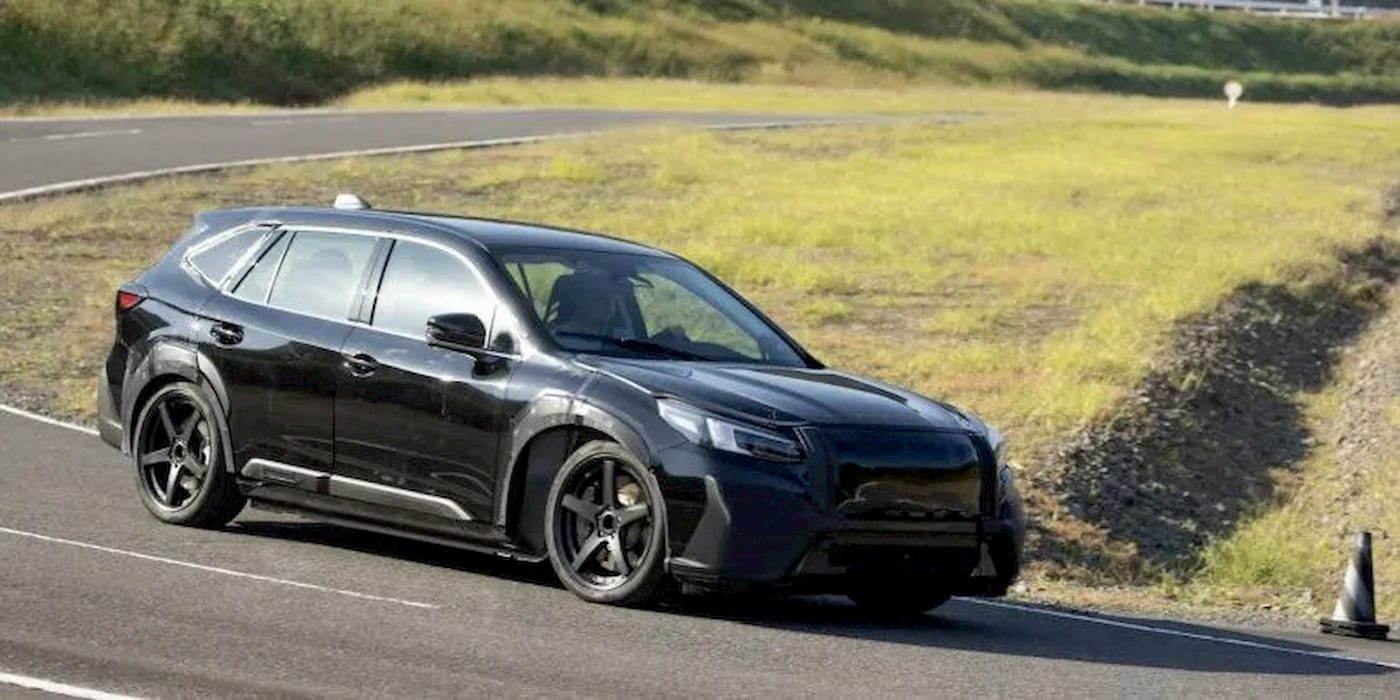
Subaru is testing its own tech for its next-generation EVs, breaking away from its longstanding partnership with Toyota.
Subaru moves away from Toyota for its next EV
After falling behind Chinese brands like BYD and other emerging EV makers like Tesla, Subaru and Toyota revealed plans in 2024 to co-develop four new electric SUVs by each brand by the end of 2026, including the updated Solterra and bZ4X ( now the bZ in the US).
The partnership was designed to share development costs and manufacturing space to cut costs and speed up development.
Subaru is now preparing to branch off from its partnership with Toyota for its next-generation electric vehicles as it looks to establish its own brand in the EV space.
According to Automotive News, Subaru revealed its latest in-house tech on Sunday that will power its upcoming next-generation electric vehicles.
“By developing vehicles in-house and having EV technologies on our own, we can quickly deliver to our customers the peace of mind and driving pleasure that define Subaru,” said Takatomo Watamori, executive officer in charge of engineering.

The new tech includes Subaru’s first dedicated EV platform, plus new batteries, electric motors, and an integrated control unit to enable over-the-air updates.
Subaru showed a prototype to reporters at its test course just north of Tokyo. The camouflaged test mule used an all-wheel-drive powertrain with a combined 509 horsepower (380 kW). Subaru said the new setup enables the EV to accelerate from 0 to 62 mph (0 to 100 km/h) in under 4 seconds.
While it didn’t reveal a specific launch date, company executives said some of the new tech will begin rolling out around 2029.

The prototype featured the new platform mounted under the body of an Outback. It used an e-axle developed with Toyota’s supplier Aisin Group and a battery pack from Panasonic Energy.
Subaru said the components are lighter, smaller, and more efficient than those used in its current electric vehicles.
Subaru’s engineers say the motors deliver a 30% efficiency increase compared with the industry average. The battery pack, meanwhile, uses 4,000 cylindrical cells from Panasonic Energy. It’s 24% lighter than the previous pack, and Subaru aims for an energy density 20% higher than the industry average.

Although it used an Outback as a test mule, Subaru quickly clarified that the design is not final and could change for the production version.
Subaru is developing an in-house integrated ECU that will support over-the-air (OTA) updates and integrate its EyeSight advanced driver assistance system.
By streamlining them across its lineup, Subaru said the new ECUs will help reduce costs. It will also develop a custom chip with Advanced Micro Devices that will utilize artificial intelligence in future EyeSight updates.
Subaru has big ambitions. By the first half of the 2030s, it aims to deliver 1.2 million vehicles, topping its record of 1.1 million in 2018. Last year, it sold about 924,000 vehicles, a fraction of Toyota’s at over 11 million.
Source: Motor-Fan.jp, Automotive News


FTC: We use income earning auto affiliate links. More.


Comments