
America’s 250th birthday on July 4th marked the last day to “safe harbor” a new solar project and still get the 30% solar tax credit – a milestone that many feared would mean the death of home solar. 28 days (ish) later, though, the industry is anything but dead.
The passage of the One Big, Beautiful Bill (OBB) killed a number Biden-era initiatives supporting renewable energy, including both the $7,500 federal EV tax credit and the 30% solar tax credit. And, while the sale of new home solar projects installations undoubtedly spiked ahead of the credit’s expiration, people are still shopping.
Heck, if the results of our reader surveys are to be believed, a lot of homeowners didn’t know about the 30% tax credit in the first place, which might explain why the Smart People™ at SEIA and Wood Mackenzie are looking at a market slide of “just” 18-21%.
An 18% hit to the residential market in the months following the loss of the tax credit isn’t nothing, of course, but it’s not evidence that demand for solar has cratered, either.
The conversation has changed

The conversation around solar has historically revolved around savings – whether that’s saving money on your energy bills or saving the planet by reducing your own use of energy derived from fossil fuels. Recently, however, the conversation has begun to shift, putting grid resilience and energy security at the top of many people’s reasons to go solar.
And, if you needed more evidence of that being the case than a casual Survey Sunday post, I’ve got you covered: the industry’s battery attachment rate is soaring, with up to 45% of new solar installations featuring energy storage technology in 2025, and continuing to grow. That’s an incredible number, up from just ~6% in 2020.
While it’s easy to make the case that keeping the lights on after a storm might be the least interesting thing your home batteries can do, rising energy prices, more frequent major storms, and an increasingly unreliable grid are driving interest in home batteries because buyers are looking for something bigger than a tax break: true energy independence, and the ability to make their own fuel.
That’s energy dominance
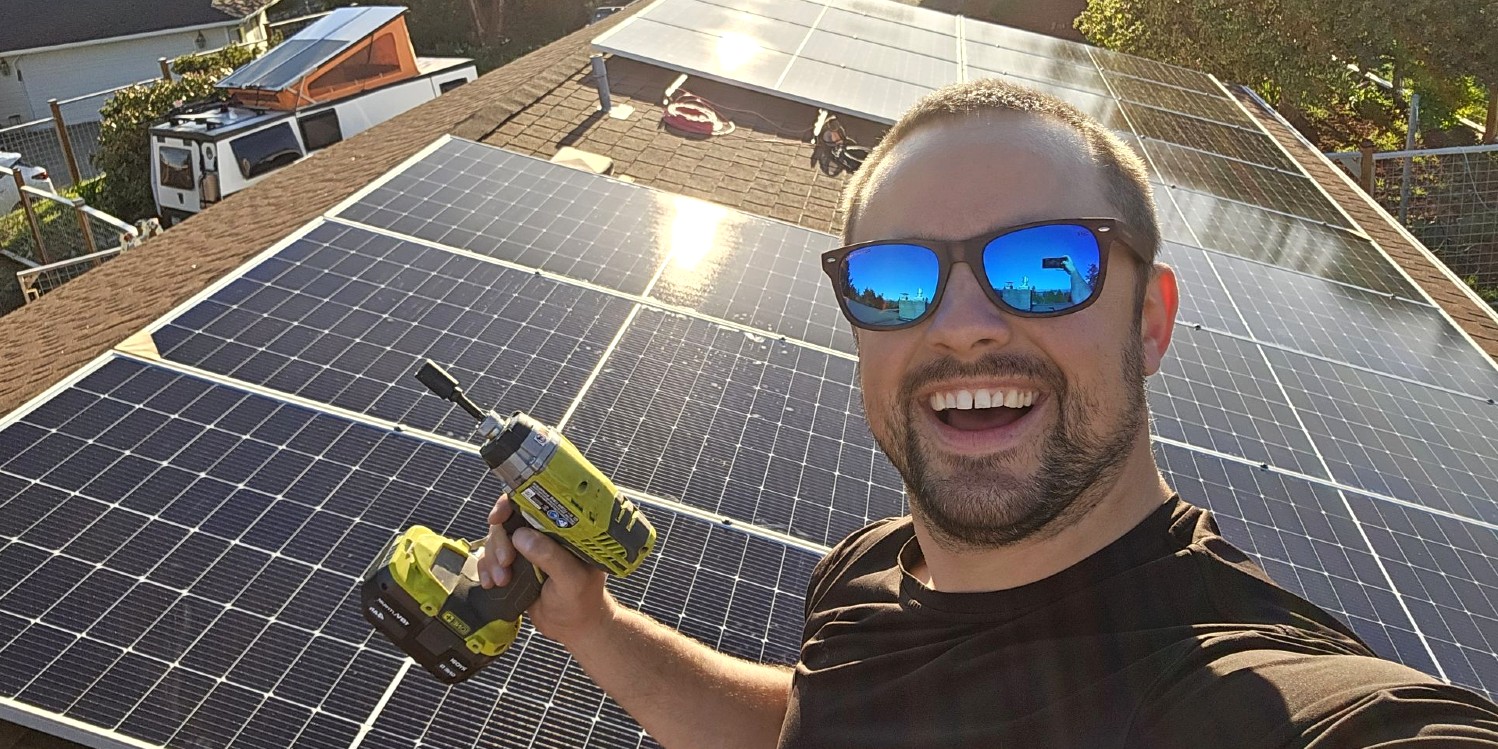
Back in April, GM Defense employee and microgrid expert Jim Reilly took to social media to share his personal experience with a “whole home” setup that included both a GM Energy home backup battery and a GMC Sierra EV powered by electrons generated by his rooftop solar array.
“This is Energy Dominance,” he wrote at the time. “I own the refinery and the delivery system. While the world reacts to the price at the pump, my costs are a flat line.”
Jim’s results aren’t unique. A few months ago, we posted similarly impressive numbers from a number of Electrek readers experiencing significant energy savings and, by pairing their home solar panel systems with EVs and batteries, were enjoying their own “energy dominance.”
“My 6.5 kw PV generates from 16 kwh/day (winter) to 38 kwh/day (late spring),” wrote Craig Merrow. “Between the efficiency of my house and my consumption habits, my usage averages 5-6 kwh per day. Went all-in on passive and active solar when I built the house ten years ago, an investment which has long since paid for itself with no heating or utility bills, plus having battery storage means no worries about power outages when the grid goes down. A great feeling to be energy independent!”
More to come

28 (again, -ish) days after the solar tax credit’s expiration, the anecdotal evidence is that the American home solar market is more complicated story than the doomsday predictions had suggested. The industry is adjusting to a new reality that’s more about resilience, independence, and individual security – even if widespread adoption of these technologies will help support the grid and drive down energy costs for everyone.
All of which is to say: the landscape for home solar may have changed – but we’re a long way from the end of this story.
Electrek’s Take disclaimer

Tax law is a messy, complicated, and high-stakes field. Federal tax credits, state laws, utility programs, and the fine print in the contracts from company to company can overlap or even contradict each other, and navigating any part of it isn’t especially intuitive. That complexity is exactly why the smart people you know hire accountants and tax professionals to make incentives work for them, and you should do the same.
If you’re considering adding solar to your home with a purchase, lease, or PPA, a conversation with a qualified professional installer can help you understand what’s being offered and how a given deal is being structured. Take that information to your accountant to understand what’s real, what’s marketing, and what actually saves you money.
Finally, if there’s money on the table, make sure you don’t leave it there! Remember that US tax law could be a single line codified into law. Instead, it’s more than 4,000+ pages of densely worded legalese. Get yourself an expert, and get what your democratically elected leaders decided you have coming to you.
YOU MIGHT ALSO LIKE:
- Base Power raises $1B to roll out its giant new home battery
- Backup power is the LEAST interesting thing your home battery can do
- Batteries become the new home solar as net metering evolves and energy prices soar

If you’re considering going solar, it’s always a good idea to get quotes from a few installers. To make sure you find a trusted, reliable solar installer near you that offers competitive pricing, check out EnergySage, a free service that makes it easy for you to go solar. It has hundreds of pre-vetted solar installers competing for your business, ensuring you get high-quality solutions and save 20-30% compared to going it alone. Plus, it’s free to use, and you won’t get sales calls until you select an installer and share your phone number with them.
Your personalized solar quotes are easy to compare online and you’ll get access to unbiased Energy Advisors to help you every step of the way. Get started here.


FTC: We use income earning auto affiliate links. More.





Comments