
There are few recent advances in the transportation industry that have had as large of an impact on the shifting ways we travel around our cities than micromobility. I’m talking bikes, scooters, mopeds, self-balancing doo-hickeys, etc.
And there are a lot of hills I’m willing to die on in the micromobility world. But one of them is that we need to stop defining such vehicles by what they look like and start defining them by what they do.
Right now, North America has done a pretty decent job of embracing the Class 2 e-bike. We’ve collectively agreed that an electric bicycle capable of 20 mph (32 km/h) on throttle and with a power level of 750W or less (under one horsepower) is, for all practical purposes, still a bicycle.
It’s the law of the land almost everywhere in the US. Millions of people ride them every day, and if we’re being honest, plenty of those riders treat the pedals more like footrests. For all intents and purposes, those pedals are there to satisfy legal requirements.
And I’m not here to pass judgement; that’s a perfectly fine way to ride. I cruise on my Class 2 e-bikes on throttle-only all the time. I also try to get in at least a 20 mile (32 km) non-electric bike ride every weekend. I live on both ends of the spectrum and everywhere in between. As long as your conveyance of choice weighs significantly closer to 50 lb than 5,000 lb (25 kg instead of 2,500 kg), I’m happy as a pig in mud.
So here’s my question: if we’ve already accepted the concept of a 20 mph throttle-enabled two-wheeler as a normal and acceptable vehicle, why are we still so hesitant to extend that same logic to other forms of micromobility?
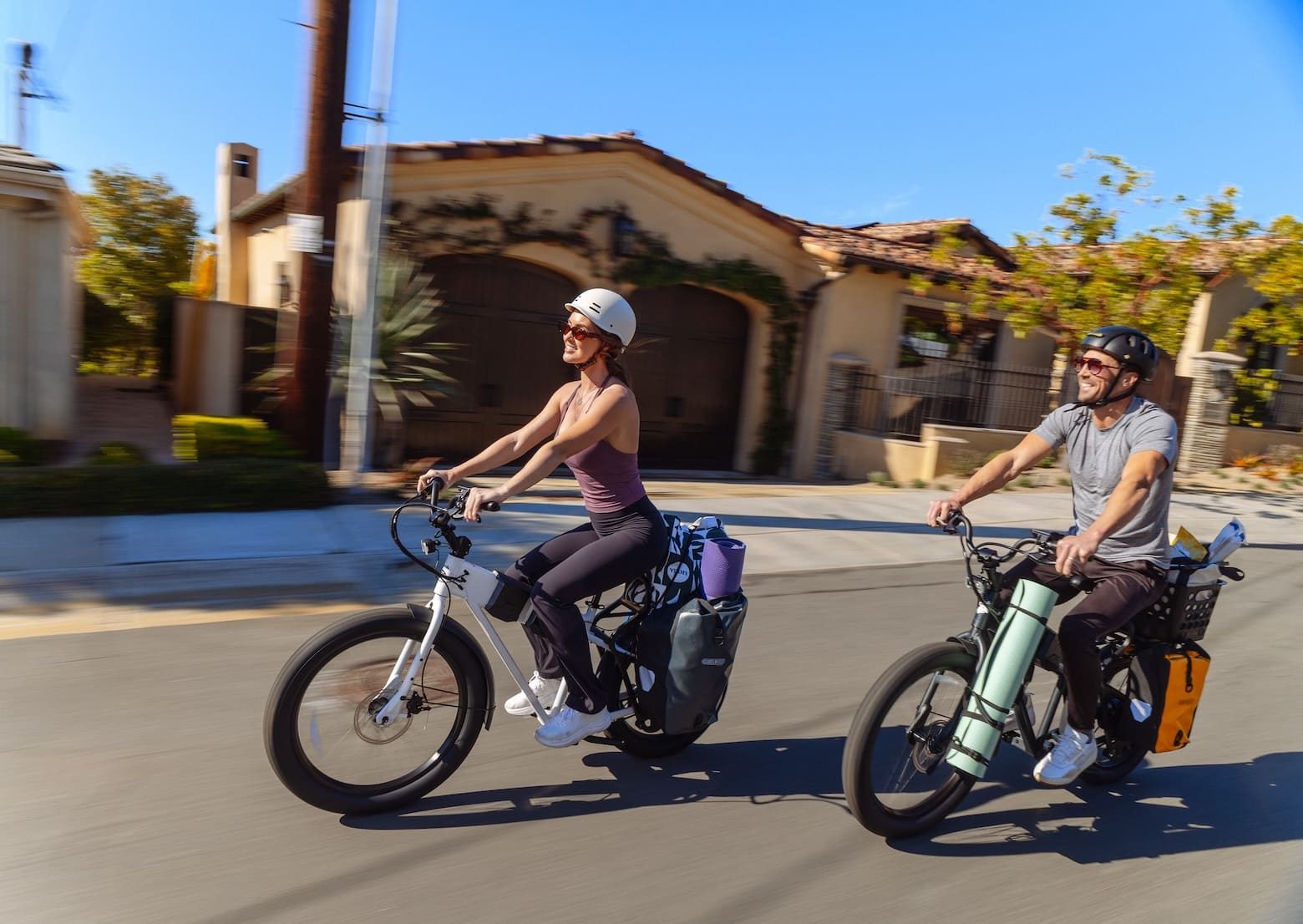
For example, take a look at the two suspiciously good-looking actor/model yoga enthusiasts cruising around on their e-bikes in the above photo. They seem to be enjoying themselves, her basking in the post practice euphoria and him having just squeezed in a session before embarking on his mail route, presumably.
But wait, look closer. Those aren’t technically electric bicycles at all… there aren’t any pedals.
Yep, those are JackRabbits — perhaps the most famous of the bike-like pedal-free alternatives. Sometimes referred to as micro e-bikes, seated scooters, or no-peds (like a moped, get it?), this class of two-wheelers can sometimes fall between the cracks of the well worn electric bicycle classifications.
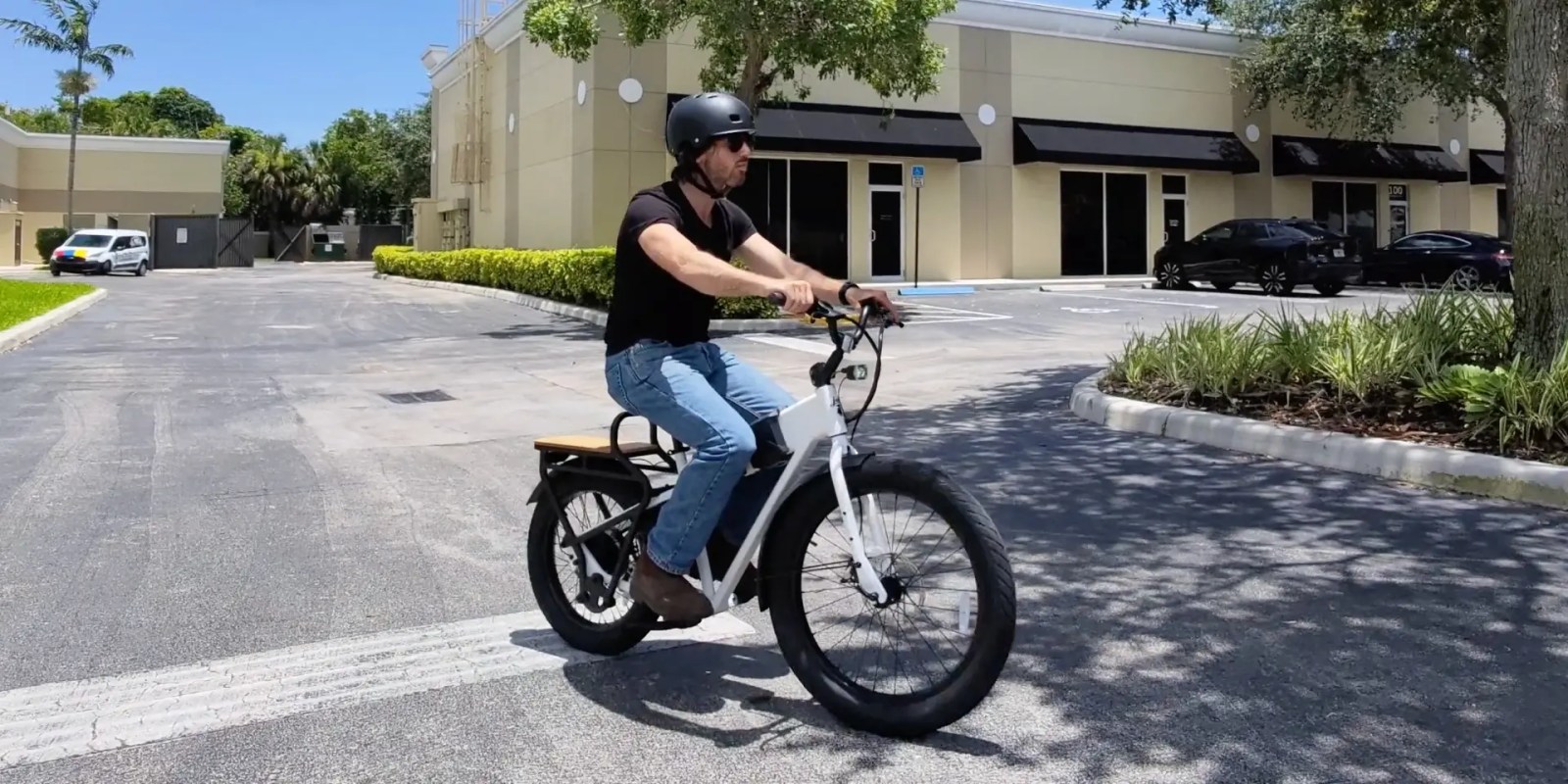
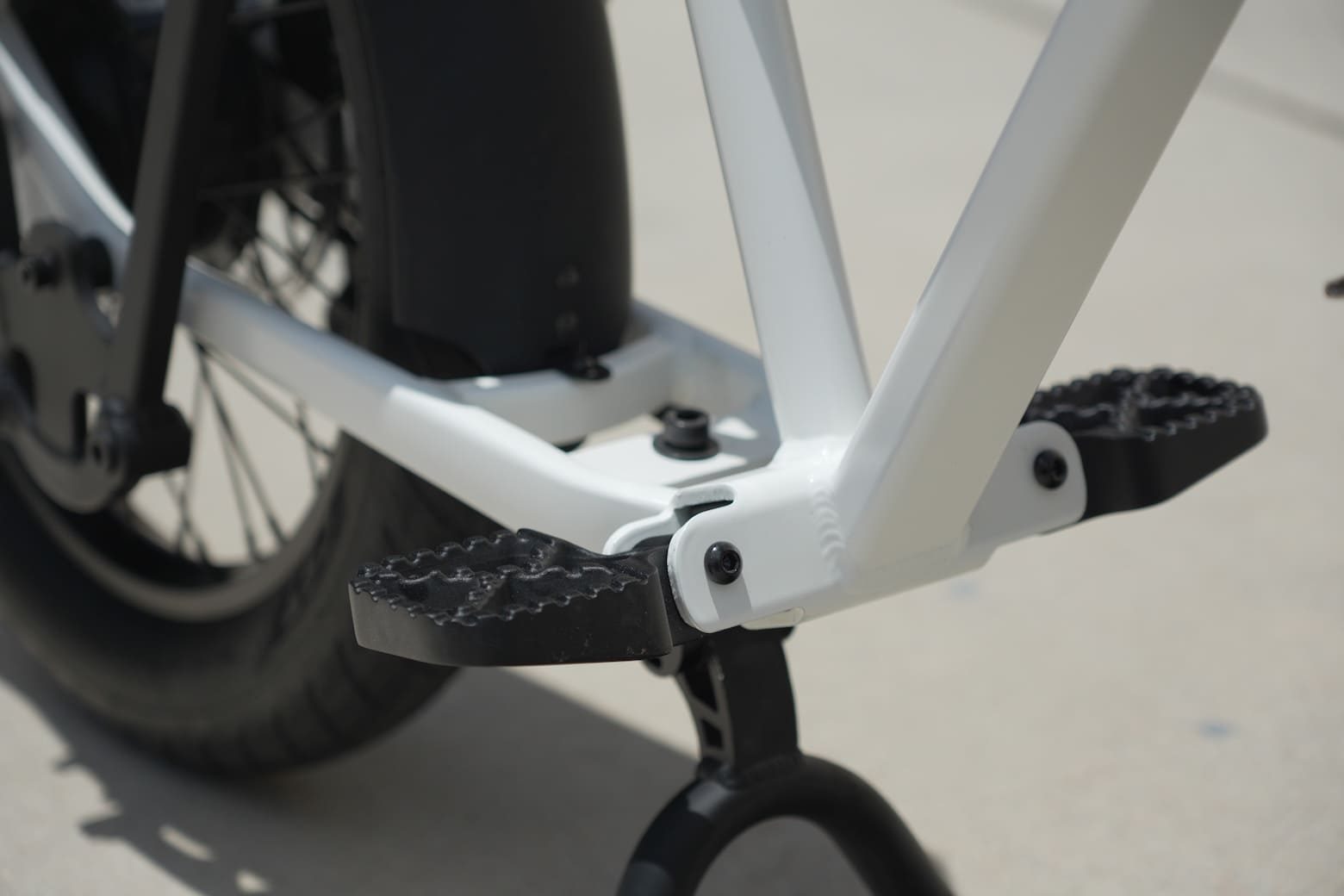
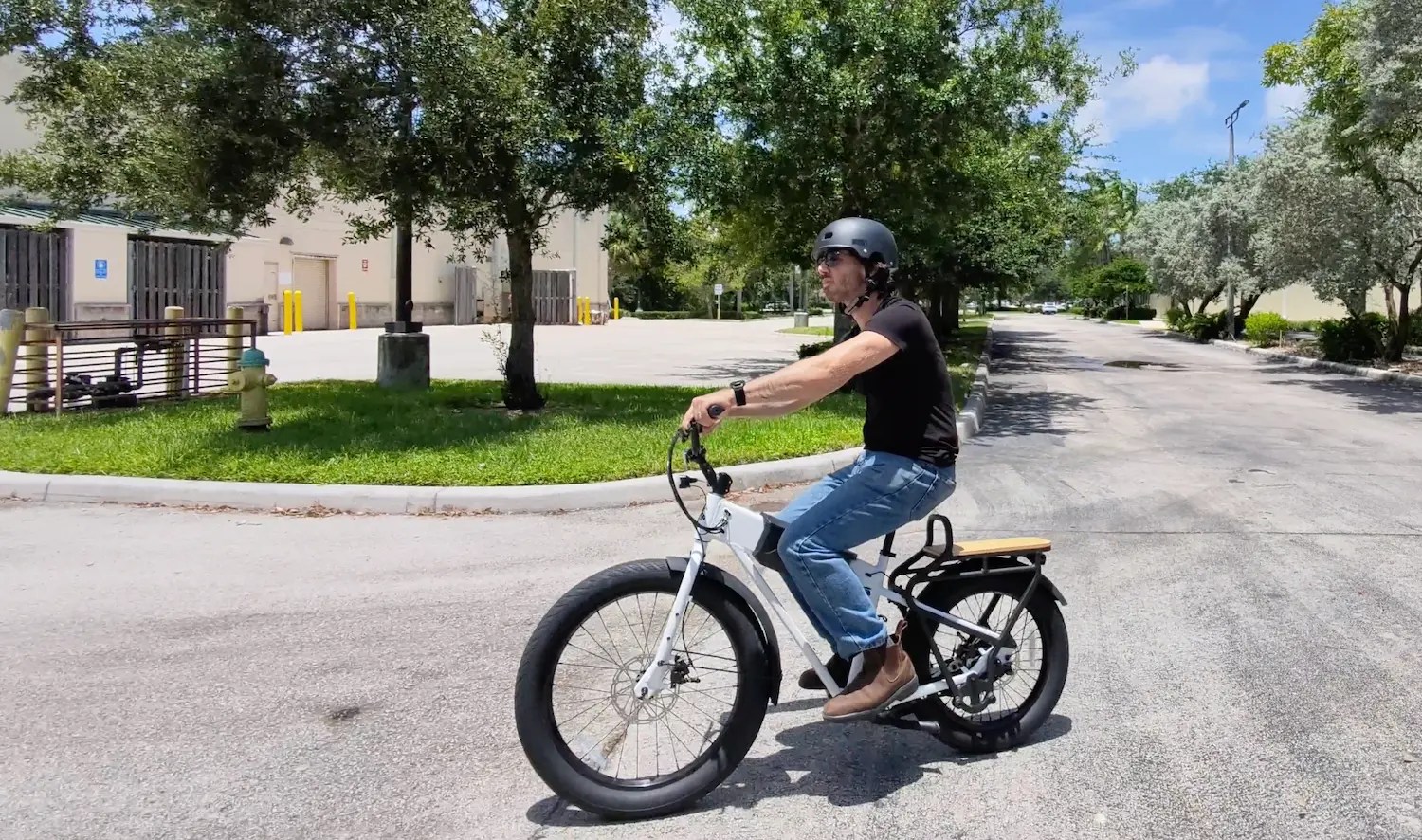
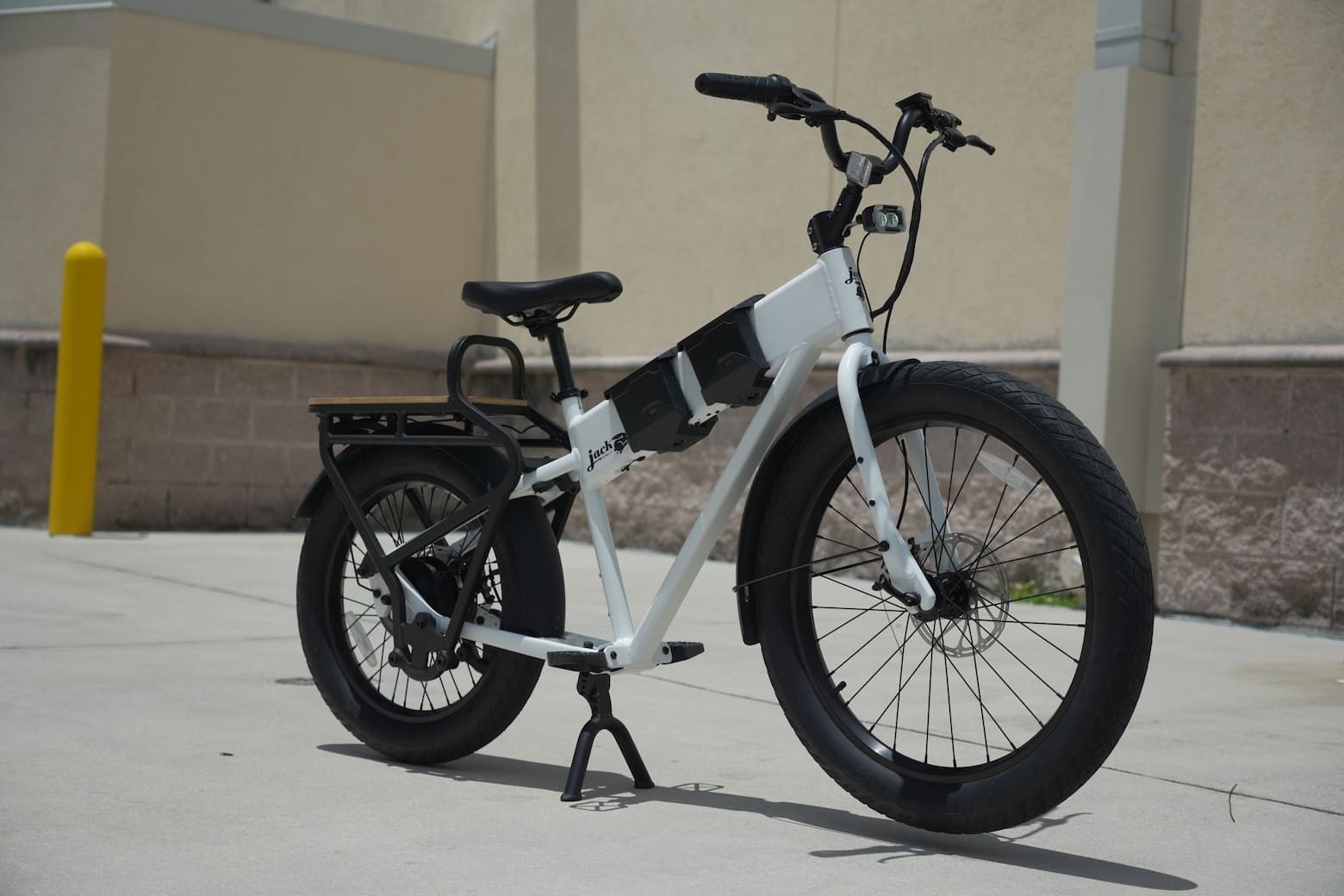
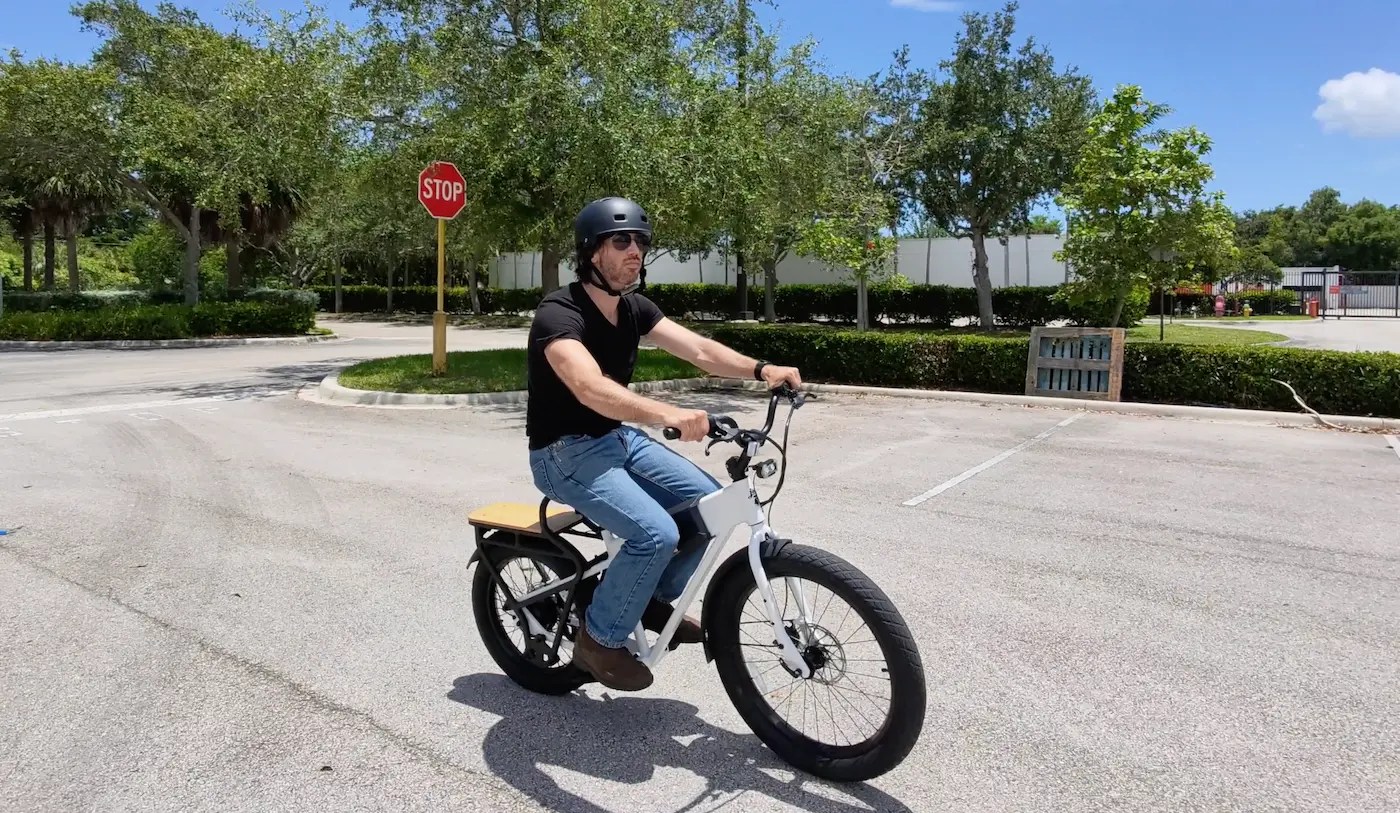
I’ve been spending time recently riding the JackRabbit MG Cargo, and it really drove this point home for me. It doesn’t have pedals. Instead, it has foot pegs. Yet functionally, it fills almost exactly the same role as a Class 2 e-bike ridden primarily on throttle.
That makes them a great example of this confusing gap in our micromobility logic.
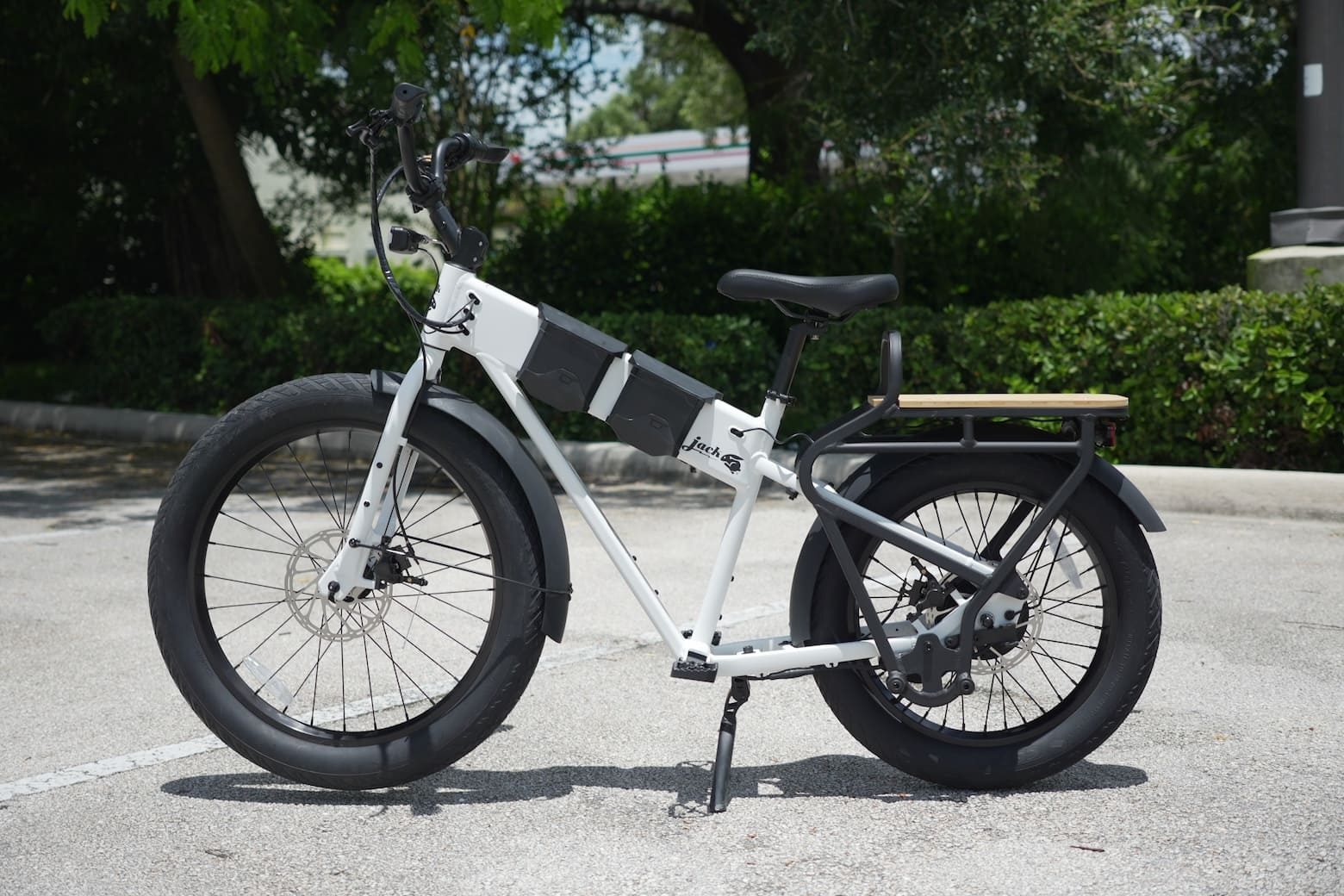
It tops out at neighborhood-friendly speeds. It’s lightweight. It takes up very little space. It doesn’t make noise, doesn’t emit pollution, and doesn’t meaningfully change the risk profile compared to countless electric bicycles already sharing bike lanes and neighborhood streets.
In fact, in several ways, it’s arguably better suited to the job.
By removing the entire pedal drivetrain, the MG Cargo sheds weight, simplifies maintenance, reduces manufacturing complexity, and becomes even easier to carry upstairs or tuck into a closet or apartment. It’s remarkably narrow, making it easy to weave through crowded bike parking or store where a conventional cargo bike simply wouldn’t fit.
And despite its tiny footprint, it still hauls an impressive amount of cargo with its 500 lb (225 kg) weight rating. Running errands, grabbing groceries, or carrying camera gear around town feels surprisingly natural. It occupies this fascinating middle ground between an e-bike and a seated scooter, while delivering many of the practical advantages of both.
To be clear: I’m not talking about fast and powerful e-motos or electric dirt bikes like Sur Rons, Talarias, Nomadix, Tuttios, and other similar off-road motorbikes. I’m talking about small, appropriate, low-speed bike-like rides. The kinds of things your mom would just assume was a bicycle until someone told her otherwise.
To be fair, many jurisdictions already have laws covering electric scooters, and vehicles like the JackRabbit often fit into those categories. But that’s exactly the problem: many jurisdictions – not all. It’s very hit or miss, and whether or not your area has codified these helpful vehicles is basically a roll of the dice.
The legal landscape becomes much murkier when you start talking about seated scooters, electric skateboards, Onewheels, electric unicycles, and the growing list of other small electric vehicles. In one city, these popular and effective micromobility options are perfectly legal. Cross an invisible municipal boundary, and suddenly nobody is quite sure whether you’re riding a bicycle, a scooter, a moped, or something that technically isn’t regulated at all.
In many areas, they aren’t explicitly ilegall. But they may not be codified as definitively legal in the same way that a Class 2 e-bike usually is.
That uncertainty doesn’t help riders, it doesn’t help law enforcement, and it certainly doesn’t help society as we try to push city dwellers toward more convenient, sustainable transportation alternatives.
Instead of writing separate laws every time someone invents a slightly different way to stand or sit on top of an electric motor, maybe it’s time we recognize a broader category: micromobility.
If a two-wheeler or three-wheeler is relatively lightweight, travels at bicycle-like speeds, and shares the same practical use case as a Class 2 e-bike, perhaps it should simply receive the same basic legal treatment regardless of whether it has pedals, foot pegs, a skateboard deck, or a single wheel underneath it.
I’m not suggesting we restrict the three-class system, which is already thoughtfully crafted and has been responsible for helping countless Americans add two-wheeled transportation into their lives. Instead, I’m suggesting we open the gates a bit wider and welcome in the other bike-like, non-standard alternatives to e-bikes that we can mostly agree perform the same duty with the same risks, but just happen to look a bit different.
Top comment by K
To me, if there are no pedals, it’s not a bicycle. Which is totally fine and a legitimate form factor but I would call it something else.
We’re entering an era where transportation innovation is moving faster than legislation. Trying to categorize every new design individually is a losing battle. Some states have woken up to this reality, such as Oregon who proposed a new law to incorporate more non-bicycle micromobility vehicles into the legal fold. Others could still use a push to embrace a wider definition of small vehicles that all perform the same job.
I believe that the better solution is to regulate based on performance instead of appearance. If it has two or three wheels and travels at up to 20 mph (32 km/h), then does it really matter whether its controlled by a twist of the ankles versus a twist of the wrist?
Because at the end of the day, whether I’m riding a traditional Class 2 e-bike, a seated scooter, or a compact utility vehicle like the JackRabbit MG Cargo, I’m accomplishing the exact same mission: replacing short car trips with something cleaner, quieter, smaller, and infinitely more fun.
That seems like the kind of transportation we should be encouraging – not forcing into regulatory gray areas simply because someone removed the pedals.


FTC: We use income earning auto affiliate links. More.


Comments