

There’s a sentence that still sounds slightly radical in much of America, even though millions of people elsewhere in the world would barely think twice about it: Every family should own an e-bike.
Sure, not every person and not every trip. Maybe not even as a complete replacement for cars. But as a standard household tool? Absolutely!
And before my readers outside the US roll their eyes and say, “Uh… yes, we already know,” that’s kind of the point.
In many parts of Europe and Asia, this argument has already been settled. Families there have spent years proving that electric bikes can replace huge numbers of short car trips, give kids more independence, reduce transportation costs, and improve quality of life in cities and suburbs alike.
Meanwhile, many Americans are still stuck thinking of bicycles primarily as toys, fitness equipment, or recreational gear. Some have gotten the memo and reaped the benefits, though the majority have yet to experience that eye-opening moment.
But the modern e-bike has quietly changed the equation, and so perhaps it’s time to take a second look.
Today’s e-bikes are faster, safer, more reliable, and more practical than ever before. Electric cargo bikes can haul groceries and kids. Class 3 commuter bikes can comfortably keep up with urban traffic (and even beat traffic most of the time). Step-through bikes make riding approachable for older adults. And affordable models now exist that cost less than a few months of car payments.
The rest of the world has already shown that this works. America may be fashionably late to the party, but we’re still ready to show up and have a blast!
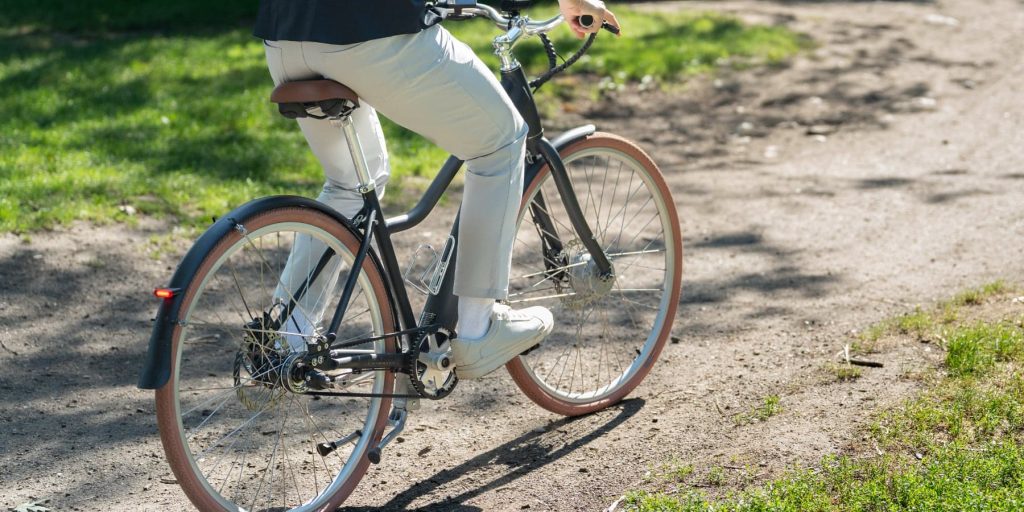
The second car replacement that many families don’t realize they already need
The strongest argument for e-bike ownership may actually be economic.
Cars are expensive – sometimes painfully expensive, depending on your financial situation.
The average American family spends thousands of dollars each year on fuel, maintenance, insurance, registration, repairs, parking, and financing. And in many households, the second car exists primarily to handle short local trips: commuting a few miles, school drop-offs, grocery runs, coffee trips, errands, and kids’ activities.
That’s exactly where e-bikes shine. An e-bike won’t replace every car trip. Nobody is pretending otherwise. But it can replace a shocking number of them.
And once a family realizes that, the math changes quickly. Even a relatively premium e-bike can cost less than a few months of owning and operating a second vehicle. But these days you can also find a really solid e-bike for under $1,000. Meanwhile, charging an e-bike battery costs literal pennies. Even someone who commutes an hour a day by e-bike likely spends well less than $1 per month on charging expenses. In other words, charging an e-bike is so cheap that it’s basically free.
That financial flexibility makes a huge difference, especially as transportation costs continue rising.
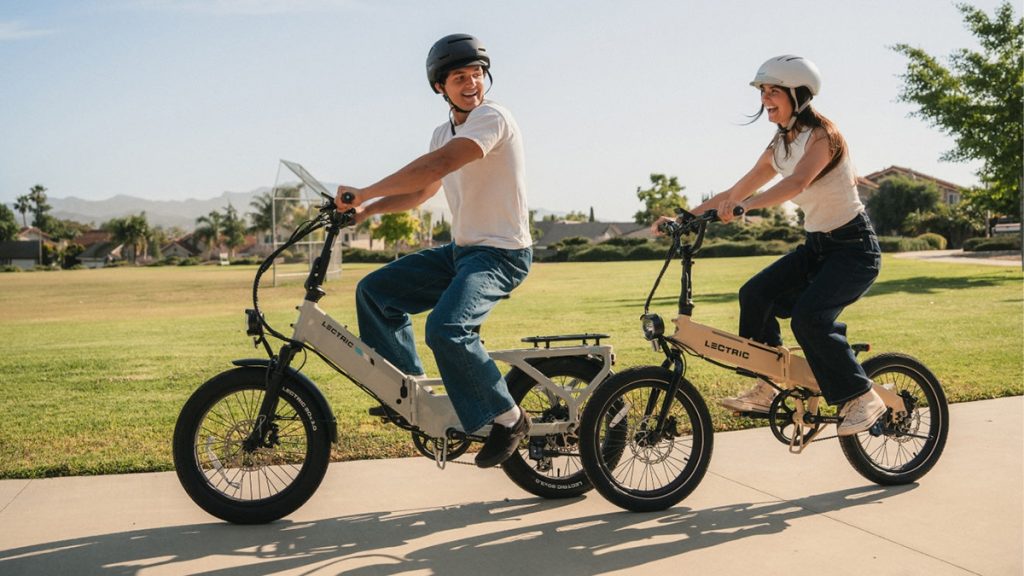
Kids and teens gain independence – and parents gain time back
One of the most underrated benefits of household e-bike ownership is what it does for family logistics.
American parents often become full-time chauffeurs the moment their kids become active in school, sports, jobs, or social lives. Entire evenings disappear into endless short-distance driving loops.
But a teenager with a safe route and an e-bike suddenly gains mobility. They can get to school, or a part-time job, sports practice, a friend’s house, the library, the corner store, you name it!
And importantly, they gain that independence without immediately jumping straight to operating a two-ton vehicle at highway speeds.
That doesn’t mean teenagers should be turned loose irresponsibly on high-powered electric motorcycles masquerading as e-bikes. Quite the opposite. Properly regulated and responsible e-bike use can actually become a healthier stepping stone toward transportation independence.
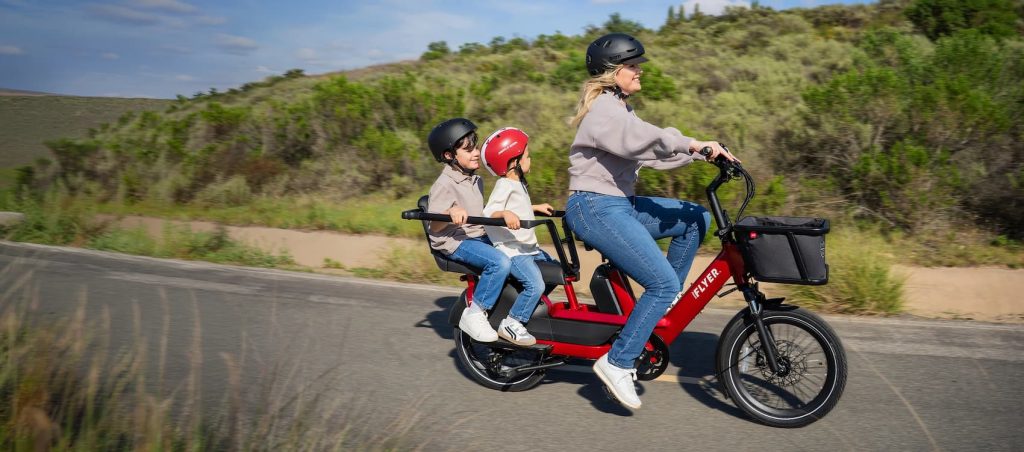
And for younger kids, riding with parents on cargo bikes or family-oriented e-bikes normalizes active transportation from an early age.
Children grow up learning that not every movement through a city requires a car. And that’s a great lesson that sticks throughout life.
Families become healthier without “trying” to exercise
One of the biggest reasons people fail at exercise routines is that they require dedicated extra effort.
An e-bike quietly bypasses that problem. You still pedal and you still move your body. You’re still going to elevate your heart rate, but it doesn’t feel like punishment.
Instead, exercise gets woven naturally into daily life.
And unlike traditional cycling, e-bikes remove many of the barriers that keep ordinary people from riding more often: hills, sweat, long distances, physical limitations, intimidating fitness expectations, or fear of arriving exhausted. Basically, they take the edge off.
That may actually be one of the most important cultural shifts happening right now.
Owning an e-bike no longer means joining some hardcore cycling subculture involving Lycra spandex, racing geometry, and weekend suffering sessions. Increasingly, an e-bike is simply becoming another useful household appliance. It’s like having a lawn mower, or a grill, or a vacuum cleaner. It’s a tool your family uses for daily life.
Except this appliance happens to improve your cardiovascular health.
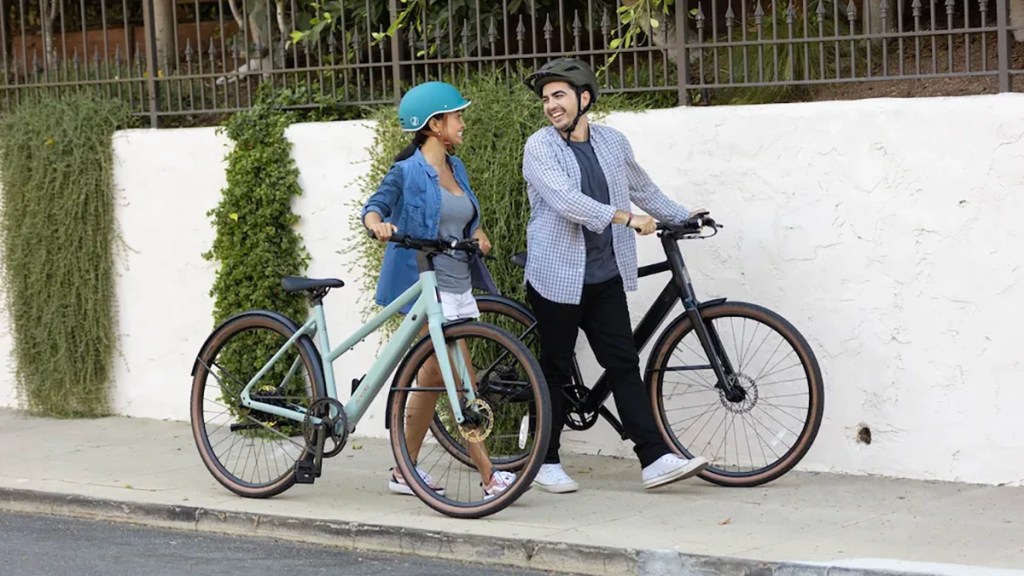
The best transportation for short trips is often not a car
Many Americans have become so conditioned to driving everywhere that they forget how absurd some car trips actually are.
Starting a multi-thousand-pound vehicle to travel one or two miles often makes little practical sense. Using a 5,000-pound SUV and burning a gallon of gasoline to go pick up a gallon of milk is downright ridiculous.
For many short trips, e-bikes are simply easier and better. You leave directly from your house. You park near the entrance. You avoid traffic. You spend less time trapped in parking lots.
And perhaps most importantly, the trip itself becomes enjoyable instead of stressful. That emotional component matters so much more than many people realize. Drivers often arrive frustrated because sitting in traffic is legitimately frustrating. Cyclists often arrive happier, not only because they got to skip traffic, but the physically activity releases endorphins and so they actually are happier, chemically speaking.
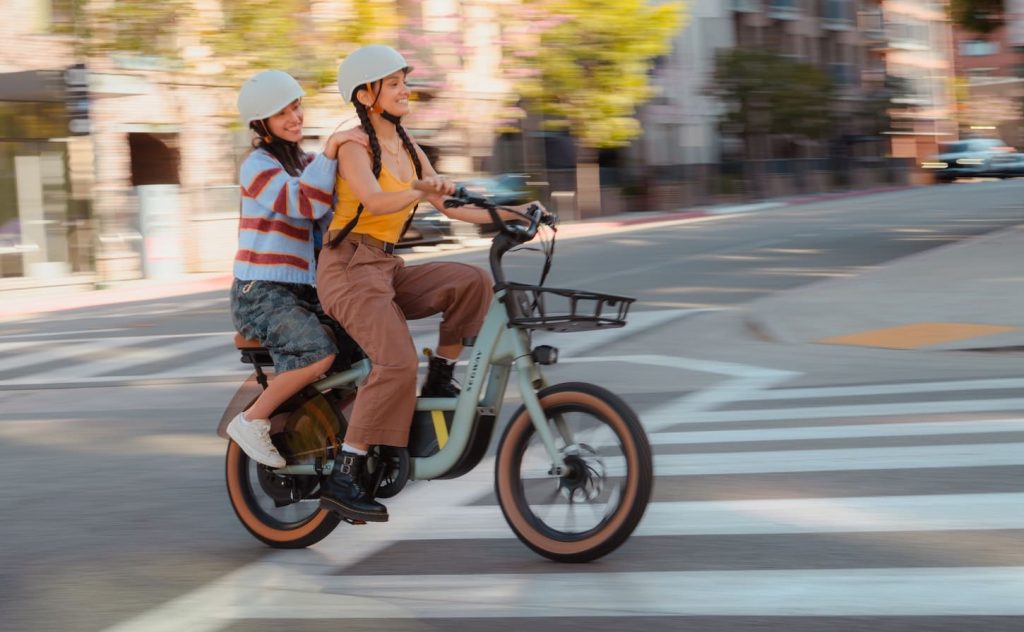
Older adults benefit too
E-bikes are also quietly extending mobility for older riders.
Many people eventually stop riding traditional bicycles because hills become difficult, knees hurt more, endurance fades, or balance confidence decreases.
But pedal assist changes the equation dramatically. Suddenly, riding becomes accessible again. And with more affordable electric trikes available now, even those who have trouble balancing a heavy e-bike can get back in the saddle and enjoy the benefits of light exercise along with the joy of pedaling.
That means older adults can continue enjoying outdoor activity, local errands, and social mobility years longer than they otherwise might.
And unlike cars, e-bikes encourage continued physical engagement rather than complete physical passivity. They’re a perfect way to extend those years into quality years, getting enough physical activity to remain healthy and mobile without overdoing it to the point of injury.

Cargo bikes are replacing SUVs in ways that would have sounded ridiculous 10 years ago
Ten years ago, the idea that families would use bicycles instead of SUVs for grocery shopping or school drop-offs sounded laughable to many Americans. But today, it’s increasingly common.
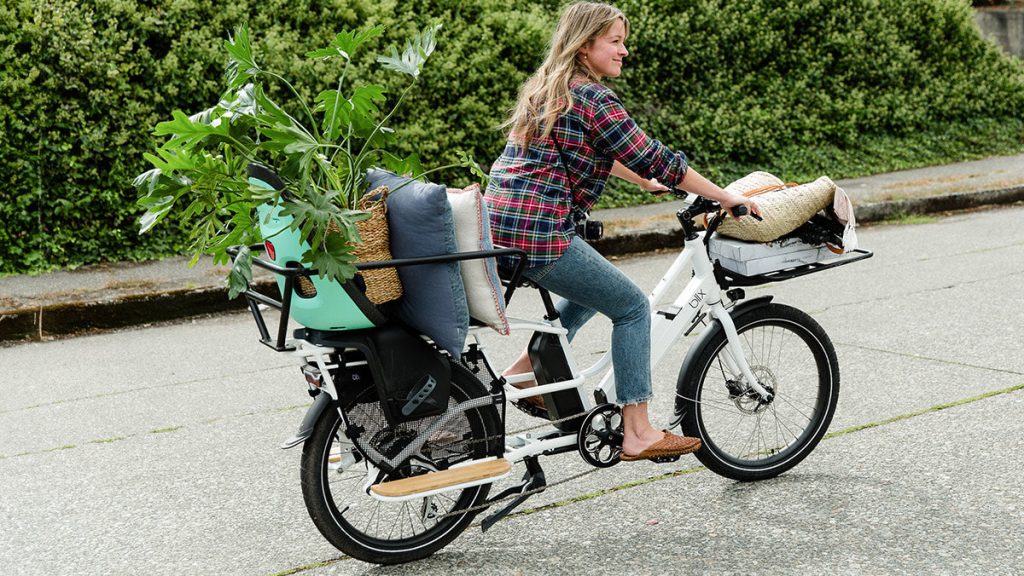
Modern cargo e-bikes are genuinely useful machines. They carry kids, groceries, sports equipment, beach gear, pets, picnic supplies, and anything else you can name.
And because electric assist eliminates much of the effort associated with heavy loads, families are discovering that many local “car tasks” were never really car tasks in the first place.
They were just transportation tasks.
And it turns out there are multiple ways to solve them. A cargo e-bike is a great solution, especially since many cargo e-bikes are still small enough to be useful for general everyday transportation roles, meaning one e-bike can still handle everything you need.
Cities and neighborhoods improve too
The benefits extend beyond individual families.
When more people use e-bikes for short trips, cities become quieter. Parking pressure decreases, roads become less congested, and neighborhoods become calmer and more social.
People on bikes interact with their surroundings differently than people sealed inside cars. You notice neighbors more often. You stop at local businesses more easily. Basically, you just become more connected to your own community. E-bikes are the mobile front porches of a community.
And when enough people ride, cities begin investing more seriously in safer infrastructure, creating a positive feedback loop that benefits everyone. The more people there are riding, the more people are able to ride.
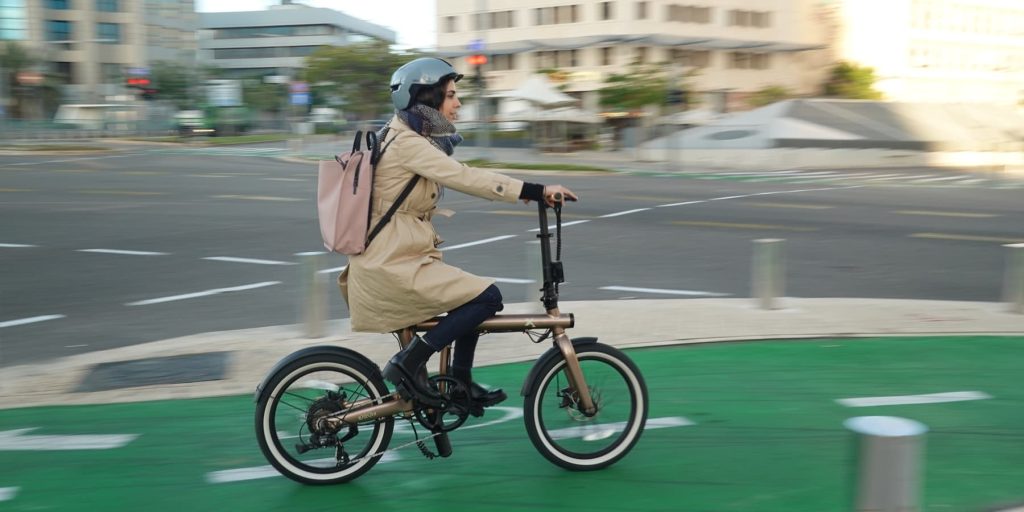
Even if you don’t care about climate change, the environmental benefits are obvious
Some readers tune out the moment environmental arguments appear. And I get it – it’s not everyone’s priority because it’s not the first thing to impact them every day. But it will be for your kids, and for theirs.
But even setting politics aside entirely, replacing short gas-powered trips with lightweight electric transportation is simply more efficient.
An e-bike uses an astonishingly tiny amount of energy compared to a car. That means less fuel consumption, less air pollution, less noise pollution, and lower overall resource use.
And unlike many environmental solutions that ask people to sacrifice convenience, e-bikes often improve convenience at the same time. That’s a rare win-win.
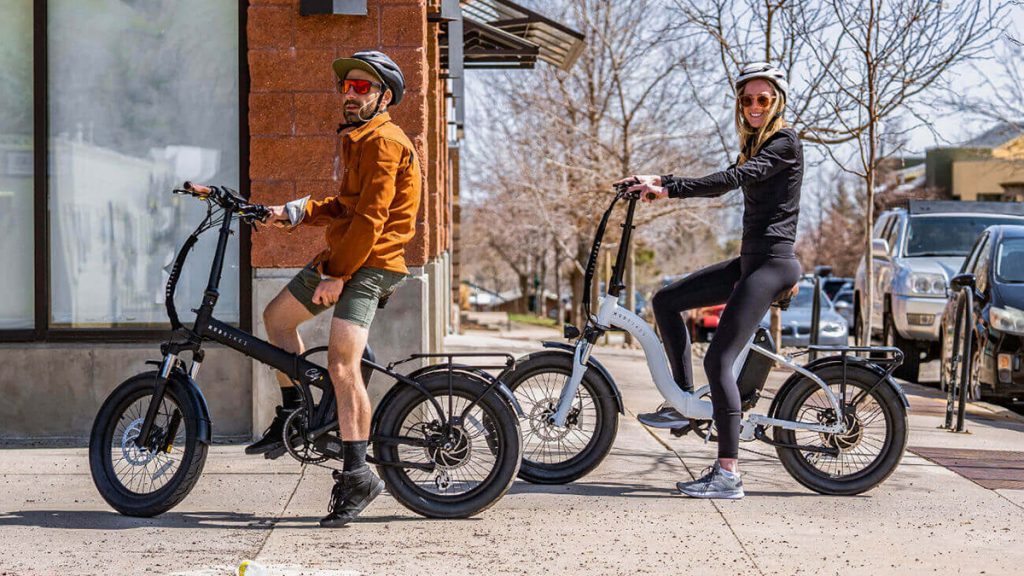
The biggest shift is psychological
Top comment by petew
Or just… a bike.
Kids and teens don’t need e-bikes to discover the freedom of independent mobility.
People have been replacing car trips for generations with bike commutes before the e-micro-mobility moment we are in.
E-bikes have been a huge boon to reducing auto-dependency and raising awareness of active transportation alternatives, and while I recognize this is an electrified transportation forum, I offer than an e-bike isn’t the best/only tool available.
Perhaps the most important thing about owning an e-bike is that it changes how a family thinks about transportation.
Once there’s an e-bike sitting in the garage, people start asking a new question: “Do we really need to take the car for this?”
Sometimes the answer is yes. But surprisingly often, the answer becomes no. And that single shift can gradually reshape a family’s finances, health, habits, and relationship with their community.
The rest of the world already figured this out years ago, but fortunately for us, America is finally starting to catch on.


FTC: We use income earning auto affiliate links. More.



Comments