
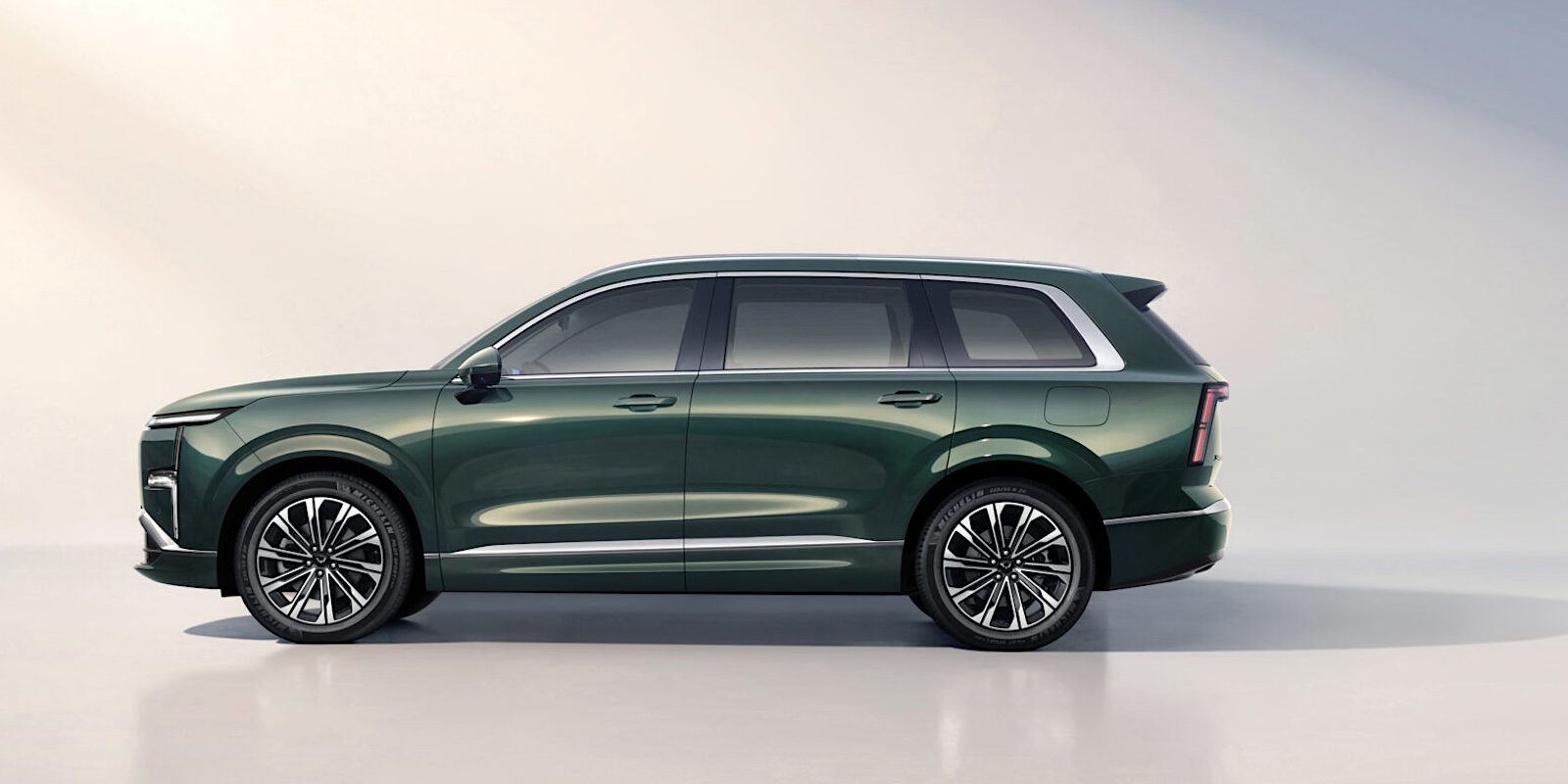
GM thinks its newest Starlight L PHEV SUV could be China’s best value hybrid, offering 260 km (~160 miles) of all-electric range, spacious six-passenger seating, and a modern technology package at an affordable price. And it’s exactly the kind of vehicle that the company could try to rebadge for North America
The newest flagship of the joint SAIC-GM Wuling brand, the Starlight L PHEV offers Chinese buyers a pure EV-like driving range with an ICE backup. Not the most popular kind of vehicle in that market, but with the rapidly increasing popularity of plug-in hybrids in North America, Canada’s relaxed stance on Chinese imports, and GM’s lack of full-sized PHEVs on this side of the Pacific, it seems like an easy, low-risk experiment for GM with plenty of upside.
To see what kind of a fit this new GM PHEV might be for North America, let’s take a look at the machine itself.
The headline spec isn’t the 106 hp 1.5-liter Atkinson-cycle ICE or even the electric drive motor that combine for a respectable 170 kW (~230 hp). Instead, it’s the Starlight L PHEV’s (relatively) massive 37.9 kWh LFP battery pack that offers roughly twice the capacity of a modern RAV4 Prime from Toyota and that’s about the same size as the batteries in the first-gen Nissan LEAF.
In practice, that lets the big SUV travel up to 260 km (~160 miles) on its battery pack alone, before the ICE ever gets called into service. That, I would argue, would allow GM’s new Wuling Starlight L to operate as an EV with a range extender (rather than a conventional PHEV) in most people’s daily driving cycles – a huge win, assuming we can convince North American drivers to ever plug the thing in, anyway.
With room for six and two captain’s chairs in the center row, and an upright, sturdy style that would presumably suit Americans’ tastes well enough, then, the real question is: will GM try to bring its new 132,800 yuan (about $19,900) Wuling Starlight L Flagship to North America?
Cars for canola
Earlier this month, a shipment of 18 brand-new Lotus Eletre EVs became the first Chinese-built electric vehicles from a Chinese-owned brand set to go on sale in Canada under an agreement that allows up to 49,000 Chinese EVs to be imported each year at reduced tariff rates, as America’s northern neighbor looks to diversify its auto market and reduce its dependence on US brands.
In exchange for lower tariffs on Chinese EVs and a foothold in the North American market, Canada is hoping that China will reduce its current import duties on Canadian canola oil (currently at 100%) and pork (at 25%). Reuters reports that tariff relief on products including canola meal, peas, and lobster – currently set to expire at the end of this year – are also on the table.
“As long as we keep to the right track, at the right pace, towards the right direction, there will be a lot of potential for us to increase our trade,” explains Wang Yi, China’s Minister of Foreign Affairs. “As long as the two countries uphold the principle of mutual respect, equality, reciprocity … there will be nothing that we cannot resolve.”
So it’s not totally far-fetched. And, face it, if GM wanted to test-drive North America’s response to Chinese-built cars, it could do a lot worse than the Starlight L, which rides a few inches longer and taller than the Chevrolet Blazer EV and could easily carry a Buick badge with minimal styling changes. Figure a 150% price bump for the US market to put it in at $49,990 and I think GM would have a winner.
Top comment by Gasbag
The first gen Leaf had a 24kWh battery so this is almost 60% larger.
Given the size of the vehicle The ~160 mi electric range is almost certainly CLTC which means it is probably south of 110 EPA miles.
If the batteries were shifted to replace the range extender then you’d probably have room for a #25 Choco SEB which would yield a vehicle that cost slightly less, be all electric, have a 300+ EPA miles range, and a sub 5 minute recharge time.
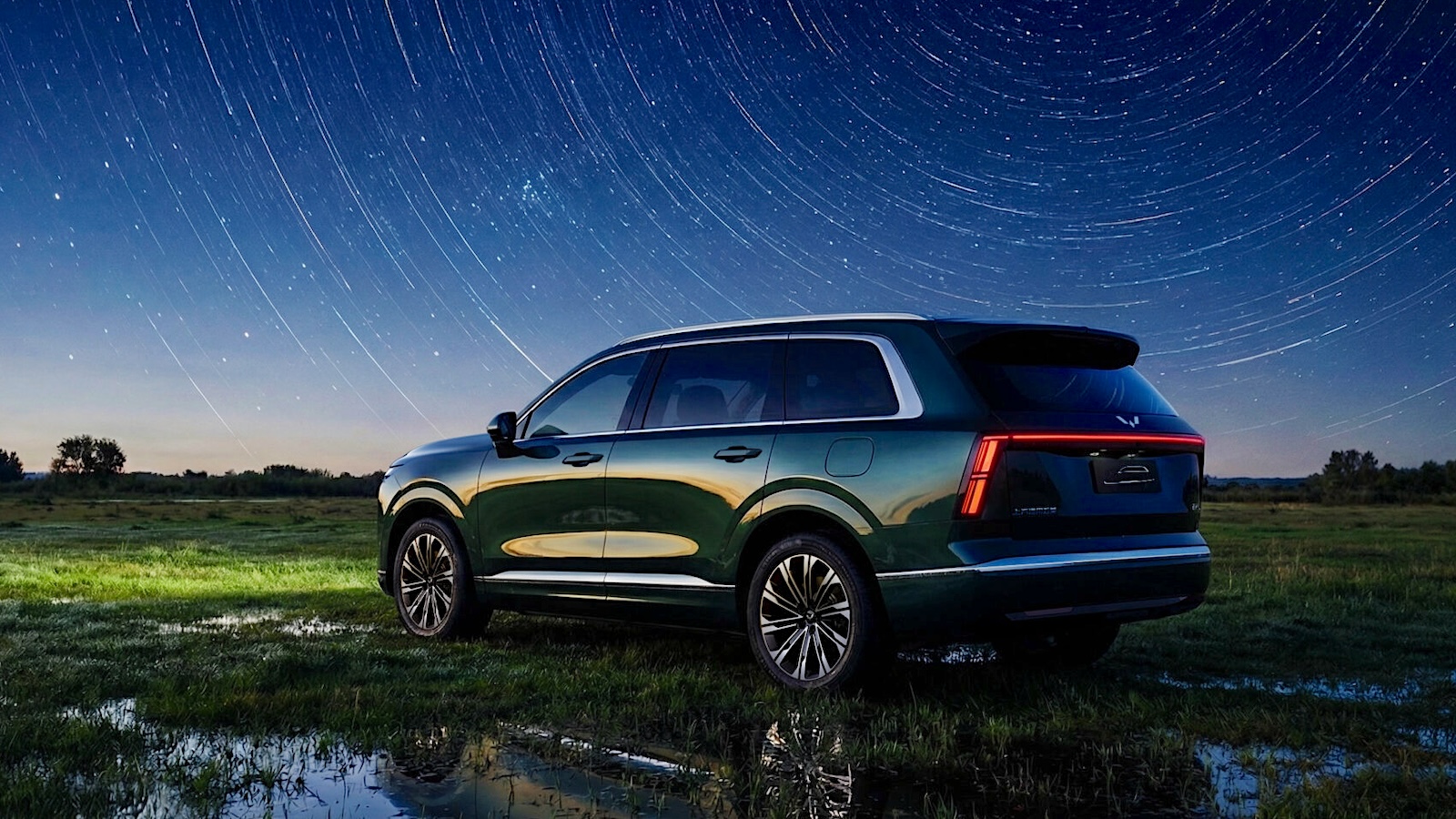
Take a look at the car, above, and its interior, below, then head on down to the comments section at the bottom of the page to let me know if you agree.
Wuling Starlight L PHEV interior


SOURCE | IMAGES: Wuling Cars.

If you’re considering going solar, it’s always a good idea to get quotes from a few installers. To make sure you find a trusted, reliable solar installer near you that offers competitive pricing, check out EnergySage, a free service that makes it easy for you to go solar. It has hundreds of pre-vetted solar installers competing for your business, ensuring you get high-quality solutions and save 20-30% compared to going it alone. Plus, it’s free to use, and you won’t get sales calls until you select an installer and share your phone number with them.
Your personalized solar quotes are easy to compare online and you’ll get access to unbiased Energy Advisors to help you every step of the way. Get started here.


FTC: We use income earning auto affiliate links. More.




Comments