
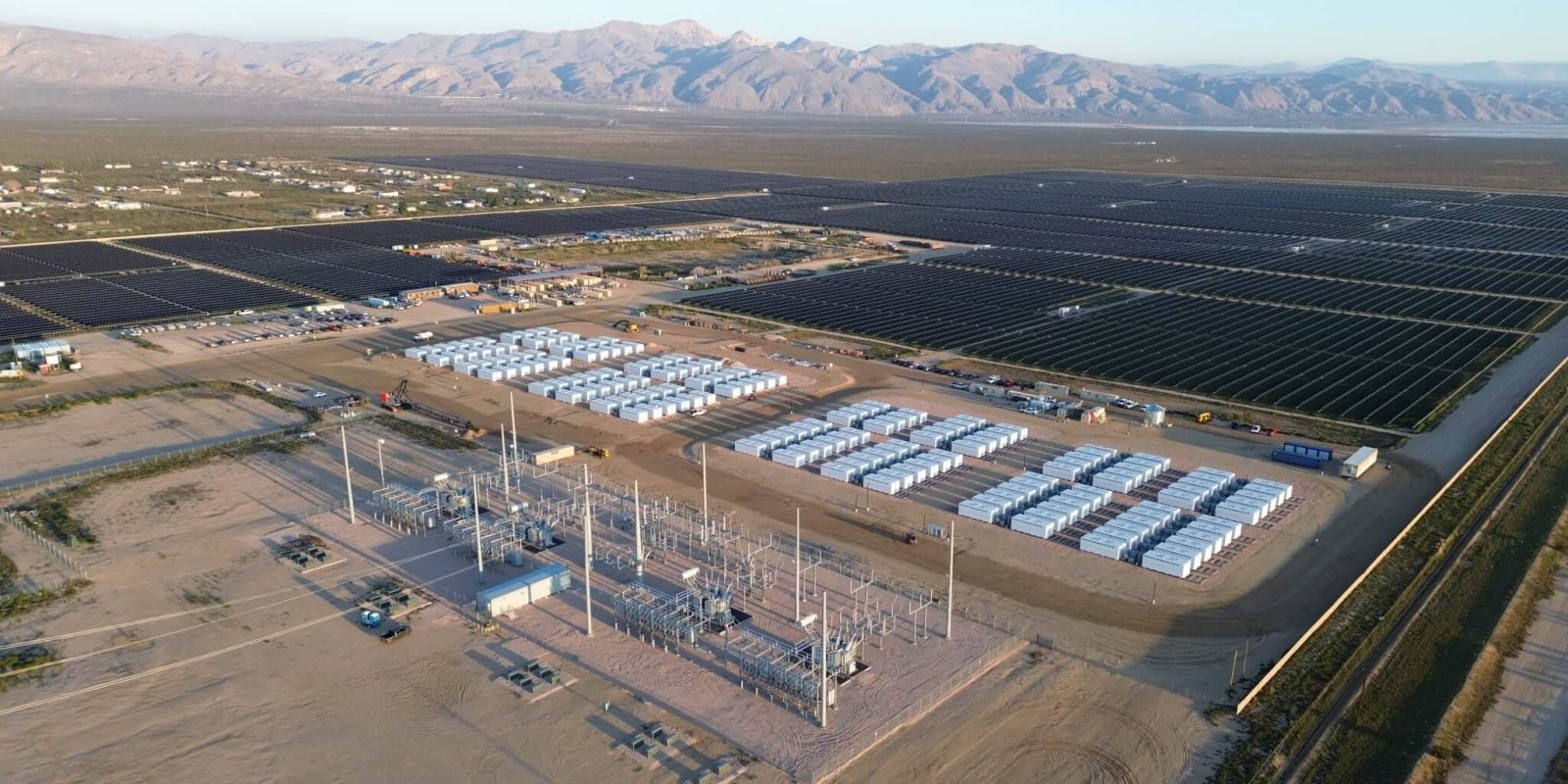
California’s utility-scale solar plants are generating more electricity than natural gas for most days of the year in 2026, according to new data from the US Energy Information Administration (EIA).
The EIA says that during the first five months of 2026, utility-scale solar generation in the California Independent System Operator (CAISO) rose 21% compared to the same period in 2024. Over the same timeframe, electricity generation from natural gas plants plunged 60%.
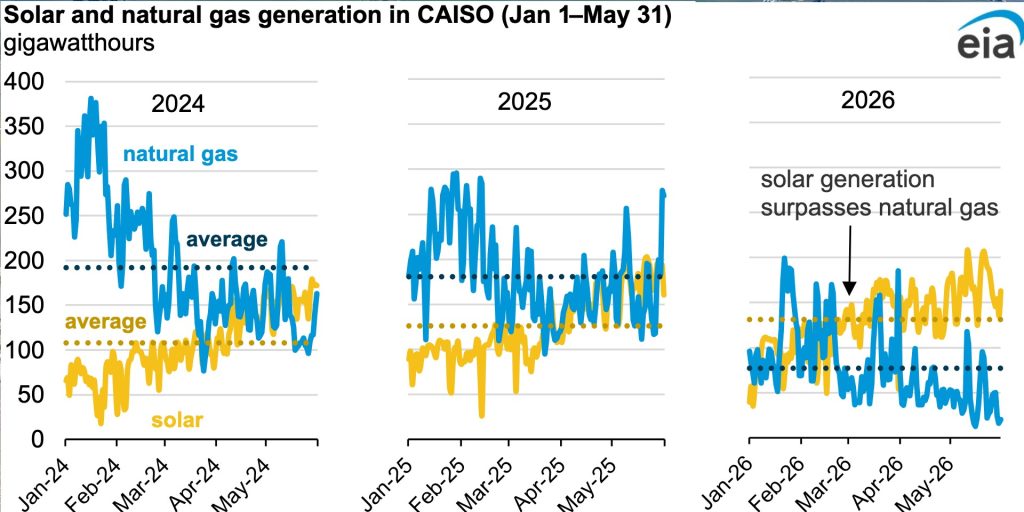
Solar didn’t just edge out gas occasionally, either. Utility-scale solar generated more electricity than natural gas on 82% of days between January and May 2026. That’s a huge jump from just 21% of days during the same period in both 2024 and 2025.
The shift comes as California continues adding solar and battery storage at a rapid pace.
Between April 2024 and April 2026, utility-scale solar capacity in CAISO grew 19% to 25 gigawatts (GW), according to the EIA’s Preliminary Monthly Electric Generator Inventory. Battery storage capacity expanded even faster, rising 79% to 16 GW. Natural gas capacity, by comparison, stayed essentially flat at 29 GW. Overall, total net generating capacity across the system increased 14%, or about 11 GW.
Batteries are playing a bigger role in helping California make use of all that solar power. Many battery systems are paired with solar projects, charging during the middle of the day when solar generation is abundant and discharging during the evening and early morning hours when solar output falls.
In fact, battery discharges during the first five months of 2026 were three times higher than they were during the same period in 2024.
Despite the growth in solar and battery generation and a 7% increase in electricity demand, total net generation within CAISO fell 19% over the two-year period. That’s because electricity imports from neighboring regions doubled.
The EIA says those imports increased largely because lower-cost power became available from outside California. Hydropower imports from the Pacific Northwest rose as drought conditions eased, and CAISO also began importing electricity from the huge new SunZia wind project in New Mexico starting in April.
The report also notes that CAISO retired 555 megawatts (MW) of generating capacity between May 2024 and May 2025. That total included a 300 MW battery storage facility that was retired after a fire in January 2025.
Taken together, EIA’s numbers show how quickly California’s electricity mix is changing. Solar generation keeps climbing, batteries are filling in the gaps when the sun goes down, and natural gas’s role has quickly diminished in just a couple of years.
Read more: One giant US power line, enough wind power for 1 million homes

If you’ve ever considered going solar, make it easy by finding a trusted, reliable solar installer near you that offers competitive pricing by checking out EnergySage. It has hundreds of pre-vetted solar installers competing for your business, ensuring you get high-quality solutions and save 20-30% compared to going it alone. Plus, it’s free to use, and you won’t get sales calls until you select an installer and share your phone number with them.
Your personalized solar quotes are easy to compare online, and you’ll get access to unbiased Energy Advisors to help you every step of the way. Get started here.


FTC: We use income earning auto affiliate links. More.



Comments