
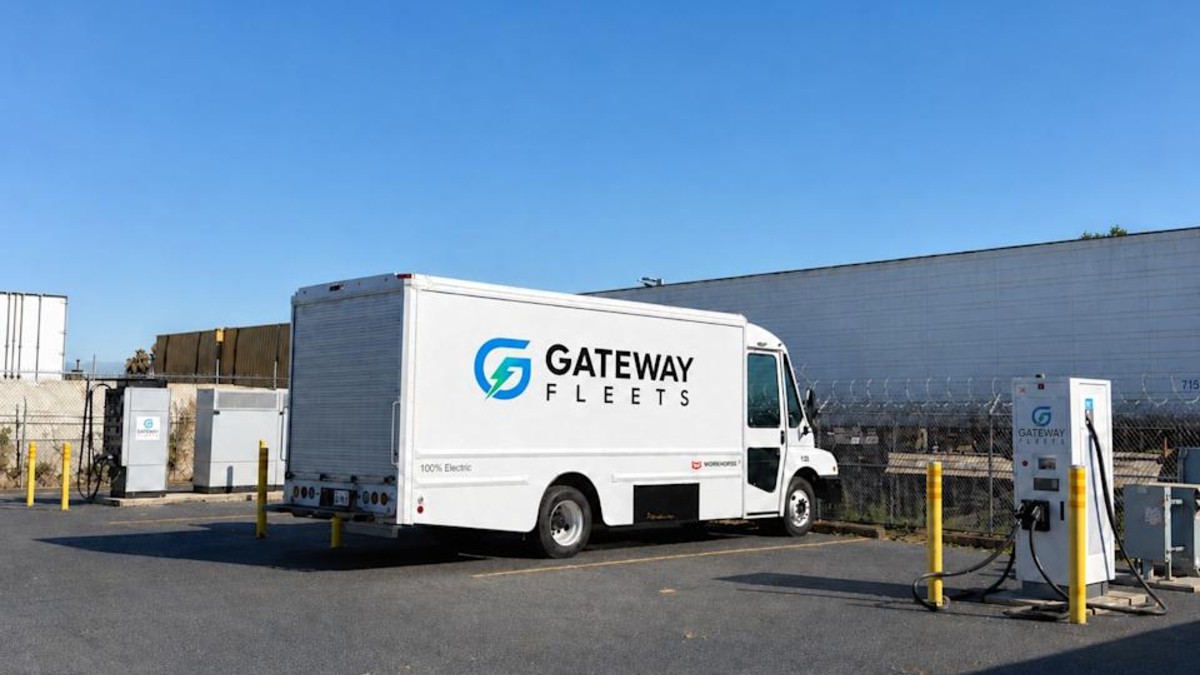
Workhorse just landed a 100‑truck order – and it’s tied to a model that could make electric fleets easier to run.
OEM Workhorse Group and California truck dealer Kingsburg Truck Center say Gateway Fleets has ordered 100 of its W56 electric step vans, with deployments set to start in July 2026, ahead of the busy holiday shipping season. The trucks will be deployed across Gateway’s growing network of electrified fleet depots, starting in Southern California.
Gateway packages the electric trucks it buys with onsite charging stations, depot access, and fleet support into a single offering for delivery operators. That way, fleets can lease trucks and plug into ready-to-go sites.
That lease structure is a big part of the pitch. Gateway says it helps operators avoid high upfront costs while still capturing lower fuel and maintenance costs associated with EVs.
And those savings can be considerable. The company says a year-long case study at its Riverside, California, site showed fuel cost savings of up to 65% on active delivery routes, even after accounting for electricity costs.
The trucks in this purchase order are Workhorse’s W56 step vans, the kind typically used for last‑mile delivery. The Gateway configuration offered includes a 178-inch standard wheelbase, a 210 kWh battery, about 150 miles of range, up to 10,000 pounds of payload, and 1,000 cubic feet of cargo space.
Workhorse builds the W56 at its Union City, Indiana, factory, which can produce more than 5,000 vehicles per year on a single shift. The company says it has delivered over 1,100 vehicles so far, which have logged more than 20 million miles in real-world fleet use.
Gateway plans to roll out the vans across its current sites and new locations it’s preparing to announce in the coming months, expanding charging access in key delivery markets.
Electrek’s Take
What’s interesting about this isn’t Workhorse agreeing a deal to sell 100 electric step vans (though that’s good, too); it’s Gateway’s business model.
One of the biggest barriers to fleet electrification isn’t the vehicles themselves. It’s everything around them: charging, depot space, financing, and operations. Gateway is bundling all of that into something fleets can actually use without a massive upfront investment.
If the economics hold up, and the claimed 65% fuel savings are real across more routes, models like this could accelerate EV adoption in last‑mile delivery, where margins are tight and reliability matters.
We’re starting to see more of these “fleet-as-a-service” approaches pop up. The question now is whether they scale and deliver consistent uptime and cost savings across different regions and use cases.

If you’ve ever considered going solar, make it easy by finding a trusted, reliable solar installer near you that offers competitive pricing by checking out EnergySage. It has hundreds of pre-vetted solar installers competing for your business, ensuring you get high-quality solutions and save 20-30% compared to going it alone. Plus, it’s free to use, and you won’t get sales calls until you select an installer and share your phone number with them.
Your personalized solar quotes are easy to compare online, and you’ll get access to unbiased Energy Advisors to help you every step of the way. Get started here.


FTC: We use income earning auto affiliate links. More.



Comments