

Buying an e-bike without a battery might sound a little like buying a car without a motor. But that’s exactly what Minnesota-based e-bike company Monarc is now offering – and there’s actually a pretty good reason for it.
Monarc has just rolled out a new pricing structure for its highly acclaimed Marker and Tracer e-bikes, allowing customers to choose between two batteries, one battery, or no battery at all.
The latter option knocks a cool $500 off the price.
The Monarc Marker, which normally costs $1,999 with two batteries, can now be purchased for $1,749 with one battery or $1,499 without a battery.
The Monarc Tracer gets the same $250-per-battery reduction, dropping from $1,899 with two batteries to $1,649 with one battery or just $1,399 without either battery.
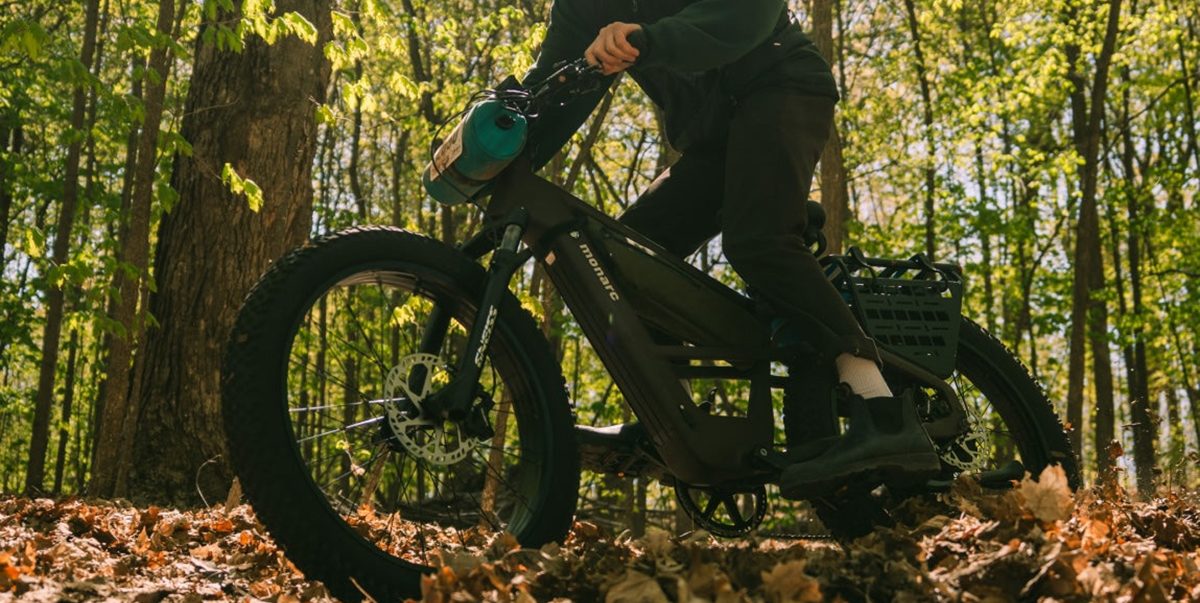
Of course, the battery-less versions aren’t really intended for someone buying their first Monarc. Instead, the company is targeting existing owners who already have compatible batteries and chargers sitting around.
That makes sense, since when the company first launched its premier e-bikes earlier this year, it did so with an impressively high-value package that included not just one but two batteries. At the time, it was seen as a bold move – especially since many e-bike companies hold back spare batteries as a significant upsell opportunity. But in this case, it looks like Monarc was angling for a different strategy more akin to the power tool world: build all your products around a single battery and then let owners swap just a few batteries among them.
If you already own a Monarc and want to add a second bike for a spouse, family member, or just a different style of riding, why buy another battery and charger if you don’t need them?
It’s a surprisingly logical idea, even if “battery-less e-bike” sounds like an oxymoron at first.
The one-battery option will likely have even broader appeal. While Monarc has traditionally included two batteries with its e-bikes, which was great for riders who want maximum range, not everyone wanted or needed a spare battery. And since batteries are also the single most expensive component on an e-bike, offering the models with a single battery is a great way to reduce cost and save owners money.
For riders who generally take shorter trips and can simply recharge at home, dropping the second battery saves $250 without changing anything about the bike itself.
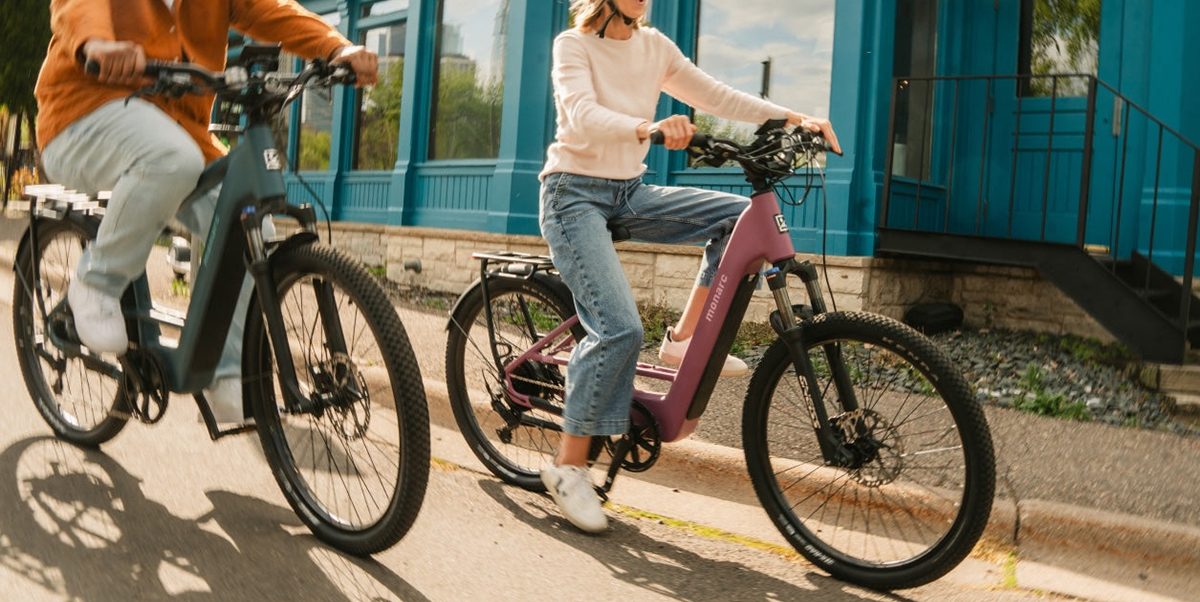
Monarc launched earlier this year, coming out swinging hard with higher quality e-bikes than we’ve typically seen from direct-to-consumer companies, yet at prices that put bike shop brands to shame.
I’ve personally had the chance to get a much closer look at Monarc than I’ve often gotten with most e-bike companies. Earlier this year, I visited the company’s headquarters in Minnesota, where I met the team, saw its operation firsthand, and even chatted with members of its in-house customer service team between their customer service calls.
I’ll have an in-depth video and article on that experience soon, but suffice it to say that my detailed visit helped drive home what Monarc is trying to do differently.
The company is essentially attempting to offer the type of nicer, more premium e-bike experience we normally associate with much more expensive brands, but using a direct-to-consumer model to keep the prices considerably lower.
That’s an increasingly difficult needle to thread in the e-bike industry. There are plenty of cheap direct-to-consumer e-bikes available online, just as there are plenty of polished premium e-bikes sold through dealers for several thousand dollars. Trying to land somewhere between those two worlds – better bikes and real support without premium-bike pricing – is a much smaller target. But with the backing of its parent company Lectric Ebikes, which happens to be the largest e-bike company in North America, Monarc seems to have stuck the landing gracefully.
The brand has impressed me so far with how seriously the team seems to take its mission. It’s one thing to put a customer service email address on a website. It’s another to walk into a company’s headquarters and see the people actually answering those emails and phone calls, sometimes jogging over to the engineering team to ensure they’ve got the most up-to-date tech answers for customers.
The new battery pricing strategy is another interesting example of the company thinking a bit differently.
Monarc calls its traditional two-battery package “The Monarc Way,” and that remains the full-monty option for riders who want the most range and flexibility.
The new single-battery version, dubbed “Monarc Base,” is designed for riders who simply don’t need as much battery capacity and would rather keep another $250 in their pockets.
Then there’s “The Second Monarc,” which includes neither a battery nor charger. That one is specifically aimed at current Monarc owners who can share batteries between bikes.
And personally, I really like the concept. I have just two Ryobi batteries but probably six or seven Ryobi power tools. I’m not really doing a lot of sanding and angle grinding at the same time, so it makes sense. And in the same way you’re probably not commuting and mountain-biking at the same time, this model gives Monarc a way to let riders tackle different e-biking scenarios without the extra cost of several redundant batteries sitting on the shelf.
We’ve seen e-bike companies increasingly lock riders into proprietary battery ecosystems, but there can actually be an upside to that ecosystem once you own multiple compatible bikes. If you’ve already got two perfectly good batteries sitting in your garage, forcing you to buy two more just because you want another bike doesn’t make much sense.
The $500 savings also makes Monarc’s pricing quite a bit more interesting. A $1,399 Tracer or $1,499 Marker sounds considerably different from an e-bike pushing two grand, even if you obviously need to already have a battery to make those prices useful. And to be perfectly honest, those bikes have no business costing that little, especially when you consider the higher end parts like Shimano CUES transmissions, Talon P4 quad-piston brakes, GNEISS reverse arch suspension forks, Bafang 750W motors, and other high-end parts adorning the bikes. These are budget bikes prices for more premium-end gear.

For first-time buyers, I suspect the $250 savings on the single-battery models will be the more meaningful development. Many riders simply don’t need two batteries, and now they don’t have to pay for capacity they aren’t going to use.
So yes, Monarc is now selling e-bikes without batteries.
But rather than another case of an e-bike company finding something to remove from the box to advertise a lower price, this one actually seems to make sense.


FTC: We use income earning auto affiliate links. More.


Comments