
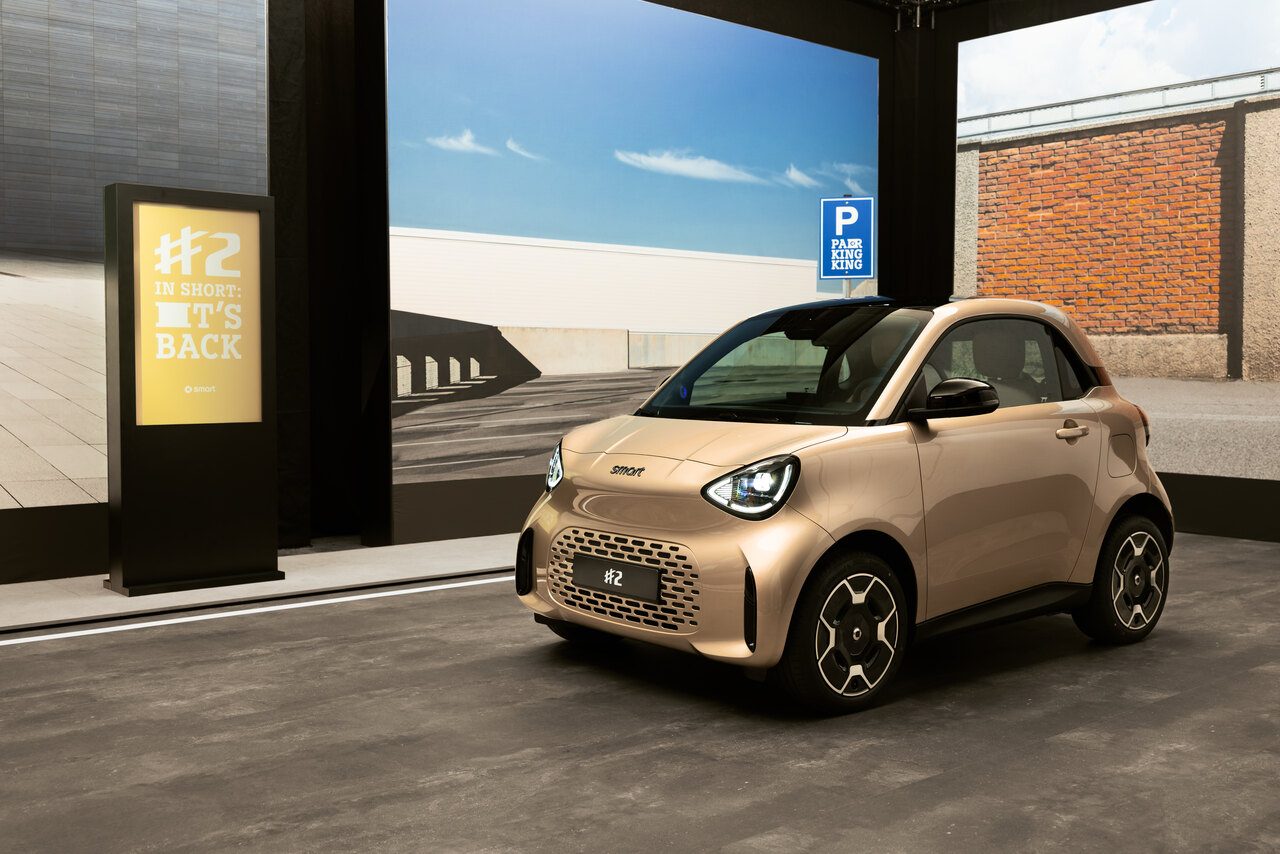
Smart is back in the two-seater business. The Mercedes-Benz and Geely joint venture unveiled the all-electric Smart #2 at the Paris Motor Show today, with a 35.8 kWh LFP battery, up to 290 km (180 miles) of WLTP range, and a starting price of €19,990.
That’s more than double the range of the last Smart EQ Fortwo, which never got DC fast charging. Early orders open in Europe tomorrow, and deliveries start in 2027.
The Fortwo formula, with the EV problems fixed
Smart picked the same Paris show where it revealed its first two-seater concept 30 years ago, and it didn’t mess with the recipe. The #2 is 2,746 mm long, about 5 cm longer than the old EQ Fortwo. The wheels are still pushed out to the corners, and the two-tone paint and split tailgate are back.
The turning circle is 6.95 meters curb-to-curb. Tiny.
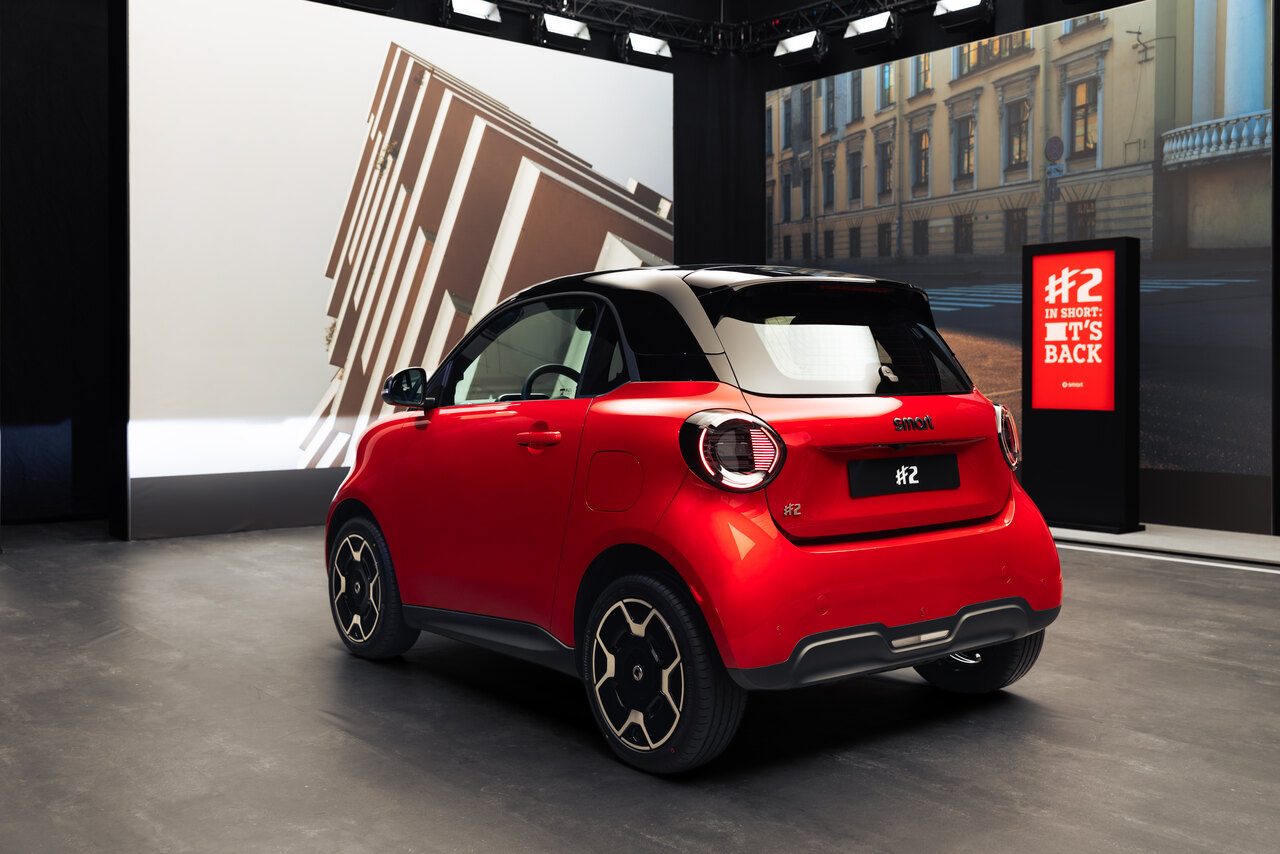
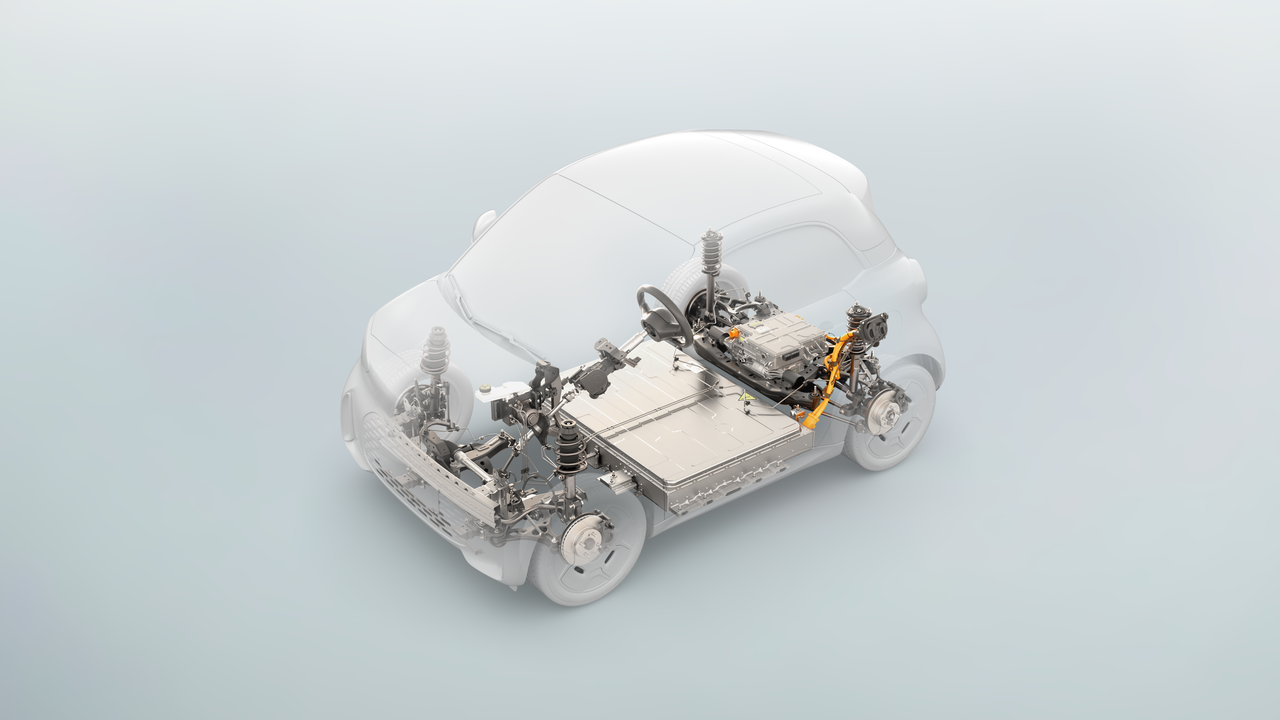
The big change is underneath. Smart developed a new platform for the car, which it calls Electric Compact Architecture (ECA), with the battery in the floor and a 60 kW motor driving the rear wheels with 130 Nm of torque. The company also claims the #2 has the first five-link rear suspension in its class.
Here’s how it compares to the car it replaces. Power is identical. Almost everything else isn’t:
| Smart EQ Fortwo (2020-2024) | Smart #2 (2027) | |
|---|---|---|
| Battery | 17.6 kWh | 35.8 kWh LFP |
| WLTP range | 133 km | 290 km (target) |
| DC fast charging | None | 65 kW |
| AC charging | 4.6 kW (22 kW optional) | 7.4 kW / 11 kW |
| Motor | 60 kW | 60 kW |
| Length | 2,695 mm | 2,746 mm |
On a DC fast charger, Smart says the #2 goes from 10 to 80% in about 20 minutes. The base Pure trim is stuck with a 7.4 kW single-phase onboard charger, which takes about 5 hours for the same session, while the other trims get 11 kW. There’s also vehicle-to-load, but you need to buy a separate adapter for it.
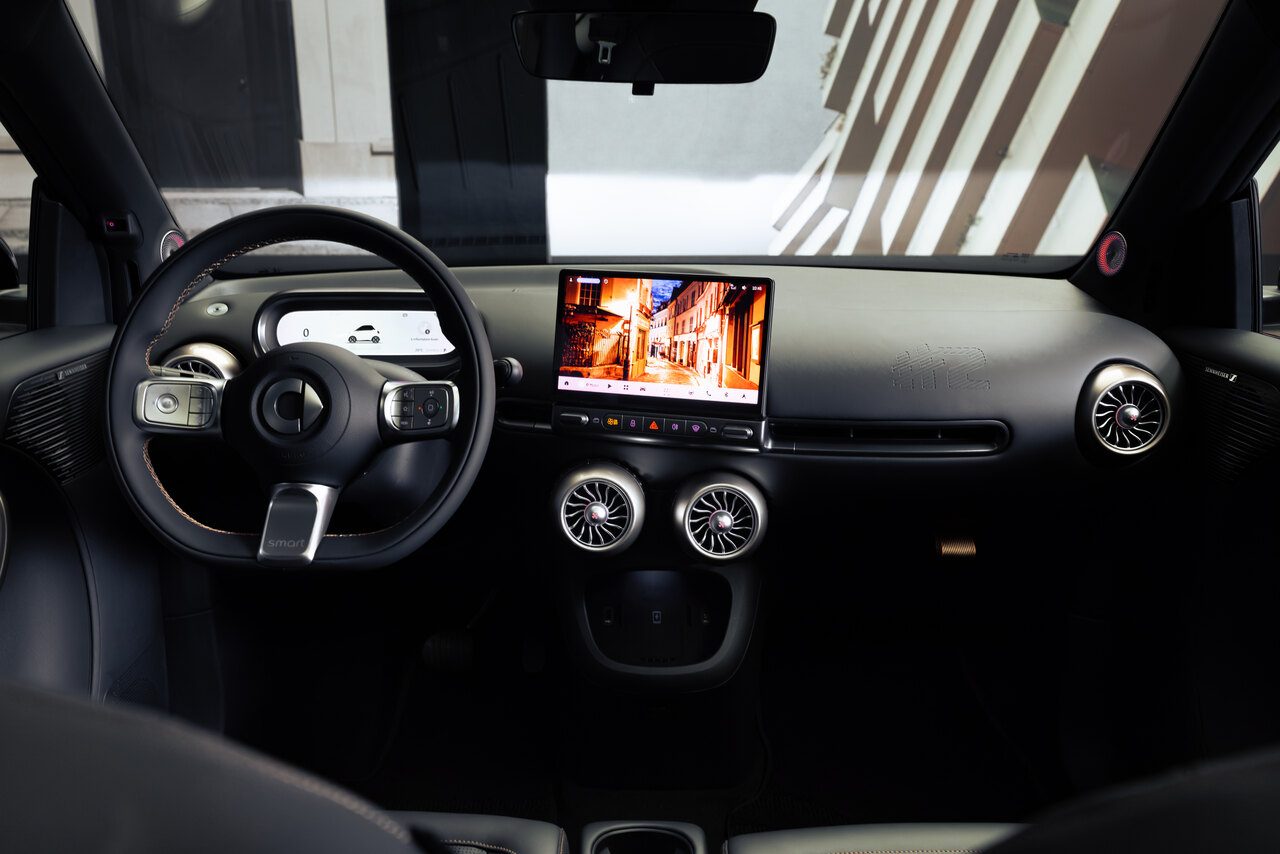
Inside, there’s a bench-style seat layout, a 10.1-inch center screen, an 8.8-inch driver display, and an eight-year connectivity package. Adaptive cruise control with stop-and-go and Smart’s Pilot Assist are standard on every trim.
Four trims, starting at €19,990
Here’s the German pricing Smart released this afternoon. It says the €19,990 starting price also applies in France and Italy:
- Pure: €19,990
- Pure+: €20,990 (11 kW AC charging, heated driver seat)
- Premium: €24,490 (glass roof, heated faux-leather seats, 7-speaker Sennheiser system)
- Couture Edition: €25,690 (limited to 999 units in Europe)
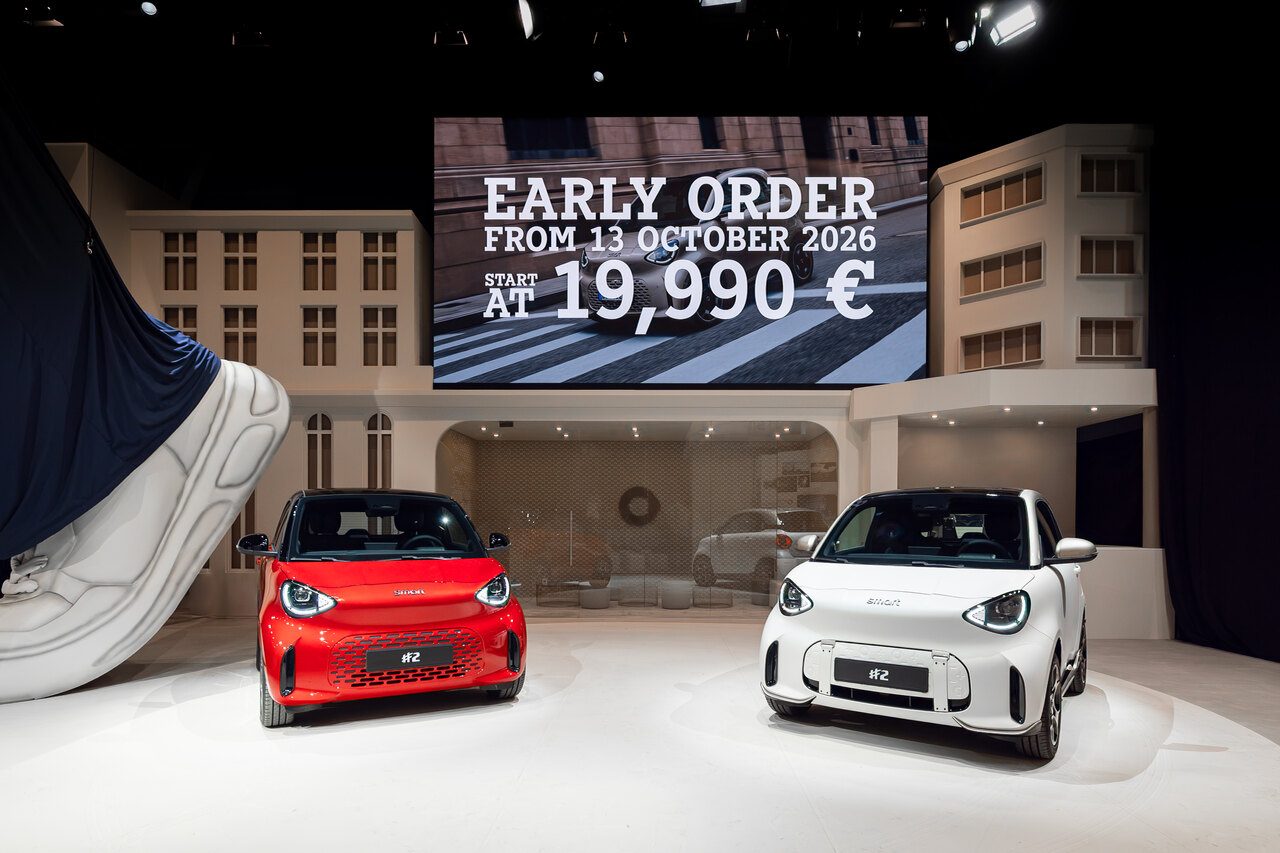
Wolfgang Ufer, CEO of Smart Europe, said that “the time is right for the next chapter of the smart two-seater.” Smart is selling the car through its retail partners first, with online ordering following in the first half of 2027. The company notes the #2 is still going through EU homologation, so the specs could change before deliveries.
The timing makes sense. Mercedes handed half of Smart to Geely in 2019 and turned it into a Chinese-built EV brand, but so far that has meant crossovers like the #1, #3, and the Model Y-sized #5. The #2 is the first car of the new era that looks like what people think of when they hear “Smart.”
The Twingo problem
The obvious rival is Renault’s new Twingo E-Tech, which also starts at €19,990 in Germany. The Twingo gets a 27.5 kWh LFP pack, up to 262 km of WLTP range, and 50 kW DC charging.
So the Smart wins on paper with 28 km more range and faster charging. But the Twingo has four seats and five doors for the same money.
And if you’re in the US, don’t get your hopes up. Daimler pulled Smart out of the US and Canada in 2019, and a Chinese-built car with connected services has no path into the US market under current rules.
Electrek’s Take
We like this car. The original electric Fortwo was a great idea held back by its battery. With 133 km of WLTP range and no DC fast charging, it was a city car you couldn’t take out of the city and you’d need to think twice about buying it unless you had a charging situation at home in the city. Smart never solved that after launching the 17.6 kWh Fortwo electric drive in 2016. The #2 finally does, with twice the battery and a real fast-charging port.
But the price puts it in a tough spot. €19,990 is now the going rate for a small European EV, and at that price Renault gives you a four-seat hatchback. The two-seater’s argument has always been parking. In Paris, Rome, or Amsterdam, a car under 2.8 meters long can squeeze into spots nothing else fits, and that’s a real advantage. It’s also a niche one.
So the #2 will live or die on how many urban buyers value a tiny footprint over a back seat. The old Fortwo proved that market exists, but it was never huge. And Volkswagen’s ID. Every1 is supposed to land at around €20,000 in 2027, right when the #2 starts deliveries.
Still, this is the most compelling Smart in years. It’s a car with a clear purpose, which is more than we could say about the brand’s lineup of crossovers.
A small city EV like the Smart #2 sips electricity, and charging it from your own rooftop solar brings the cost of driving it close to zero. With electricity rates up almost 10% last year and expected to keep climbing, going solar is one of the best ways to protect yourself against rising costs. And with lease and PPA options, you can do it with zero upfront cost and start saving immediately. If you want to find the best deal, check out EnergySage. It’s a free service with hundreds of pre-vetted installers competing for your business, so you save 20 to 30% compared to going it alone. No sales calls until you pick an installer. Get your free quotes here.


FTC: We use income earning auto affiliate links. More.



Comments