
Elon Musk says the Boring Company is working on a 200-mph “Hyperloop” tunnel between Austin and San Antonio that would cut the drive to under 30 minutes. He posted the claim on X this weekend with no route, no timeline, and no cost.
It’s a version of a promise Musk has been making for more than a decade. So far, he hasn’t built any of them.
“Boring Company is working on a simple, precursor Hyperloop tunnel between Austin and San Antonio (>200 mph),” Musk wrote. “Due to traffic congestion, that journey can currently take up to 2.5 hours. @BoringCompany can reduce that to a consistent <30 mins.”
The Boring Company replied that it “would be excited and honored to build this massive infrastructure project.”
The two cities sit about 80 miles apart on I-35. At a sustained 200 mph, the math roughly works. The problem is the gap between the tweet and anything real. No permit. No funded route. And no sign anyone is committing to anything.
Musk has promised a hyperloop for over a decade
Musk introduced the hyperloop in a 2013 white paper: passengers riding in pods through a near-vacuum tube at 700 mph. He open-sourced the idea and moved on. In 2017, he claimed “verbal” government approval for a Boring Company hyperloop from New York to Washington, DC. It never happened. A year later, the company got a green light for a possible hyperloop station in Washington. That didn’t happen either.
The most recent attempt is the most telling. In late 2022, the Boring Company began testing a “full-scale” hyperloop at its Texas facility near Austin. The “twist”: it was a Tesla driving through a tube at normal air pressure, not a pod in a vacuum. The company still advertised “600+ mph.” Nothing came of it.
So this Austin-San Antonio pitch isn’t a new frontier. It’s the fourth or fifth time Musk has floated a hyperloop, in some cases in the exact same part of Texas.
What the Boring Company has actually built
One thing: the Las Vegas Loop. It’s a network of tunnels under the convention center and a few casinos where human-driven Teslas shuttle passengers between stations. In Electrek’s first rides back in 2021, the cars topped out around 35 mph. Self-driving still isn’t working in them.
Bigger projects keep getting announced and quietly dropped, from a Chicago airport express to an Ontario, California airport loop. Money isn’t the issue. The company just raised $3 billion at a $23 billion valuation, led by the UAE. It’s not short on cash, but it is short on delivered high-speed transit.
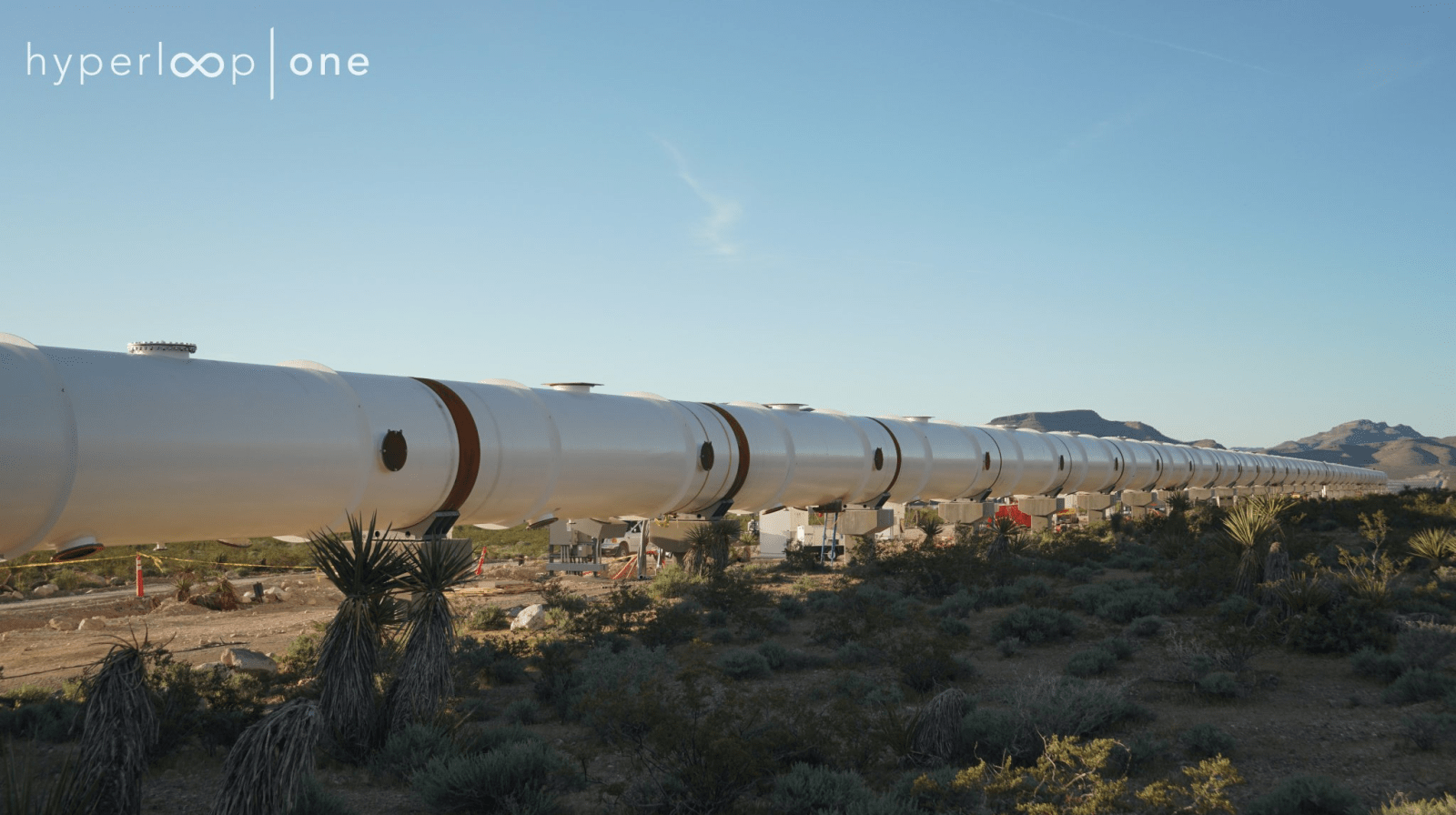
And no one else has cracked it. Hyperloop One, the best-funded independent effort, burned through hundreds of millions and shut down in December 2023 without moving a single paying passenger. A decade after Musk’s white paper, there isn’t one hyperloop carrying people anywhere on Earth.
Electrek’s Take
We’ll believe it when we can ride it.
Top comment by bruno tonelli
We call them high speed trains. We have plenty of them in Europe. They are fast (more than 200 mph) and they are reliable. They are also profitable. And they can transport way more people than any kind of fantasy hyperloop.
The Austin-San Antonio corridor is a real problem worth solving. It’s one of the fastest-growing regions in the country, and I-35 between the two cities is miserable. But a weekend tweet with no permits and no timeline isn’t a plan. It’s a headline.
We have been here too many times to just beleive Musk when he says something like this.
Musk delivers on plenty. Reusable rockets and the best-selling EVs of the last decade are not vaporware. But hyperloop is one idea he’s pitched over and over and never once shipped. Until there’s a signed agreement with the state and a shovel in the ground, this belongs in the same folder as the New York-DC tunnel: a promise, not a project. What would change our mind? A permit. We’re not holding our breath.
Whatever becomes of Musk’s tunnels, the cheapest way to get around is on energy you make yourself, and if you drive an EV, home solar can cut your charging costs to nearly nothing. With electricity rates up almost 10% last year and expected to keep climbing, going solar is one of the best ways to protect yourself against rising costs. And with lease and PPA options, you can do it with zero upfront cost and start saving immediately. If you want to find the best deal, check out EnergySage. It’s a free service with hundreds of pre-vetted installers competing for your business, so you save 20 to 30% compared to going it alone. No sales calls until you pick an installer. Get your free quotes here.


FTC: We use income earning auto affiliate links. More.





Comments