
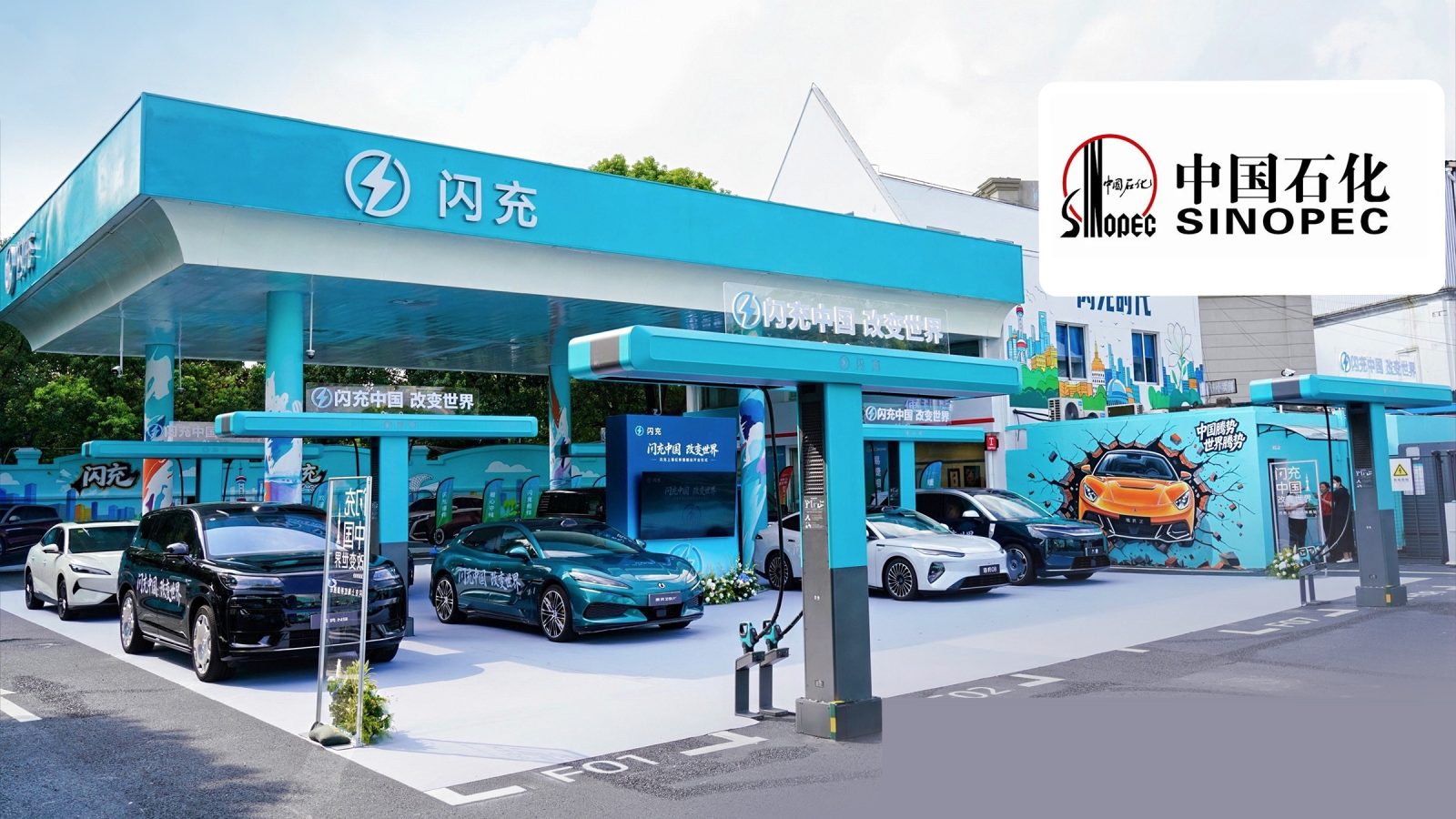
Chinese oil use dropped drastically in Q2 of this year, leading to an overall drop in emissions for the country. That alone is a big deal – but the potential effects of the world’s second-largest oil consumer rapidly passing peak oil could have massive effects on the world’s oil markets.
For the past few years, it has seemed that China was in the midst of a plateau in both emissions and oil use. Nobody was ready to declare that it had passed the peak of either, wondering whether the graphs might turn upwards from here. But with new Q2 numbers showing a drastic drop in oil use and a consequent drop in total CO2 emissions, it might be that time.
New numbers released by the National Bureau of Statistics of China and analyzed by Carbon Brief tell the tale: in Q2, overall oil use dropped by a whopping 9% in China, and an even more incredible 16% for transportation.
Combined, the drop in oil use was enough to pull Chinese CO2 emissions down by 1%. This may seem like a minor drop, but it happened despite an uptick in coal use. Usually, when countries reach peak emissions, it’s due to dropping coal use, and this is the first instance Carbon Brief could find where lower oil use, rather than coal, was the driver of a reduction in emissions.
It would be tempting to blame the drop in transportation emissions to a disrupted global oil market which has fallen victim to an ill-considered war of choice, spiking energy prices globally, especially for Far East nations. As oil prices spike, perhaps Chinese consumers are using their vehicles less, causing only a temporary drop in oil use.
But transportation levels have in fact increased in China. Part of this has been due to increased public transit, which could be a result of Chinese people being priced out of private gas-powered transit.
But a large portion is due to the boom in electric vehicles and collapse in ICE vehicle sales in the country, meaning transportation is simply getting more efficient in the world’s largest auto market. Not only are more EVs on the road, but EVs are being used more than non-EVs (partially due to a rise in electric taxis).
In fact, in the first six months of this year, EVs in China displaced more oil than all of the UK used in the same period. A massive rise in electric heavy truck sales was responsible for the largest part of this oil displacement.
Huge numbers like a 9% drop in oil use and 16% drop in transportation oil use are generally considered anomalous, the type of drop that is usually an outlier. These are Q2 2020-level numbers – when COVID was at its strongest, and nations around the world dropped oil use and emissions significantly.
China seems to be past peak oil consumption
So we wouldn’t necessarily expect to see these numbers every quarter from here on out, but it does seem like we’ve finally passed peak oil consumption in China.
This is a milestone which many have expected to come for years now. Sinopec, China’s state-owned oil company, predicted in 2024 that Chinese oil demand would peak before 2027, but last week said that actually, it probably already peaked in 2025.
“Next year, even if the US-Iran conflict eases up, things might recover, but it won’t hit last year’s level. So it’s very likely demand peaked last year.”
-Hou Qijun, Chairman, Sinopec
Going forward, this could be a huge influence on oil markets. China’s high level of electrification (and its release of its petroleum reserve) has already been credited for “quietly saving the world” from what could have been a much larger oil shock related to the ill-advised war in Iran.
So having the world’s second-largest oil consumer (the US consumes more oil than China, despite having only 1/4 of China’s population) suddenly stop using nearly as much oil is the sort of shock that gets oil traders to stand up and notice (or to stick their fingers in their ears and shout “I’m not listening”).
China’s CO2 and oil peaks come much earlier than the US’ did
If oil use and CO2 trendlines continue as they have, this means that China will have peaked its per capita CO2 emissions at about a third of the US’ peak. US CO2 emissions peaked at around 22 tons per capita, a number reached in the 70s and nearly reached again in 2000. Meanwhile, Chinese per capita emissions are currently just over 8 tons per capita.
In terms of total emissions, China is still ahead – that’s because China has 4 times as many people living in it as the US does, and because the US has been gradually reducing emissions since the early 2000s, whereas China is later in its development curve.
And in terms of oil usage, China’s peak consumption was 17.35M barrels/day in 2025. Meanwhile, USA’s was 19.4M in 2025, and previously peaked at 20.53M in 2005. This means that every American is currently using more than 4x as much oil as every Chinese person, along with making almost 2x as much CO2 (USA’s current per capita emissions sit around 14 tons per year).
So if China truly has passed the peak for both of these numbers, then it has done so at much lower levels than the US did. Showing that a country can develop into a major world power while still pulling the arc of its CO2 emissions in the right direction.
How this could trigger the death spiral that can end oil
It’s a trend that I saw in Norway in 2023, where massive EV adoption led to cratering motor fuel sales. I declared (with a very similar headline as today’s article, sorry) that this trend showed “the death spiral that can end oil,” and this is how that could work.
While many have mentioned that higher oil prices lead to increased demand for EVs and decreased consumer demand for oil (as we are seeing now, in China and elsewhere, with phrases like “permanent demand destruction” being bandied about), relatively less attention has ben put on the supply side of this equation, where low oil prices reduce the incentive to explore and drill for oil.
If oil demand goes down, and oil prices go down, it suddenly becomes less economical to open new wells, and potentially even uneconomical to operate existing oil extraction operations in some areas. This, then, can cause a larger positive environmental effect than increased EV use does, because it means that oil projects will be cancelled or won’t be proposed in the first place, and that oil will stay in the ground where it absolutely, positively, objectively needs to remain.
That previous article was about Norway, which has been the world standout in electrification, but at the end of the day is a tiny country which wasn’t going to affect global oil consumption that much.
But China is anything but a tiny country. China is the sort of country that can really change world oil markets. And it’s not far behind Norway in terms of EV sales percentage – and way ahead in total number of EVs and total displaced oil use.
Oil crashes have happened for less. The 2014 crash in oil prices, wherein oil lost about half of its value, was blamed on an oversupply of roughly 2 million barrels a day globally. Meanwhile, China’s 9% drop in oil consumption in Q2 represents about 1.5 million barrels a day worth of avoided oil use. That’s just one country, in which about 25% of cars on the road are electric (up from around 18% this time last year). Just wait until that number continues to go up in China, and everywhere else too.
We’re not seeing a global supply glut right now because supply is constrained by the war in Iran, which has allowed oil companies to opportunistically put up record profits. But going forward, if the disruption from that war ends and supply normalizes, it’s going to have to normalize at a lower supply number and/or a lower price. Either of these are good news for the environment, and could hopefully trigger cascading effects (like making oil companies rethink drilling in the arctic).
An actual free market – one where externalities are priced – would help this happen
It is a possibility that a future where oil prices drop significantly will result in a return to oil as a cheaper-than-present form of energy. But that could be avoided by ending the subsidy, in the amount of trillions of dollars globally per year, that fossil fuels get by not having to pay the full costs they impose on society.
This could be solved by finally properly pricing oil globally. In countries that have implemented a realistic carbon price, pollution has dropped and societal wellness has increased. The IMF estimates that pollution pricing would increase world GDP by eliminating market inefficiencies.
In contrast, the artificially low gasoline costs in the US (yes, US gasoline prices are still artificially low, even at today’s “high” prices) work to buoy consumer oil demand. Removing the ~$750 billion in yearly implicit subsidies received by the fossil fuel industry in the US alone would help ensure that fair market conditions could prevail, and consumers would have a clear choice about what the better and cleaner option is.
And if we finally let the market work freely, after more than a century of both direct and implicit oil subsidies that have coddled this lying, deadly industry, we could finally see it spiral into the oblivion it deserves.
Charge your electric vehicle at home using rooftop solar panels. Find a reliable and competitively priced solar installer near you on EnergySage, for free. They have pre-vetted installers competing for your business, ensuring high-quality solutions and 20-30% savings. It’s free, with no sales calls until you choose an installer. Compare personalized solar quotes online and receive guidance from unbiased Energy Advisers. Get started here. – ad*


FTC: We use income earning auto affiliate links. More.





Comments