

The Department of Transportation has removed bike lanes from its list of proven safety measure, among other changes which will worsen traffic congestion. The changes seem focused on making roads less safe for bicycles, when cyclist deaths are already near all time highs.
Tens of thousands of people are killed on US roads every year. 36,640 died in 2025 – which is actually one of the lowest rates the country has ever recorded, and has been falling for decades as cars get more safety technology.
So if road deaths are down, everything is going great, right? Well… not so fast.
The US per capita road death rate is actually almost six times higher than that of the UK. There are over 100 countries with lower road death rates than the US, including countries with famously dangerous roads like India, Pakistan and Russia. Put in that framing, our “record low” numbers don’t look so great.
They look even worse for anyone who uses US roads and isn’t in a car.
In recent years, US pedestrian and cyclist deaths are both at or nearing the highest ever rates recorded, with cyclist deaths hitting a 40-year high in 2025 and pedestrian deaths doing the same in 2022.
Several reasons have been proposed for this rise, with the common assumption being that phone distraction plays a part. But other countries which also have seen growth in the use of smartphones have not seen similar rises in deaths as the US has, so this is unlikely to be the explanation.
One thing that most other countries haven’t seen is the proliferation of vehicles with giant hoods. The US has particularly weak hood-height and pedestrian/cyclist safety requirements for cars, so this is a variable which has affected the US more than elsewhere.
A tall hood is deadlier to other road users, because it will tend to knock people over onto the ground, rather than having them fall onto the hood and be somewhat cushioned after being struck.
Other countries also have worked on strategies to separate car traffic from traffic of other road users – kicking cars out of city centers, creating protected bike lanes, and the like. These are simple solutions which everyone around the globe knows to work.
These giant cars are making roads less safe for everyone. Science knows what the problem is here.
So of course, what is the set of incompetents running the US into the ground to do? Well, ignore the science and try to kill more cyclists.
Sean Duffy is openly trying to kill anyone who isn’t in a car
That’s the move made last week by Sean Duffy, the current squatter at the head of the Department of Transportation. Duffy’s transportation “expertise” comes from being a contestant on Road Rules: All Stars, a reality TV travel game show.
Changes were made to the Federal Highway Administration (FHWA) list of “Proven Safety Countermeasures.” This is a set of strategies the FHWA recommends to state and local transportation agencies to increase road safety.
Prior to last week, there were 28 total strategies listed on the website, each with their own breakdown on how they benefit safety.
But last week, 5 of those strategies were removed, and most of them relate to cyclists. Here’s a before and after:
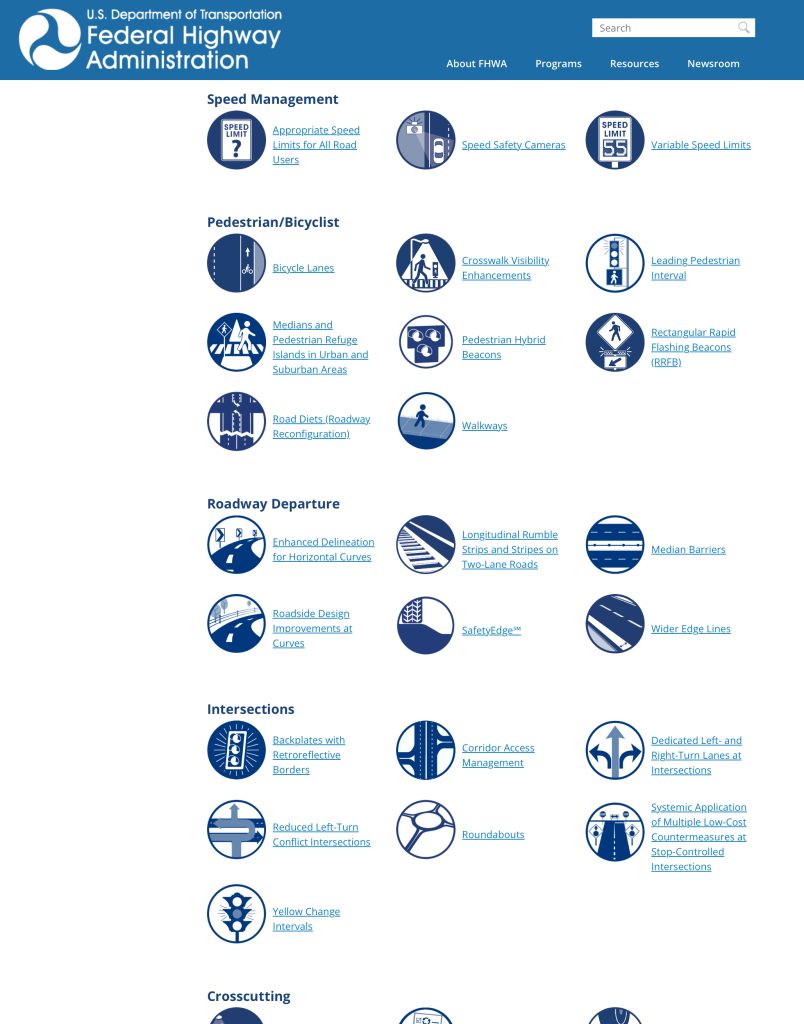
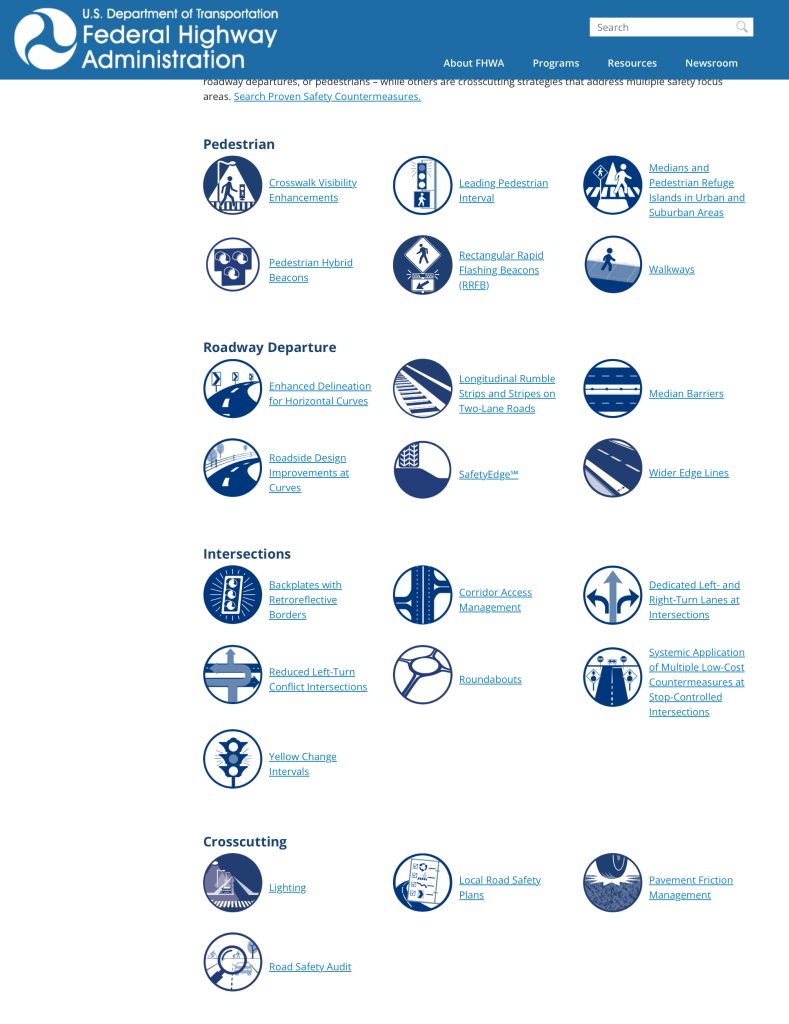
Looking side by side, you can see five main changes, most of which relate to cyclists. Also, the word “bicyclist” was deleted from the “pedestrian/bicyclist” section, which sort of gives the whole game away. Here’s a breakdown of the five now-missing categories, along with the benefits they bring:
- Appropriate speed limits for all users – This encourages the setting of speed limits to take into account non-car traffic. If a road is likely to be used by pedestrians or cyclists, it makes sense to lower speed limits to make the road more safe for them (you wouldn’t want a 60mph speed limit in your neighborhood, for example). Seattle saw a 26% decrease in fatalities when adopting this strategy.
- Speed safety cameras – The presence of a speed camera can reduce crashes by 54% as drivers will be less likely to speed in the area (and if you’re worried about surveillance, you’re already being watched by creepy Flock cameras anyway).
- Variable Speed Limits – This allows speed limits to be changed based on time of day, which lets roads have higher throughput when needed to reduce congestion, and safer operation when work crews are present or when roads are unsafe due to weather. These can reduce freeway crashes by up to 34%.
- Bike lanes – These ones should go without saying, it makes it easier for everyone on the road if bikes and cars are separated. They often go different speeds, and when the two collide, there’s a big problem. Bike lanes also allow traffic to flow more freely, because if there’s no bike lane, there’s a chance a bunch of cars could be stuck behind a bike – and have to go into oncoming traffic in order to get around the bike, potentially causing a crash with either the bike or a car. Bike lanes can reduce crashes by up to 53%.
- Road Diets – This is a strategy that takes an existing road and reconfigures it to more efficiently use space and separate traffic types, for example converting a 4-lane road into a 3-lane road with bike lanes and a center turn lane. This strategy has many benefits, and can reduce crashes by 19-47%.
Each of these strategies is backed by research showing its effectiveness, and many have been used around the world to make roads safer.
But most of them also help non-car road users. With the exception of variable speed limits, each of the other strategies help to make roads safer, and three of them are targeted at making roads safer for cyclists.
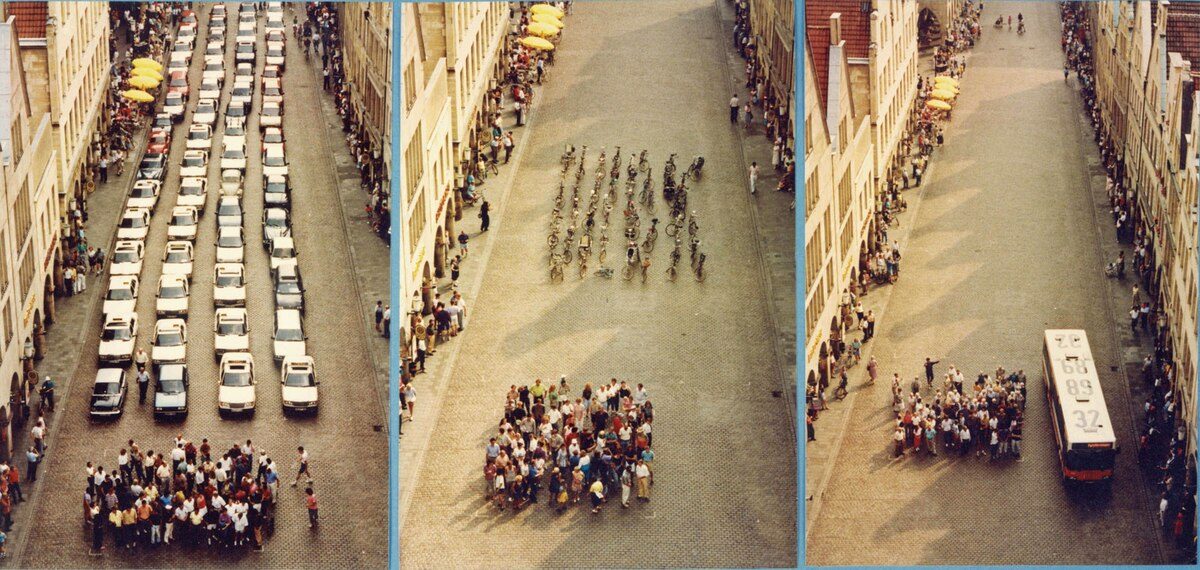
These strategies also make the road less congested – cars take up a lot of space, and bikes don’t. This famous photo shows the amount of space taken up on the road by the same number of various types of road users:
But lower congestion and roads that are safe for cyclists are things that Duffy simply cannot abide. If people ride bikes, they’re not using oil, and then the oil industry which has given Duffy hundreds of thousands of dollars of bribes over his political career might have slightly lower profits. Congestion, too, hurts all drivers and breathers of air (that’s you), but helps the oil industry as people burn gas while they sit still.
And all of this comes on top of the $23 billion in additional fuel costs that Duffy wants to saddle you with, which he announced on his first day. As a reward for this, oil companies paid for a vacation for Duffy’s family.
This isn’t the only indication of Duffy’s hatred of bikes and love of road accidents. Duffy previously pulled funding for bike lanes, calling them “hostile to motor vehicles.” Notably, in conflicts between motor vehicles and bicycles, motor vehicles are typically the more violent participant.
Duffy’s stated rationale for the FHWA’s changes displays the typical republican stupidity and Orwellian nonsense that we have come to expect every time one of these morons says anything about anything. He called bike lanes “DEI bike lanes,” whatever that means, and an FHWA spokesperson said that these moves to congest the road with more cars will somehow decrease congestion (see above photo). The FHWA spokesperson also said that the Department is “putting safety first” – I guess, first in their list of things to eliminate?
Thankfully, this is just the changing of one set of guidelines – which still exist if you just put the site into archive.org, as does the research backing the former recommendations. Transportation engineers still know that bike lanes work, and most of them will hopefully not have the same bloodlust as Duffy does.
But road safety advocates say that the changes will make it harder for local governments to implement projects to increase safety, without having a simple set of federal guidelines to point to. This will result in the US remaining high on the list of deadliest roads internationally.
And importantly, it is yet another direct indication that the squatters in US government are trying to kill you and make your life worse in every way they can conceive of. Keep that in mind, with November just over three months away.
Charge your electric vehicle at home using rooftop solar panels. Find a reliable and competitively priced solar installer near you on EnergySage, for free. They have pre-vetted installers competing for your business, ensuring high-quality solutions and 20-30% savings. It’s free, with no sales calls until you choose an installer. Compare personalized solar quotes online and receive guidance from unbiased Energy Advisers. Get started here. – ad*


FTC: We use income earning auto affiliate links. More.




.jpg)
Comments