
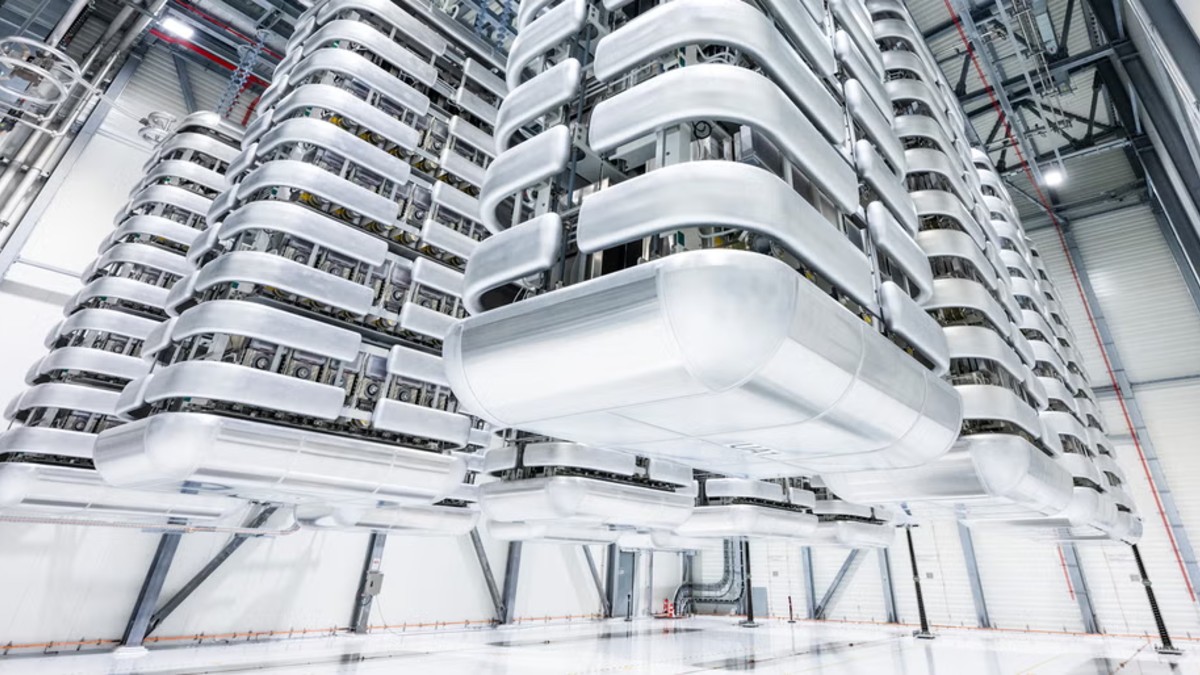
Italy and Tunisia have taken a major step toward building the first DC power link between Europe and North Africa.
Italy’s grid operator Terna and Tunisia’s electricity and gas utility STEG have awarded Hitachi Energy a contract worth around €770 million ($900 million) to build the converter stations for the Elmed interconnection project.
The award completes the procurement process for the high-voltage direct current (HVDC) link, which will connect the two countries with a 600-megawatt transmission line stretching about 220 kilometers (137 miles). Most of the cable will run beneath the Mediterranean Sea, reaching depths of around 800 meters (2,625 feet) in the Strait of Sicily.
The converter stations will be built in Partanna, on the Italian island of Sicily, and in Mlaabi, near Menzel Temime in northeastern Tunisia.
HVDC technology is typically used for long-distance submarine cables because it transmits electricity more efficiently than conventional alternating current. Once completed, the Elmed link will allow electricity to flow between the European and North African grids, making it easier to share renewable energy and improve energy security on both sides of the Mediterranean.
Hitachi Energy will supply the HVDC system, including converter valves, its MACH digital control platform, power transformers, and high-voltage switchgear. The company will also handle engineering, system design, installation supervision, and commissioning.
Civil construction work will be carried out by consortium partners D’Agostino Costruzioni Generali in Italy and Orascom Construction in Tunisia.
The €1.42 billion ($1.66 billion) Elmed project is part of Italy’s Mattei Plan for Africa, which aims to strengthen economic and energy ties with African countries. It’s also intended to support the European Union’s REPowerEU strategy by diversifying energy supplies and helping integrate more renewable electricity into the grid.
The European Commission has committed €307 million ($360 million) through its Connecting Europe Facility program, marking the first time the EU has funded an energy infrastructure project involving a country outside the bloc.
On the Tunisian side, the project is also backed by the World Bank, the European Investment Bank, the European Bank for Reconstruction and Development, and Germany’s KfW development bank.
Read more: One giant US power line, enough wind power for 1 million homes
If you’ve ever considered going solar, make it easy by finding a trusted, reliable solar installer near you that offers competitive pricing by checking out EnergySage. It has hundreds of pre-vetted solar installers competing for your business, ensuring you get high-quality solutions and save 20-30% compared to going it alone. Plus, it’s free to use, and you won’t get sales calls until you select an installer and share your phone number with them.
Your personalized solar quotes are easy to compare online, and you’ll get access to unbiased Energy Advisors to help you every step of the way. Get started here.


FTC: We use income earning auto affiliate links. More.



Comments