
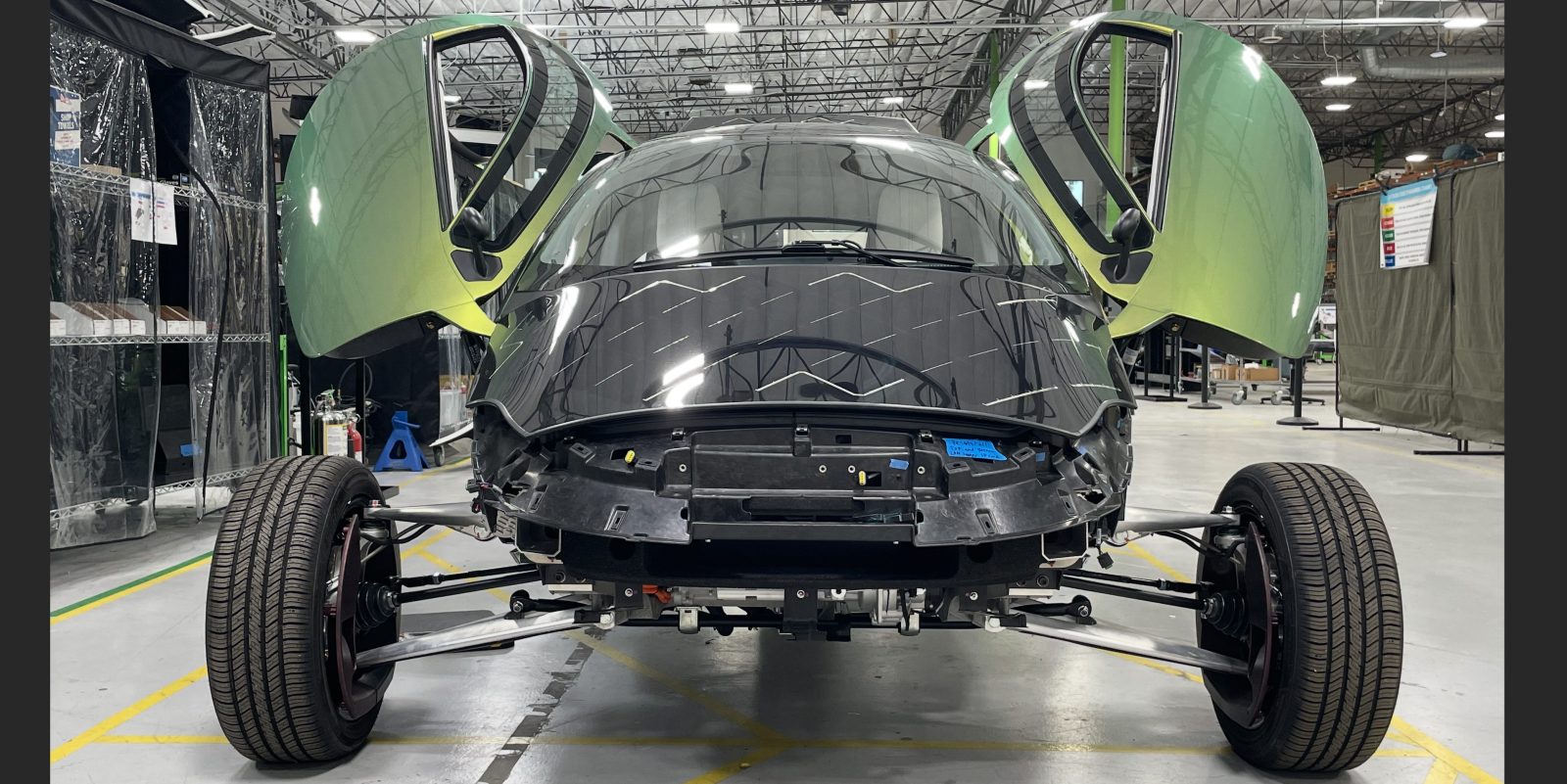
Alongside finally getting a chance to drive the Aptera 3-wheeled solar EV, we got a short tour around the company’s facility. It was illuminating – showing off the progress Aptera has made and the challenges still to come for the company.
If you’ve been around the EV industry for a while (or if you read our first drive report), you’ve probably heard about Aptera.
Based in California in sunny San Diego county, Aptera is a startup hoping to make a hyper-efficient solar electric vehicle.
But it’s been hoping for a long time. A really long time.
In fact, I’ve been driving electric vehicles since 2009, which I’d say is rather early in the technology’s lifespan. And yet, the idea behind Aptera is older even than my involvement in this industry.
The company was founded all the way back in 2005. At least, its original incarnation was. At the time, they were trying to make a 300+ mile per gallon gas-powered vehicle. Then the company folded, restarted, folded again, and restarted again in 2019, with its original founders back at the head.
Now it has moved on to a fully electric, solar-boosted EV, and if you read the company’s press releases, you’ll see a lot of hype about progress, prototypes, production validation and the like. It seems like things are getting closer… but they’ve been getting closer for a while, too.
The fact that no car has been delivered so far and that the company has had to engage in some creative fundraising efforts to get here has led to skepticism from the overall EV community.
So, to get a better sense of what’s going on with Aptera, we got a short tour around its ~77,000 square foot headquarters in Carlsbad where it intends to do final assembly.
The Aptera factory is further along than we expected
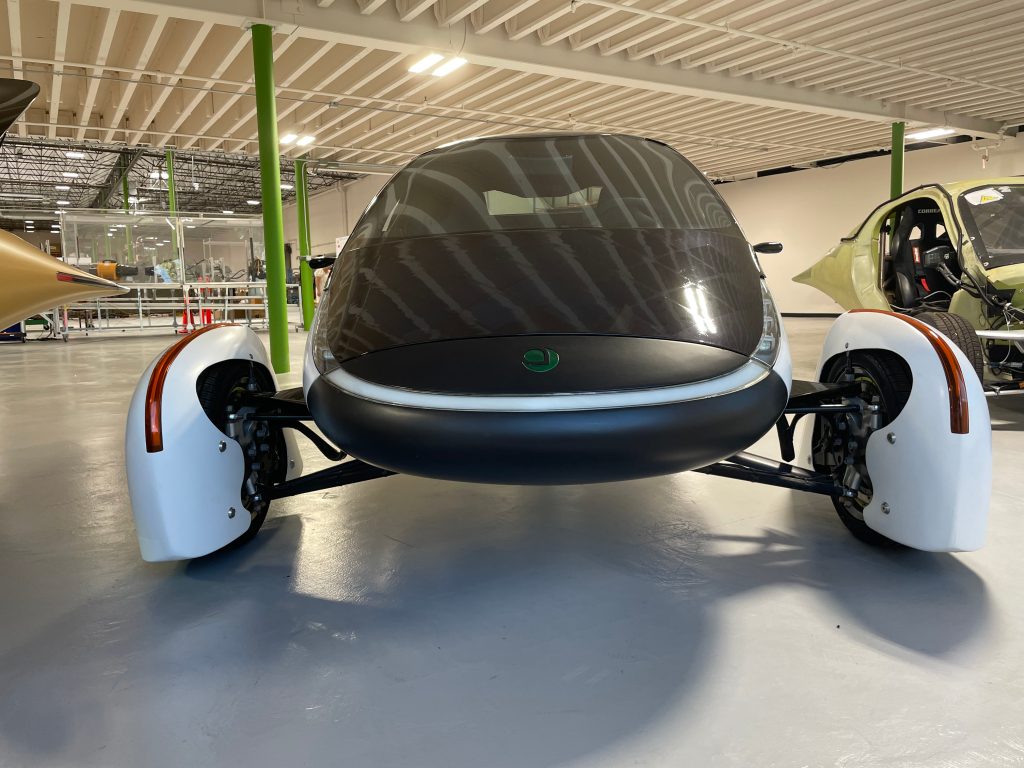
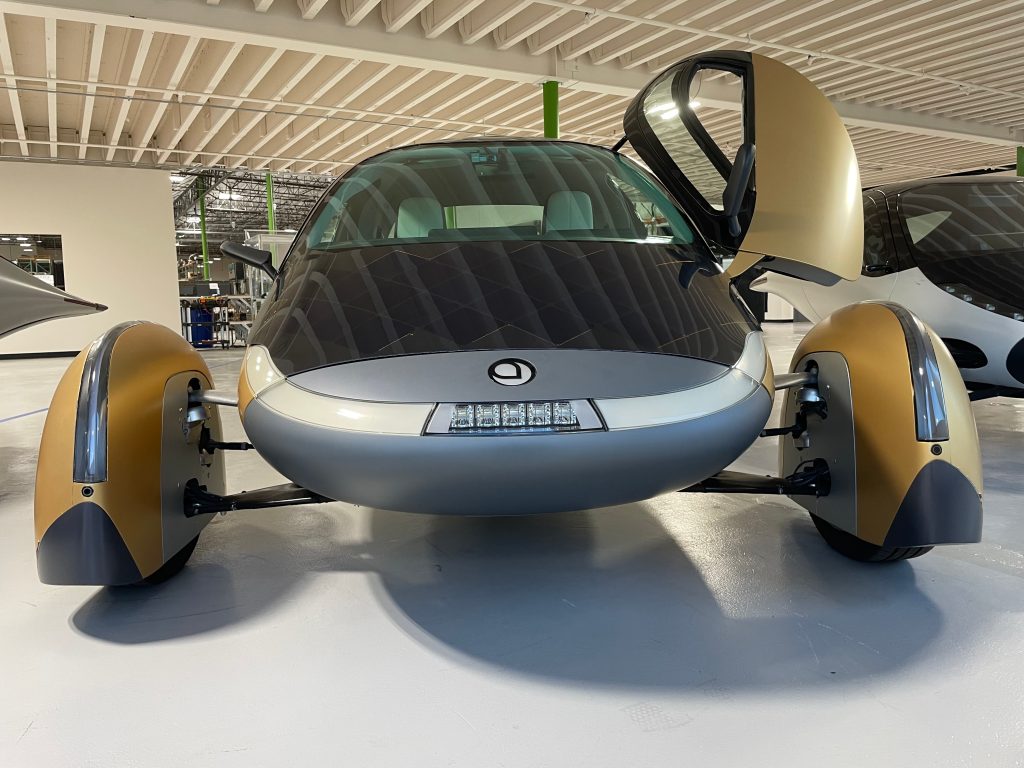
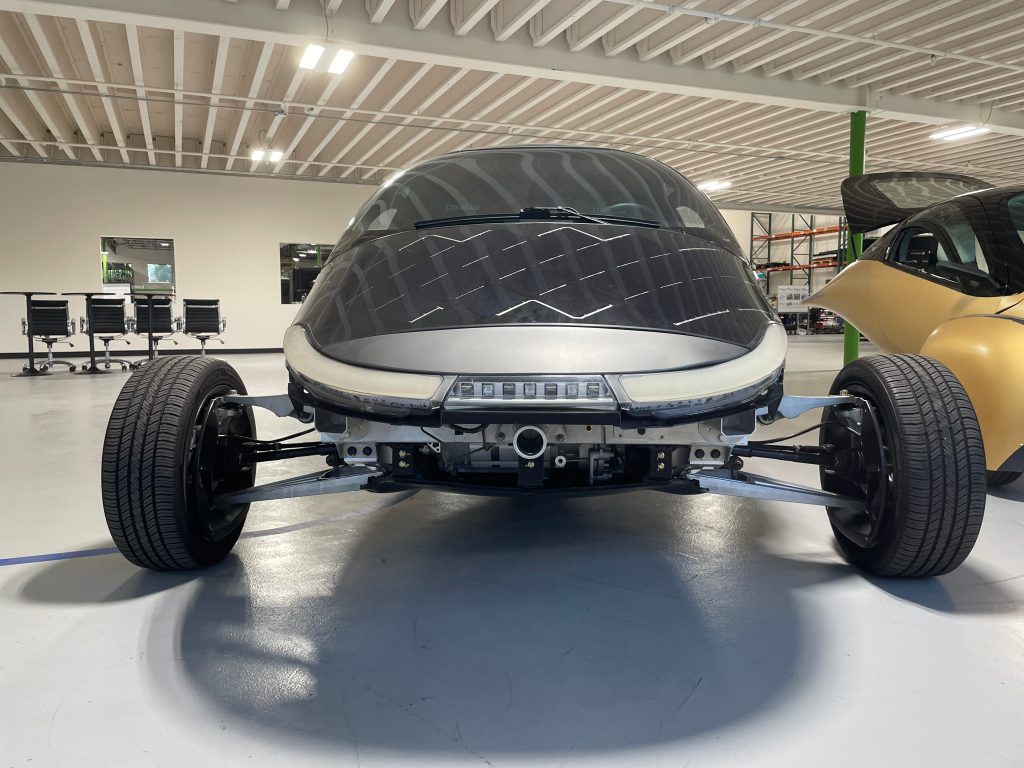
Near the lobby, Aptera had a few generations of its prototypes parked side by side, displaying the iterations the company has gone through in developing the vehicle. Of particular interest here is the suspension design, which has changed several times as Aptera seeks to reduce aerodynamic disturbances at the front of the car.
Stepping into the factory, we traveled roughly along the same path that a car will take during assembly.
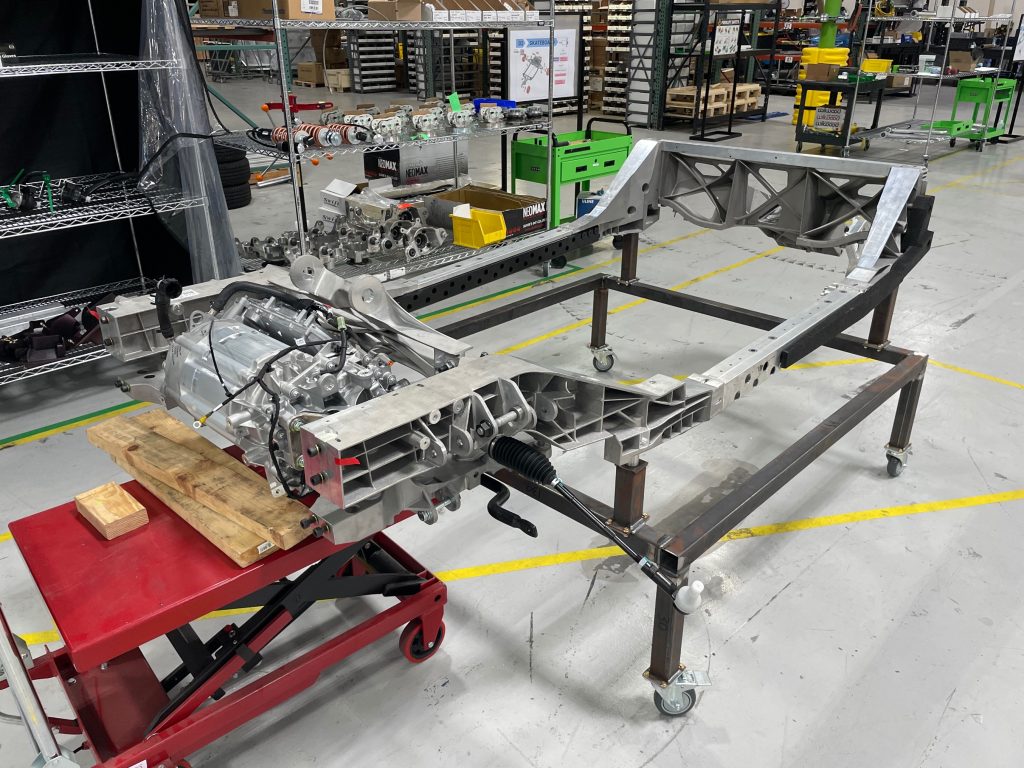
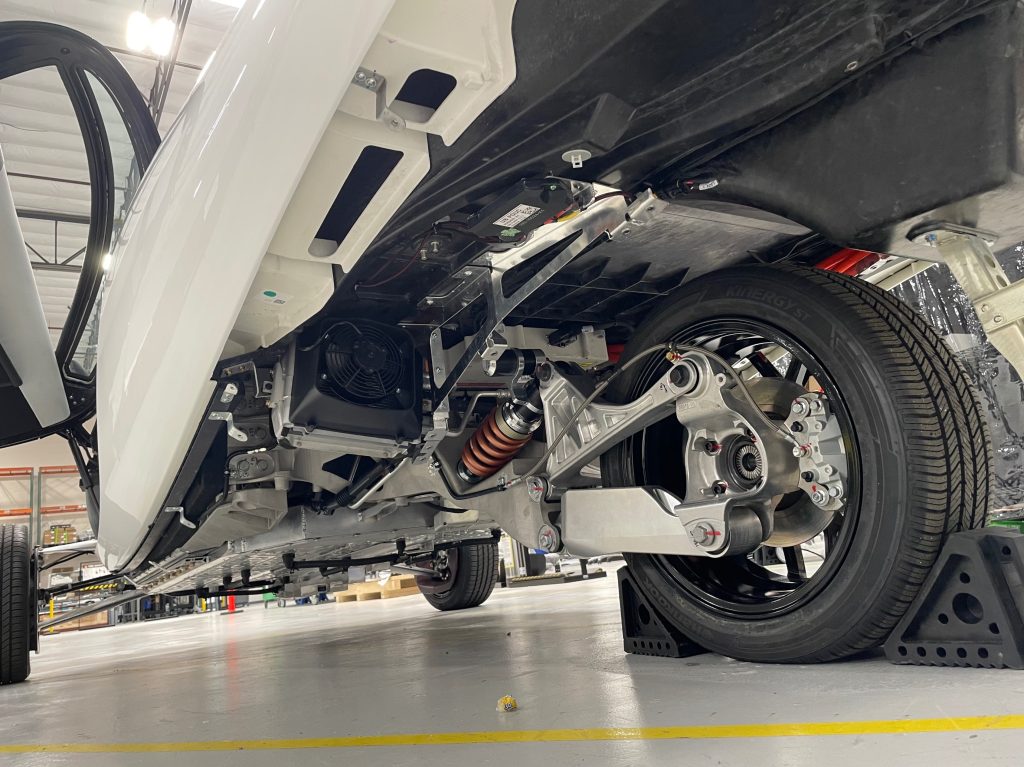
First we saw the rather svelte chassis, with the inboard motor assembly in place. This is a newer decision, as Aptera had originally wanted to use wheel hub motors, but found an inboard one would be simpler to manufacture, as the wheel hub motors they had wanted to use suffered high failure rates out of the supplier’s factory.
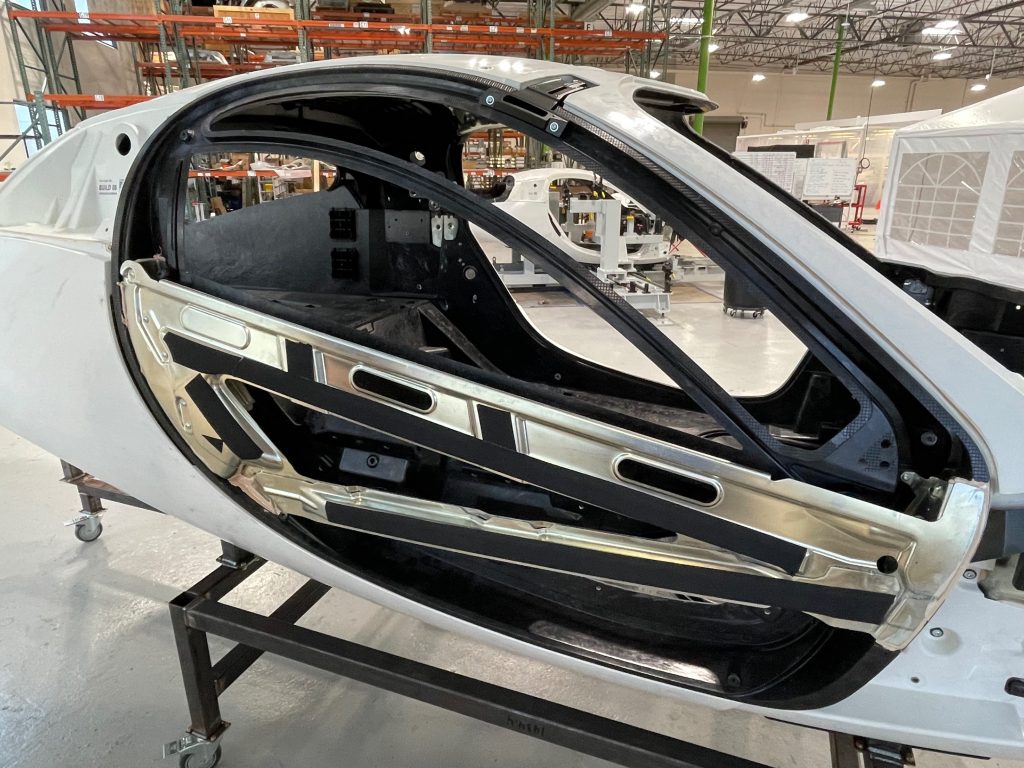
Then we saw several of Aptera’s bodies being assembled. Basically all of the body components are made of carbon fiber sheet molding compound (“CF-SMC”), produced in partnership with CPC Group in Italy.
This material is similar to fiberglass, but stronger (and more expensive) as it’s reinforced by carbon fiber. It can be molded into any shape and requires very little labor, as material is injected into a mold and comes out as a finished piece after around 10 minutes.
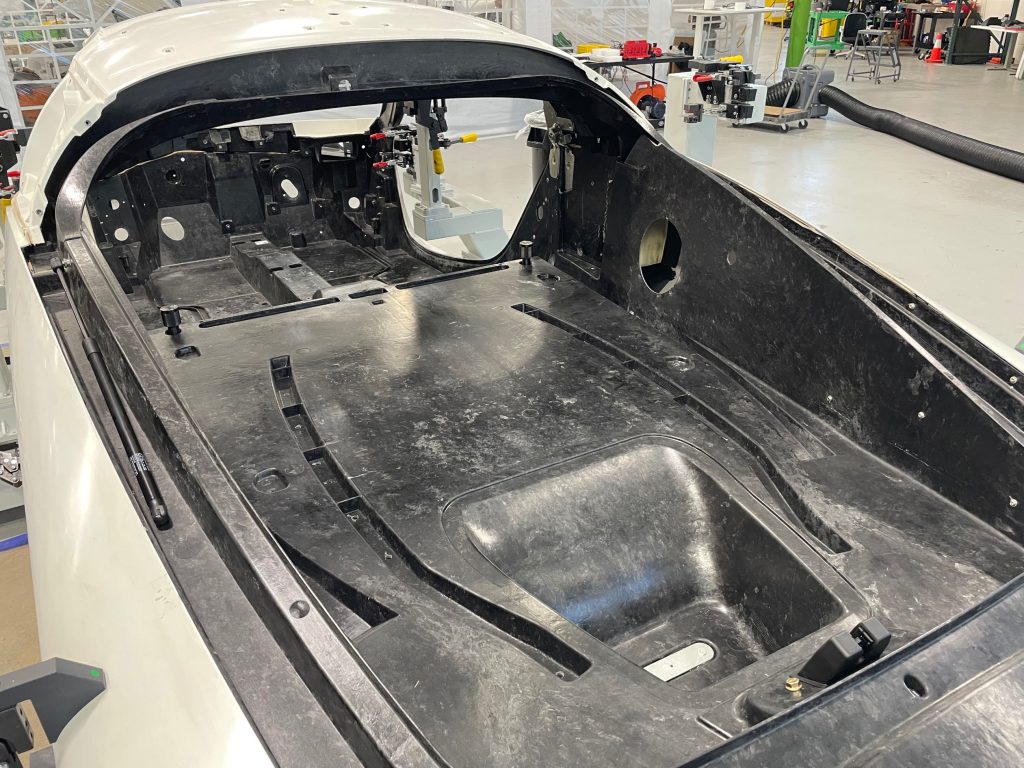
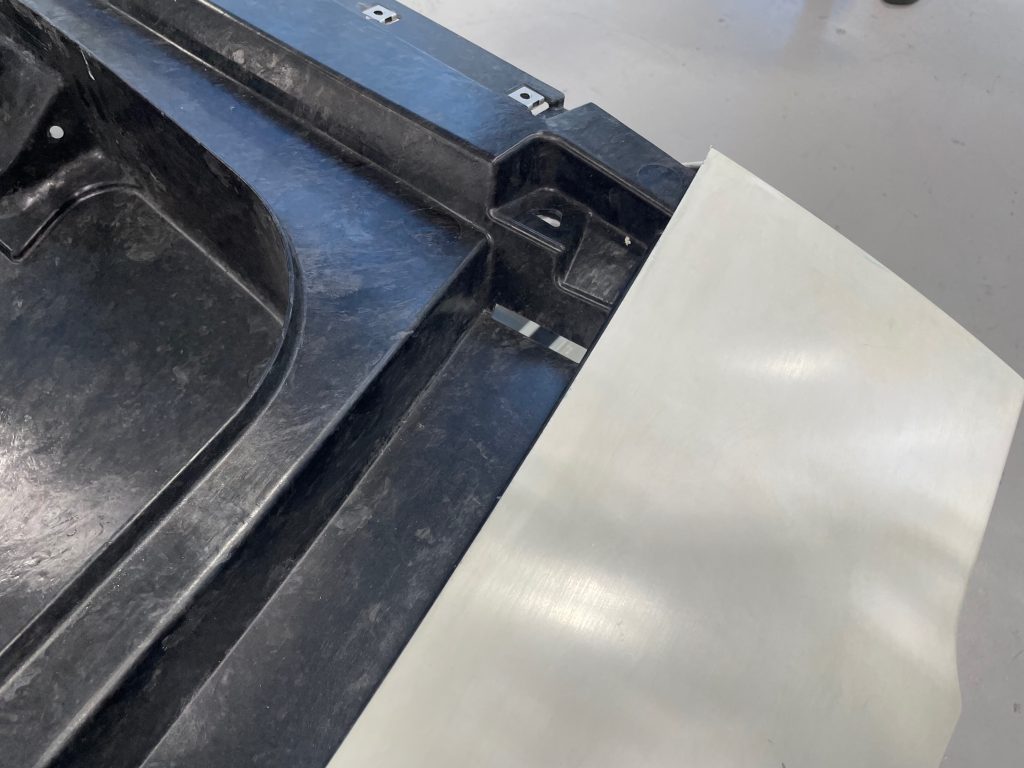
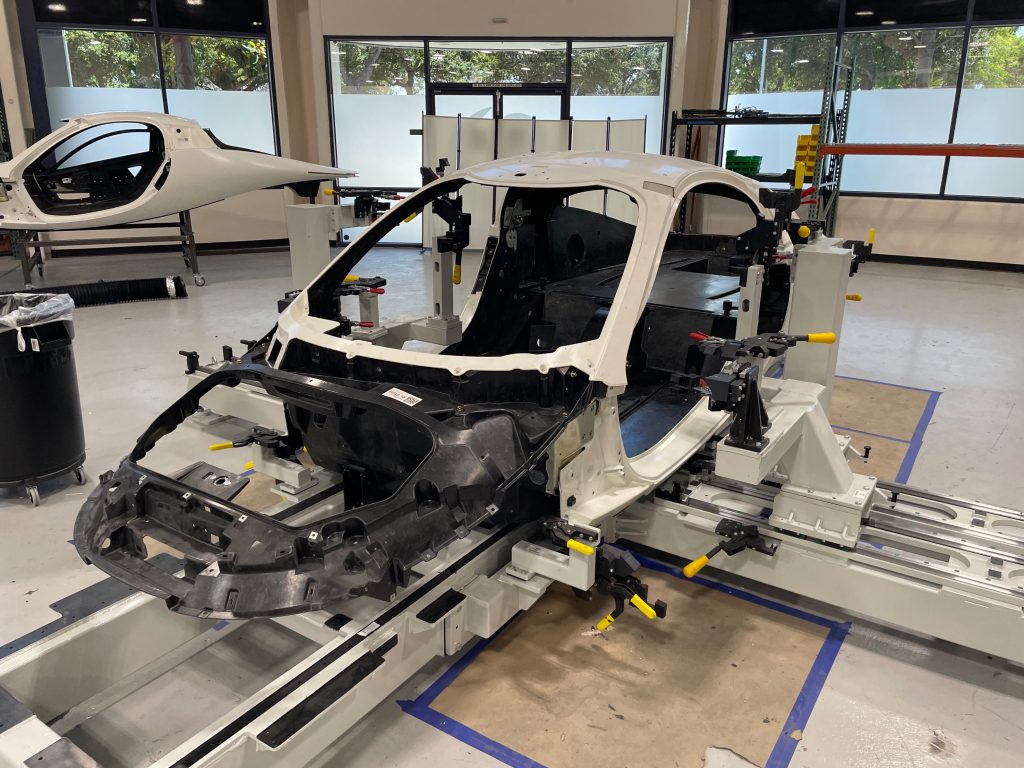
Those pieces are made in Italy and shipped to Aptera’s facility where they are glued together. This is the station where the pieces are clamped into position.
There were a few bits that we couldn’t take pictures of – like the solar production area, where Aptera has custom machines to produce the curved solar panels on the car’s body. Another interesting note: Each panel on the car is broken up into zones, which helps reduce efficiency loss in the event that part of the car is shaded.
Aptera’s parts department is relatively small, as the company says the whole car only has 130-ish parts. Aptera currently has to assemble some of those, like the dashboard pieces, but it says they’ll come assembled once the company can order in higher volumes.
All of the parts have involved a focus on efficiency. For example, Aptera uses a Snapdragon 845 ARM processor for its ADAS tasks, which only uses 9 watts of power and runs openpilot. And it uses LIN instead of CAN for network communication within the car, saving both power and cost.
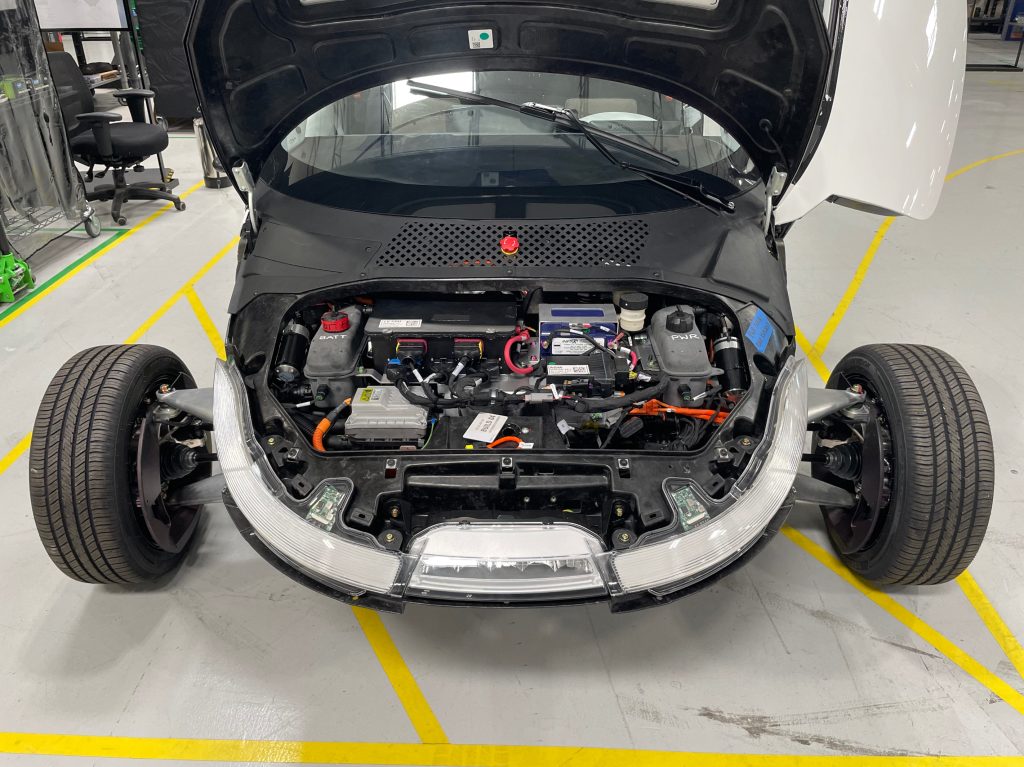
Even the charging system had to be rethought, as EV charging usually takes ~200 watts of overhead, which would be a huge waste when charging on ~500W of solar. So they bypass the full charging system and use a lower-power system with only 8-15 watts of overhead, only activating the full system when necessary.
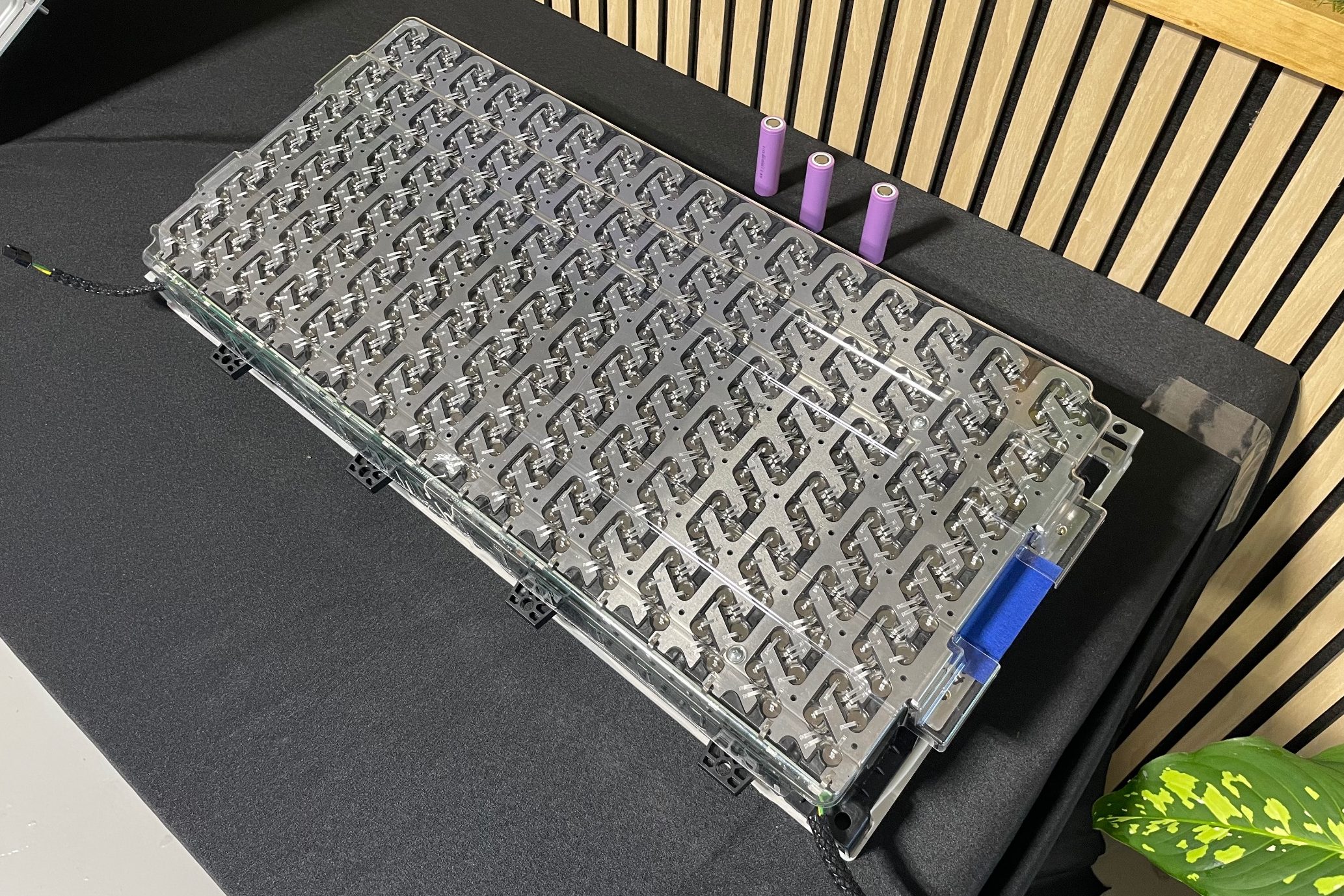
This is all controlled by an Aptera-designed battery management system (BMS) and power distribution unit (PDU), and having those units in-house means that Aptera can update every module on the car over-the-air, which is very helpful for automotive startups to have the capability to do.
Aptera was quite open and frank during the tour
What struck me most about the tour was the high level of openness displayed by Aptera. Nothing seemed particularly staged or hidden, and I was able to take pictures of almost anything. There were papers left around that probably would have been put away if the area had been staged for journalists.
While this company sometimes receives skeptical or even outright hostile comments, this openness was not the kind of behavior of a company that is trying to hide something.
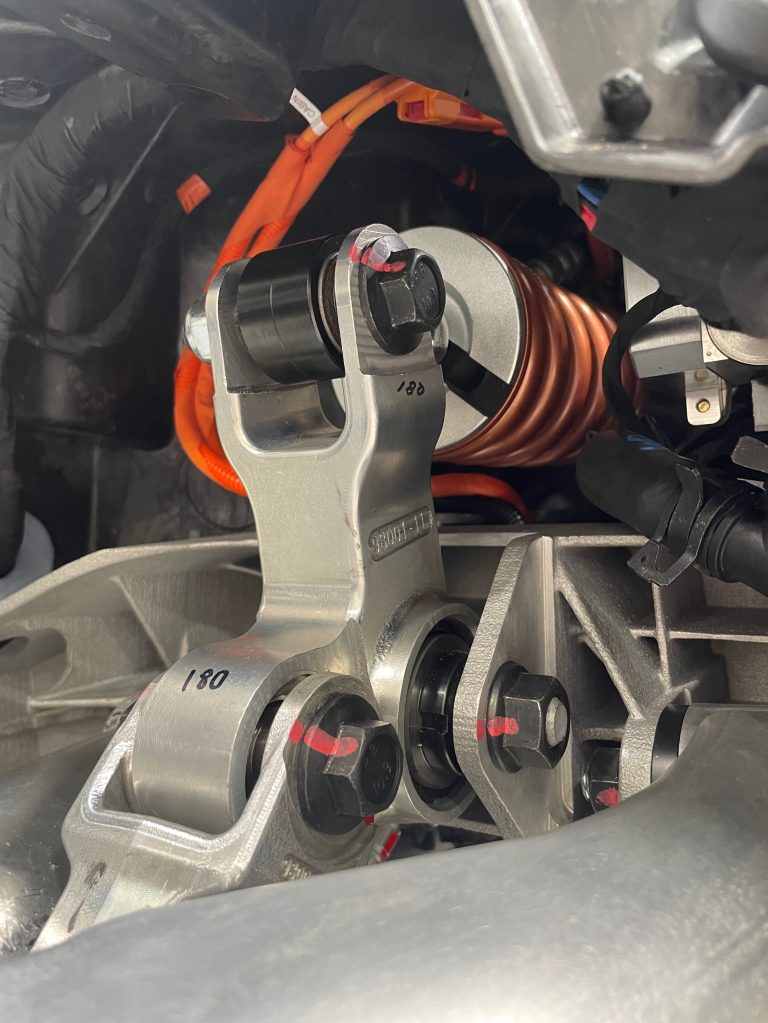
And we saw perhaps 15 or so vehicle bodies in various stages of assembly, and from various stages of the development process. It was far more vehicles than I had expected to see, which is encouraging.
That said, we saw a similar number of vehicle bodies as in the video Aptera published in December. But the facility was laid out in a more organized manner now, with identifiable production stations in logical places. Was it as much change as we might expect in 6 months worth of progress? Maybe, maybe not. But the company is on a tight budget, after all.
And while 15 or so vehicles is more than we expected, it’s a far cry from the 5,000 vehicles Aptera wants to deliver of its “Launch edition” cars, which will all come with the same option list (more options will be available later – including different colors, all of which will come in the form of wraps, rather than paint, because paint shops are one of the most expensive parts of a factory. The green color in the featured photo at the top of this article is a wrap).
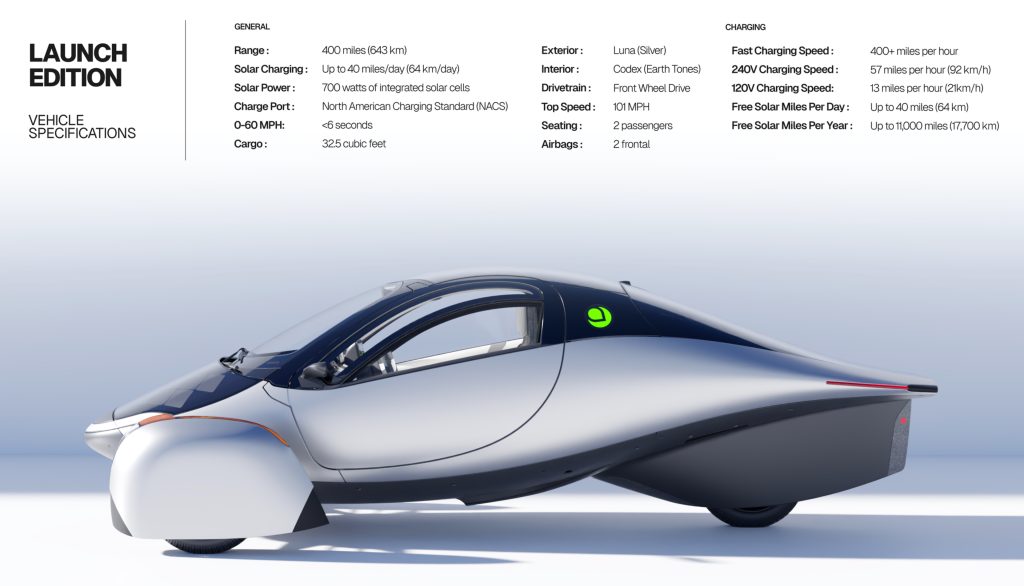
But how would it fit into the market?
One major issue with Aptera is the market it would be jumping into. It’s a cool idea for a car(-like thing), but there may be some competition which is hard to ignore.
If someone wants an affordable EV, both the Chevy Bolt and the Nissan Leaf are available for cheaper than the Aptera. They’re competent vehicles, and they’re “normal,” in that they have four wheels, four doors, five seats, a trunk and so on. But they aren’t distinctive.
And if someone wants a hyper-efficient EV, there’s the Cybercab. It’s not as efficient as the Aptera and doesn’t have solar, but it’s small and cheap and much more efficient than everything else. But… well, it might not have a steering wheel. Depending on if Elon tells the truth this time or not.
So a couple of the motivations for getting the Aptera have been front-run by the competition. There are more affordable and almost-as-efficient options.
Which leaves us with distinctive and solar. It still has those in droves, and its usage of solar is basically unique. And solar unlocks some interesting potential applications – very low cost per mile could be used for commercial applications, the ability to charge without plugging in could help those who don’t have access to home charging.
Can a solar EV succeed? That question is still open
But can a solar EV succeed? There have been several other ideas for solar EVs, and most have folded or gotten nowhere so far.
Aptera has kept plugging along, and thanks to recently going public (under ticker SEV, previously owned by Sono Motors, which folded in 2023), it has some cash to keep going for now. Being listed on the NASDAQ does give it more options for fundraising.
Top comment by GreenSushi
Good article. I still doubt there's a significant market for Aptera, but also you need to stop comparing anything to Cybercab until Tesla confirms it'll be available with driver controls. Until then, it's purely a robotaxi fleet vehicle for use in geofenced areas--not an actual option for consumers.
It has raised around $150 million over its life, but it still estimates that it will need another $40 million or so to bring this car to the road. It said it’s preparing to do more fundraising soon, though we don’t have details on that.
Earlier this year, Aptera said first deliveries would happen… in June 2026. That seems, uh, quite unlikely to happen within the next two weeks. We don’t have an updated date for first deliveries, which means the mantra will probably be as it always was: wait and see.
Aptera is taking reservations now for $100 a pop. If you want to get in line, you can use our Aptera Referral Link for $30 off the refundable reservation fee.
If you *don’t* have solar on your car, you can always charge your electric vehicle at home using rooftop solar panels. Find a reliable and competitively priced solar installer near you on EnergySage, for free. They have pre-vetted installers competing for your business, ensuring high-quality solutions and 20-30% savings. It’s free, with no sales calls until you choose an installer. Compare personalized solar quotes online and receive guidance from unbiased Energy Advisers. Get started here. – ad*


FTC: We use income earning auto affiliate links. More.




Comments