
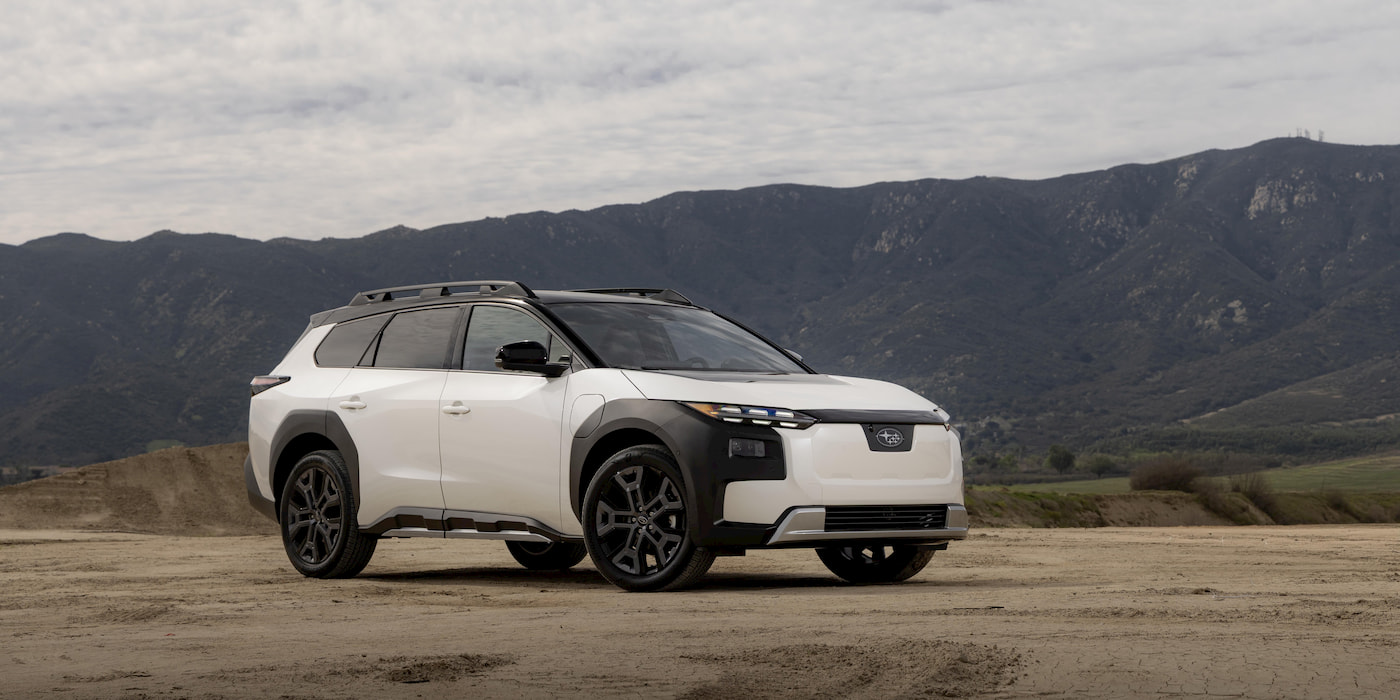
Subaru has dropped 2028 as the target year for launching its own in-house developed electric vehicles, with no new timeline set. The Japanese automaker’s new EV factory will produce gas and hybrid models instead.
The decision comes after Subaru’s operating profits collapsed 90% for the fiscal year, with tariffs alone costing the company roughly ¥229 billion ($1.4 billion) and EV-related write-downs adding another $385 million in losses.
Subaru retreats from in-house EV development
Subaru had planned to roll out up to four independently developed electric vehicles by 2028, built at a new factory within the Oizumi Plant in Gunma prefecture. That plant was supposed to start EV production in 2027. Instead, it will now open producing gasoline and hybrid vehicles, with EV production pushed to an undefined future date.
This is the second time in six months that Subaru has pulled back from its EV commitments. Back in November, the company announced it was redirecting funds from its planned ¥1.5 trillion ($9.7 billion) EV investment toward hybrid and ICE development. Now, the in-house EV program has been shelved entirely.
Subaru CEO Atsushi Osaki pointed to US market conditions as the driving factor. According to comments reported by Automotive News, Osaki said the company wants to conduct a full reevaluation of its EV strategy before committing to new launch dates.
The financial damage is staggering. Subaru’s full-year EBIT fell 90% to just ¥40.1 billion. The company swung to a net loss of ¥51.36 billion, reversing a ¥325 billion profit a year earlier. A ¥28 billion write-down on environmental regulation credits — devalued under the current US administration’s policy reversals — added to the losses.
Subaru joins Mazda in a broader Japanese retreat
Subaru is not alone. Mazda announced the same week that it’s delaying its first in-house EV from 2027 to 2029 and slashing its planned EV investment nearly in half, from roughly $12.5 billion to around $7.5 billion.
The pattern across Japanese automakers is now unmistakable. Toyota, Honda, Subaru, and Mazda have all delayed or scaled back EV programs in recent months. The common excuse is “slowing US demand,” but the data tells a different story. Global EV sales continue to grow, and Chinese competitors like BYD are expanding aggressively while Japanese brands retreat to the comfort of hybrids and combustion engines.
Subaru’s four Toyota-developed EVs — the Solterra, Uncharted, Trailseeker, and the upcoming three-row Getaway — remain on schedule. The company is essentially acknowledging it cannot build competitive EVs on its own and will depend on Toyota for the foreseeable future.
Electrek’s Take
This is a company that previously pledged EVs would account for half its global sales by 2030. That target is now effectively dead. Subaru can’t even commit to a new date for launching its own electric vehicles.
Subaru mentions US EV demand as a factor in the decision. The US is basically the only major car market on Earth where EV adoption isn’t accelerating rapidly — and Subaru looked at that and said ‘yes, this is the market we should base our entire global strategy on.’
Top comment by Alan K
Well, the U.S. is Subaru's largest market. It's actually not even close - about 75-80% of their sales are to the U.S. market. So if Americans aren't going to massively and rapidly switch to buying EV's, then Subaru can't switch to primarily making them. They have the same problem in their home country, where the government is still pretty much pushing hydrogen as the fuel of the future, with little investment in EV infrastructure or support, making it economically difficult to pivot to EV's.
This is also somewhat true of Honda. The U.S. is 40% of their sales - not as much as Subaru, but still their largest market. Honda has more sales in Japan and China, but neither of those markets offer much opportunity for EV's for them: Japan for the reasons mentioned above, and China because it's the most cutthroat market on earth and brutal for anyone not getting support from the Chinese government (national and local).
So it makes perfect sense for them to pivot away from EV's. It's not an ideal outcome for them - they'd much rather be in the timeline where the U.S. continued their subsidies and fuel economy rules and the Japanese government gave up on hydrogen. But they have to do business in the environment they're in, and that means that most of their actual customers are unlikely to be asking for EV's in the next 5-10 years.
It makes no sense. That’s like canceling your umbrella factory because it’s not raining in Arizona — while the rest of the world is in a monsoon.
The core issue is not “slowing demand” — it’s that Subaru never invested seriously enough to build competitive, profitable EVs on its own platform. Now, tariffs and financial pressure have given the company a convenient exit ramp from commitments it was likely going to miss anyway.
Every month that Subaru delays building its own EV technology is another month its dependence on Toyota deepens and its ability to differentiate erodes. When these Japanese automakers finally do commit to EVs, they’ll be competing against Chinese brands with a five-year head start in battery costs, software, and manufacturing scale. The retreat to hybrids is not a strategy — it’s a delay that will cost them dearly.
As traditional automakers pull back on EVs, the savings case for going electric keeps getting stronger. With electricity rates climbing nearly 10% last year, home solar protects you against future rate increases. And with lease and PPA options, you can go solar with zero upfront cost and start saving immediately. If you want to find the best deal, check out EnergySage. It’s a free service with hundreds of pre-vetted installers competing for your business, so you save 20 to 30% compared to going it alone. No sales calls until you pick an installer. Get your free quotes here.


FTC: We use income earning auto affiliate links. More.




Comments