

After securing another major partnership, Factorial is closing in on bringing its “groundbreaking” all-solid-state EV battery platform to global markets.
Moving from the lab to the real world
Factorial’s solid-state battery cells are already being put to the test in real-world conditions. The US-based solid-state battery specialist has partnerships with Mercedes-Benz, Stellantis, Hyundai, and Kia to commercialize the promising new technology.
In September, Mercedes called Factorial’s batteries “a true gamechanger” after driving a modified EQS, fitted with its 106 solid-state cells, for over 745 miles (1,200 km) on a single charge.
Jeep maker Stellantis verified 77 Ah cells in lab testing, “demonstrating high energy density, fast charging, and robust performance across temperature extremes.”
Now, the company is closing in on scaling production, one of the biggest hurdles in bringing the promising new battery tech to market.
Factorial announced a new strategic manufacturing partnership with Korea’s leading battery equipment provider, Philenergy, to accelerate production.

“The companies that win in next-generation batteries won’t just have breakthrough technology – they’ll have production partners experienced in battery manufacturing and capable of delivering at scale,” Factorial’s CEO, Siyu Huang, said.
Factorial is ready to scale all-solid-state EV batteries
Factorial will tap into Philenergy’s vast manufacturing network and supply chain as it prepares to scale its Solstice all-solid-state EV battery platform.
According to Factorial, the Solstice platform has up to 450 Wh/kg, or 80% higher energy density than traditional lithium-ion batteries, while maintaining stability at temperatures as high as 194°F (90°C).
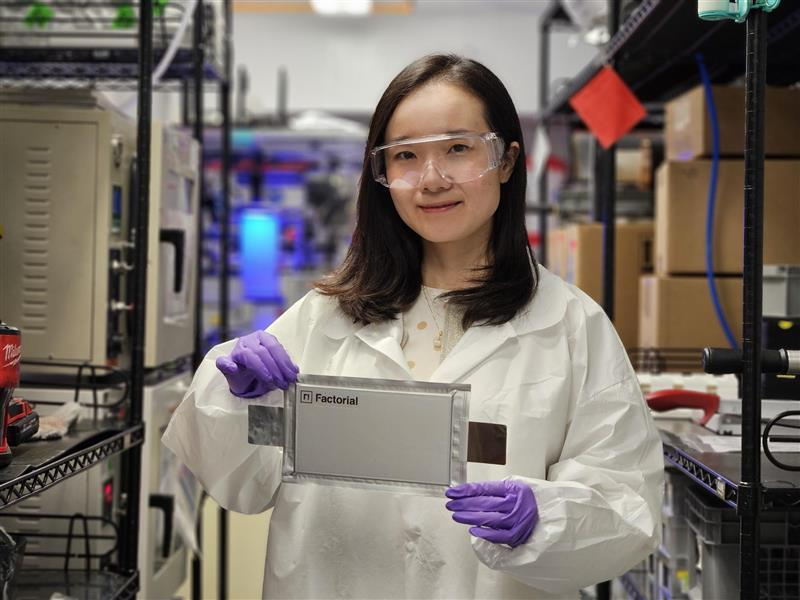
Using a dry-cathode architecture, the platform features a faster formation process that reduces the number of manufacturing steps and its environmental impact compared to lithium-ion batteries.
Factorial said the new partnership will help it reach volume production faster while providing a clear path to help bring its breakthrough solid-state battery tech to global markets.

The announcement is the latest in a string of recent developments as Factorial closes in on production. In December, Factorial announced a proposed business merger with Catesian Growth Corporation III to list the company on the Nasdaq exchange as it looks to tap into public markets to fuel growth.
The proposed merger is expected to close in mid-2026. Once finalized, Factorial will list on the Nasdaq exchange under the ticker symbol FAC. The merger values Factorial at around $1.1 billion while providing it with $100 million to fund growth.
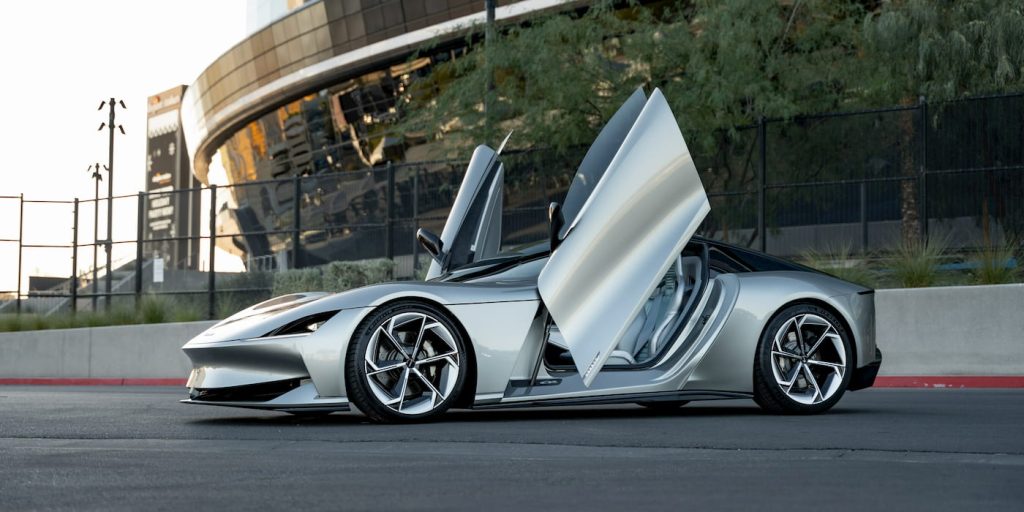
Earlier this month, Factorial launched the first commercial solid-state battery program in the US through a collaboration with Karma Automotive.
Speaking with The New York Times in December, Huang said that Factorial’s solid-state EV batteries could be used in EVs as early as 2027.
They will likely launch in high-performance or luxury models at first, before rolling out to mass-market EVs, according to Huang.

Top comment by Blake
“the Solstice platform has up to 450 Wh/kg, or 80% higher energy density than traditional lithium-ion batteries, while maintaining stability at temperatures as high as 194°F (90°C).”
That would allow driving ranges of up to 900 miles, meaning parity with ICEVs. Charging times would also fall under 5 minutes for refuelling parity.
The greatest benefit would be the reduction in battery sizes for small & mid sized cars, making the BEV weight lighter than their ICEV equivalents
Even with US automakers like Ford and GM scaling back EV plans, Factorial is betting on the promising new battery tech as the future.
“The existing battery is not big enough and it’s not light enough, it’s not efficient enough,” Huang explained during the interview, adding, “There needs to be a next generation to address the issues that our US consumers are facing.”
While Factorial is moving toward future production, several other automakers and battery manufacturers plan to launch solid-state batteries around the same time.
Chinese automakers, including Changan and Dongfeng, are starting to test solid-state batteries in prototype vehicles with plans to begin mass production between 2027 and 2030. BYD, CATL, Volkswagen, Toyota, and a few others have announced similar timelines.


FTC: We use income earning auto affiliate links. More.


Comments