
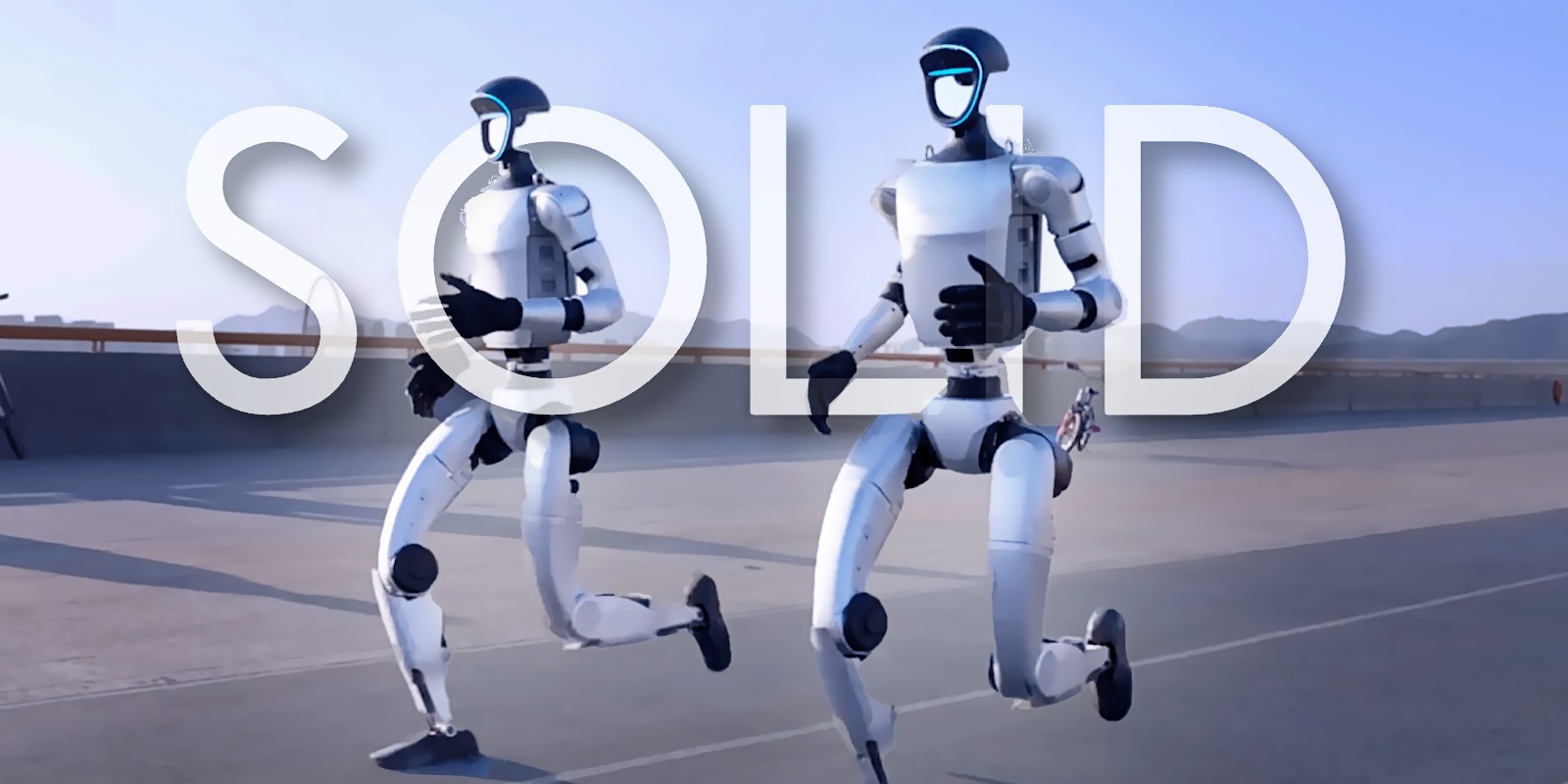
Just how big is the market for humanoid robots? Big enough to soak up a whopping ~75 GWh of solid-state battery capacity between now and 2035 – nearly 1500x growth!
Party-loving Tesla CEO Elon Musk made headlines recently when he announced plans to honorably discharge the groundbreaking Tesla Model S and Model X EVs. Tesla isn’t replacing them with new EVs. Instead, the company is retooling the production line to manufacture Optimus robots.
That choice seems to support a recently published forecast from industry analysts at TrendForce, who predict that the solid-state battery capacity needed for humanoid robots will explode (sorry) from about 0.05 GWh in 2025 to a massive 74.2 GWh by 2035 – a 1500x leap creating a massive new market as these bots hit the factory floors.
Global shipments of humanoid robots will exceed 50,000 units by 2026, with a YoY growth of over 700%. The dominant power source for these robots is high-nickel ternary lithium batteries (NMC/NCA), thanks to their higher energy density. Meanwhile, lithium iron phosphate (LFP) batteries, being more affordable, are mainly used in service robots that do not require high endurance.
The demand surge is being driven by the relatively poor battery life of today’s “early” humanoids, like the Unitree H1 (above) that gets less than four hours’ of static operation from its ~0.85 kWh pack. Even the hyped-up Tesla Optimus Gen 2, with a 2.3 kWh high-nickel battery system, taps out after just two hours of dynamic (walking) work.
For robots designed to replace employees that can stand, bend, twist, lift, and move for hours on end, that kind of battery performance won’t do, and while the “hot swap” workaround employed by Agility Robotics’ Digit and Apptronik’s Apollo allow for a 24-hour runtime with enough batteries, it’s far from a perfect solution.
Energy-dense solid-state batteries, though, might make it good enough. TrendForce notes that these solid-state lithium batteries provide longer life with their higher energy density, making them a better solution than the current liquid lithium options. These next-gen packs also promise to be more stable, which both improves safety, and allows for the opportunity to move beyond today’s 2-4 hour runtime limit without constantly swapping packs.
Top comment by Zed
I'm sure that at some point humanoid robots will have a market and be a viable product for some applications. In the meantime this is ALL just hype. The market for them is teeny tiny. The drawbacks and costs are HUGE.
What’s more, we’re already seeing early solid-state adoption from major players like Xpeng with the HGR Iron and GAC with the GoMate. So, if the TrendForce forecast plays out, Tesla’s decision to sunset its longest-running EVs in favor of robots may look less like a distraction and more like an early bet on big battery growth.
SOURCE | IMAGES: TrendForce, via CNEVPost.

If you’re considering going solar, it’s always a good idea to get quotes from a few installers. To make sure you find a trusted, reliable solar installer near you that offers competitive pricing, check out EnergySage, a free service that makes it easy for you to go solar. It has hundreds of pre-vetted solar installers competing for your business, ensuring you get high-quality solutions and save 20-30% compared to going it alone. Plus, it’s free to use, and you won’t get sales calls until you select an installer and share your phone number with them.
Your personalized solar quotes are easy to compare online and you’ll get access to unbiased Energy Advisors to help you every step of the way. Get started here.


FTC: We use income earning auto affiliate links. More.




Comments