
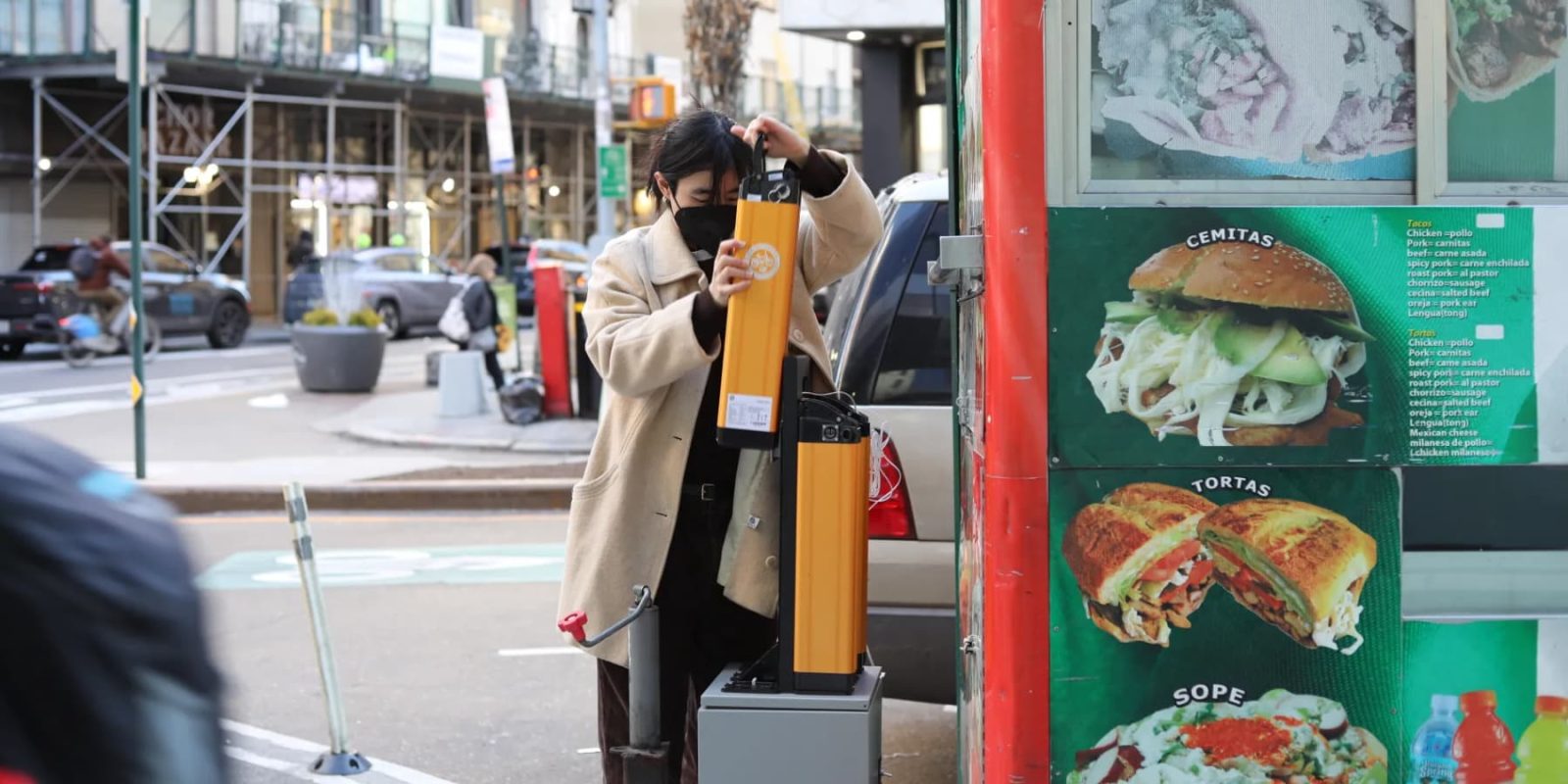
New York City’s food carts are part of the city’s soul. They’re loud, fast, fragrant, and everywhere – serving up everything from tacos to kebabs on street corners that somehow never sleep. But for all their charm, there’s one thing almost everyone agrees could disappear tomorrow without being missed: the rattling, smoky gas generators that keep those carts powered.
Now, in a twist that feels peak New York, some of those carts are starting to run on the same batteries that power the city’s e-bike delivery fleet.
A Brooklyn-based startup called PopWheels is piloting a system that uses swappable e-bike batteries to power food carts, replacing small gasoline generators with silent, emissions-free electricity. The first full-scale test recently took place at La Chona Mexican, a food cart operating on a busy Manhattan corner – and it didn’t take long for neighboring vendors to notice something was different.
Specifically: the absence of noise, fumes, and vibration.
It’s a cool idea, but it wasn’t the company’s initial goal. PopWheels didn’t set out to electrify food carts, but rather was originally founded to tackle one of New York’s more alarming micromobility problems – unsafe charging practices that led to a wave of e-bike battery fires a few years ago.
Its solution was a network of fire-safe battery swap cabinets spread around Manhattan, allowing delivery riders to exchange depleted batteries for charged ones in seconds.
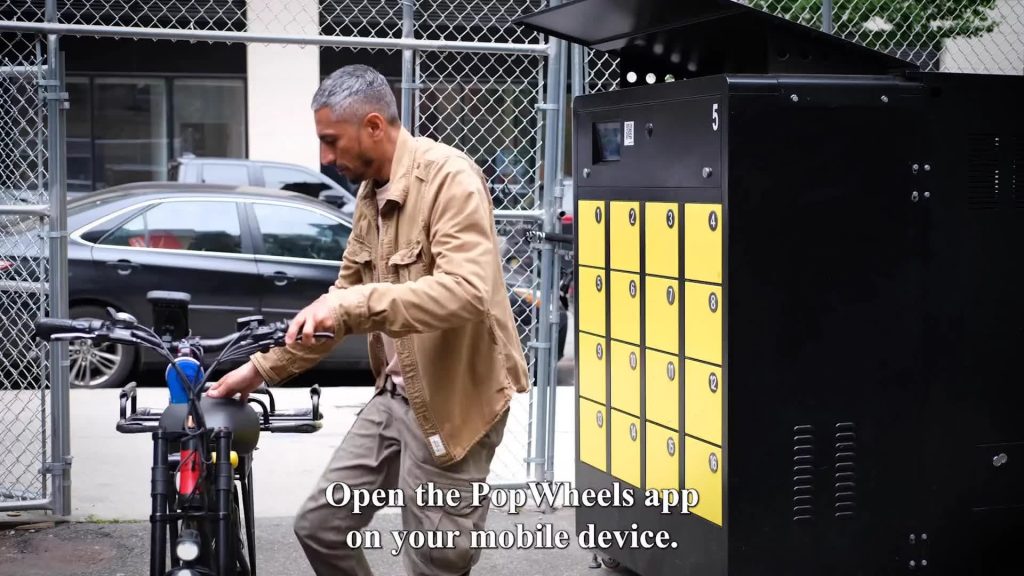
That network has quietly grown into something resembling urban battery infrastructure. PopWheels now operates dozens of swap cabinets across the city, primarily serving gig workers riding Arrow and Whizz e-bikes.
Riders pay a flat monthly fee for unlimited swaps, avoiding both the hassle and the hidden costs of charging at bodegas or finding other solutions to keep their delivery e-bikes rolling all day.
“We can make the economics work so that we’re actually saving them money right off the bat,” founder David Hammer told TechCrunch, explaining that the company has a long waitlist of delivery riders hoping to get access to the service.
Along the way, the company realized something important: once you’ve solved safe charging and distribution, batteries stop being tied to just one vehicle type.
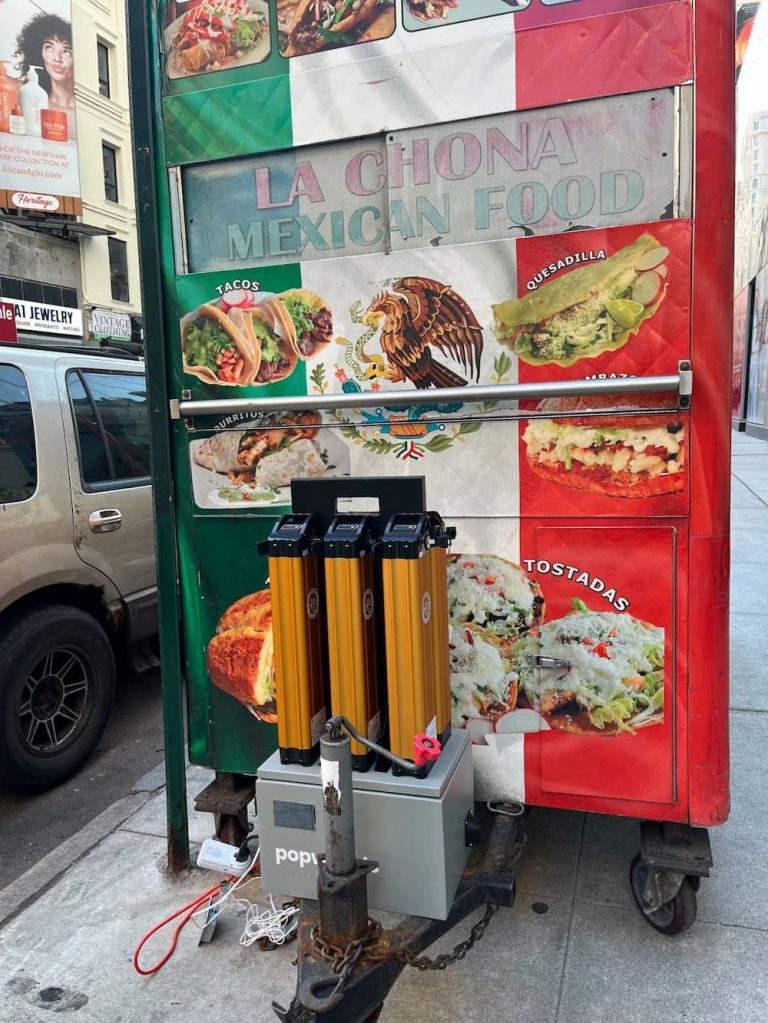
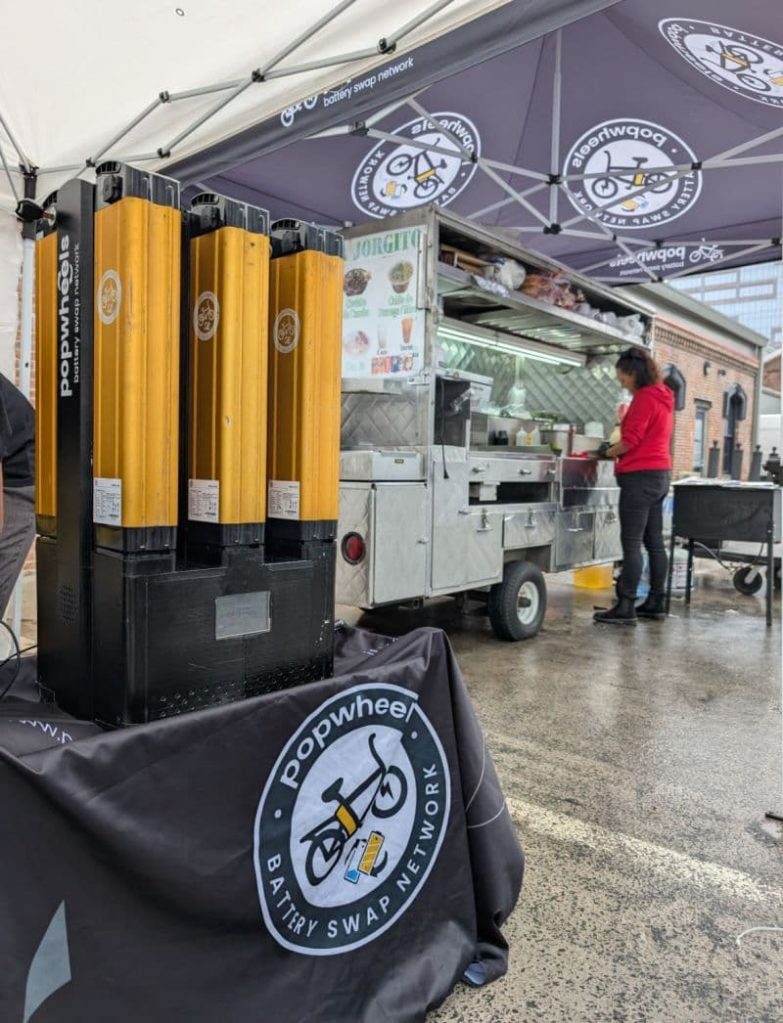
Food carts turned out to be an obvious next step. While most cooking is done with propane, carts still rely on electricity for lighting, refrigeration, fans, and point-of-sale systems. Traditionally, that power comes from small gas generators that burn roughly $10 worth of fuel per day and produce outsized annoyance for everyone nearby.
Four PopWheels batteries – roughly 5 kWh total – can cover the lower end of a food cart’s daily electrical needs. If more power is required, a midday battery swap solves the problem. From a cost perspective, the numbers line up closely with gasoline, but with far fewer downsides.
After testing a prototype adapter at a climate-focused event last year, PopWheels partnered with the Street Vendor Project to bring the concept to real-world carts. The recent Manhattan demo marked the first time a cart ran on swappable e-bike batteries for an entire day.
The reaction from other vendors was immediate and telling. When the usual generator noise vanished, people wanted to know how it worked and how they could get it.
From a citywide perspective, the idea checks a lot of boxes. New York has been looking for ways to decarbonize food carts without putting new financial burdens on vendors. A battery-based system that’s roughly cost-neutral, quieter, cleaner, and already supported by existing infrastructure could be a rare win-win. And while battery-powered generators are plentiful these days, they don’t have a built-in solution for when the battery is eventually depleted. Sure, solar panels can help, but NYC isn’t exactly a prime location for street-level solar panels, even during the summer. Battery swapping, however, solves the issue by treating energy as a commodity that can be ‘refilled’ like gasoline, simply by swapping in a new e-bike battery.
For PopWheels, it also hints at something bigger. What started as an e-bike safety project is beginning to look like a flexible energy layer for dense cities – one that can power bikes, carts, and potentially far more.
Electrek’s Take
This is one of those ideas that feels obvious only after someone does it. E-bike batteries are already everywhere in NYC, so they’re basically a commodity. With PopWheels’ system in place for delivery riders, a swapping system has been proven to work well and can now be leveraged for more uses like these.
The batteries are already being charged safely and are already moving through a swap network designed for fast turnaround. Using them to clean up food carts is simply clever and practical. If PopWheels can scale this without adding friction for vendors, this could quietly eliminate one of the city’s most universally disliked street-level nuisances. And that’s a rare thing in New York.


FTC: We use income earning auto affiliate links. More.


Comments