
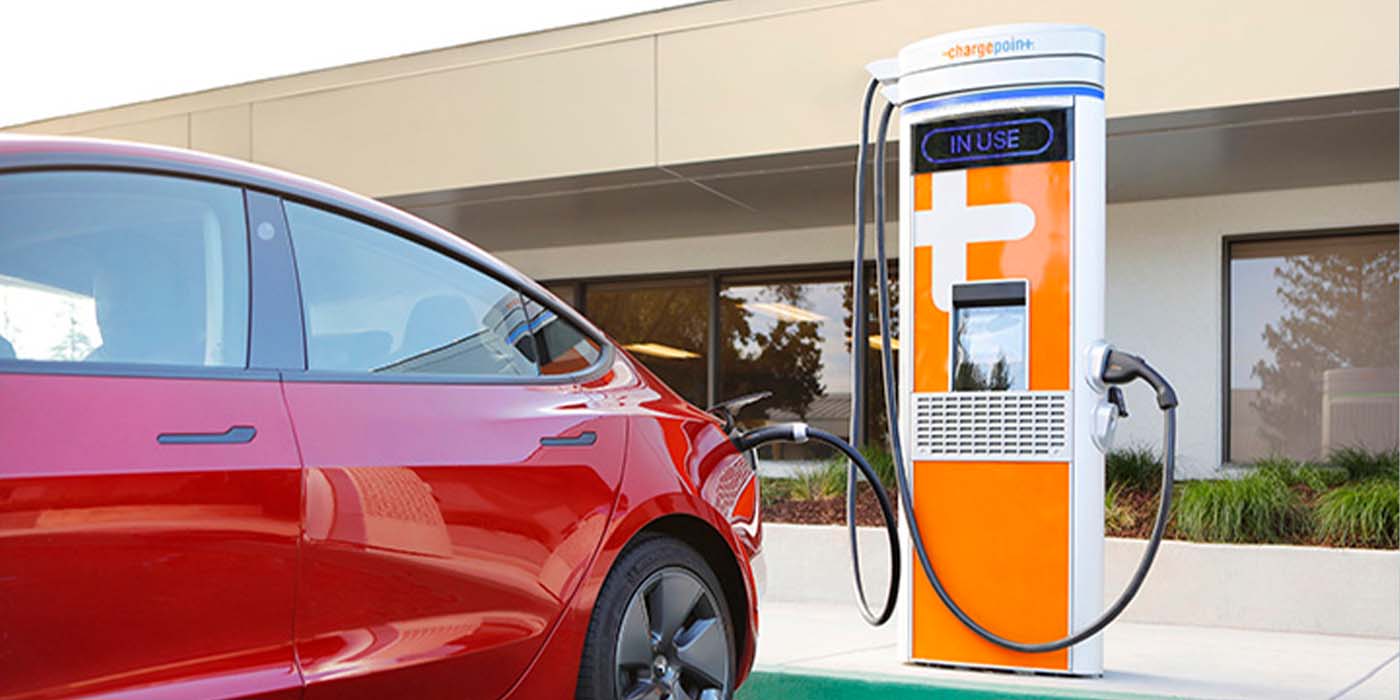
With EVs charging their batteries faster and faster, retailers’ captive EV audience is vanishing. If they get EV charging wrong, they’ll lose everything – but getting it right means they’ll make tens of thousands. Even more, in fact, than they’re making with gas pumps.
But what does “getting it right” even mean?
Despite what your clueless uncle heard on Fox News, America’s EV charging infrastructure is expanding quickly and capably – and modern EVs don’t take hours to charge anymore. They take minutes. In China, the tech has gotten so good that EVs exist that can be charged in as little as five minutes, with the push for even faster, megawatt charge times coming along.
A recent study from MIT that analyzed data from more than 4,000 chargers and 140,000 businesses found that businesses that added customer charging saw significant revenue boosts, between 0.8 and 1.4%. The effect was even more pronounced when chargers were installed near a point of interest (POI), where chargers increased revenue by 3.2%. Another statistic published by EVgo in 2022 showed that, in their findings, retail shoppers spend about $1 for every minute their electric vehicle is plugged in … and that’s where things get tricky.
This is where Goldilocks comes in
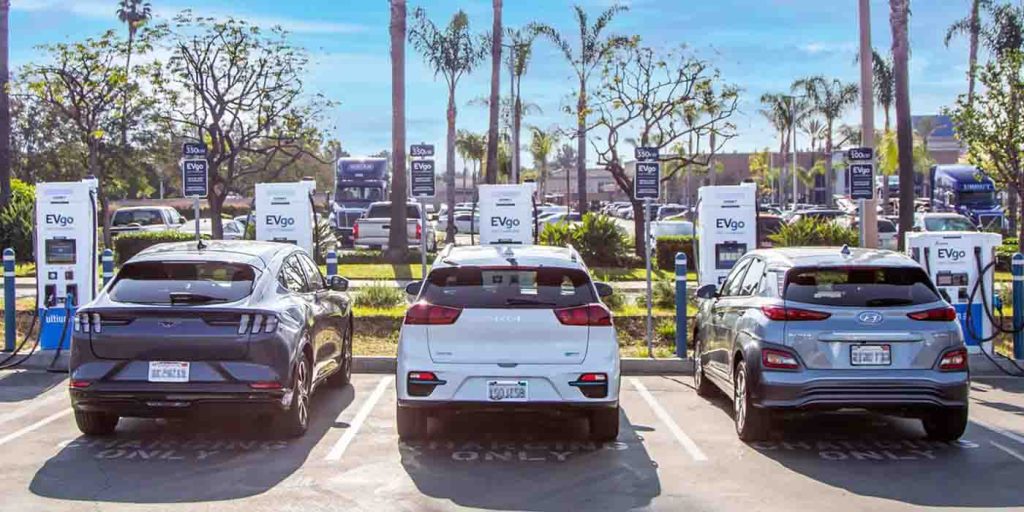
It’s relatively easy math, right? If you want shoppers to spend more, put in slower chargers so they have more dwell time. More dwell time = more dollars, right?
The problem here is that consumers don’t want dwell time. And, when they’re just looking for charging – like they are on road trips, service routes, or between ride share passengers – they’ll choose the charging stations that offer the fastest chargers. And, as a consequence, the least amount of dwell time. That’s the Dwell Time Paradox™ part.
There must exist, then, some ideal balance where the charging is fast enough to draw in EV drivers using route planning apps like Chargeway, but still slow enough to encourage increased spending. Not too slow, but not too fast, either. That’s the Goldilocks part.
Finding the balance
| Location | Ideal Charger Type | Avg. Dwell Time | Monetization Hacks |
|---|---|---|---|
| Movie Theaters / Sports Arenas | L2 (7-11 kW) | 3-4 hrs. | Rewards points |
| Shopping Centers | L2 (22 kW) | 1-2 hrs. | In-app coupons |
| Highway Rest Stops | 150 kW+ DCFC | 15-30 min. | C-store partnerships |
The key in selecting the right charger is to match the idealized customer experience (ideal for you, not necessarily for them) to the customers’ dwell time to the appropriate charging station(s).
For example, you don’t want a moviegoer to be interrupted in the middle of a movie and feel pressure to go move their EV. So, understanding that they’ll be sitting for about 3-4 hours, you want to pair their experience with a 3-4 hour charging experience that will give them enough juice to drive to dinner and home again after the show. If someone is on a road trip two hundred miles from home with two hundred miles to go, they want to stop, use the restroom, and maybe grab lunch or a coffee before getting back on the road. A five or even a ten minute stop might mean they’ll hit a drive-thru a few miles up the road if you don’t have the exact sandwich/burger/coffee chain on site. A fifteen or twenty minute stop, though?
Top comment by Les Inanchy
After owning an EV for about eight years and being lucky enough to charge at home more than 95% of the time, I’ve often thought that we need a lot more level two chargers at places like shopping, malls and movie theaters. A physical therapy facility I visit several times a week has a number of level two chargers which I use for the hour or so that I’m there. I may only get about 25 miles of range, but since I go two or three times a week, it adds up. If there were level two chargers at the supermarket and Costco, I would use those also. I’ve only been using fast chargers when we go on a road trip.
How different are those Caribou and Starbucks lattes, really?
And that’s the key – finding that balance of convenience and inconvenience that leads to spending, building on MIT’s 2024 study that shows EV chargers boosting nearby business revenue by $400–$1,500 annually per charger and getting closer to how McKinsey calculates ancillary revenue streams (targeted ads, loyalty programs, partner coupons, etc.) at $5,000–10,000/mo. for high-traffic or POI locations.
Get it right, kids. And cash in.
Original content from Electrek.


FTC: We use income earning auto affiliate links. More.




Comments