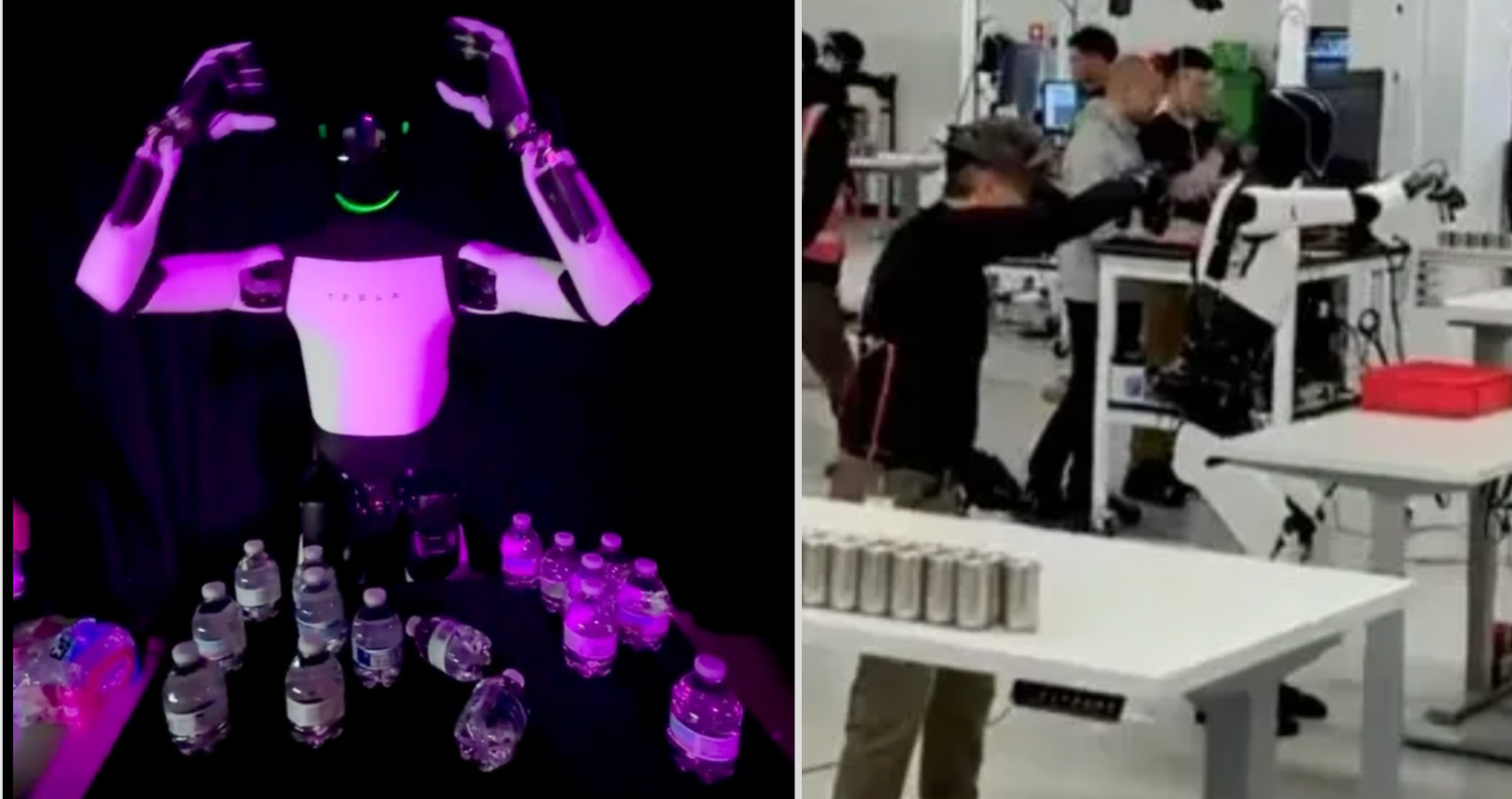
A new video surfacing from a Tesla demonstration in Miami this weekend shows the Optimus humanoid robot taking a nasty fall. But it’s not the fall itself that is raising eyebrows, it’s the specific hand movements the robot made on its way down, which strongly suggest it was mimicking a remote operator frantically removing a VR headset.
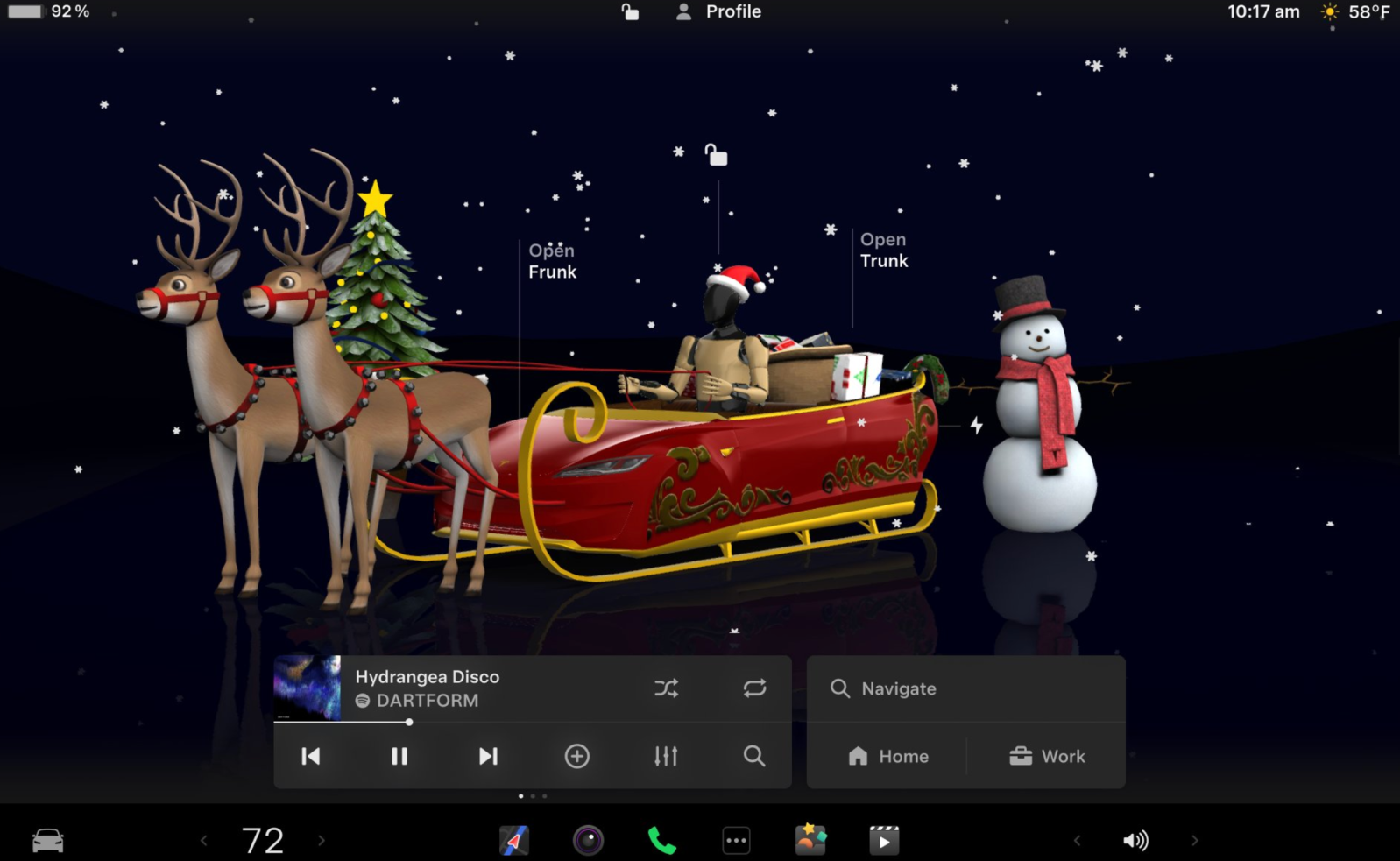
Tesla has officially announced its 2025 Holiday Update, and this year, the automaker is not using the usually bigger update for any groundbreaking stuff, but there are a few interesting new smaller features.
In the Electrek Podcast, we discuss the most popular news in the world of sustainable transport and energy. In this week’s episode, we discuss Tesla allowing texting and driving on FSD v14, Trump killing CAFE’s MPG standard, an Aptera update, and more.
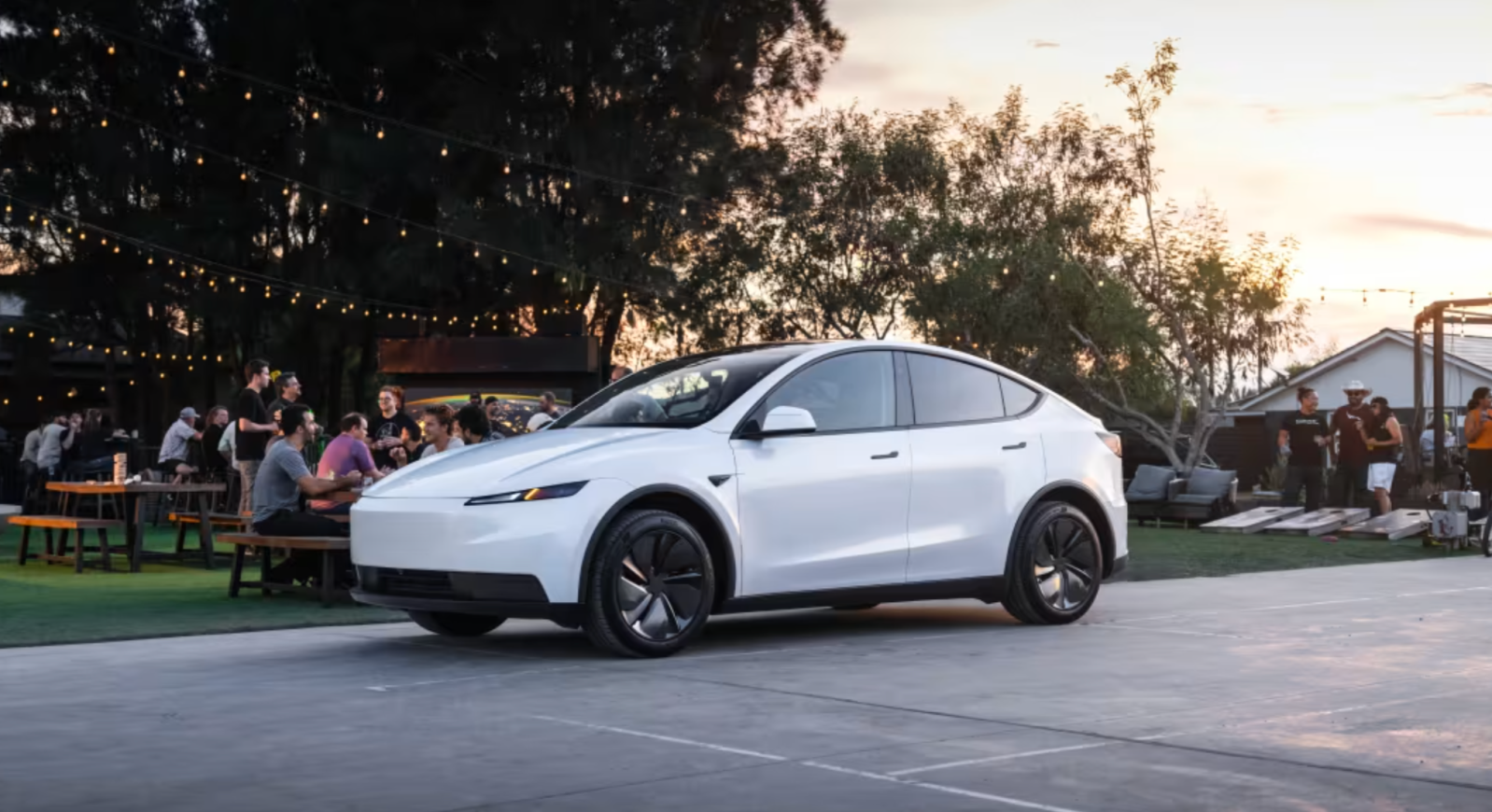
Tesla has officially launched new “Standard” trims for both the Model 3 and Model Y in Europe after launching them in North America. The automaker is aggressively positioning these stripped-down models to undercut competitors and arrest a painful sales slump in the region, with the Model 3 now starting at an impressive €36,990 in Germany.
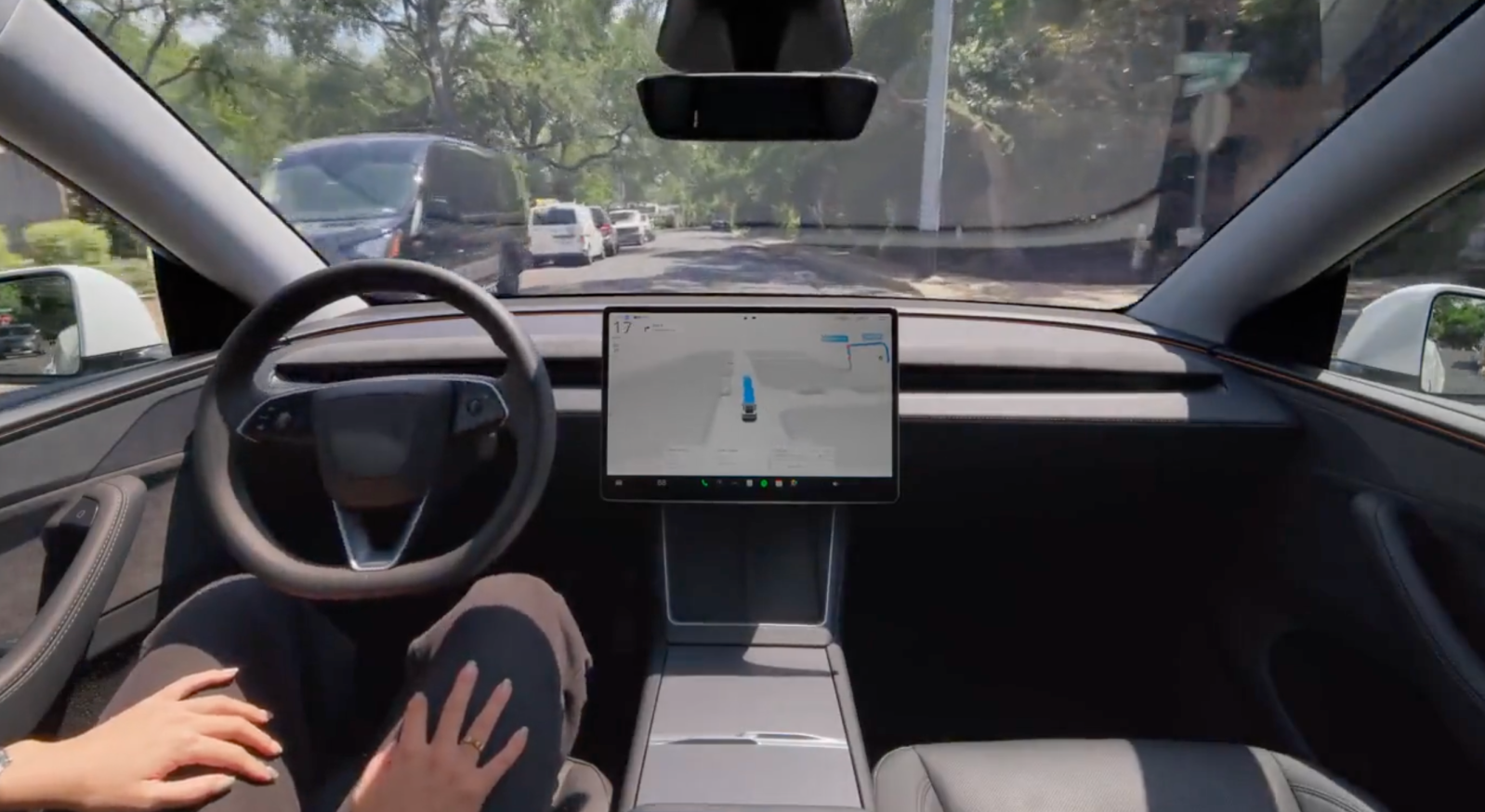
Elon Musk has confirmed that Tesla’s Full Self-Driving (Supervised) system now allows drivers to text and drive, though he added a caveat that it depends on the “context of surrounding traffic.”
This comes just a month after the CEO promised the feature was coming, despite the obvious legal and safety concerns surrounding it.
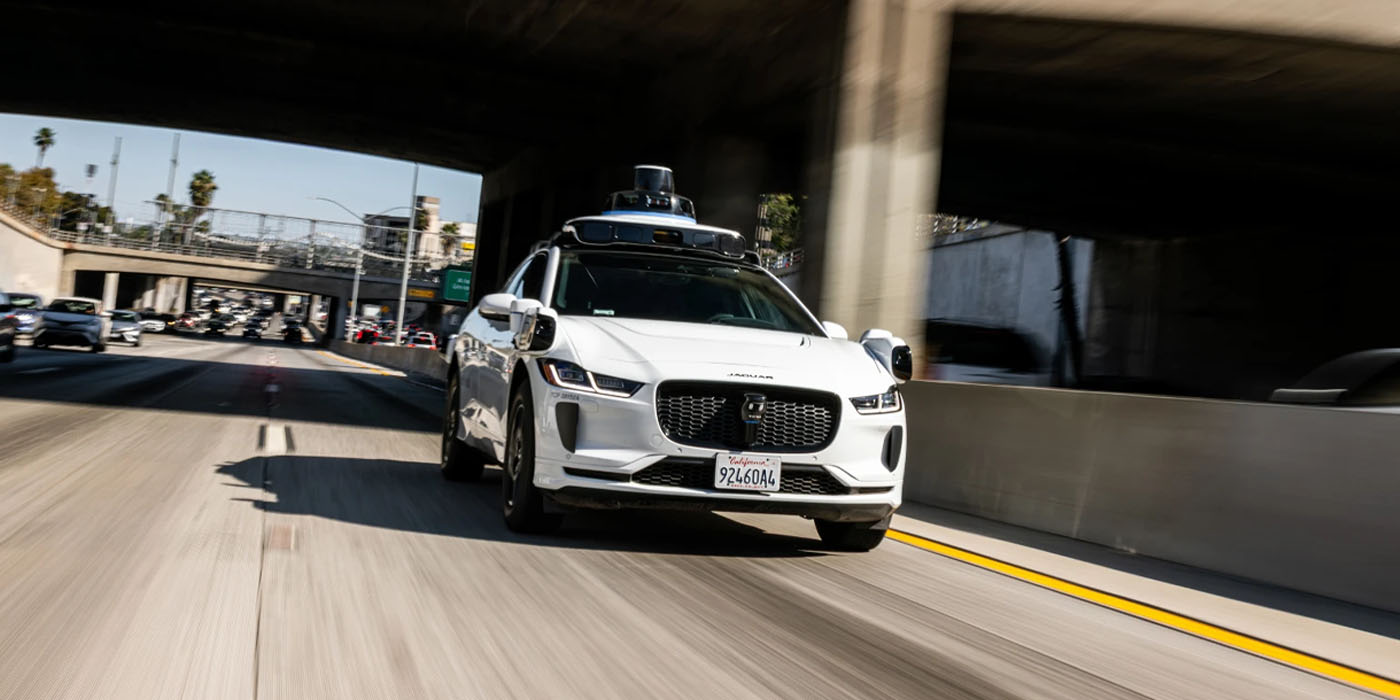
For years, the loudest and most persistent argument coming from the Tesla camp, including Elon Musk himself, against Waymo has been simple: “Sure, it works, but it can’t scale.”
The narrative, usually pushed by those heavily invested in the promise of Tesla’s “generalized Full Self-Driving”, was that Waymo was a geofenced parlor trick. They argued that Waymo’s reliance on lidar, radar, and, specifically, high-definition (HD) mapping would mean it would take years to launch in every new city.
But the narrative is now dying, as Waymo went from testing to fully autonomous in a couple of Texas cities in just a few months.
Tesla’s registration numbers for November 2025 are starting to roll in for European markets, and they paint a stark picture: demand is still collapsing in nearly every major market, with one massive exception that is propping up the entire region.
According to registration data tracked by Electrek, Tesla’s volumes in key European markets are down 12.3% year-over-year.
Tesla has received a brutal reality check from Germany this week. The country’s closely watched TÜV Report 2026 has not only ranked the Tesla Model Y as the absolute worst car for reliability in its age group but noted that it has the highest defect rate of any vehicle tested in the last ten years.
It’s a tough look for the world’s best-selling car, though the details paint a more nuanced picture than just “the car is falling apart.”
Tesla is quietly but significantly expanding its Tesla Semi sales team, bringing on two seasoned veterans from the electric trucking industry as the company prepares for volume production at Gigafactory Nevada.
Solar electric vehicle startup Aptera Motors released a new update today, giving us a first look at its validation vehicle assembly line, along with progress on battery production and efficiency testing as it moves closer to its goal of low-volume production.
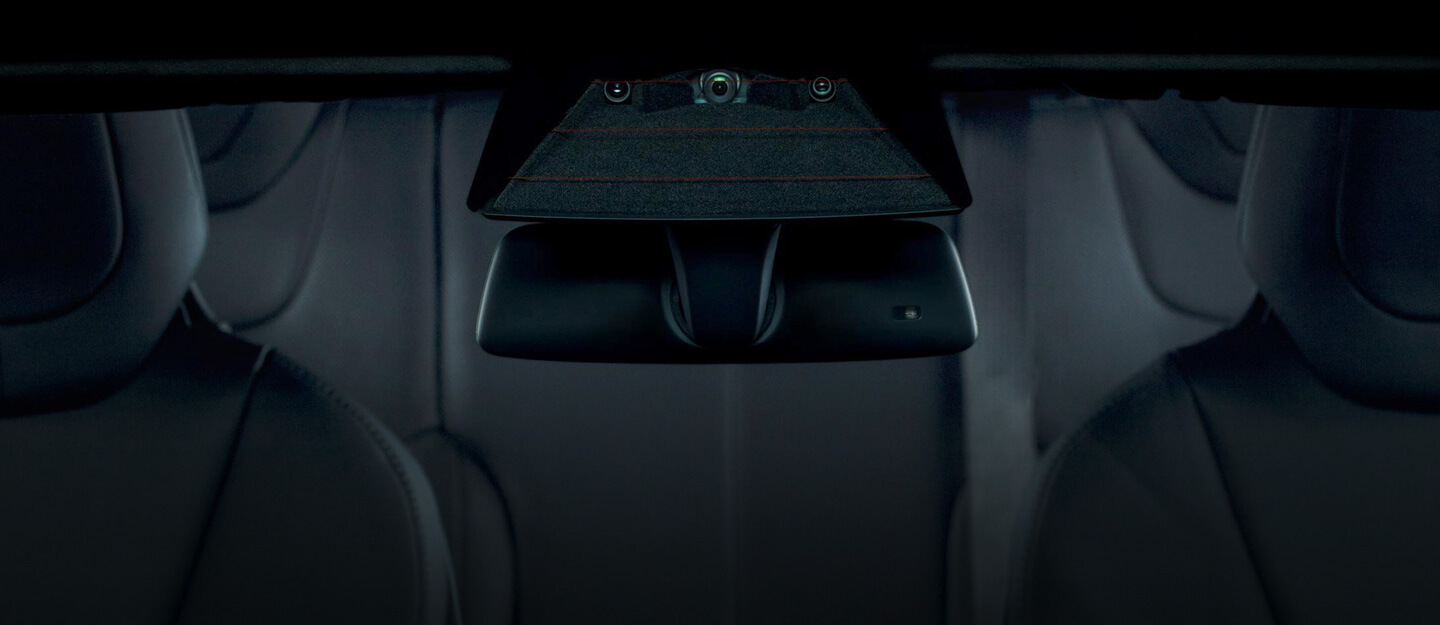
Tesla appears to be preparing to introduce yet another new camera sensor to its hardware suite, according to code found in the automaker’s latest firmware. While hardware improvements are generally good news, this latest discovery adds to the mounting evidence that Tesla is continuously moving the goalposts for self-driving, potentially leaving millions of owners with “older” hardware in the dust… again.
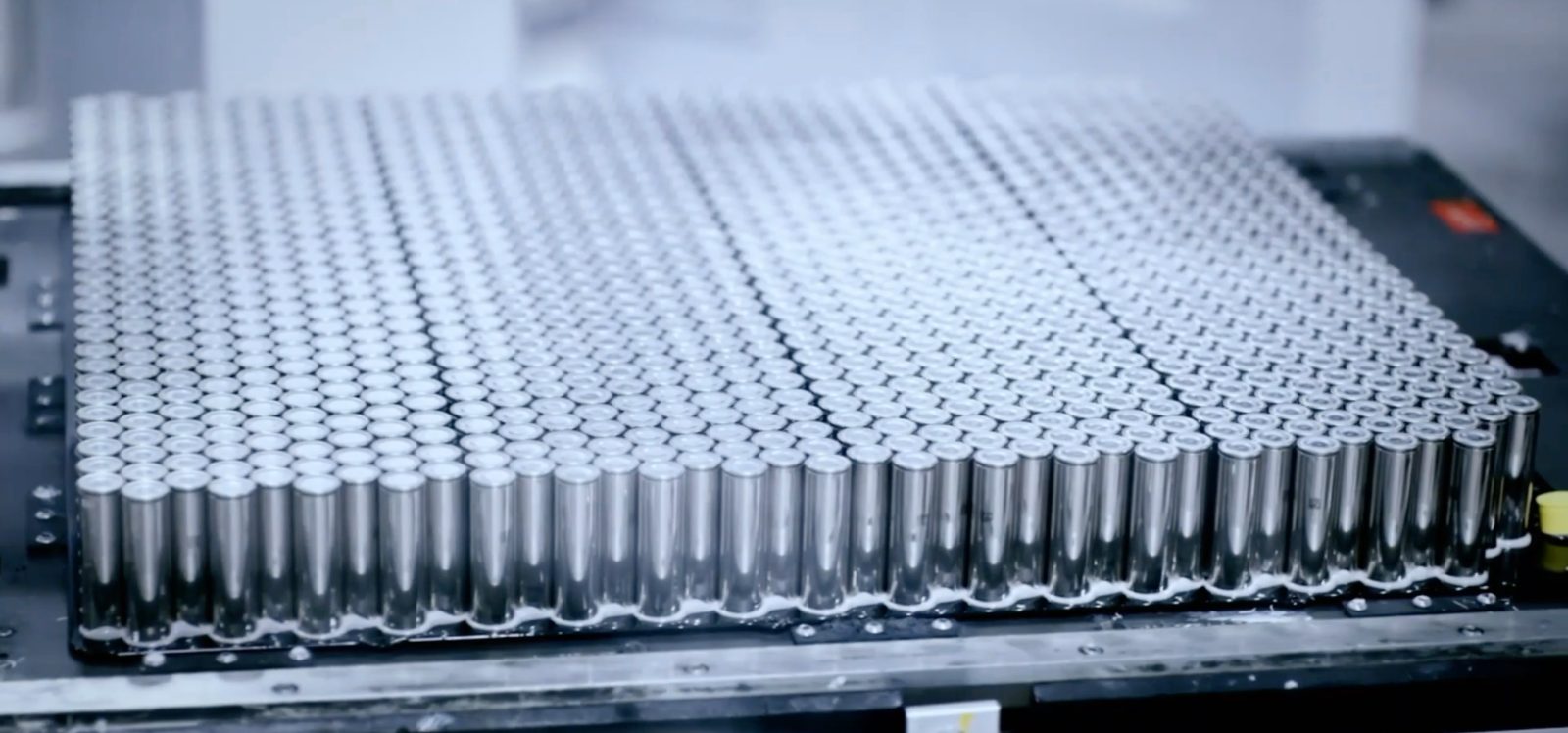
A prominent European EV repair specialist is sounding the alarm on Tesla Model 3 and Model Y vehicles equipped with LG battery cells manufactured in China, claiming they are seeing “catastrophic” failure rates and significantly shorter lifespans compared to Panasonic packs.
Michael Burry, the investor made famous by The Big Short, is back to criticizing Tesla (TSLA). In a new article, Burry takes aim at the “tragic algebra” of stock-based compensation (SBC), which focused primarily on NVIDIA, but the famed investors also specifically highlight Tesla’s high dilution rate and argue that the company’s pivot to robotics is just the latest narrative shift to prop up a “ridiculously overvalued” stock.
In the Electrek Podcast, we discuss the most popular news in the world of sustainable transport and energy. In this week’s episode, we discuss a big Tesla Robotaxi setback, the new Mercedes-Benz CLA EV, Bollinger is over, and more.
Today’s episode is brought to you by Climate XChange, a nonpartisan nonprofit working to help states pass effective, equitable climate policies. Sales end on Dec. 8th for its 10th annual EV raffle, where participants have multiple opportunities to win their dream model. Visit CarbonRaffle.org/Electrek to learn more.
Tesla’s poorly handled Powerwall 2 recall is now turning into a potential class action lawsuit over for leaving people with bricked batteries until Tesla replaces them.
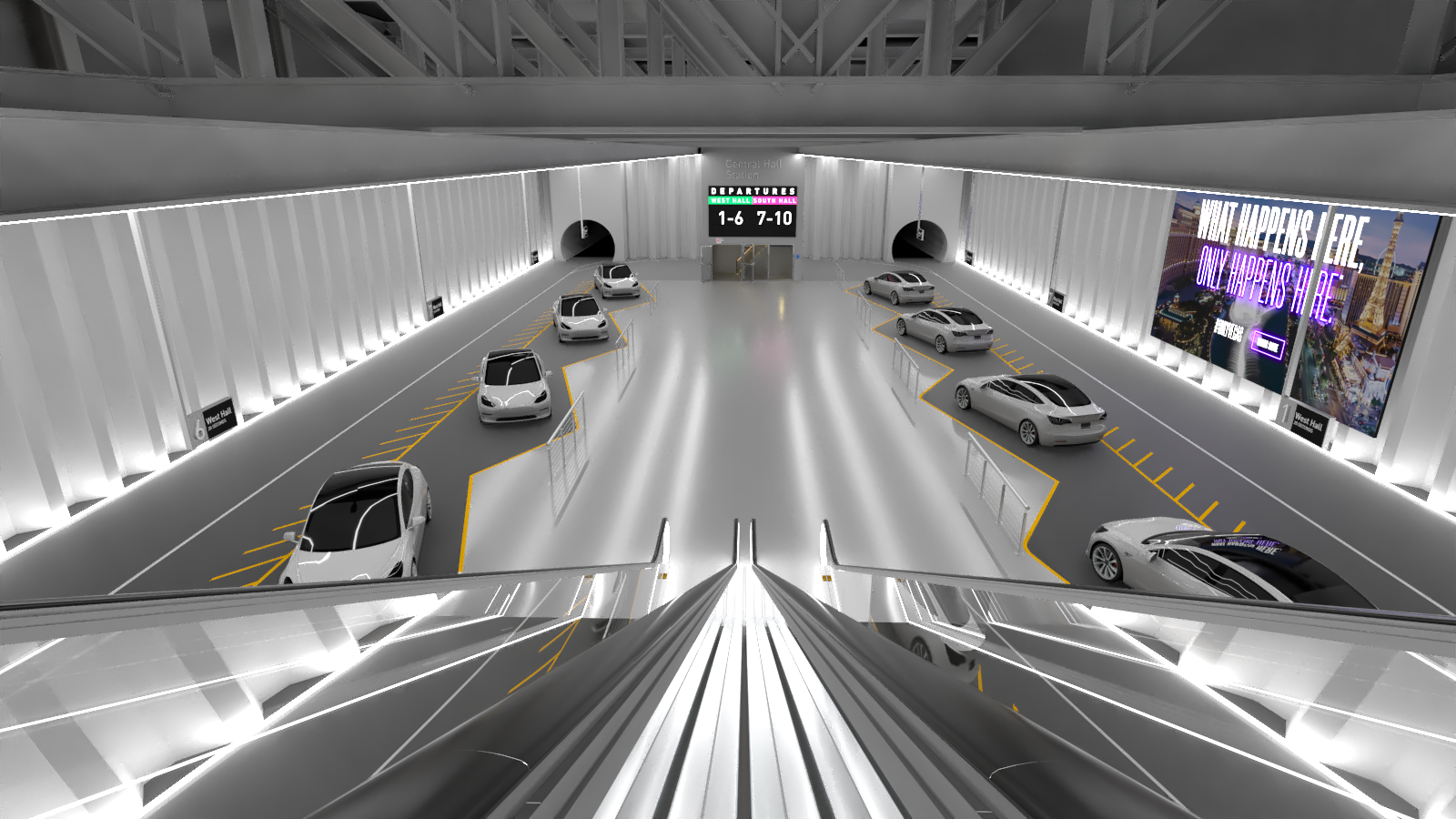
The Boring Company, Elon Musk’s tunneling startup, is reportedly facing significant issues with its new project in Nashville, Tennessee. A key subcontractor has walked off the job, alleging that the company has failed to pay for work completed on the “Music City Loop,” claiming they have received only 5% of what they are owed.
Elon Musk announced last night that Tesla is planning to “roughly double” its Robotaxi fleet in Austin next month. While an expansion of the pilot sounds positive on the surface, a look at the actual numbers reveals that Tesla is missing its own “end of year” target by a massive margin.
Just last month, Musk explicitly stated that Tesla aimed to have 500 Robotaxis in Austin by the end of the year. Now, “doubling” the current estimated fleet suggests the actual number will be closer to 60.
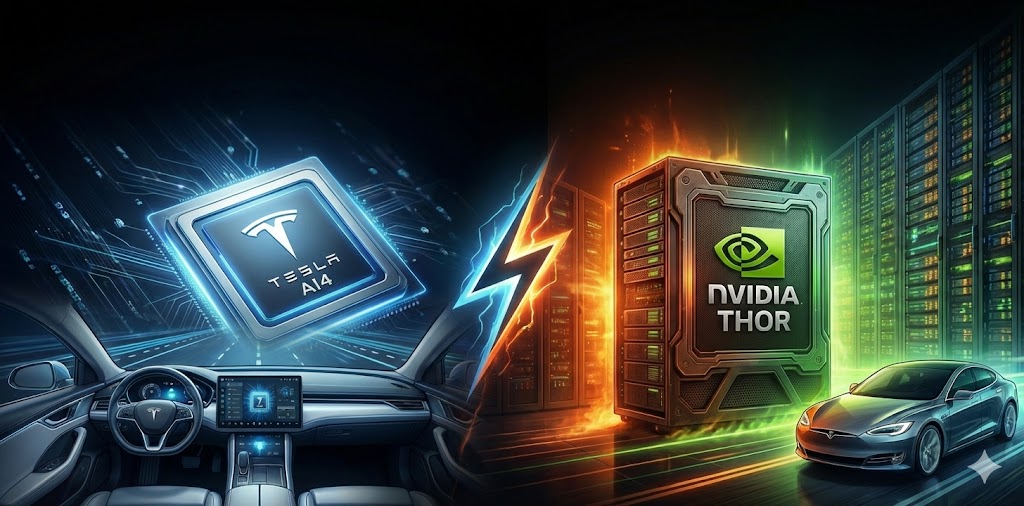
The race for autonomous driving has three fronts: software, hardware, and regulatory. For years, we’ve watched Tesla try to brute-force its way to “Full Self-Driving (FSD)” with its own custom hardware, while the rest of the automotive industry is increasingly lining up behind NVIDIA.
After years of teasing that other automakers would license Tesla’s Full Self-Driving (FSD) system, Elon Musk has now admitted that no other automakers want to license it.
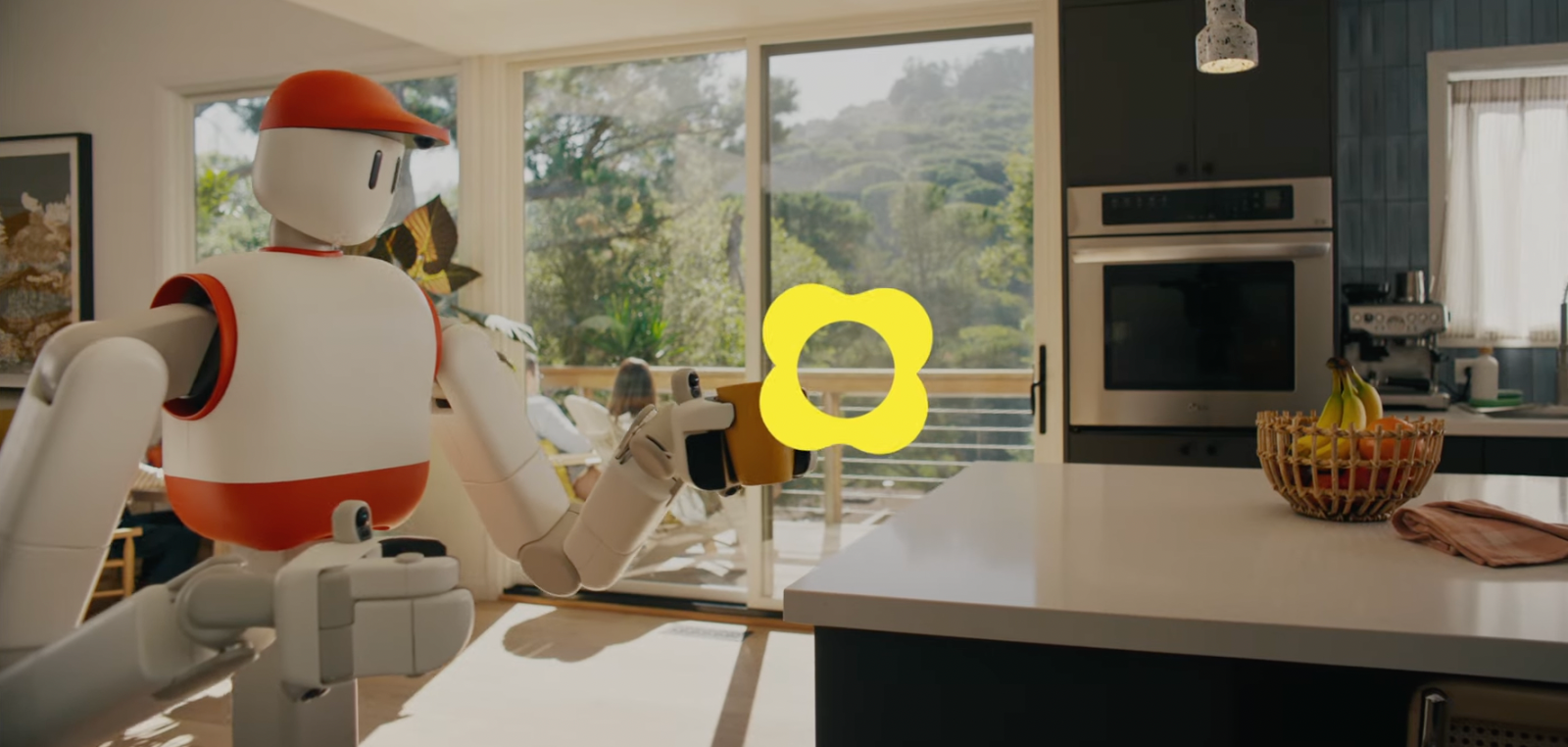
Tesla’s AI and robotics divisions are facing a significant “brain drain” as a stealth startup called Sunday Robotics emerges with a roster of engineers from Tesla’s Optimus and Autopilot teams.
For the first time in what feels like forever, Tesla has put a hard date on the arrival of Full Self-Driving (Supervised) in Europe. The automaker confirmed that the Dutch vehicle authority (RDW) has committed to granting national approval for the system in February 2026, which is just a few months away.
Update: RDW has denied that it has told Tesla it plans to grant approval in February.
In the Electrek Podcast, we discuss the most popular news in the world of sustainable transport and energy. In this week’s episode, we discuss electricity becoming the base currency, Tesla Robotaxi crashes, the new Porsche Cayenne EV, and more.
For most of human history, currency was a direct claim on tangible, productive output. Before the abstraction of government fiat or cryptocurrency, value was stored in things that required real work and resources, bushels of grain, livestock, gold, assets with their own direct productive output: horses, and tragically, slaves.
These were the foundational assets of economies, representing a direct link between labor, resources, and stored value.
As we accelerate into an all-electric, all-digital age, this fundamental link is re-emerging, but with a new unit of account. The 21st-century economy, defined by automated industry, robotic, electric transport, and now power-hungry artificial intelligence, runs on a single, non-negotiable input: electricity. In this new paradigm, the real base currency, the ultimate representation of productive capacity, is the kilowatt-hour (kWh).
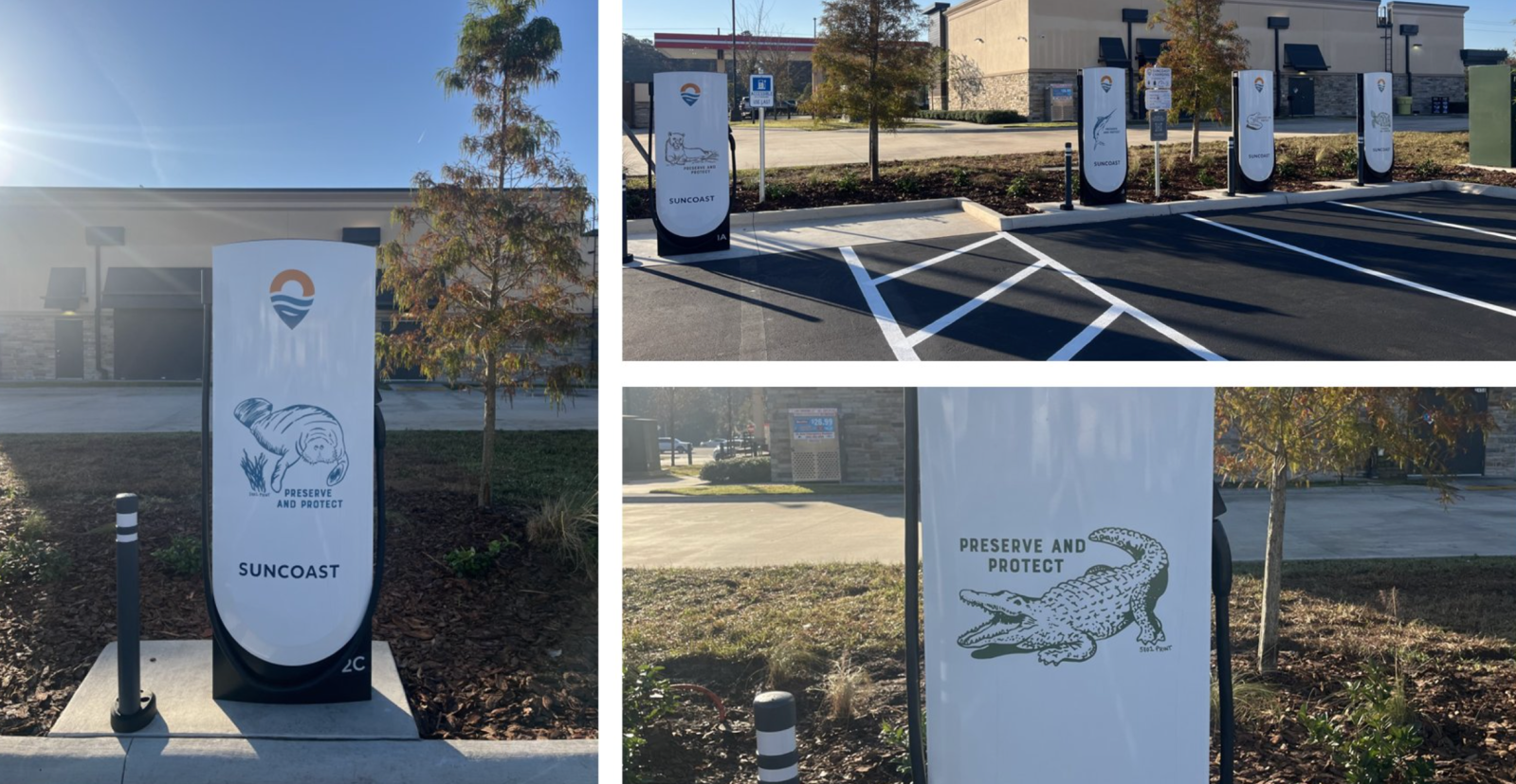
Tesla has officially deployed its first Supercharger station owned by a third party in the US, a step in the automaker’s effort to accelerate the charging infrastructure growth while reducing capital expenditure.