
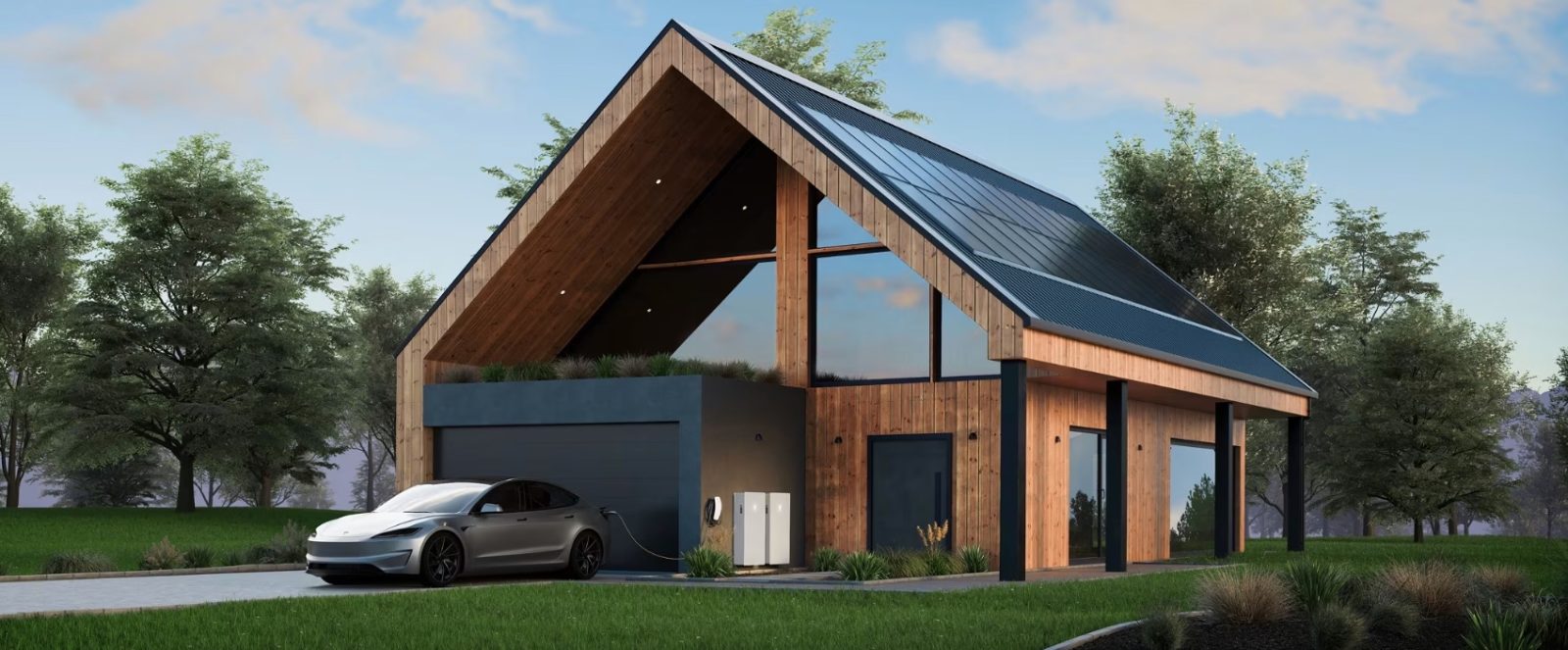
Tesla’s proposed $10 billion “Project Crystal Sun” solar factory in Texas could get up to 35 years of local tax breaks on its equipment, according to the four agreements Fort Bend County commissioners approved on Thursday.
The vote was 4-0. And Tesla still hasn’t committed to building the plant in Texas.
From a tax filing to four agreements
As we first reported in August, Tesla applied for a 10-year school property tax limitation under the state’s JETI program, through Lamar CISD and the Texas Comptroller. The plan is a vertically integrated solar plant near Richmond, southwest of Houston, that would make everything from silicon ingots to finished modules, with commercial production targeted for Q1 2029.
Lamar CISD approved the school tax piece in September. The county was next.
On October 22, the commissioners court approved items 25A to 25D on its agenda: a Chapter 312 tax abatement, a Chapter 381 incentive agreement, a foreign trade zone agreement with a payment in lieu of taxes (PILOT), and a “true up” PILOT agreement. Interim County Judge Daniel Wong abstained because his engineering firm has worked with Tesla.
Each agreement covers a different slice of Tesla’s tax bill, and together they run for decades.
Years 1 to 10: no county tax on equipment or inventory
The Chapter 312 agreement abates 100% of county property taxes on Tesla’s equipment and other tangible personal property at the plant for 10 tax years. The clock starts in tax year 2029 by default, but Tesla can move it to the first year after production starts, as late as 2031 without needing the county’s approval.
Tesla’s JETI application splits the $10.1 billion into $1.52 billion of real property and $8.6 billion of personal property, mostly production equipment.
Land and buildings aren’t part of the deal. Anything that isn’t eligible for the abatement, including the land and buildings, stays “fully taxable at all times,” according to the agreement.
Inventory goes through the foreign trade zone deal instead. Tesla’s site would be part of Port Freeport’s Foreign-Trade Zone No. 149, which exempts eligible inventory from local property tax. In exchange for the county not objecting, Tesla agreed to make PILOT payments, set at “zero dollars or 0%” of the forgone taxes for as long as the abatement is in effect.
Years 11 to 30: Tesla gets 90% back
When the abatement ends, the Chapter 381 agreement takes over. Tesla starts paying county taxes on its equipment, and the county pays 90% of them back as an annual grant for 20 years. The county keeps 10% for its general fund.
Inventory follows the same pattern. After the abatement, Tesla’s FTZ payment rises to 10% of the taxes that would otherwise apply.
The 12,000-job bonus
There’s one more lever. If Tesla averages at least 12,000 employees for any two consecutive years during the first decade, the first five years of the rebate period become a 100% grant, and the rebate period stretches from 20 to 25 years.
That pushes the agreement out to Project Year 35. It’s also 2,288 jobs above the 9,712 Tesla says it will create.
What Tesla has to deliver
To keep the tax breaks, Tesla has to start construction by June 30, 2027, begin “regular commercial production of solar cells” by December 31, 2030, and invest $10 billion by the later of December 31, 2031 or two years after production starts. Force majeure and “ERCOT Delay” provisions can extend those dates.
The jobs ramp is 2,500, 5,000, 7,500, then 9,712 employees by the fourth year of operations, with an average compensation of $55 per hour. Tesla gets the full abatement as long as it hits 90% of the headcount target, which is about 8,741 people.
The penalties are mild. Missing a jobs or wage target for one year only costs Tesla that year’s break, and two misses in a row lets the county terminate the agreement. Full recapture of abated taxes, plus a possible 15% penalty if they aren’t repaid within 60 days, is reserved for “Material Defaults” like missing the $10 billion investment, blowing the construction deadlines or abandoning the plant for 12 months.
Under the Chapter 381 deal, grants from earlier years can’t be clawed back for a headcount shortfall.
The county’s floor is small. The true-up agreement only guarantees that Fort Bend collects at least $2 million a year, and 25% of the taxes Tesla pays on its real property, the county’s 10% share and the FTZ payments all count toward that total.
For scale, Tesla’s own consultant, Kroll, estimated in the JETI filing that the project would pay $276.5 million in Fort Bend County general taxes over 38 years without incentives, peaking at $16.2 million in 2030. That estimate lumps land, buildings and equipment together. The equipment portion is the one the county just agreed to give back, for most of those years.
Shopping for the best deal
In its application, it says the economics of the Fort Bend site are “not competitive” with an unnamed site in another state without the JETI limitation and local abatements. The competing state is redacted in a confidential supplement.
None of the documents state a production capacity. The only big number is a quote from Elon Musk at Davos in January, cited in the application: “The SpaceX and Tesla team, both separately, are working to build to 100 GW a year of solar power in the U.S., of manufactured solar power.”
For comparison, Qcells is spending $2.5 billion on its ingot-to-module campus in Cartersville, Georgia, where a 3.5 GW cell line started production this year. Crystal Sun’s budget is four times that.
Tesla has been here before. New York spent $950 million on the Buffalo factory for Tesla’s solar business, and when the solar plans fell apart, Tesla turned to things other than solar to meet its employment requirements, including data labeling for Autopilot. Tesla did announce production of a new solar panel in Buffalo last year.
Electrek’s Take
We want this factory to happen. A US plant making its own ingots, wafers, cells and modules would be rare, and it’s one of the few parts of Tesla’s business that still lines up with the mission it used to talk about before its “awesome abundance” pivot based on AI.
But corporate America loves its tax breaks. For 10 years, Tesla pays no county tax on the $8.6 billion of equipment that makes up most of the project. For the next 20, it gets 90% of it back. In return, the county’s guaranteed minimum is $2 million a year, on a $10 billion plant. And Tesla still hasn’t said it’s coming.
That’s how site selection works now. Companies file, collect offers from several states, and the county that bids the most wins. Fort Bend’s economic development director, Carlos Guzman, told ABC13 the county “would’ve been eliminated from consideration” without these agreements. Hard to argue with that, and it’s exactly why these deals keep getting richer.
Top comment by CyanPizza
That bonus for extra workers looks like an invitation to gaming (if things get that far). Paying people for make-work for a couple of years could yield tax breaks well exceeding their combined wages.
The protections are thin too. One bad year costs Tesla a year of breaks, and past rebates can’t be clawed back over a headcount shortfall, even though the county’s goal is obviously long-term employment.
Then there’s the equipment. Reuters reported in March that Tesla was in talks to buy $2.9 billion of Chinese solar equipment, and its supply chain is already caught in a patent fight between Chinese suppliers.
The state still has to sign off on the school-tax piece. After that, it’s on Tesla. Is it actually building in Texas, or is Fort Bend’s offer just leverage against the other state? From what I’m hearing, Tesla is set on the Houston-area location.
Tesla wants to start making solar panels in Texas by 2029, but you don’t have to wait that long to go solar at home. With electricity rates up almost 10% last year and expected to keep climbing, going solar is one of the best ways to protect yourself against rising costs. And with lease and PPA options, you can do it with zero upfront cost and start saving immediately. If you want to find the best deal, check out EnergySage. It’s a free service with hundreds of pre-vetted installers competing for your business, so you save 20 to 30% compared to going it alone. No sales calls until you pick an installer. Get your free quotes here.


FTC: We use income earning auto affiliate links. More.




Comments