
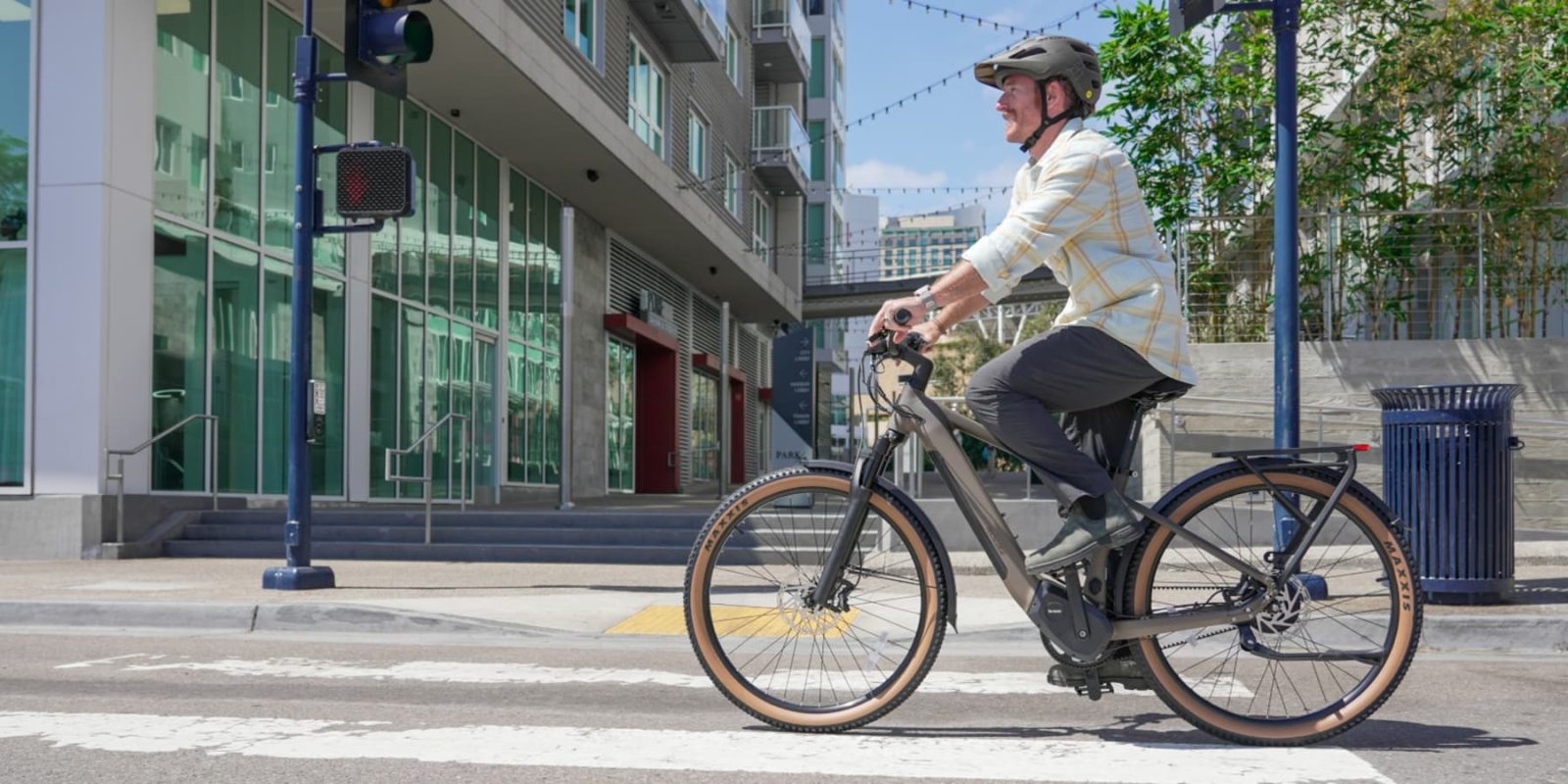
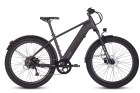
There are cheap e-bikes, and there are good mid-drive e-bikes. Those two circles on the Venn diagram don’t overlap nearly as often as we’d like. But Ride1Up’s newly launched Prodigy V2 Eco is doing its best to smash them together with a surprisingly low $1,295 price tag.
And this isn’t a $1,300 bike with some no-name mid-drive motor you’ve never heard of. At the heart of the Prodigy V2 Eco is a German-made Brose TF Sprinter mid-drive motor pumping out 90 Nm of torque, paired with a 504 Wh battery using Samsung cells.
In other words, the expensive bits are still there.
The Prodigy line has been around for several years now, and Ride1Up has historically used it as the company’s more premium mid-drive offering. The new Eco version appears to take that same basic formula and ask a fairly simple question: How much can we shave off the price without cutting into the parts that actually make the bike so good?
The answer, apparently, is quite a lot.
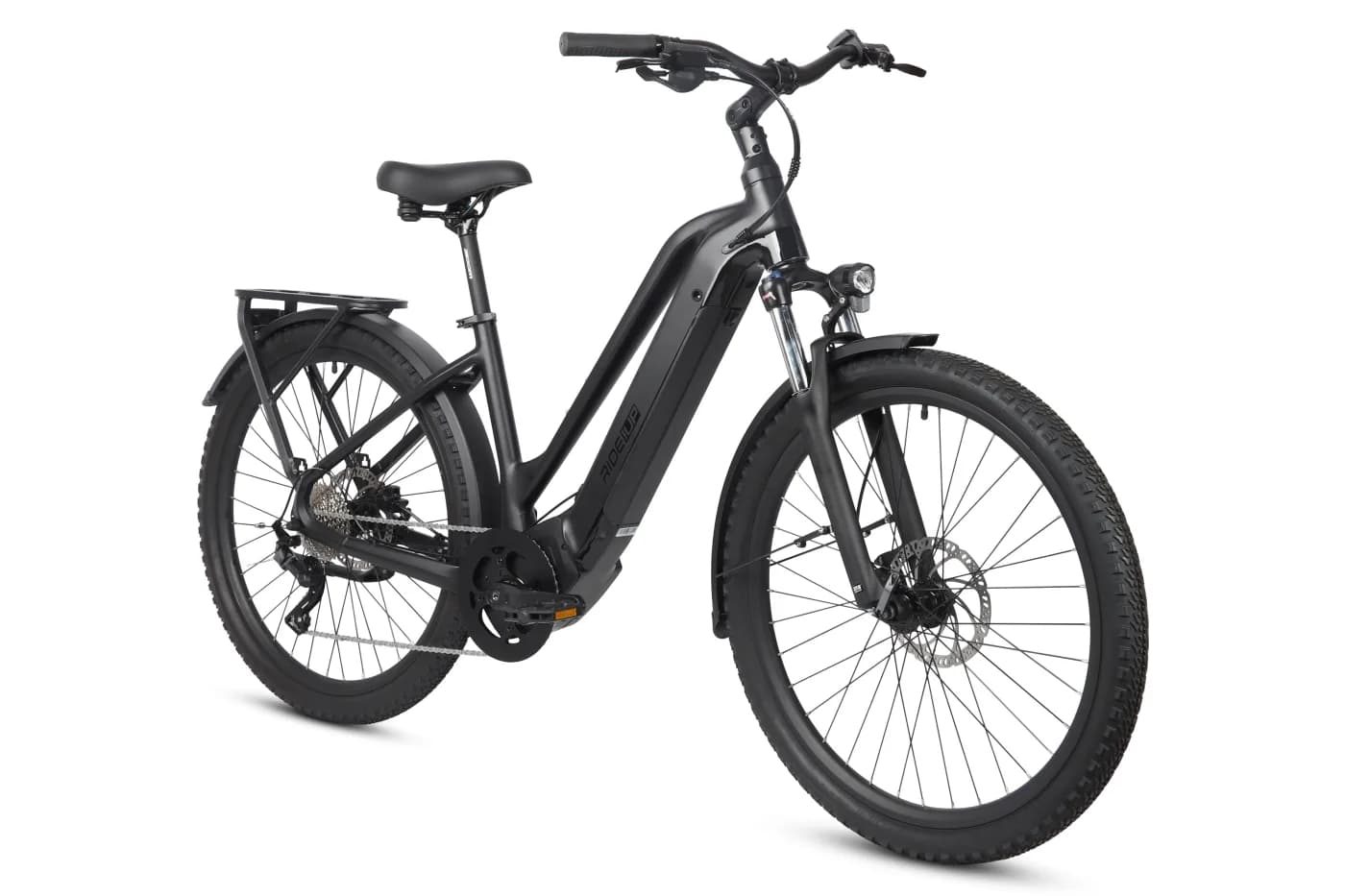
Ride1Up has made some component concessions compared to its higher-end Prodigy builds. The fancier Maxxis rubber is gone in favor of more affordable tires, while the higher-spec four-piston hydraulic brakes have been replaced with 180mm two-piston hydraulic brakes. The drivetrain is also a fairly pedestrian 9-speed setup with a microSHIFT Advent derailleur and Shimano Alivio 11-34T cassette.
These are all fine parts, but not top shelf components like you’d find on a $4,000 Specialized or Trek. However the battery and motor – basically the heart and soul of the bike – could stand toe to toe with those top tier bike shop e-bikes any day of the week.
And those are exactly the kinds of compromises I like to see on a value-focused e-bike. Save money on the components that are relatively easy and inexpensive to replace someday, not on the expensive electrical drivetrain buried in the middle of the bike. If my tires wear out a bit faster, I can decide to put on nicer rubber later. But giving me a $3,000 e-bike for less than half the price – now that’s a deal.
And that’s what it looks like the company is doing, because Ride1Up didn’t cheap out there. You still get the Brose mid-drive with its integrated torque sensor, a 36V 14Ah battery, and Class 3 performance up to 28 mph (45 km/h).
There’s also a 100mm suspension fork with lockout (though here too, it’s not clear which fork they went with), integrated front and rear lights, full-coverage fenders, a 40 lb-rated rear rack, an adjustable stem, and 27.5-inch wheels. The bike comes in both step-through and step-over frame styles, which in lieu of multiple frame sizes, gives riders a ‘shorter’ and ‘taller’ mounting option.
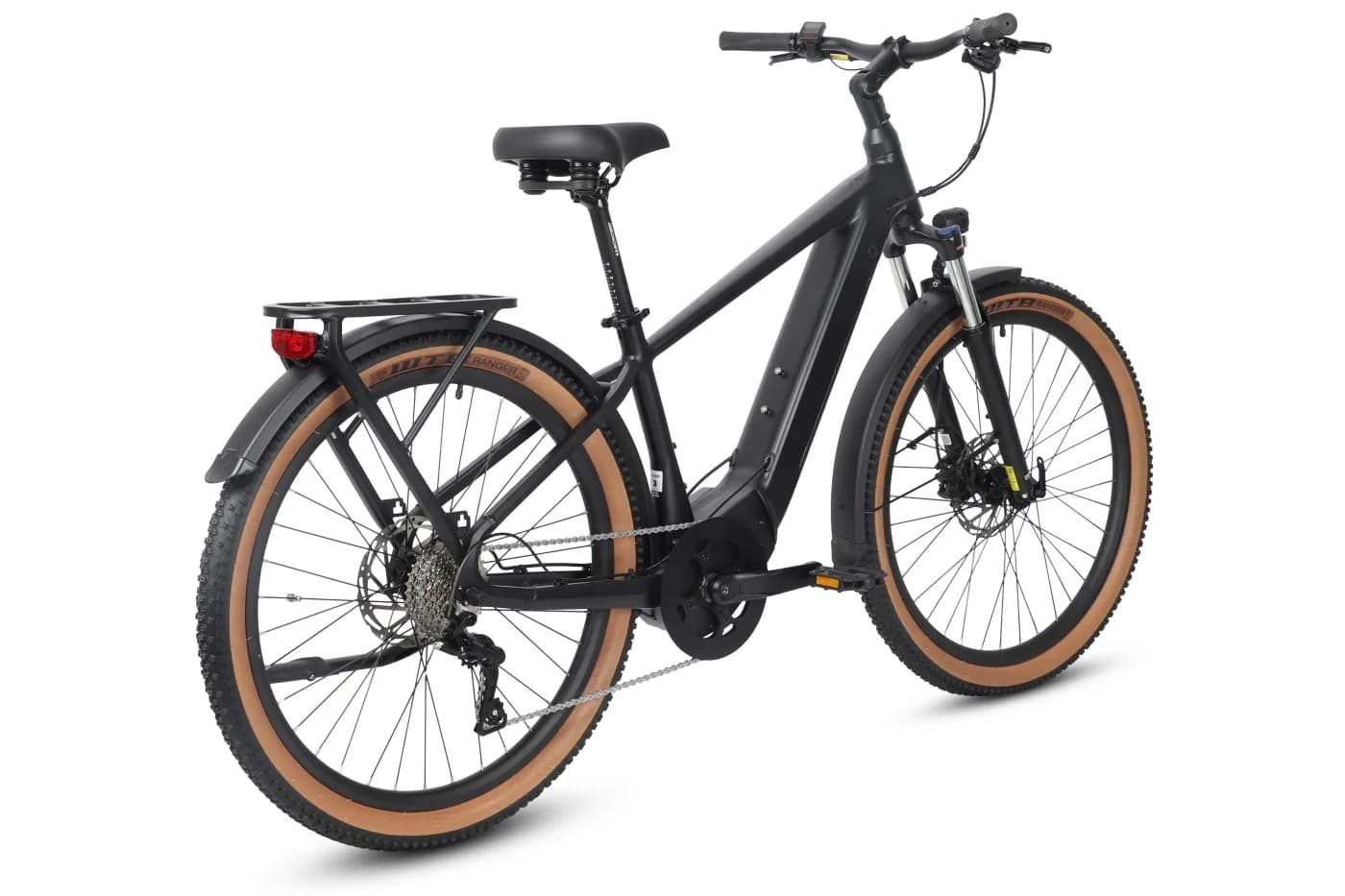
Perhaps the most eyebrow-raising part is simply what $1,295 buys you here compared to the rest of the market.
Ride1Up itself points toward bikes like Trek’s FX+ 7S and Allant+ 8S, as well as the Specialized Turbo Vado SL 2 5.0, all of which sit north of $4,000. That’s not to say these are apples-to-apples comparisons; premium dealer brands bring their own advantages in component selection, dealer support, frame engineering, refinement, and service networks.
But when we’re talking about more than a three-fold difference in sticker price, it’s hard not to notice.
A $1,295 hub-motor e-bike isn’t particularly surprising anymore. We’ve seen plenty of those. A $1,295 e-bike with a 90 Nm Brose mid-drive, torque sensor, Samsung-celled 504 Wh battery, hydraulic brakes, suspension, fenders, lights, and a rear rack? That’s a very different proposition.
And frankly, it’s the kind of aggressive pricing that makes you wonder just how much room is left beneath the premium e-bike market.
The Prodigy V2 Eco is currently listed for pre-order at $1,295, with Ride1Up indicating shipments are expected to begin in the next couple of weeks.
Hopefully we’ll get to test one of these out for you soon, but until then, check out my review of the Prodigy V2 below, which is largely the same e-bike but with a bit nicer brakes, tires, and other components.


FTC: We use income earning auto affiliate links. More.


Comments