
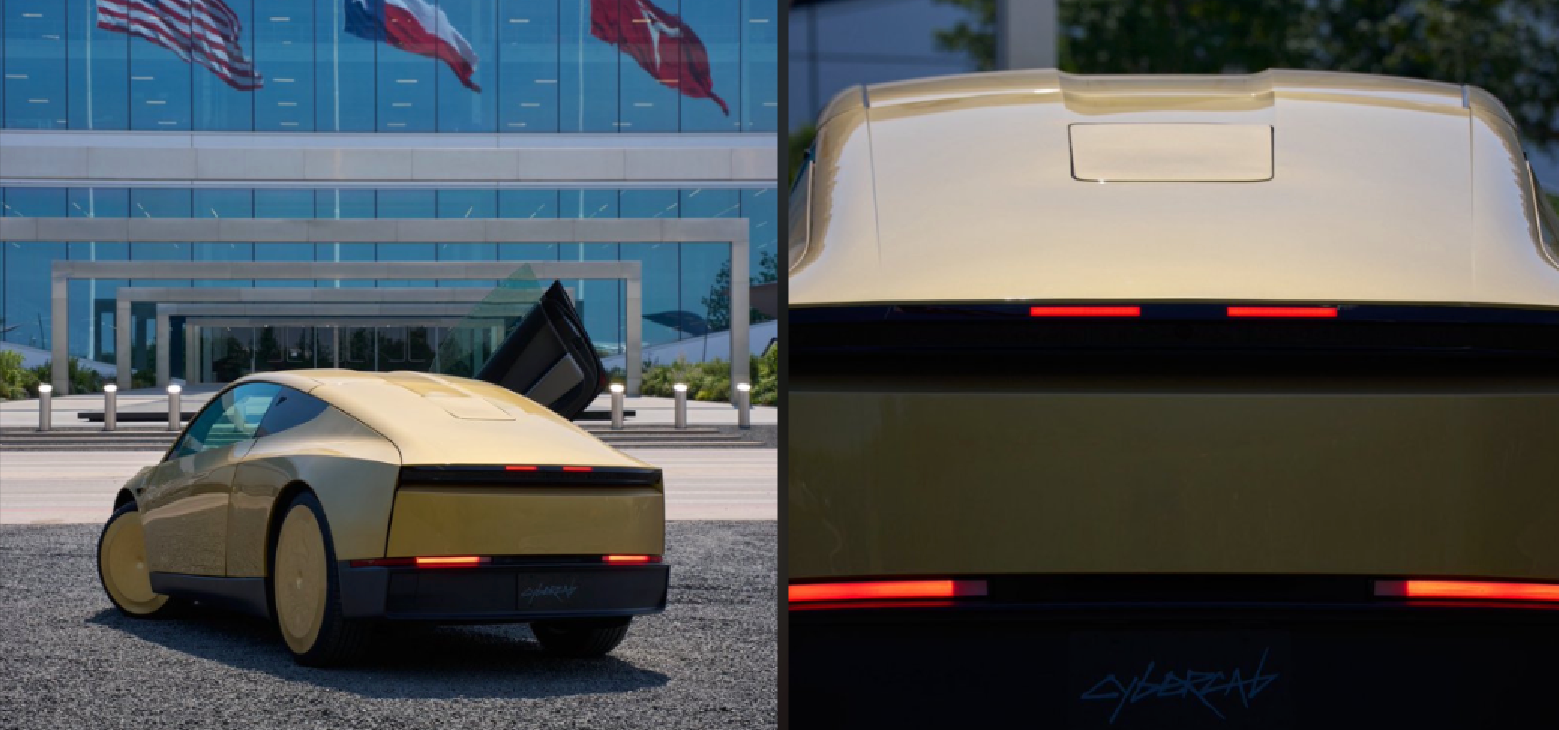
Tesla’s robotaxi account posted photos today of what it’s calling the first Cybercab with a Starlink antenna built into the vehicle.
The pictures show a gold Cybercab parked at Gigafactory Texas, with a low-profile satellite antenna integrated into the roof. It’s the physical version of an integration Tesla teased with a diagram last month.
What Tesla showed
The @robotaxi account shared two images. One is a front three-quarter shot of the gold Cybercab with its door up, sitting in front of US and Texas flags. The other is a rear view showing the roof-mounted Starlink antenna and the “Cybercab” badge.
The caption was short: “First Cybercab with @Starlink integration.” That’s it. No specs, no timeline, no explanation of what the antenna is actually used for.
This follows Tesla and Starlink’s July reveal, when the two companies said satellite internet was “directly integrated” into the Cybercab. But that came with a cutaway rendering, not a real car. Now there’s real hardware apparently in production.
The question nobody’s answering
Here’s the thing: the Cybercab drives itself on Tesla’s onboard AI4 computer. It doesn’t need an internet connection to drive.
And the robotaxi service currently runs only in dense urban markets (Austin, Houston, Dallas, and Miami), where cellular coverage is already strong. Those are exactly the places where a satellite link adds the least.
So what’s the antenna for? Tesla is framing this as an added connectivity option to track robotaxis in remote areas.
The Cybercab, unveiled in October 2024, was supposed to be a $30,000 two-seat robotaxi with no steering wheel or pedals. Production started at Giga Texas earlier this year, and over 100 units were spotted in factory lots by July — even though Tesla still can’t sell them or run them without a human watching.
Electrek’s Take
As we previously discussed when Tesla first annoucned the integration, this is currently not particularly useful for Tesla. It’s primarily just another way for Elon Musk to have Tesla pay SpaceX.
Top comment by stetrain
Ah yes, this was the missing link, the one thing keeping Tesla from rolling out unsupervised Robotaxis at scale in multiple markets. Finally that's solved and they can get to 1 million Robotaxis by the end of 2021.
The car doesn’t need it to drive. Onboard compute handles that. Where the robotaxis operate, cellular already covers connectivity for remote monitoring and support. A satellite dish is redundant hardware in those markets, and it adds cost, weight, and a recurring bill to a vehicle Tesla is trying to build for $30,000.
Musk has spent the year moving Tesla resources toward his other companies, from the xAI investment to the constant SpaceX-Tesla merger talk. A Starlink terminal in every Cybercab is a nice recurring revenue stream for SpaceX, whoever ends up owning what.
Maybe there’s a real plan here for rural or intercity autonomy down the road, but we are still years away from that.
If you’re following Tesla’s robotaxi push, the cheapest way to power an EV is with your own electricity. With electricity rates up almost 10% last year and expected to keep climbing, going solar is one of the best ways to protect yourself against rising costs. And with lease and PPA options, you can do it with zero upfront cost and start saving immediately. If you want to find the best deal, check out EnergySage. It’s a free service with hundreds of pre-vetted installers competing for your business, so you save 20 to 30% compared to going it alone. No sales calls until you pick an installer. Get your free quotes here.


FTC: We use income earning auto affiliate links. More.





Comments