
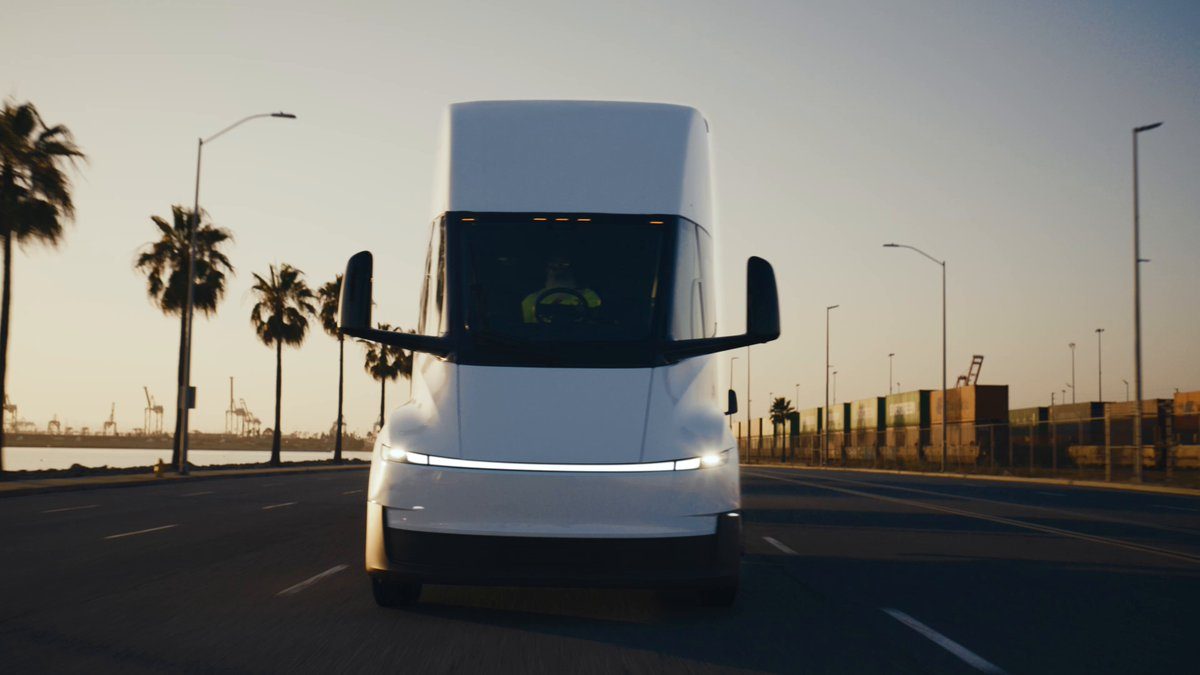
Tesla officially launched high-volume production of the Tesla Semi last night at its new dedicated factory in Nevada, a plant it says can build 50,000 electric trucks per year.
The Class 8 truck was unveiled in 2017 with production promised for 2019. Seven years later, Tesla says deliveries “start now,” and it detailed a heavily redesigned truck in a 13-post thread on X.
A factory built only for Semi
Tesla held the launch event at the Semi factory next to Gigafactory Nevada in Sparks, where the first truck came off the high-volume line back in April.
According to Tesla, the plant covers 1.8 million square feet and builds every variant (Standard, Long Range, and a European spec) on the same line. Tesla called it “our first factory built for Semi.”
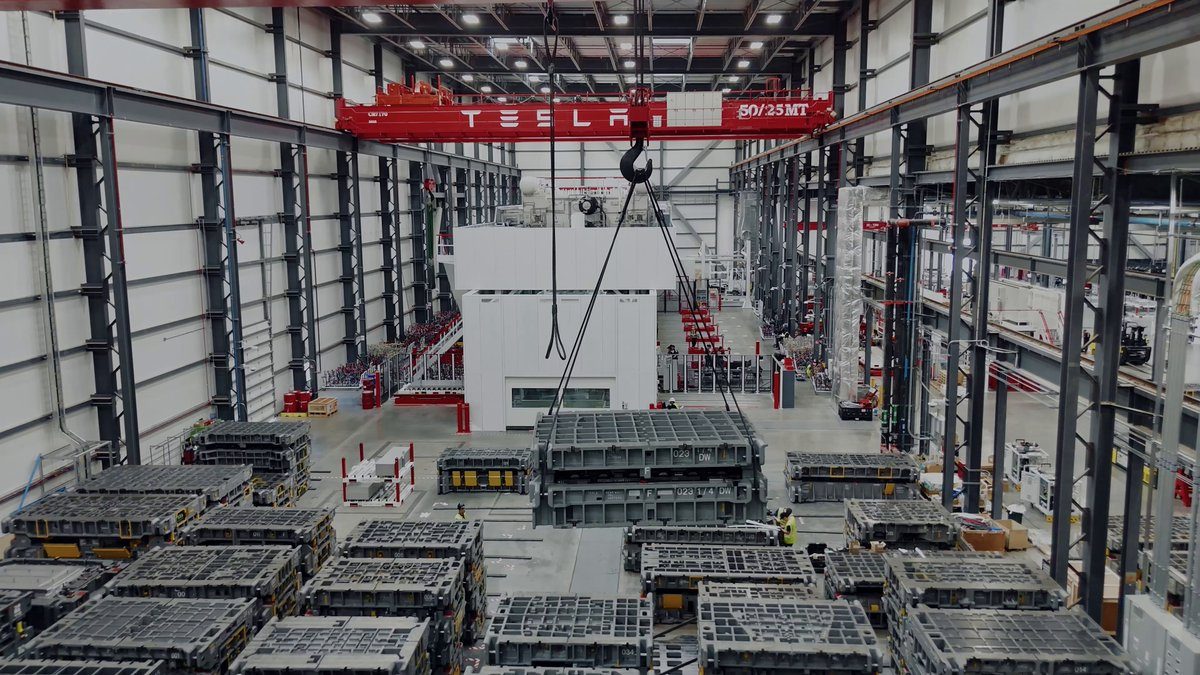
Tesla leaned hard on vertical integration. It says it stamps parts and builds the batteries, drive axles, high-voltage distribution, cooling modules, and even the seats in-house, while “most truck plants just assemble.” It also claims the first powder-coated Class 8 truck and one of its most automated battery lines to date.
“Vertical integration is the only real way to bring cost down,” Tesla wrote.
4680 cells, a cheaper motor, and electric steering
The truck itself has changed a lot since PepsiCo got the first hand-built units in late 2022. Tesla says it spent four years redesigning the Semi “for true volume.”
The biggest change is the battery. Tesla moved from 2170 cells to its in-house 4680 cells, which it says means “less battery mass & fewer kWh with no compromise on range.” Tesla didn’t give a new pack size. When it released the final Semi specs in February, it listed 325 miles for the Standard Range and 500 miles for the Long Range at 82,000 lbs, with consumption of 1.7 kWh per mile.
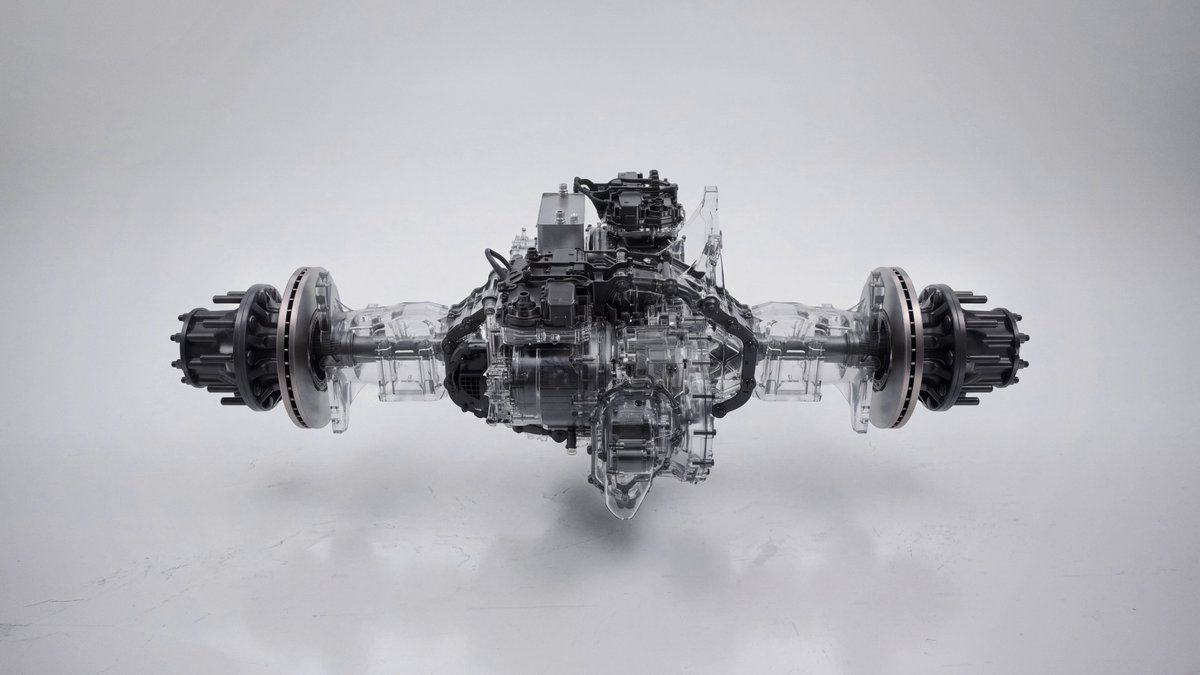
The drivetrain was reworked too. Tesla swapped the carbon-fiber-sleeved rotor for a steel-caged rotor that it says is cheaper, more reliable, and more efficient. The bar-wound stator is now shared with Cybertruck, a part Tesla already builds at volume.
Tesla also says Semi is the first heavy-duty truck with electric steering, which gets rid of the hydraulic pumps and fluids that leak and need servicing. And it’s upfront about why that matters beyond maintenance: it “lays the groundwork for future autonomy.”
Thermal management now runs through what Tesla calls a “Megamanifold,” a heat pump that handles cabin HVAC plus all powertrain heating and cooling. It’s the same thermal system Tesla uses in Cybercab.
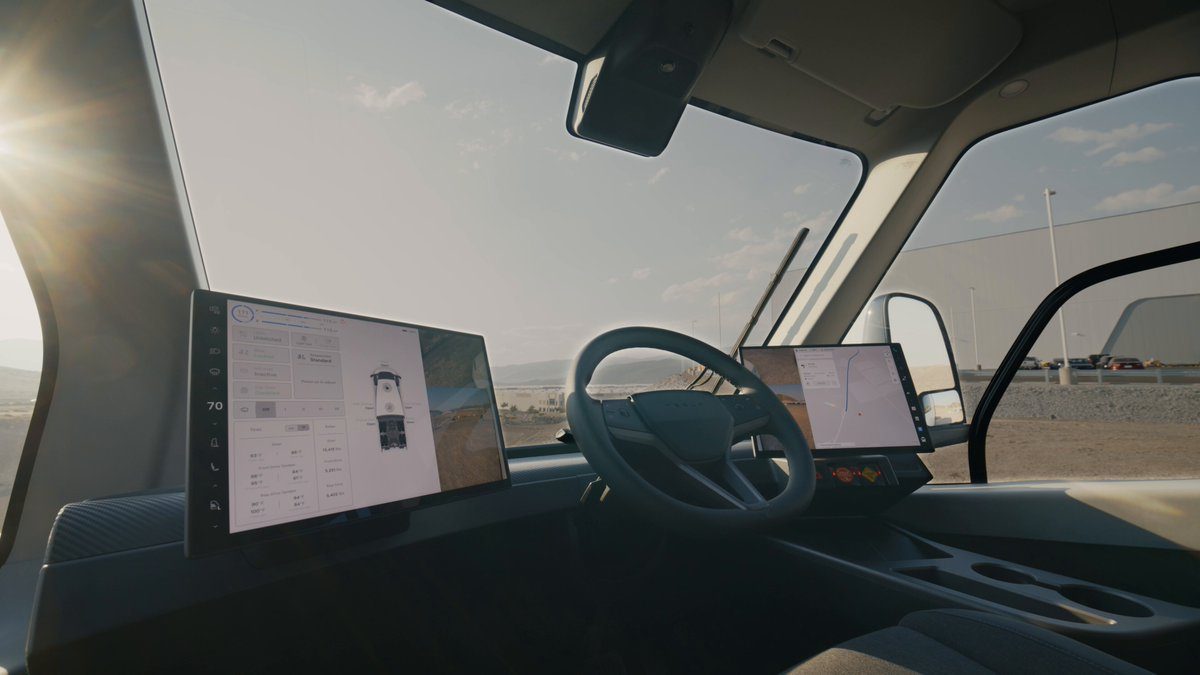
Inside, there’s acoustic glass, a roll-down window, and a cabin you can stand up in. Tesla also automated parts of the pre-trip inspection and can generate electronic logs of when those checks were done. That’s a real quality-of-life feature for drivers.
Uptime, charging, and the diesel math
Tesla claims its Semi fleet has had over 98% uptime so far in 2026 and says the truck “requires almost no maintenance.”
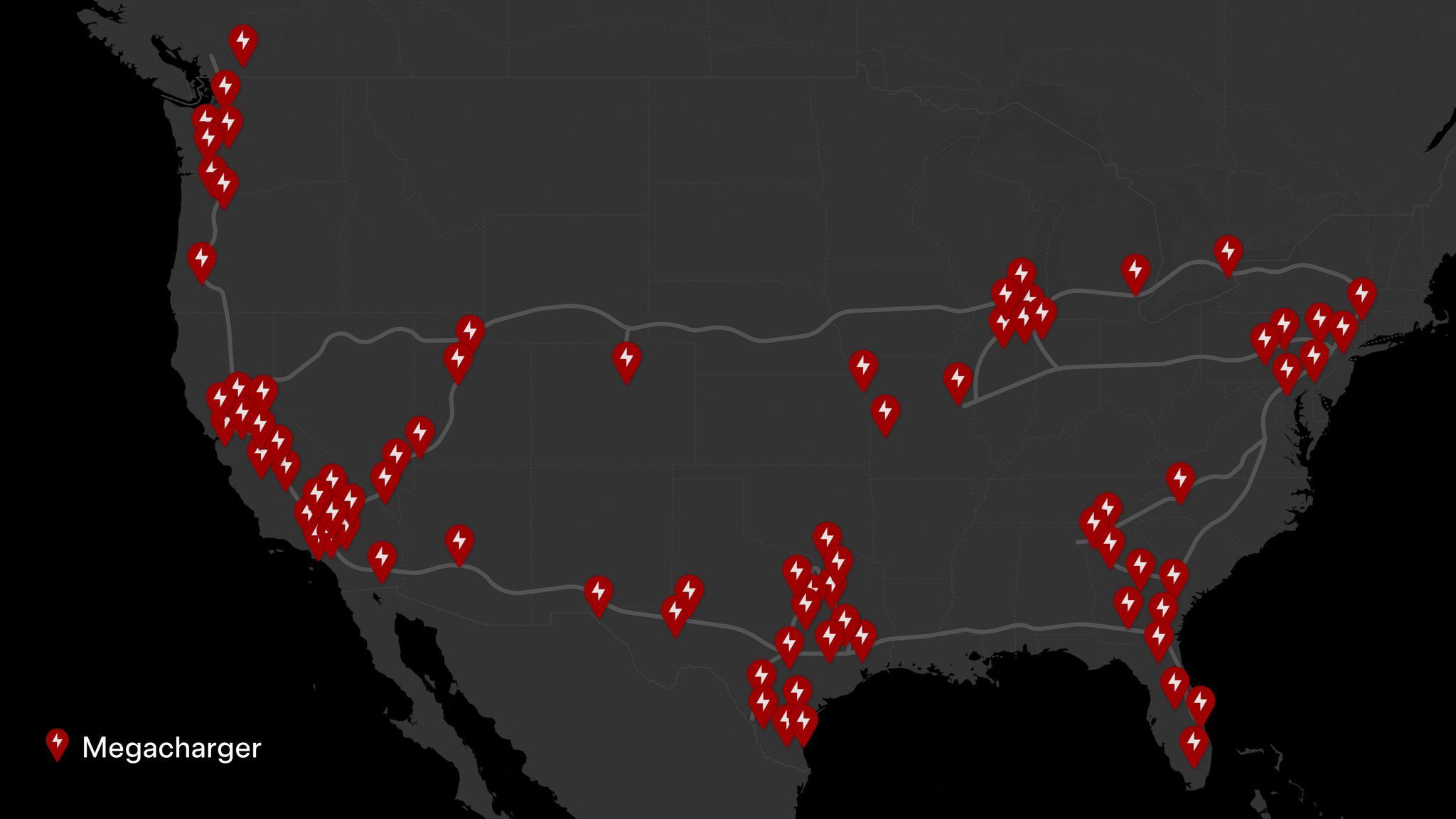
On a Megacharger, Tesla says drivers get up to 60% of their range back in 30 minutes. It shared a map of Megacharger sites along major freight corridors, heavily concentrated in California, Texas, and the East Coast, with big gaps across the Mountain West and the Plains.
Tesla’s economic pitch came down to one chart: fuel cost per mile for a diesel truck at 7 mpg versus a Semi at 1.7 kWh per mile using transportation electricity rates.
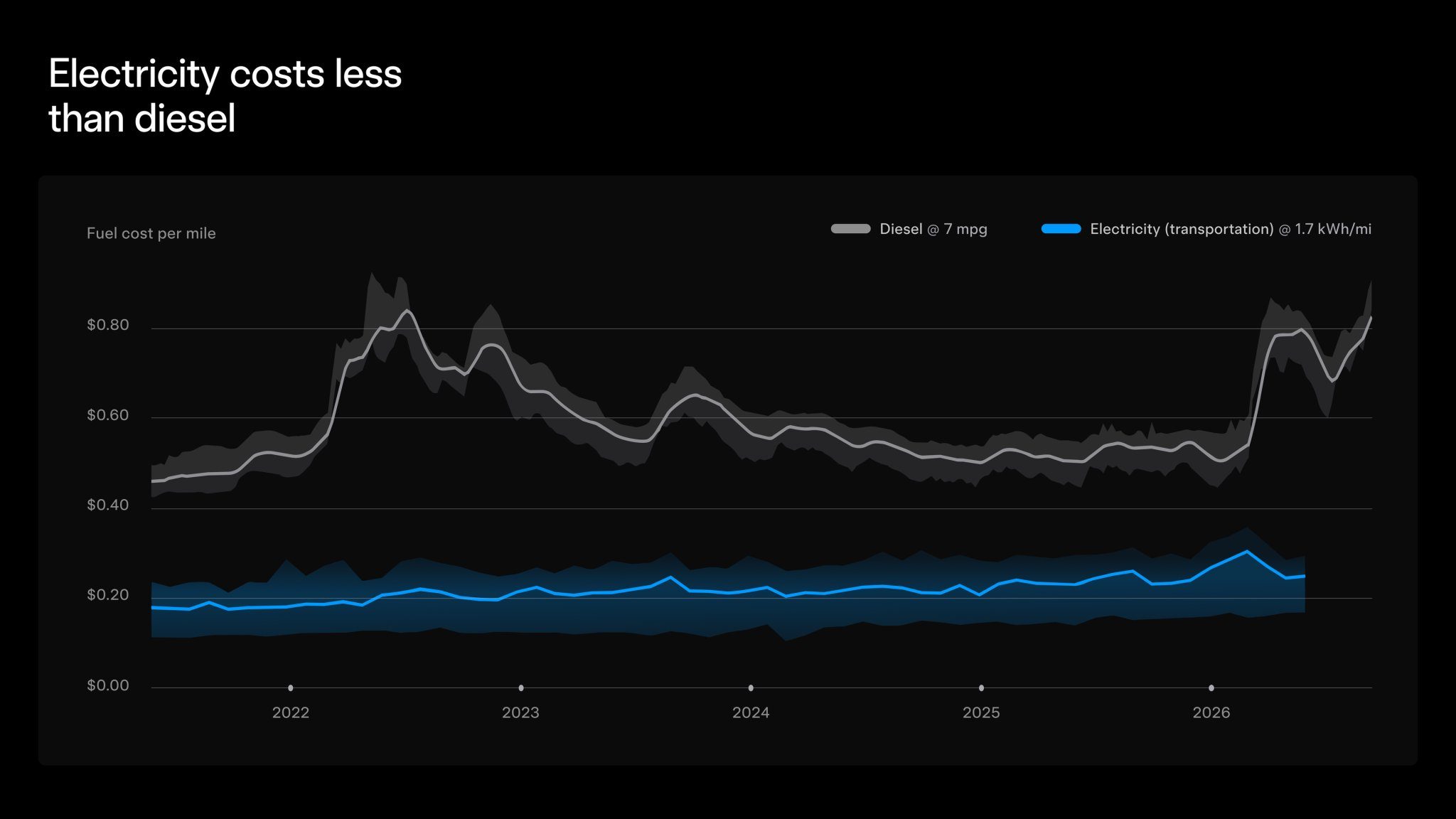
Based on Tesla’s chart, diesel has spiked back to roughly $0.80 per mile this year, while electricity has stayed in the $0.20 to $0.30 range. That gap is the whole business case, and it has widened in 2026.
Who’s buying
Deliveries start now, according to Tesla, which also says it will use Semis to haul its own freight.
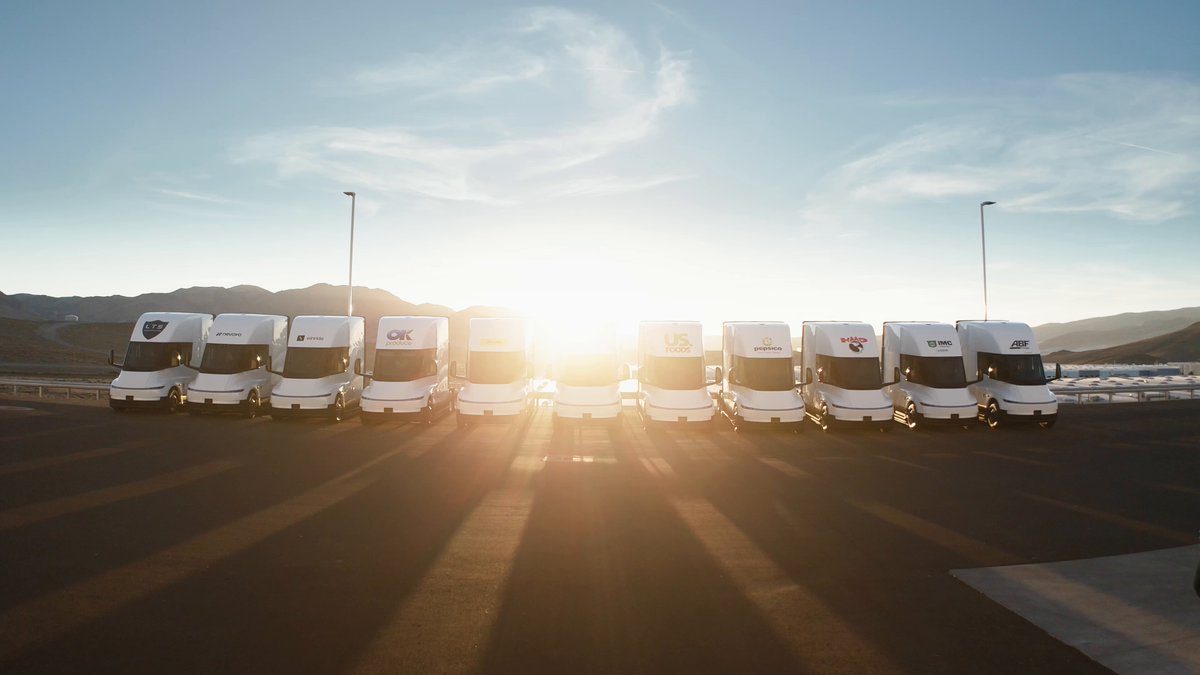
Customer trucks at the event carried logos from PepsiCo, DHL, US Foods, ABF, Einride, IMC Logistics, and WattEV, among others. The big one came earlier this week: the ZET SCALE alliance picked Tesla as primary supplier for 2,500 electric trucks, an order that would nearly double the number of electric Class 8 trucks on US roads. That follows Einride’s 500-truck order in August.
Pricing is also a big advantage. Tesla hasn’t confirmed pricing since the event, but Electrek previously reported that Tesla has been quoting $290,000 for the 500-mile Semi and about $260,000 for the Standard Range. That’s up roughly 60% from the $180,000 Tesla advertised in 2017, but still about $145,000 below the average price of an electric Class 8 truck.
Electrek’s Take
As I have been saying for years, Tesla Semi is the last Tesla vehicle program that gets me excited, and despite the many delays, it is finally here.
The Semi is real, it’s in volume production, and on paper it’s the best electric Class 8 truck you can buy. It’s cheaper than the competition by six figures, and the efficiency claims have held up with fleets like PepsiCo.
Tesla can clearly build the trucks. Now it has to sell them, and the Megacharger network has to fill in fast enough outside California and Texas to make long-haul routes work. Diesel at $0.80 a mile helps a lot.
We’ll be watching the delivery numbers closely over the next few quarters. If Tesla ships 5,000 Semis in 2027, it’s a real business. If it ships 1,500, that factory is going to look awfully big.
If you’re following the shift to electric trucks, the same math that makes the Semi work (cheap electrons beating expensive fuel) applies at home too. With electricity rates up almost 10% last year and expected to keep climbing, going solar is one of the best ways to protect yourself against rising costs. And with lease and PPA options, you can do it with zero upfront cost and start saving immediately. If you want to find the best deal, check out EnergySage. It’s a free service with hundreds of pre-vetted installers competing for your business, so you save 20 to 30% compared to going it alone. No sales calls until you pick an installer. Get your free quotes here.


FTC: We use income earning auto affiliate links. More.





Comments