
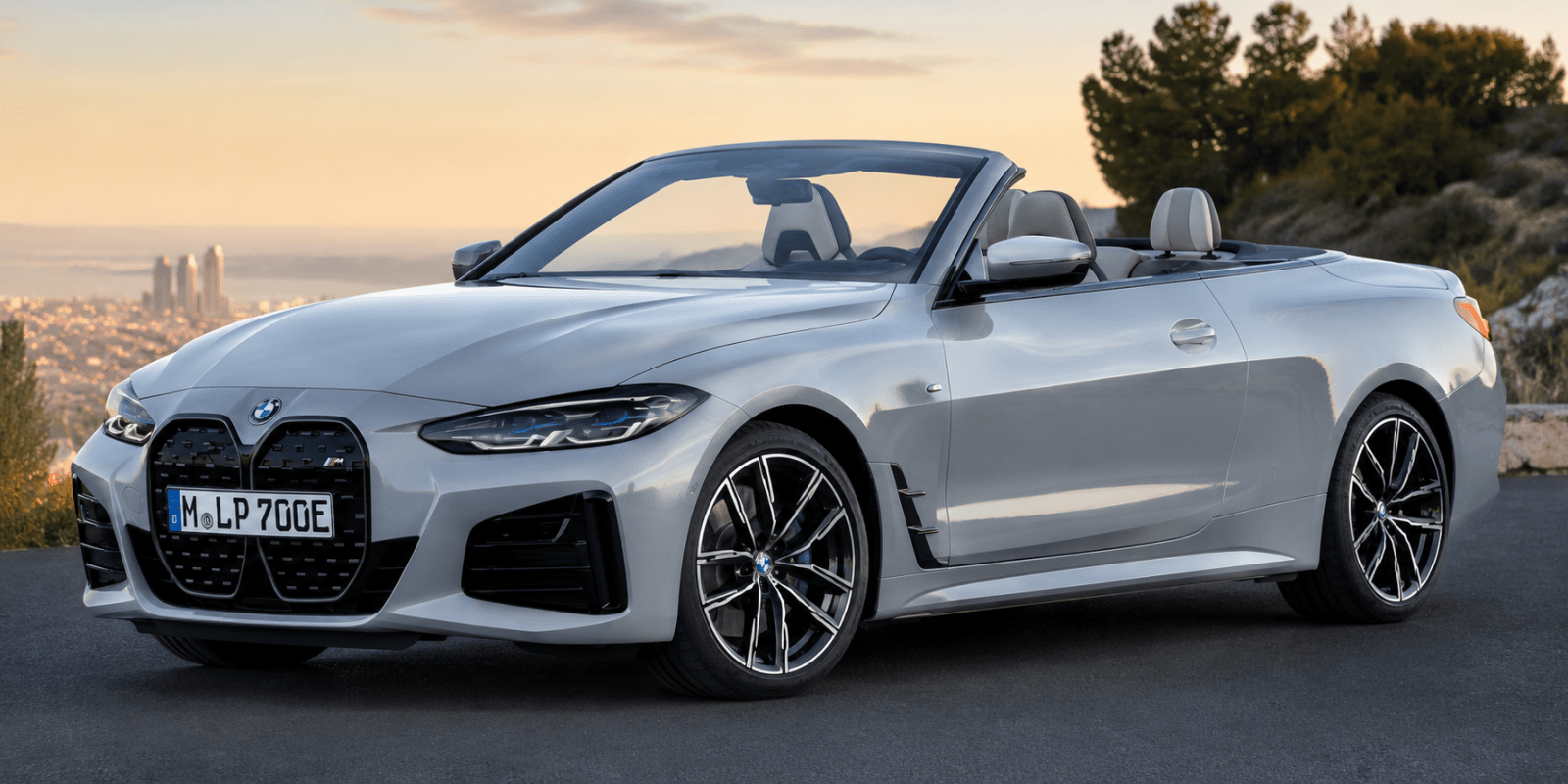
BMW is planning an all-electric i4 Convertible for 2028, according to a new report from BMWBLOG citing sources close to the automaker.
That would make it one of a small handful of electric convertibles anywhere in the world. Right now, you can buy exactly one new EV convertible in the US, and it starts at $206,095.
BMW’s electric convertible plan
The car carries the internal codename NA3 and would ride on the Neue Klasse platform that underpins the new i3 electric sedan. The formula matches the current gas car: fabric soft top, four seats, two doors. No folding hardtop.
BMW is reportedly also building an i4 Coupe, codenamed NA2, on the same architecture and around the same time.
There’s a gap first. Nothing replaces the i4 Gran Coupe when it ends production next year, so the badge sits idle for a year before the two-doors pick it back up, if this report is accurate.
And the gas car isn’t going anywhere to make room. The G23 has a production run scheduled through mid-2029, which puts roughly a year of overlap between BMW’s electric and combustion 4 Series Convertibles.
Nobody else is building electric convertibles
The segment is close to empty. In the US, the only new EV convertible on sale is the Maserati GranCabrio Folgore, which costs $206,095 and returns 229 miles of EPA range. Maserati has been telling dealers to knock as much as $85,000 off its electric Folgore models. Not exactly a thriving business.
Europe gets a little more. Fiat sells a 500e cabrio that never came here. MG sells the Cyberster roadster in the UK, Europe, and China, also not here. And BMW’s own Mini brand built 999 units of an electric Cooper SE Convertible in 2023 as a Europe-only limited run.
Everything else got delayed or shelved. Polestar pushed the 6 roadster back behind the Polestar 7 with no firm date. Tesla has been promising a new Roadster since 2017 and just pushed the demo again, to August. Audi scrapped its electric sports car plans outright.
So the entire global market for a new electric convertible right now is one $200,000 Maserati and a couple of niche European-market cars.
The Neue Klasse solves the hard part
Convertibles are hard EVs to build. Cutting the roof off costs structural rigidity, you buy that back with weight, and weight is the enemy of range in a car that’s already carrying a battery in the floor. That’s how the Mini Cooper SE Convertible ended up with 125 miles.
Which is why the timing matters. The i3 sedan is rated at 440 miles of EPA range on an 800-volt architecture with 400 kW charging and a native NACS port. Give back 15% of that to weight and worse aerodynamics with the roof down, and a convertible version is still comfortably over 350 miles.
BMW also already has the buyers. The 4 Series family sold 39,379 units in the US last year and the i4 added 20,114 on its own. That’s an existing dealer network and an existing customer base for a two-door BMW, which is more than any startup trying to build an electric roadster can say.
Electrek’s Take
This is the EV we keep waiting for someone to build, and I think BMW is the right company to do it.
Top comment by Vanessa
I’m so excited about this. I was already very impressed with the Neue Klasse engineering and design. For me there will be the Osborne Effect: I’ll put off buying not just the Miata but also any non-convertible non-electric BMW. They don’t want to announce this until they can take orders. But I’ve bought my practical EV and I’ve been waiting ages already for that promised electric 718 Porsche Boxter too.
Convertibles and EVs should be a natural pairing. No engine noise, no exhaust heat. Just wind and whatever’s on the stereo. An open-top EV is a better sensory experience than an open-top gas car, and almost nobody has bothered to sell one you can actually buy.
It’s no mystery. Convertibles are a low-volume segment in long-term decline, and no automaker wants to spend platform money on one. But BMW’s approach to EVs gets around that. It’s already committed to Neue Klasse across its entire lineup and it already sells convertibles at scale, so the i4 Convertible doesn’t have to justify a platform. It only has to justify a body variant.
We’d temper the excitement a little. 2028 is two model years out, this is a sourced report rather than an announcement, and the industry’s record on low-volume halo EVs is dismal.
If you’re buying an EV, powering it with home solar can cut your fuel costs to nearly zero. With electricity rates up almost 10% last year and expected to keep climbing, going solar is one of the best ways to protect yourself against rising costs. And with lease and PPA options, you can do it with zero upfront cost and start saving immediately. If you want to find the best deal, check out EnergySage. It’s a free service with hundreds of pre-vetted installers competing for your business, so you save 20 to 30% compared to going it alone. No sales calls until you pick an installer. Get your free quotes here.


FTC: We use income earning auto affiliate links. More.



Comments