
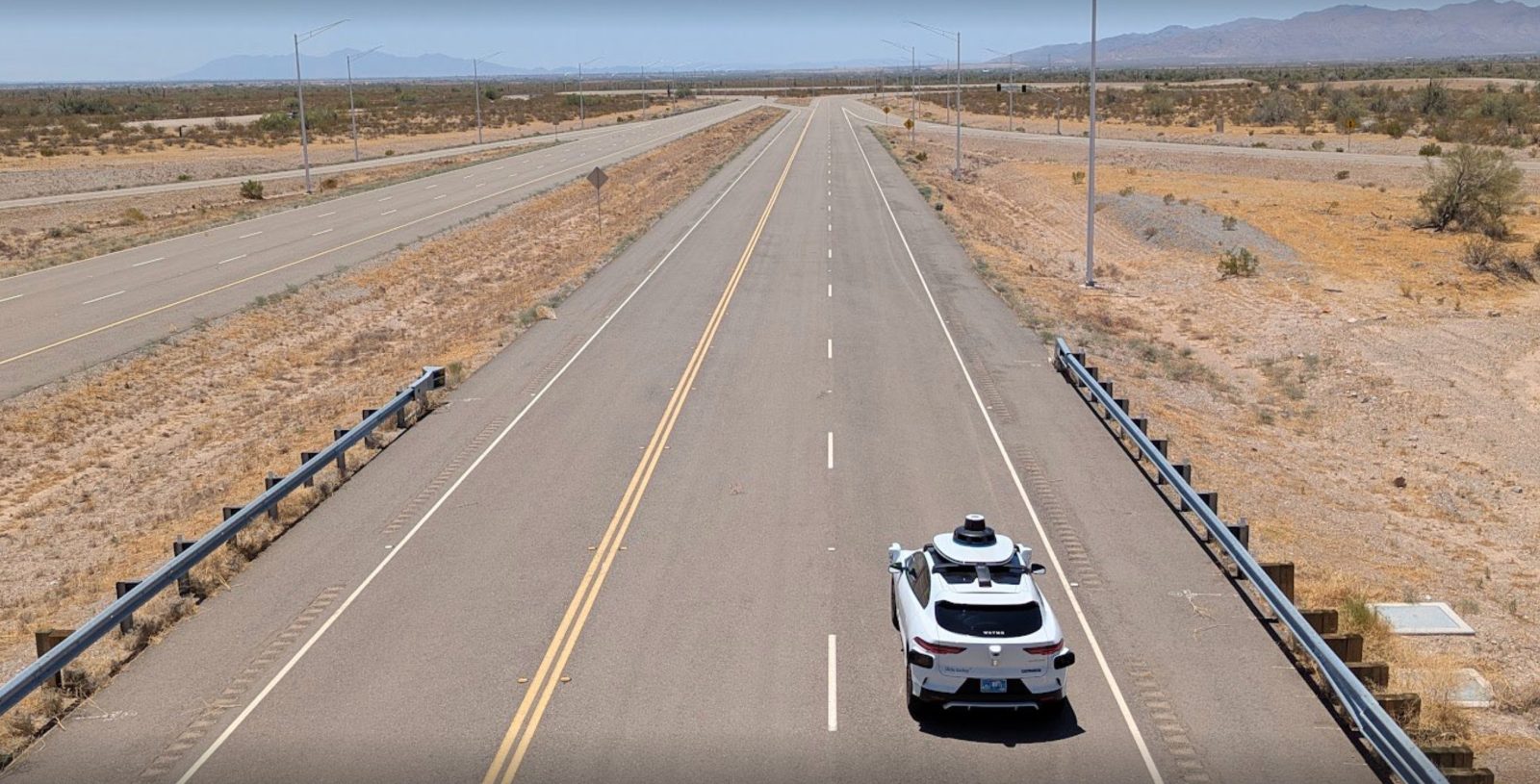
Waymo has acquired a massive 5,500-acre autonomous vehicle proving ground in Wittmann, Arizona, for $220 million — nearly double the $125 million Apple paid for it in 2021. The facility was the centerpiece of Apple’s now-dead self-driving car program.
The deal, recorded June 5 in Maricopa County filings, adds a world-class test facility to Waymo’s infrastructure as the company races to scale its robotaxi fleet to 1 million weekly rides by the end of the year.
Apple spent billions, gave up — Waymo picks up the pieces
The property was sold by Route 14 Investment Partners LLC, a Delaware shell company associated with Apple, according to documents first spotted by the Phoenix Business Journal. Apple originally purchased the proving ground in 2021 for $125 million after renting access to it for years. Before Apple, the facility served as Fiat Chrysler’s hot-weather testing ground for vehicles and components.
Apple used the 5,500-acre site to test prototype autonomous vehicles as part of its secretive car project, internally known as Project Titan. That effort went through multiple pivots over nearly a decade before Apple finally killed it in early 2024 after spending billions of dollars.
The symbolism is hard to miss. Apple — one of the wealthiest companies on the planet — poured billions into developing a self-driving car and came away with nothing to show for it. Waymo, which has been methodically building actual autonomous driving technology for over 15 years, now owns the very facility where Apple’s ambitions went to die.
What Waymo gets
The Arizona facility is purpose-built for autonomous vehicle testing and dwarfs Waymo’s other test sites at the Castle Proving Ground in California and the Transportation Research Center in Ohio.
The proving ground includes a 115-acre city course that simulates urban driving conditions, a 35-acre vehicle dynamics area, a four-mile oval track, and a dedicated freeway course. Waymo told TechCrunch the facility will be used to simulate driving scenarios in a controlled environment, specifically supporting rider-only testing, motion control testing, operational training workflows, and future testing expansion.
The acquisition fits neatly into Waymo’s broader Arizona build-out. The company already operates a 239,000 square-foot factory in Mesa, Arizona, where Magna helps integrate Waymo’s self-driving hardware into the new Zeekr-built Ojai robotaxi and eventually the Hyundai IONIQ 5. Having a massive dedicated test facility nearby streamlines the development-to-deployment pipeline.
Waymo’s aggressive expansion push
The $220 million proving ground purchase comes as Waymo is in the most aggressive expansion phase in its history. The company raised $16 billion at a $126 billion valuation earlier this year — the largest investment ever in an autonomous vehicle company — and is deploying that capital rapidly.
Waymo’s fleet now stands at close to 4,000 vehicles across more than 10 US cities, including San Francisco, Los Angeles, Phoenix, Austin, and Atlanta. The company has expanded its total coverage area to more than 1,400 square miles — larger than the state of Rhode Island — and plans to enter 20+ additional cities, including its first international markets in Tokyo and London.
Meanwhile, Tesla continues to promise an autonomous ride-hailing service while relying on camera-only hardware and human supervision. The contrast between Waymo’s methodical, infrastructure-heavy approach and Tesla’s software-promise strategy grows starker with each passing quarter.
Electrek’s Take
Top comment by Grant
I find it interesting that Waymo would even need this now that it is operating in so many cities currently. Waymo must feel like this is a good investment, and it shows they are serious at developing their product.
Apple’s Project Titan is likely the most expensive failed car project in tech history, and the fact that Waymo takes it over from Apple tells you everything about the relative trajectories of these programs. Waymo is scaling so fast that it needs more testing capacity. Apple walked away entirely.
We also think this signals that Waymo is serious about expanding beyond its current vehicle types. A 5,500-acre facility with urban courses, freeway loops, and a high-speed oval gives Waymo room to test not just its current Ojai and IONIQ 5 platforms, but potentially future vehicle form factors as the company targets tens of thousands of robotaxis per year. Given the pace of its expansion, Waymo clearly believes it will need this infrastructure for years to come.
It would make sense as testing grounds for integrating the “Waymo Driver” in consumer vehicles from other automakers.
If you’re looking to reduce your transportation costs even further, powering your home with solar is one of the smartest investments you can make. With electricity rates climbing nearly 10% last year, home solar protects you against future rate increases. And with lease and PPA options, you can go solar with zero upfront cost and start saving immediately. If you want to find the best deal, check out EnergySage. It’s a free service with hundreds of pre-vetted installers competing for your business, so you save 20 to 30% compared to going it alone. No sales calls until you pick an installer. Get your free quotes here.


FTC: We use income earning auto affiliate links. More.



Comments