
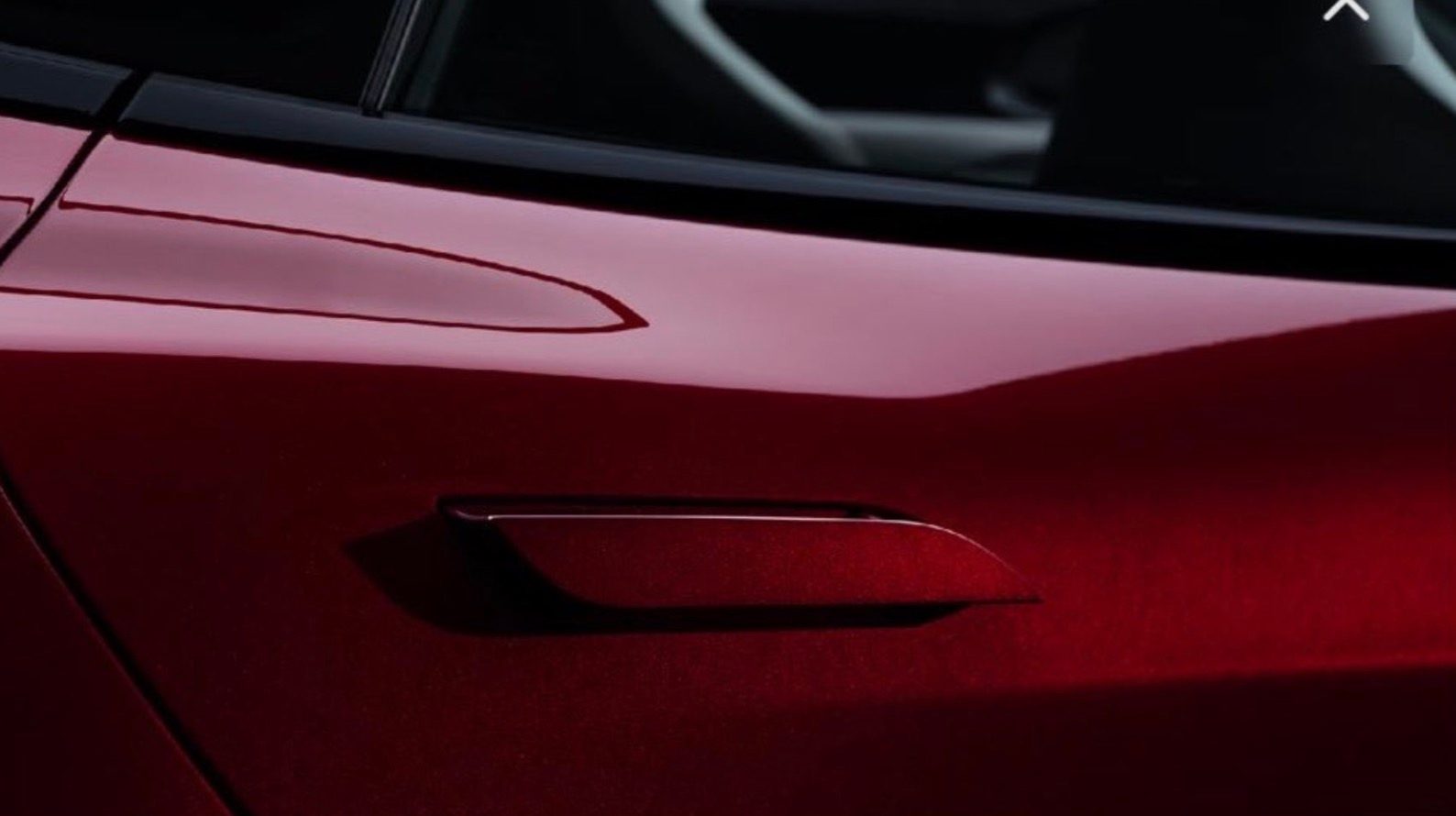
NHTSA has denied a petition asking it to open a defect investigation into the hidden manual door releases on the Tesla Model 3. But in the same decision, the agency agreed to start writing new door-safety rules for the entire auto industry.
The denial, published today, covers 179,031 model year 2022 Model 3 vehicles. NHTSA said it found exactly one complaint matching the petition’s allegation — and it came from the same owner who filed it.
One complaint, one VIN
The petition, filed November 7, 2025 by Tesla owner Kevin Clouse, argued that the Model 3’s “emergency egress controls for the mechanical door release are not readily accessible and clearly identifiable,” in violation of federal safety standard FMVSS 206.
That standard covers door locks, latches, and hinges meant to keep occupants from being ejected in a crash. The problem is what it doesn’t cover. As NHTSA put it, “no requirements exist in the standard that address the Petitioner’s concern regarding the labeling and location of a mechanical door release.” So there’s nothing on the books to enforce.
NHTSA also leaned on the complaint math. As of March 13, 2026, it found a single consumer complaint about a concealed or unlabeled manual release creating an entrapment risk, and that complaint traced back to Clouse’s own VIN. It described a front-impact crash in which the car lost power and the electric door mechanism stopped working. The agency noted the 2022 Model 3 owner’s manual includes an “In Case of Emergency” section with illustrations showing where the manual release is.
The conclusion: “NHTSA does not believe that the issues presented by the Petitioner indicate the likelihood of a safety related defect that would warrant a defect investigation, and the issue is best addressed through the rulemaking process.”
But NHTSA is writing new rules anyway
Here’s the part that matters more than the denial. A separate petition landed at NHTSA’s Office of Rulemaking on November 4, 2025, asking the agency to create a brand-new federal standard mandating “a robust and obvious door egress system in all motor vehicles.” NHTSA granted it. It will now commence a formal rulemaking on emergency door releases.
The agency also spelled out the risk in plain language: “A concealed or hard to locate door release could prevent an operator or occupant from exiting the vehicle in the event of an emergency, such as a crash or fire.”
That’s the same concern that’s been building around Tesla for a year. In September 2025, NHTSA opened an investigation into Model Y door handles after parents reported children getting trapped in the back seat when the 12-volt system died. Days later, Tesla said it was redesigning its door handles to combine the electronic and manual releases into one motion.
Then in December, NHTSA opened a probe into the Model 3’s emergency door releases, the same vehicles at the center of this petition, following reporting on fatal crashes where occupants couldn’t get out. Congress got involved in January, introducing the SAFE Exit Act and citing 15 deaths tied to door-handle access. And Tesla is facing a string of fatal door-handle lawsuits, even as it ships a mechanical fix on cars in China.
What the split decision means
The two tracks do different things. A defect investigation could have forced a recall of specific Tesla vehicles on a timeline measured in months. Rulemaking sets a standard for every automaker, but it’s slow — federal safety rules routinely take years to write, and any final requirement would apply to future vehicles, not the millions of Teslas already on the road.
So Tesla owners driving today’s cars get a future industry standard, not a fix for their own doors.
Electrek’s Take
Top comment by Damon Ekstrom
When I still had my Model 3, I remember having to explain to everyone that had never ridden inside of a Tesla before, on how to not only open the door, but get out. Tesla does not make it abundantly clear how to operate their doors for the uninformed, let alone how to access the emergency latch.
I get that Tesla wanted to go against the grain and do something new, but when it comes to safety, you can't make a radical redesign unless the design is easy to understand.
As such, I wouldn't be surprised if Tesla redesigns the door handles to pop open on the Model Y and the Model 3 like they did on the Model S, which would certainly be an improvement.
Read the denial closely and it’s not the clean win for Tesla that the headline suggests. NHTSA denied the petition on a technicality, one complaint and no existing standard that covers labeling, while simultaneously agreeing that door egress is a real enough safety problem to justify writing a whole new federal rule. You don’t start rulemaking over a non-issue.
The one-complaint reasoning also deserves a hard look. NHTSA is treating this specific petition in isolation, but it already has an open Model 3 door-release probe and an open Model Y investigation running in parallel, plus a stack of lawsuits and a bill in Congress citing 15 deaths. The problem isn’t that only one person complained. It’s that Tesla built a car where the way out in an emergency depends on electricity, and buried the manual backup where panicked people and first responders can’t find it. That’s a design choice, and China already made Tesla fix it there.
The rulemaking is the right long-term move. But rules take years, and they don’t recall anything. Millions of Teslas with hard-to-find manual releases stay on the road in the meantime.
If you’re driving an EV, the cheapest miles come from charging on your own power — and home solar is how you get there. With electricity rates up almost 10% last year and expected to keep climbing, going solar is one of the best ways to protect yourself against rising costs. And with lease and PPA options, you can do it with zero upfront cost and start saving immediately. If you want to find the best deal, check out EnergySage. It’s a free service with hundreds of pre-vetted installers competing for your business, so you save 20 to 30% compared to going it alone. No sales calls until you pick an installer. Get your free quotes here.


FTC: We use income earning auto affiliate links. More.


Comments