
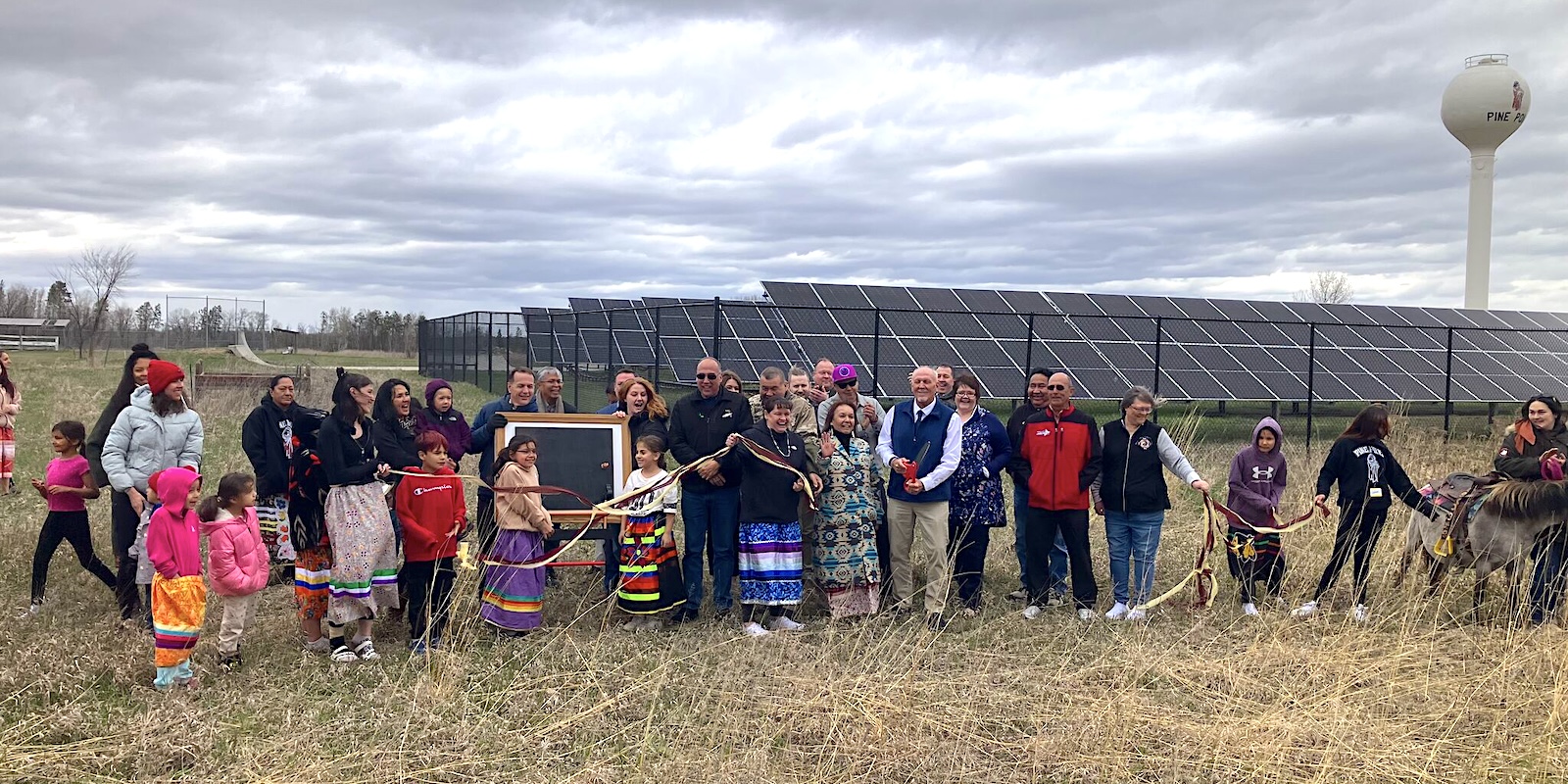
The Pine Point School district serving Minnesota’s White Earth Reservation community has taken a huge step towards energy independence this month, with the commissioning of a new solar + BESS microgrid project that will help insulate the district from energy rate hikes caused by new data center construction.
The Pine Point Schools’ latest microgrid project from Ziegler Energy Solutions is the latest in a long line fo stories highlighting the resilience of the White Earth Reservation community, but this one also serves as a reminder that the words “solar panel project” are increasingly coming to mean “solar panel + battery energy storage system project.”
The Pine Point kids who were part of last weekend’s ribbon-cutting won’t need a reminder, though. They actually got to “flip the switch” that turned the grid on – making the commissioning of the 2.7 MWh project something they’re not likely to forget.
“(It’s) a meaningful milestone,” reads the official copy from Ziegler ES, the regional CAT Energy dealer that helped manage the Pine Point Schools project. “(It’s) a great example of what’s possible when strong partnerships and community leadership come together.”
The school is a genuine community center for the White Earth Reservation, acting as both a place of celebration in good times and, in its role as a designated storm shelter, a place of retreat in bad times. As such, its ability to “keep the lights on” is too important to be trusted to outside entities alone. To that end, the school’s new microgrid system combines a 500 kW solar array with a 400 kW, 2.7 MWh battery energy storage system (BESS), turning what would otherwise be a standard solar panel system into a significantly more resilient energy asset capable of supporting critical community infrastructure during future outages.
Solar + storage is the new baseline
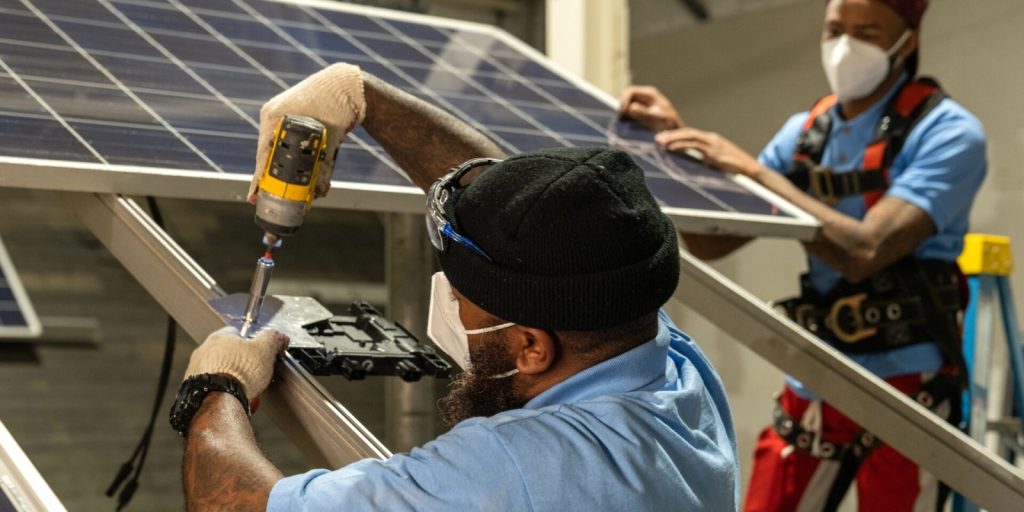
While solar and battery installations were previously considered distinct offerings, pairing BESS solutions with solar panel systems is rapidly becoming the norm, with the EIA reporting that 79% of planned new US utility-scale energy generating capacity in 2026 will feature solar + battery assets. On the residential side, ~40% of new home solar systems installed in 2025 included battery storage – and that number is climbing, too.
And, as solar + storage installation costs continue drop while energy bills continue to climb, the conversation is quickly turning from keeping the lights on when the grid goes down to a much bigger question: does your community need the traditional grid at all, anymore?
Top comment by RudieCantFail72
Good stuff Jo, thanks! Would be interesting if Pine Point Schools and Ziegler Energy Solutions release an annual report to document the project's contributions / benefits / challenges, etc.
You guys are smart. Head on down to the comments section and give us your answer to that question, below.
SOURCES | IMAGES: Ziegler ES, via LinkedIn; EIA.

If you’re considering going solar, it’s always a good idea to get quotes from a few installers. To make sure you find a trusted, reliable solar installer near you that offers competitive pricing, check out EnergySage, a free service that makes it easy for you to go solar. It has hundreds of pre-vetted solar installers competing for your business, ensuring you get high-quality solutions and save 20-30% compared to going it alone. Plus, it’s free to use, and you won’t get sales calls until you select an installer and share your phone number with them.
Your personalized solar quotes are easy to compare online and you’ll get access to unbiased Energy Advisors to help you every step of the way. Get started here.


FTC: We use income earning auto affiliate links. More.





Comments