
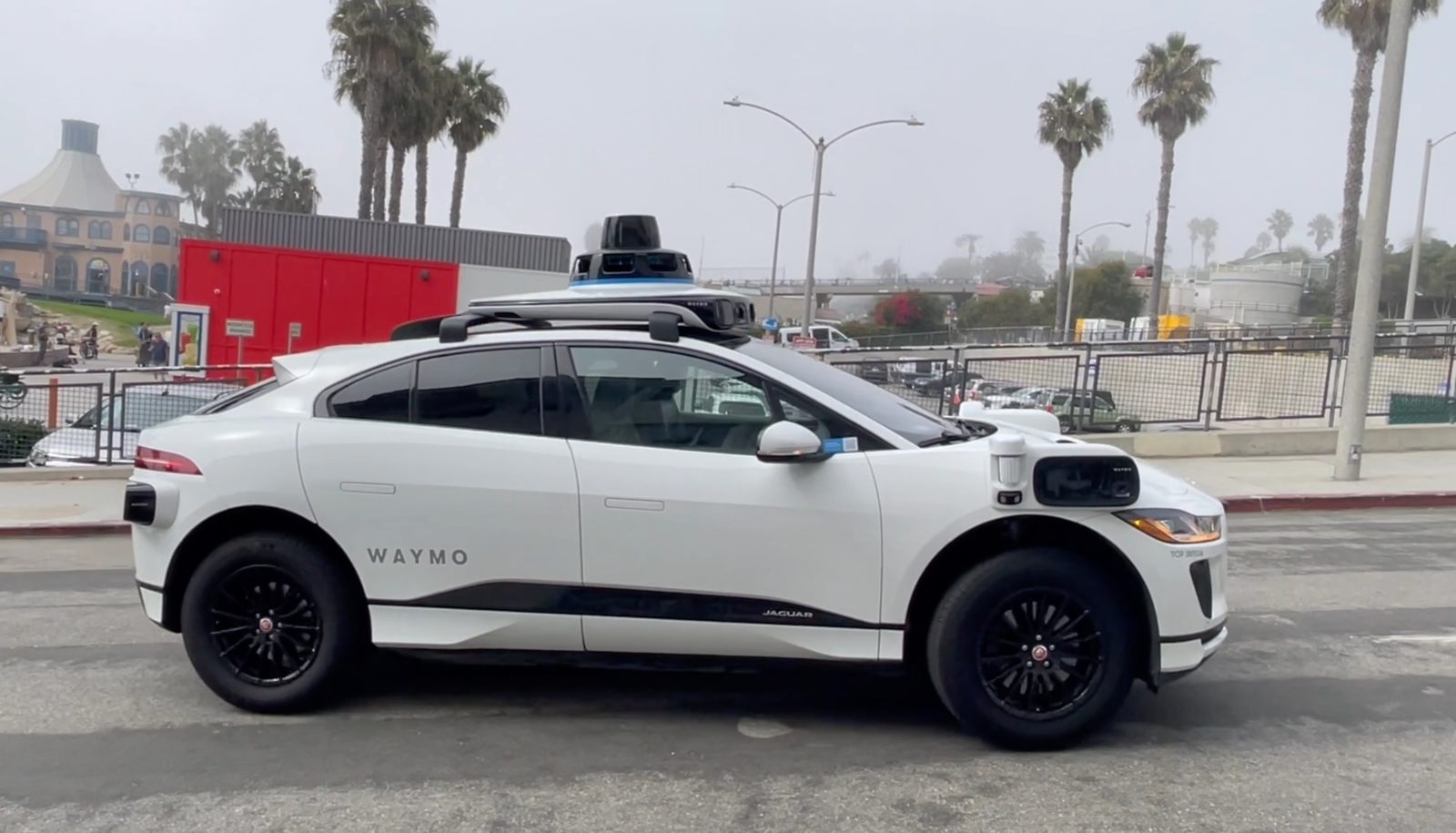
Waymo has started driverless robotaxi operation in 4 more US cities today: Dallas, Houston, San Antonio, and Orlando. This brings the running total to 10 cities, while Waymo’s highest-profile competitor in the space, Tesla, currently operates driverless robotaxis in zero cities, despite big claims to the contrary.
Waymo is continuing its expansion of its level 4 driverless taxi network today, adding four new cities in one fell swoop.
The cities are all in Texas and Florida, two states where Waymo already has operations (in Austin and Miami, respectively).
Each of them are opening to “select riders,” which is how Waymo has traditionally rolled out its service. Usually it starts testing with a single employee driving the car, then offers rides to employees, then starts service with select members of the public, then gradually invites more people.
So, while not everyone will be able to hop on immediately, you can download the Waymo app and will be invited as operations expand. It usually takes a few months.


Waymo’s four new coverage areas cover the downtown areas of each city and then expand out from there (well, sort of – Orlando covers part of downtown, but mostly expands down towards the resorts – importantly, Disney World is covered, but airports and highways in the 4 new areas are not covered at this time).
The new coverage areas are around 60 square miles each in Orlando and San Antonio, 50 square miles in Dallas, and 25 square miles in Houston – making Houston the smallest coverage area by the company at this time. 60 square miles is about on par with the size of Waymo’s original Atlanta and Miami coverage areas.

Each of Waymo’s other coverage areas are larger than this, with Phoenix and San Francisco numbering in the hundreds of miles and LA and Austin a bit over a hundred, but Waymo does tend to start small and expand over time.
This brings Waymo’s total to ten cities, but there are many more on the docket. Waymo lists 18 cities as “up next” on its website, including London and Tokyo as its first targeted for international expansion.
How’s the competition doing?
That expansion has been fairly rapid, at least compared to the competition. Waymo’s Miami service is in fact only a month old, while its Austin service has been gradually increasing in size, partially spurred on by a rivalry with Tesla, another company that purports to be offering robotaxi services.
Tesla has claimed for years that it would be a leader in driverless taxis, owing to the strength of its large data collection advantage from millions of cars that it formerly said have all the hardware for full self-driving. The idea was that Tesla could simply flip a switch and add generalizable self-driving capability to every vehicle on the road, wherever regulations allow, and immediately have more coverage than any competitor that rolls out city-by-city (and you could run your own autonomous taxi service, too).
But that’s not how things have turned out. Tesla rolled out its “Robotaxi” service in Austin, placing the driver in the passenger seat for optics. But it hasn’t “flipped the switch” to allow drives elsewhere, and has had to do extensive additional mapping each time it has expanded its Austin area, suggesting that it will take more than the flip of a switch to expand everywhere else.
It did briefly offer a handful of “Robotaxi” rides with the driver following in a chase vehicle, but those cars are now nowhere to be found. Tesla also claims that it has a robotaxi service operating in SF Bay Area, but that’s not true, as those vehicles have a human driver in the driver’s seat driving the car and Tesla has not even applied for a license to operate driverless taxis in California.
So that brings Tesla’s score to zero cities in which it is operating an unmonitored taxi service, down from “one” the last time we checked in (Tesla in fact started its “driverless” rides during the writing of that article, which is why we gave Tesla the temporary single point at the time, despite later info that it had just moved the driver to a following car). Though that hasn’t stopped Tesla from claiming that it’s winning the game with its losing score.
Tesla CEO Elon Musk had previously said that Robotaxis would be available to half of the US population by the end of last year, which did not happen.
Another potential competitor is Zoox, which currently offers free rides on the Las Vegas strip and says it is arriving soon in San Francisco. But that service is far more limited so far, with only a few pick up and drop off points and a smaller coverage area, whereas Waymo operates in far more varied environments and you can be picked up and dropped off on almost any block within those areas.
(For an example of some of those varied environments, read or watch our coverage of a Waymo trip we took on a chaotic Venice Beach weekend for a far-too-detailed log of how the cars handle a famously tough place to drive)
Top comment by Aerilenn
while Waymo’s highest-profile competitor in the space, Tesla
Waymo has competitors, but Tesla certainly isn't and has never been one of them. Waymo has actual autonomous vehicles, while all Tesla has is an extra inefficient Uber service.
Finally, Cruise used to operate level 4 robotaxis, but after a human driver struck a pedestrian into the path of a Cruise vehicle and the Cruise vehicle dragged the pedestrian for some distance, and then Cruise withheld data from regulators, the company shut down its operations.
Other companies operate robotaxis outside the US, such as Apollo Go and WeRide, both Chinese companies that primarily operate in that country (and so are not direct competition to US-based services… at least, not yet).
Waymo did recently make the news as it struck a child near a school, though the company said (in a perhaps-not-empathetic-enough statement) that the accident was made less severe by the car’s quicker-than-human reaction speed. Waymo says its vehicles are much safer for pedestrians and the company’s scientists have submitted studies to back its assertion.
Charge your electric vehicle at home using rooftop solar panels. Find a reliable and competitively priced solar installer near you on EnergySage, for free. They have pre-vetted installers competing for your business, ensuring high-quality solutions and 20-30% savings. It’s free, with no sales calls until you choose an installer. Compare personalized solar quotes online and receive guidance from unbiased Energy Advisers. Get started here. – ad*


FTC: We use income earning auto affiliate links. More.



Comments