
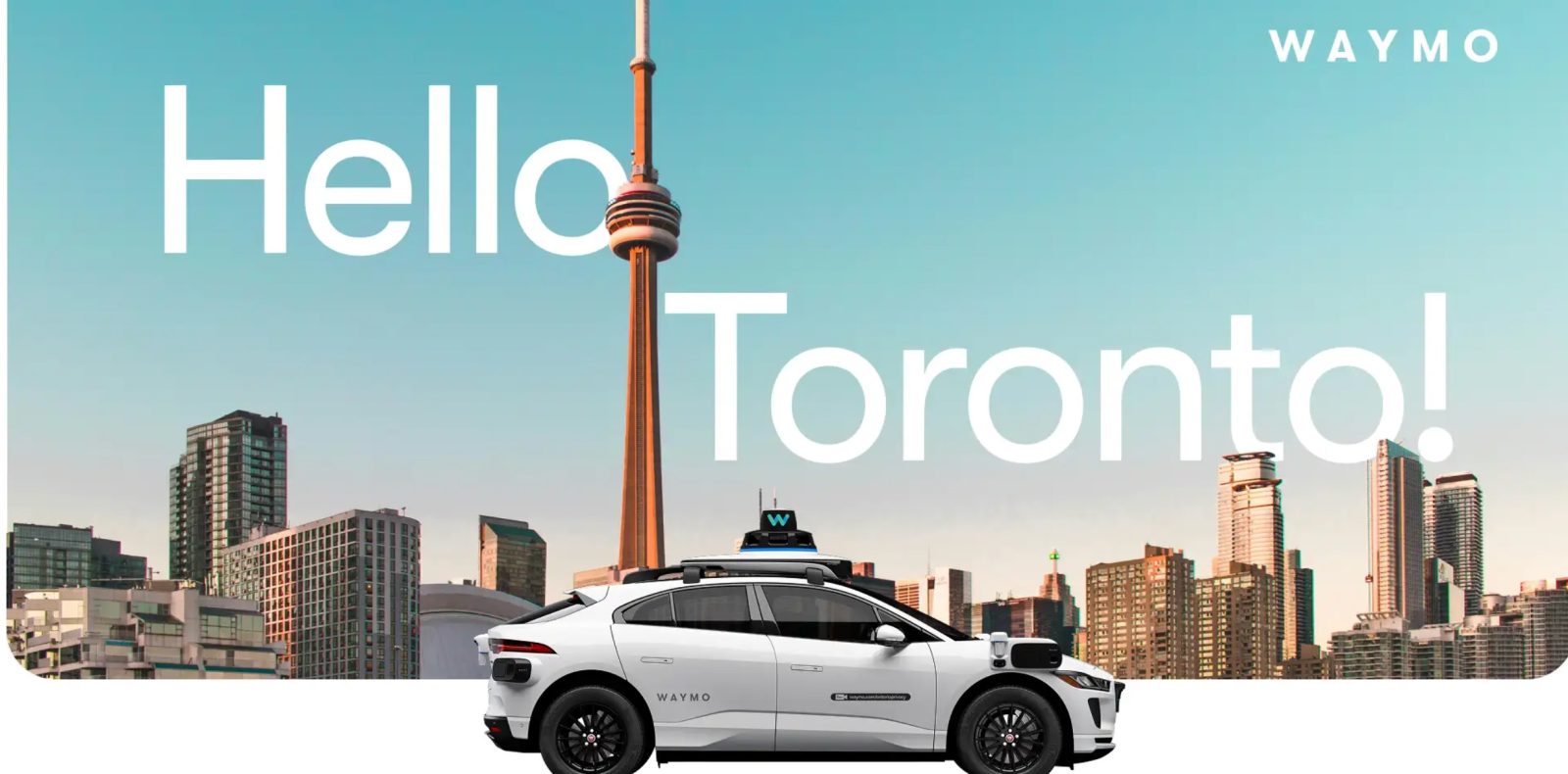
Waymo is bringing its robotaxis to Canada, and Toronto is first. Its cars will start driving the city’s streets in the coming days, and the company wants its first public riders on board in 2028.
That makes Toronto Waymo’s fourth announced market outside the US, after London, Tokyo, and Singapore. But there’s a catch: Ontario doesn’t have rules for a commercial driverless service yet.
Mapping first, riders in 2028
Waymo announced the expansion on its blog today. As in every new city, its cars will start out manually driven. Specialists behind the wheel will build high-definition maps and validate the software on Toronto streets before anything runs without a human.
For operations, Waymo is bringing in Element Fleet Management, which is headquartered in Toronto, to run end-to-end fleet management. It also pointed to two Canadian companies already in its corner: the Canada Pension Plan Investment Board, a long-term investor, and Magna International, its manufacturing partner.
Co-CEO Tekedra Mawakana called Canada “an important milestone in Waymo’s global journey.”
Waymo also says it and its partners will create “hundreds of roles” over time in fleet maintenance, validation driving, customer service, and operations. That line is there for a reason. In April, Mayor Olivia Chow’s office told the Toronto Star it wouldn’t support Waymo if the service cost jobs, and that the company “must demonstrate this will not happen.”
Ontario’s rules run out before Waymo’s launch
Waymo’s post doesn’t mention a single permit or approval.
Ontario has allowed automated vehicle testing since 2016 under a pilot regulation, O. Reg. 306/15, and added driverless testing in 2019. According to Ontario’s e-Laws database, that regulation is revoked on October 13, 2027, months before Waymo wants to carry riders, and the province hasn’t said what replaces it.
It’s also a testing framework, not a ride-hailing licence. Transport Canada told Canadian Affairs last week that self-driving vehicles on public roads are limited to “temporary pilot projects” run by the provinces. So Waymo’s 2028 date depends on Doug Ford’s government writing rules that don’t exist today.
The safety case Waymo is bringing
Waymo’s pitch rests on its US record. The company says it has driven more than 400 million fully autonomous kilometres (roughly 250 million miles) and that its vehicles were involved in 95% fewer crashes causing serious injury or worse than human drivers in the cities where it operates.
As we reported last month, Waymo now claims its cars have prevented 841 injuries. It’s carrying more than 500,000 paid rides a week across over a dozen US metros, and it went driverless in Las Vegas this summer with Denver, San Diego, and Tampa following.
Denver matters here. It’s Waymo’s first real snow city, and Toronto’s winters, with slush, road salt, and freezing rain coating sensors for months, are exactly what the long manual-driving phase is meant to test. Waymo calls its system “all-weather.” Toronto will check that claim.
Compare that to Tesla. Its “Robotaxi” service runs in seven US cities, Tesla still doesn’t disclose how many cars operate without a safety monitor, and the fleet has been barely running for much of the year. Tesla hasn’t put a date on carrying riders in a single Canadian city.
Electrek’s Take
This is the right way to enter a new country. Waymo isn’t promising driverless rides next month. It’s giving itself more than two years and at least two Toronto winters of data before anyone pays for a ride, which is exactly how it built a US service that now does half a million paid trips a week.
Queen’s Park and City Hall might give them trouble. Ontario’s only legal framework for these cars expires next October, there’s no path yet from a testing permit to a paid service, and Toronto’s mayor has already made jobs the condition for her support. Waymo clearly read that, which is why Element and “hundreds of roles” are front and center in its announcement.
I think Waymo gets there, but 2028 is Ontario’s deadline to hit as much as Waymo’s. If the province lets the pilot lapse without a commercial framework, Canada’s biggest city ends up watching London and Tokyo get robotaxis first.
And for those of us in Montreal: Quebec, your move.
If you’re watching robotaxis reshape how cities move, it’s worth thinking about how your own home is powered too. With electricity rates up almost 10% last year and expected to keep climbing, going solar is one of the best ways to protect yourself against rising costs. And with lease and PPA options, you can do it with zero upfront cost and start saving immediately. If you want to find the best deal, check out EnergySage. It’s a free service with hundreds of pre-vetted installers competing for your business, so you save 20 to 30% compared to going it alone. No sales calls until you pick an installer. Get started here.


FTC: We use income earning auto affiliate links. More.



Comments