
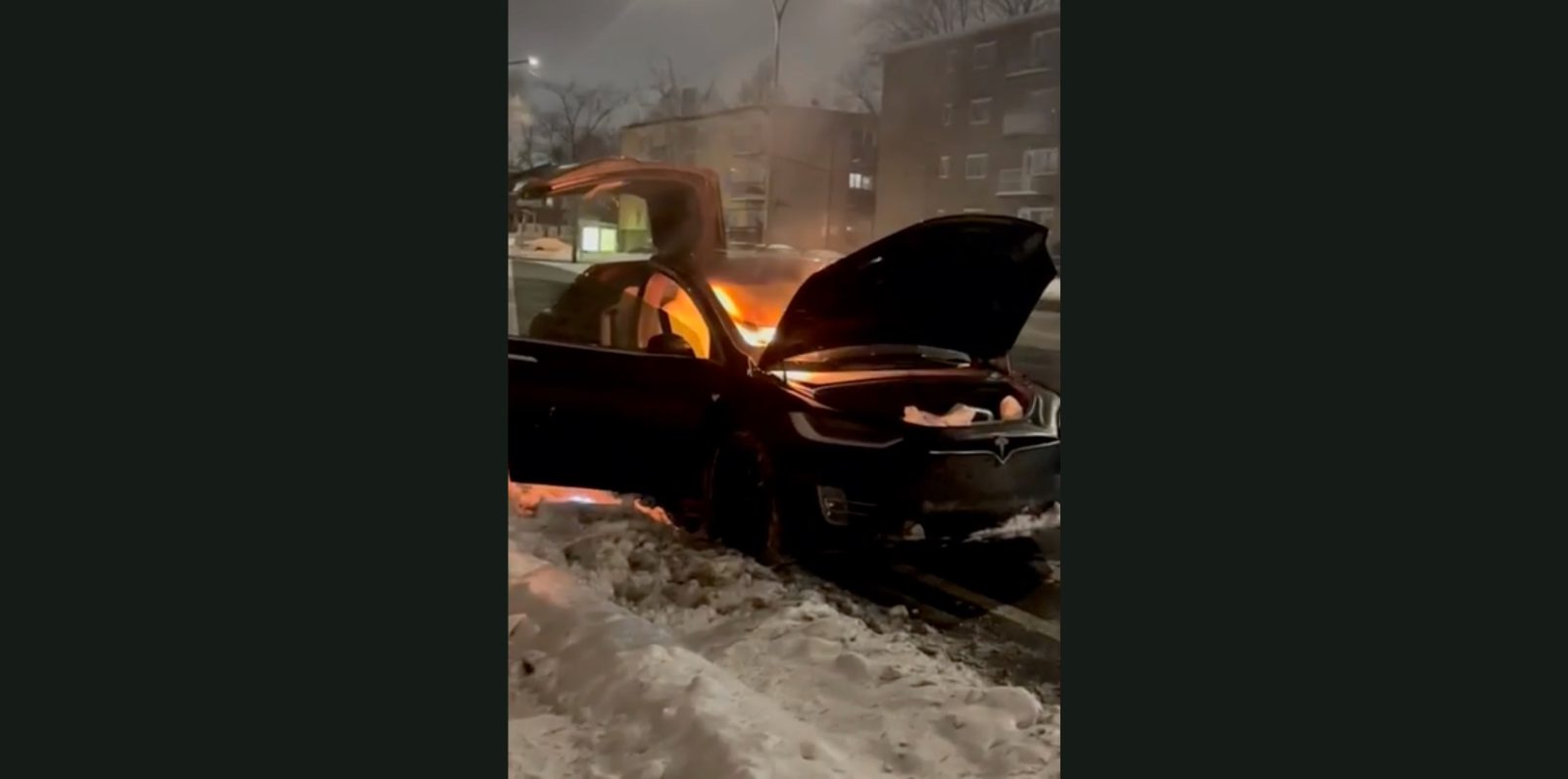
Tesla told a Quebec court that car fires are “generally” caused by misuse or vandalism. The judge didn’t buy it, and Tesla Canada now has to cover the C$161,700 an insurer paid out for a Model X that burned in Montreal.
An expert report traced the fire to an electrical failure in the dashboard of the 2020 Model X, which was still under Tesla’s warranty. Tesla offered no data to support its theory, and the court called it out for that.
A Model X fire five minutes after turning on the heat
Owner Sacha De Santis was driving with his girlfriend through Montreal’s Ahuntsic-Cartierville borough around 1 a.m. on March 5, 2023, as first reported by Le Journal de Montréal and TVA Nouvelles. Smoke started filling the cabin shortly after they turned on the heat.
They stopped, got out with their belongings, and within about five minutes the SUV was gone.
Montreal police concluded in 2023 that the fire wasn’t criminal. De Santis’s insurer, Intact, paid him C$161,700 for the car and then went after Tesla Canada to get its money back.
Tesla lost by default, then tried to undo the ruling
Intact argued the SUV was still under Tesla’s factory warranty. In Canada, Tesla’s basic vehicle limited warranty runs 4 years or 80,000 km, and the fire happened roughly three years after the Model X entered service.
An expert report filed with the court found that the fire started on the passenger side of the dashboard and called a premature electrical failure “probable.”
Intact obtained a default judgment against Tesla in June. Tesla then asked the court to retract that judgment, which is how a Tesla employee ended up on the record explaining that car fires usually come down to misuse or vandalism.
Justice Ian Demers wasn’t convinced. He rejected Tesla’s request and wrote that the automaker didn’t raise “the slightest serious” defense, pointing out that Tesla made its vandalism-or-misuse claim “without relying on any data whatsoever” (our translation).
Tesla Canada didn’t respond to the Journal’s request for comment. Intact declined to comment and noted that the deadline to appeal hasn’t expired yet.
Tesla has fire data. It just didn’t bring it to court
Tesla tracks vehicle fires closely, and it publishes the numbers.
Tesla’s Vehicle Fire Safety Report claims roughly one Tesla vehicle fire for every 140 million miles traveled from 2012 to 2024, versus one fire every 17 million miles for the average US vehicle based on NFPA and DOT data. Tesla says its own count includes fires it didn’t cause, like arson, wildfires and structure fires.
For the record, when Tesla first added fire data to its safety reports in 2019, the figure was one fire per 170 million miles. So Tesla’s own number has gotten worse, not better, though it’s still far better than the gas car average.
But none of that answers the question in front of the judge: did this specific Model X catch fire because of a defect while under warranty? The only expert evidence said yes. Tesla countered with an employee’s impression.
Electrek’s Take
Top comment by Jethro
"I still get baffled that a $1 trillion company operates like this." Really? This is a company whose CEO actively lobbies against its entire product line, and who claims they aren't even a car company.
One burned Model X doesn’t make the Model X a fire hazard. EVs catch fire far less often than gas cars, and this case doesn’t change that.
But it does show how Tesla handles a warranty claim when the bill gets big. The car was under warranty. The police ruled out a crime. An expert report pointed to an electrical failure in the dashboard. And Tesla’s response was to let the suit go to a default judgment, then send someone to tell a judge that fires are usually the owner’s fault or a vandal’s. No data, no counter-expert. Just vibes.
I still get baffled that a $1 trillion company operates like this.
If you’re buying an EV, powering it with home solar can cut your fuel costs to nearly zero, and a home battery adds backup power on top. With electricity rates up almost 10% last year and expected to keep climbing, going solar is one of the best ways to protect yourself against rising costs. And with lease and PPA options, you can do it with zero upfront cost and start saving immediately. If you want to find the best deal, check out EnergySage. It’s a free service with hundreds of pre-vetted installers competing for your business, so you save 20 to 30% compared to going it alone. No sales calls until you pick an installer. Get your free quotes here.


FTC: We use income earning auto affiliate links. More.




Comments