
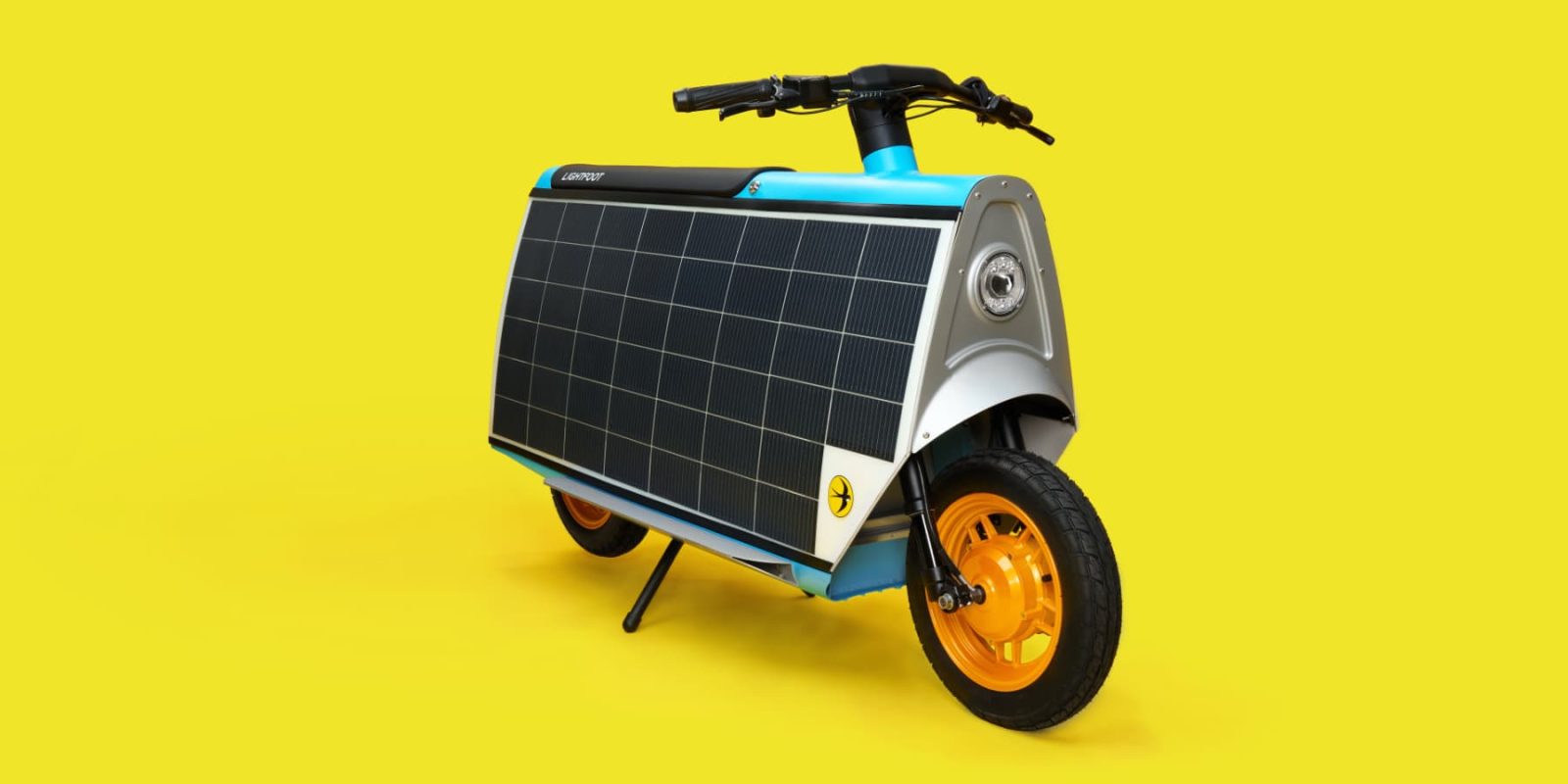
There are plenty of ways to build a small electric vehicle. These days, the prevailing options have been to make it faster, give it more power, slap on bigger tires, or keep adding features until your humble little scooter has somehow turned into a 150-pound electric motorcycle.
Or you can be brave and go in the other direction to ask a simpler question: How much vehicle do people actually need for all those short trips around town?
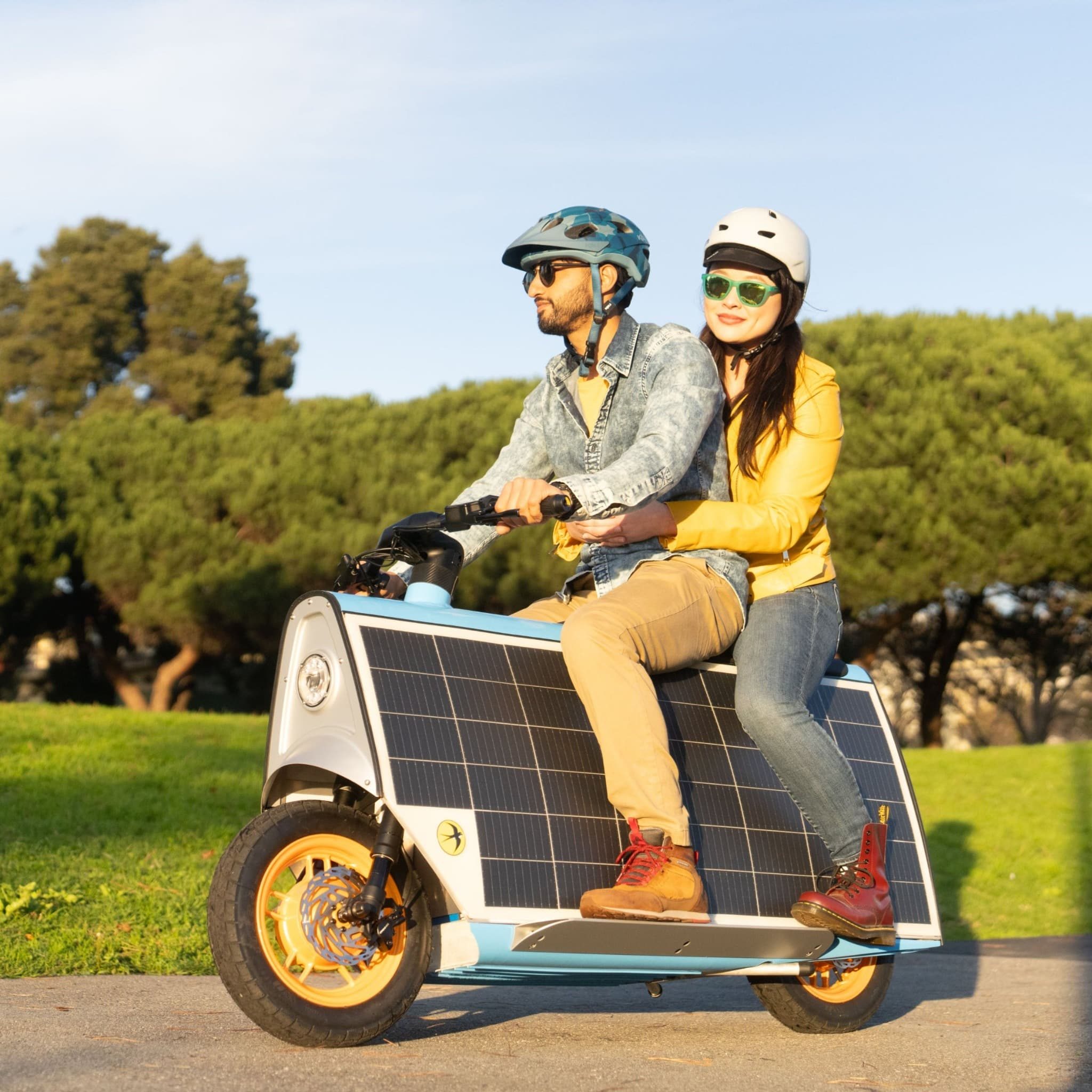
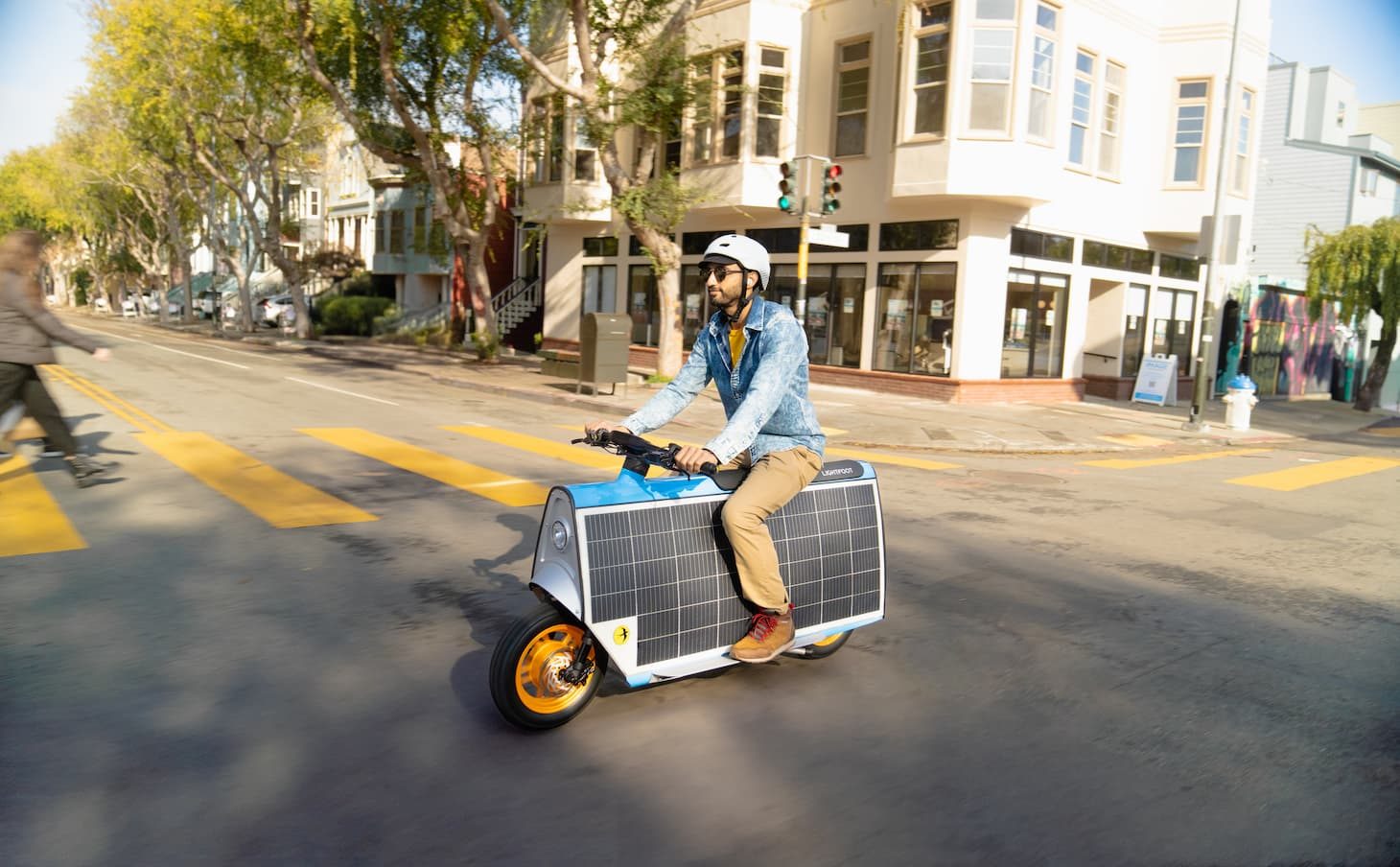
That’s essentially the idea behind the Lightfoot, a wonderfully weird new solar-powered electric scooter from San Francisco R&D company Otherlab. The two-seat electric scooter tops out at just under 20 mph (32 km/h), carries a surprisingly large amount of cargo, and covers both sides of its body in solar panels capable of adding up to 18 miles (29 km) of range per day.
And as someone who has long argued that we need more small electric vehicles – not simply faster and heavier e-bikes and e-mopeds – I’m pretty intrigued.
The Lightfoot has actually been kicking around for a while, and I covered the prototype’s unveiling nearly two years ago. But now it’s finally available for sale and delivery. The first 100 Launch Edition scooters are priced at $4,495 including delivery, with a refundable $100 reservation required to get in line. Those initial scooters will be available in sky blue and solar orange. A bit on the nose, but I like it.
Sure, $4.5k certainly isn’t cheap for a 20 mph electric scooter.
But then again, there aren’t many other electric scooters that can recharge themselves while you’re buying groceries, or fit 45 liters (1.6 cubic feet) of those groceries inside their body panels on the ride home instead of wearing a hiking backpack full of grains and veggies.
Yes, those solar panels actually do something
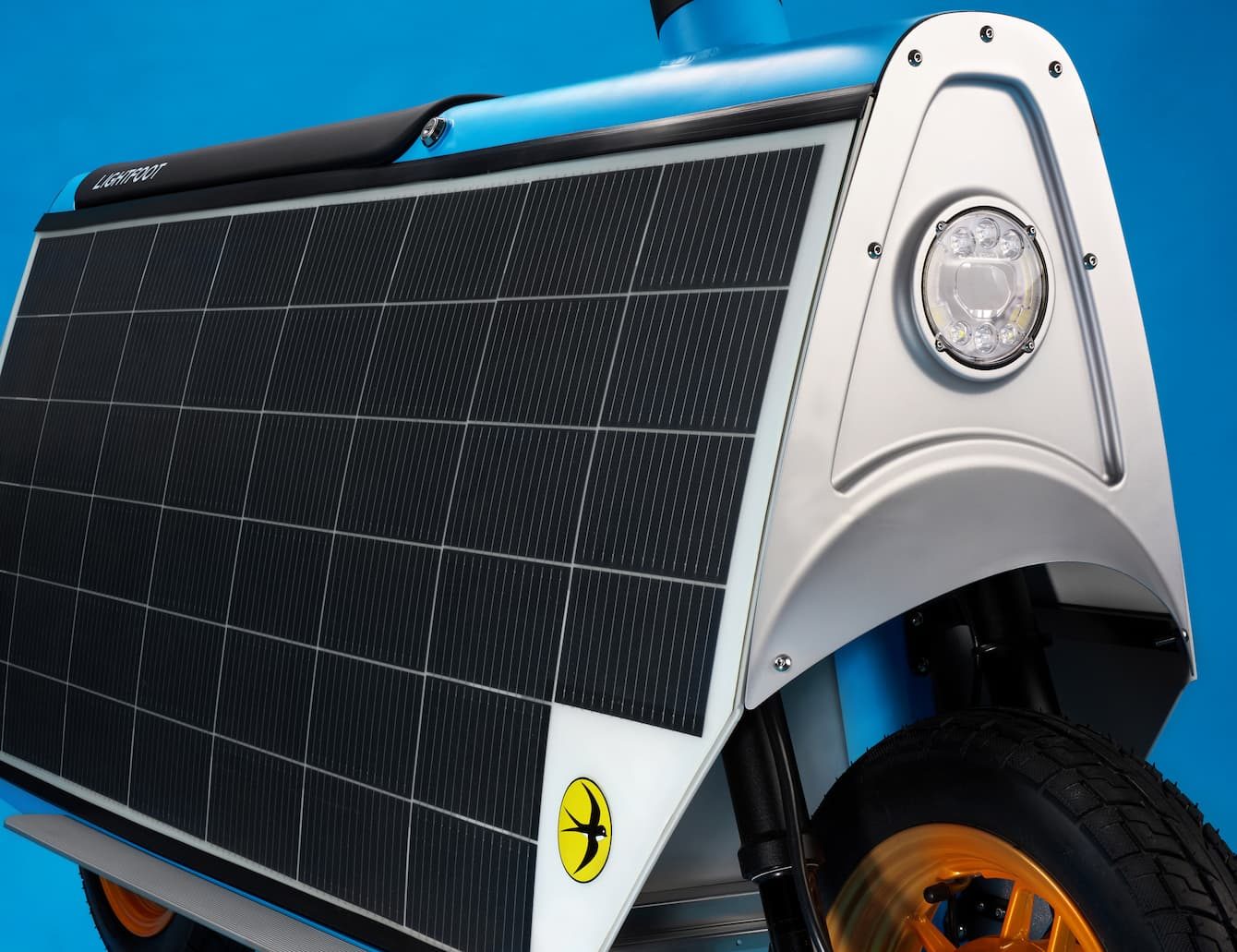
The most visually obvious feature of the Lightfoot is the pair of 120W solar panels built directly into the sides of the scooter.
Together, the 240W system can add a claimed 3-4 miles (5-6 km) of range per hour in good sunlight, or as much as 18 miles (29 km) over the course of a day.
That’s actually a meaningful amount of solar charging for this type of vehicle.
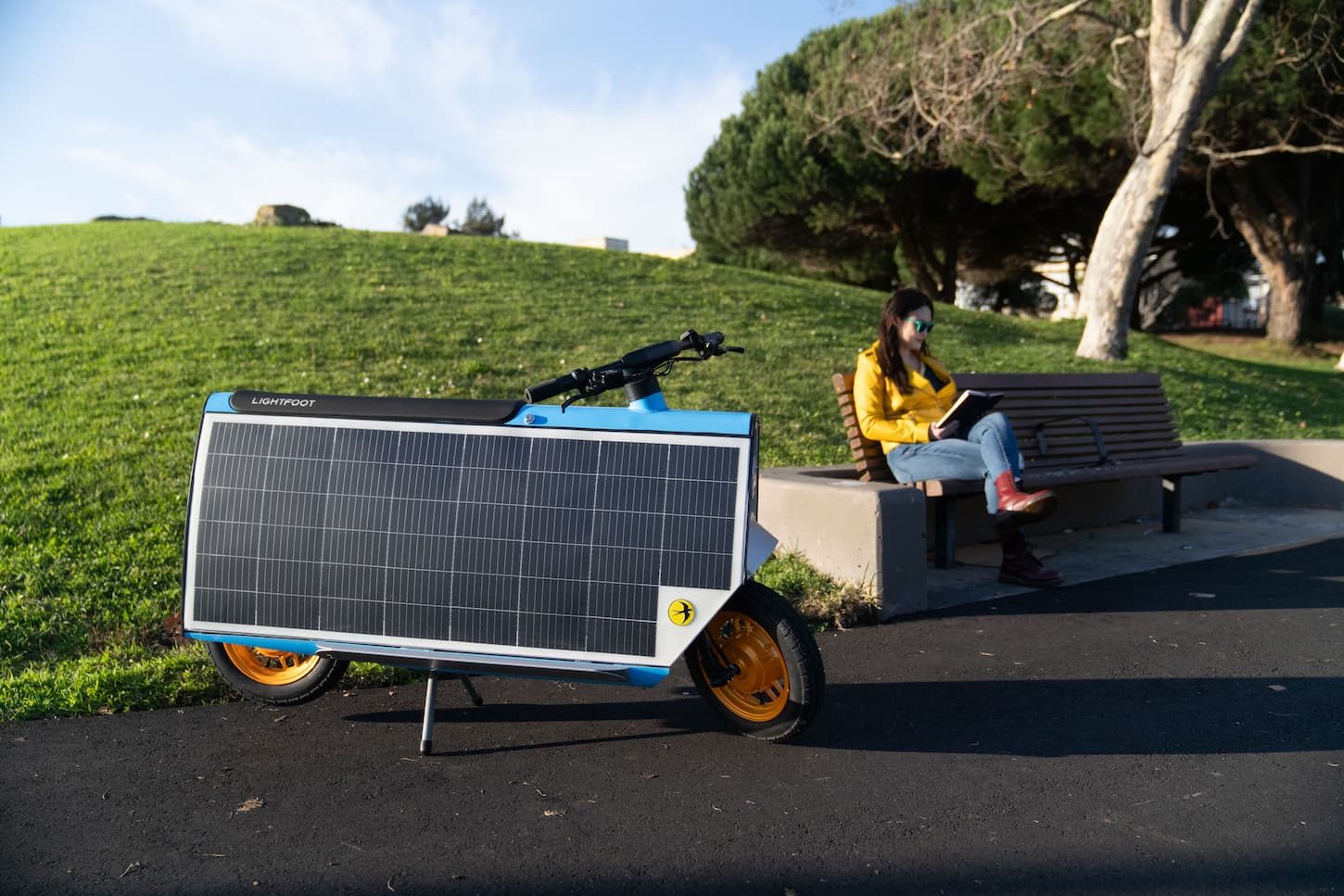
The trick is that Lightfoot doesn’t require much energy in the first place. Its 52V and 1,560Wh battery is rated for up to 37 miles (60 km) of range. That means someone commuting 5 miles (8 km) each way and leaving the scooter parked outside all day could theoretically replenish most or even all of their daily energy from sunlight under favorable conditions.
Of course, let’s keep the solar thing in perspective. A 1.5 kWh battery isn’t exactly an electric Hummer battery pack. Lightfoot includes a 230W onboard charger and can be plugged into a normal wall outlet, with a full charge taking around four hours. So that means sunshine isn’t necessary to make the scooter practical; it simply gives owners another option.
But there’s something undeniably cool about owning a vehicle that you might rarely need to plug in if your daily trips are short enough.
Sure, there may be downsides. It looks like a strong crosswind could have you tacking back and forth across the lane like a sailboat, and I’m sure they’ve got a solution for locking up – but I can’t quite imagine what it would be with no exposed frame members. But hey, it looks like an engineer’s dream – and I’m an engineer.

More than just a solar science experiment
Fortunately, Lightfoot seems to have put some thought into the rest of the scooter, too.
Power comes from a pair of 750W nominal geared hub motors – one in each wheel – rated at 1,000W peak each. Lightfoot claims a whopping 160 Nm of combined torque, meaning most hills shouldn’t be a problem.
The important takeaway though is that this isn’t supposed to be a high-speed machine. All that motor is there to haul people and cargo up those hills while keeping the speed below 20 mph (32 km/h). Again, they’re pitching this as a bike lane solution, not an electric motorcycle.
There’s also full suspension, with a 70mm-travel inverted front fork and a 45mm-travel rear coil-over shock. Tektro hydraulic disc brakes with 160mm rotors provide stopping power, while chunky 14 x 3.2-inch tires should help soak up rough pavement.
And despite its scooter-sized footprint, this isn’t exactly a featherweight. The lightfoot weighs 141 lb (64 kg) and has a 48-inch wheelbase.
Some of that heft buys you a feature I really like, such as that 45 liter (1.5 cubic foot) lockable, weatherproof cargo compartment inside the body. Lightfoot says that’s enough for three grocery bags.
Even better, there’s room for a passenger. The long bench seat is designed for two riders, meaning this isn’t merely a funky commuter. It can handle a grocery run and then pick someone up on the way home without forcing you to choose between your passenger and your pasta.
Though I will say that the thin PU seat cushion looks roughly as plush as an extra-absorbent maxi pad. Perhaps it’s more comfortable than it looks. I’d certainly be fascinated to find out.
Lighting includes a 2,000-lumen headlight, accelerometer-activated taillight, and a rather serious 120 dB horn. There’s also a lockable center stand, Bluetooth-enabled display, and regenerative braking.
What about those bike lanes?
This is where things become slightly more complicated.
Otherlab pitches Lightfoot as a vehicle for both city streets and bike lanes and says it doesn’t require a license or registration.
But micromobility regulations vary significantly by state and municipality, so riders should check their local laws rather than assuming a sub-20 mph (32 km/h) top speed automatically makes Lightfoot legal everywhere a bicycle can go.
Conceptually, though, that’s clearly the territory Lightfoot is aiming for. This isn’t a 50 mph (80 km/h) Sur-Ron competitor masquerading as an e-bike. It’s a sub-20 mph seated scooter intended for the same sort of short urban trips already being made on electric kick scooters and other low-speed micromobility vehicles.
So as long as there aren’t some disqualifiers like the lack of pedals, it should be fairly easy to fit into the expanding definitions of micromobility vehicles in most places.
Electrek’s Take
I love this idea.
Not necessarily because I think everyone needs solar panels hanging off the sides of their scooter, but because I think we desperately need more experimentation in the space between an e-bike and a car.
There are millions of trips where a 4,500 lb (2,000 kg) automobile is ridiculous overkill, yet people still want weather-protected storage, the ability to carry a passenger, enough torque for hills, and something they can simply hop on and ride.
Lightfoot checks a surprising number of those boxes.
It’s admittedly expensive. At $4,495, you’re paying significantly more than many 20 mph (32 km/h) seated electric scooters, including machines like the Infinite Machine Olto. And unlike the Olto, which can be unlocked to around 36 mph (55 km/h), Lightfoot isn’t secretly offering you a faster vehicle underneath its low-speed settings. At least, not that I know of.
But speed isn’t really the point here.
You’re paying for the unusual design, the big enclosed cargo compartment, two-person capability, full suspension, dual motors, and – obviously – those giant solar panels.
If all you need is something with two wheels that travels 20 mph, I don’t think Lightfoot makes much financial sense. There are much cheaper ways to accomplish that.
But if your daily mileage is low enough that you could genuinely run largely on sunshine, you’ve got somewhere outdoors to park it, and you want a highly practical little vehicle that looks like absolutely nothing else on the road, then I can see the appeal.
The bigger question is whether enough people are willing to pay a premium for that appeal. Otherlab has built an interesting answer to the question of what a short-trip, self-sustaining vehicle could look like. Now we’ll get to find out whether there are enough buyers asking the same question.


FTC: We use income earning auto affiliate links. More.


Comments