
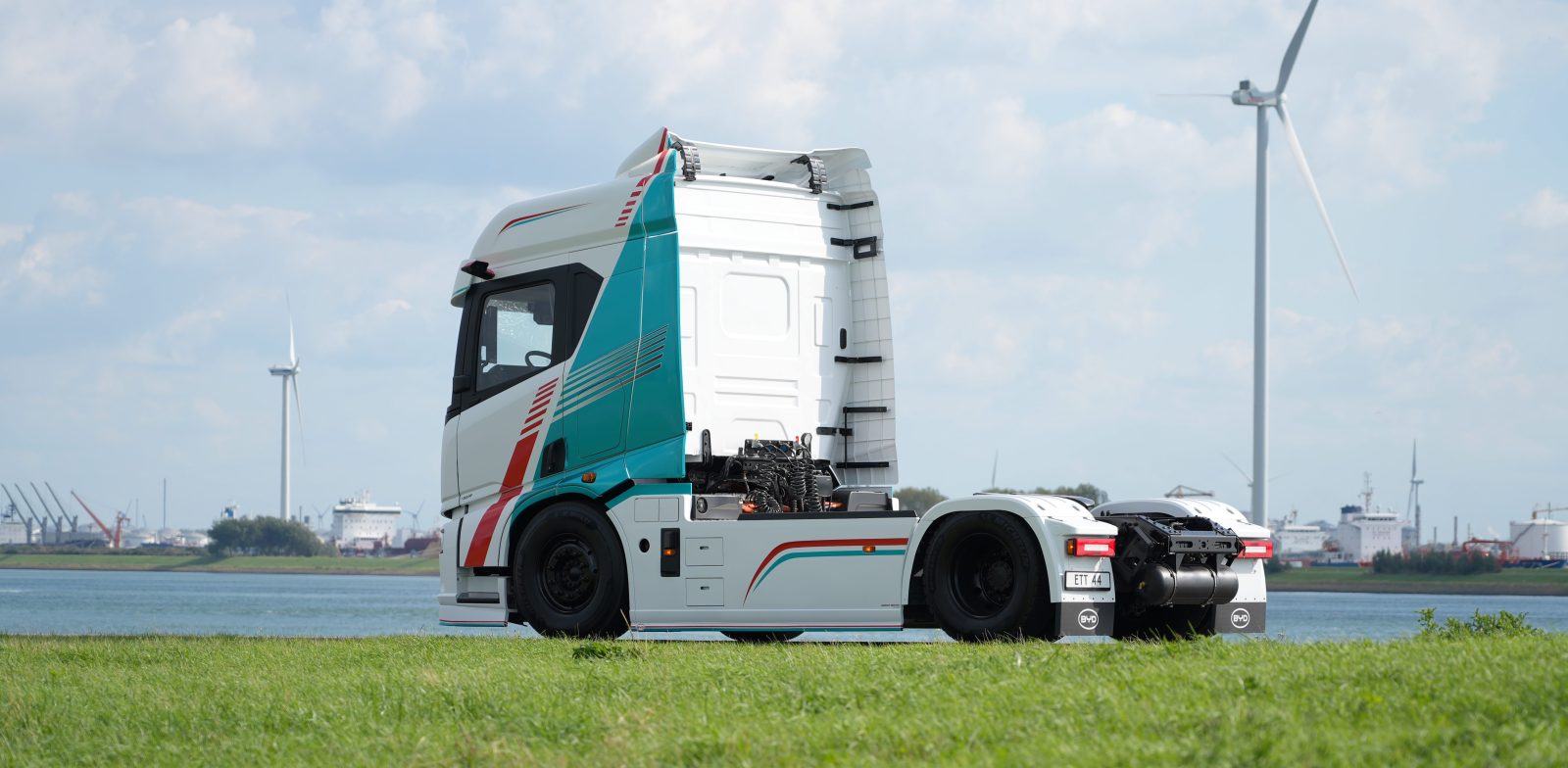
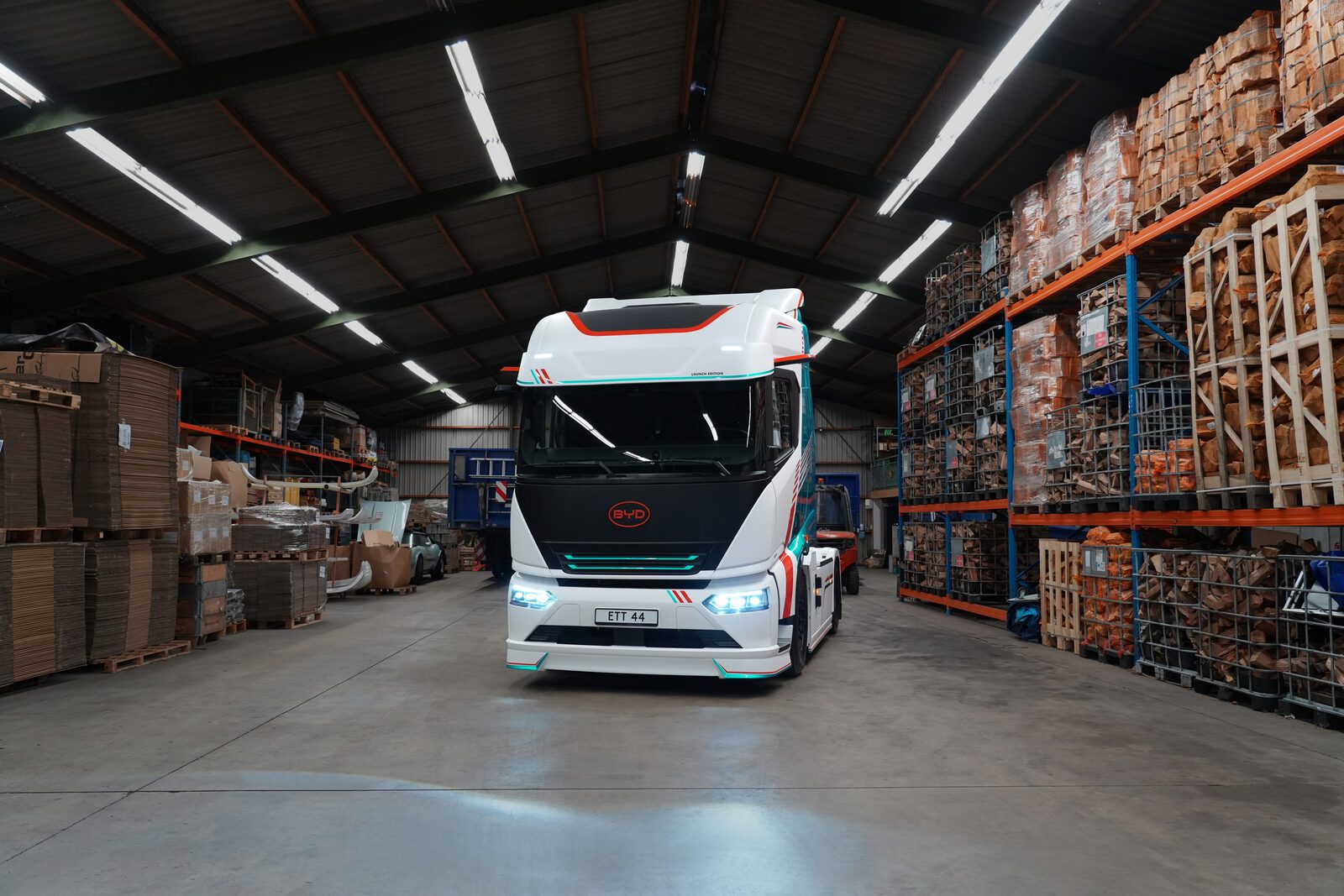
BYD unveiled its most complete electric commercial vehicle lineup yet at IAA Transportation 2026 in Hannover, headlined by the ETT 44, a heavy-duty tractor with up to 600 km of range and 1.5-megawatt charging.
It’s BYD’s clearest shot yet at Europe’s heavy-truck market, and it brings the “Flash Charging” pitch the company built around its cars straight to the freight business.
What’s in the ETT 44
The ETT 44 is a 4×2 tractor built for combinations up to 44 tonnes. It runs a 651 kWh Blade Battery on an 851V architecture, with a rated 743 PS and up to 1,000 PS of peak power. BYD quotes up to 600 km of range and a 10-year or 1.2-million-kilometer battery warranty.
On a standard CCS2 DC charger, the ETT 44 pulls up to 420 kW and goes from 20% to 80% in about an hour. Plugged into BYD’s Megawatt Charging System, it takes more than 1.5 MW and does that same 20-80% in roughly 20 minutes, adding up to 248 miles of range in the process.
“We have already put FLASH Charging into practice in passenger vehicles. Today, we are bringing this technology to commercial vehicles, starting with our trucks,” said Stella Li, Executive Vice President of BYD. “Less time charging. More time on the road.”
That’s the whole argument for electric freight in one line. A truck that only earns money while it’s moving can’t sit at a charger for two hours, and megawatt charging is how the industry plans to close that gap.
A full portfolio, not one flagship
BYD didn’t stop at the tractor. The company showed rigid 4×2 and 6×2 trucks, including 26-tonne swap body and hooklift versions, plus the E-Vali light commercial van and the EYT 2.0 electric yard tractor. Altogether the portfolio now spans 3.5 to 44 tonnes, which covers most of what moves goods around a European city or a distribution yard.
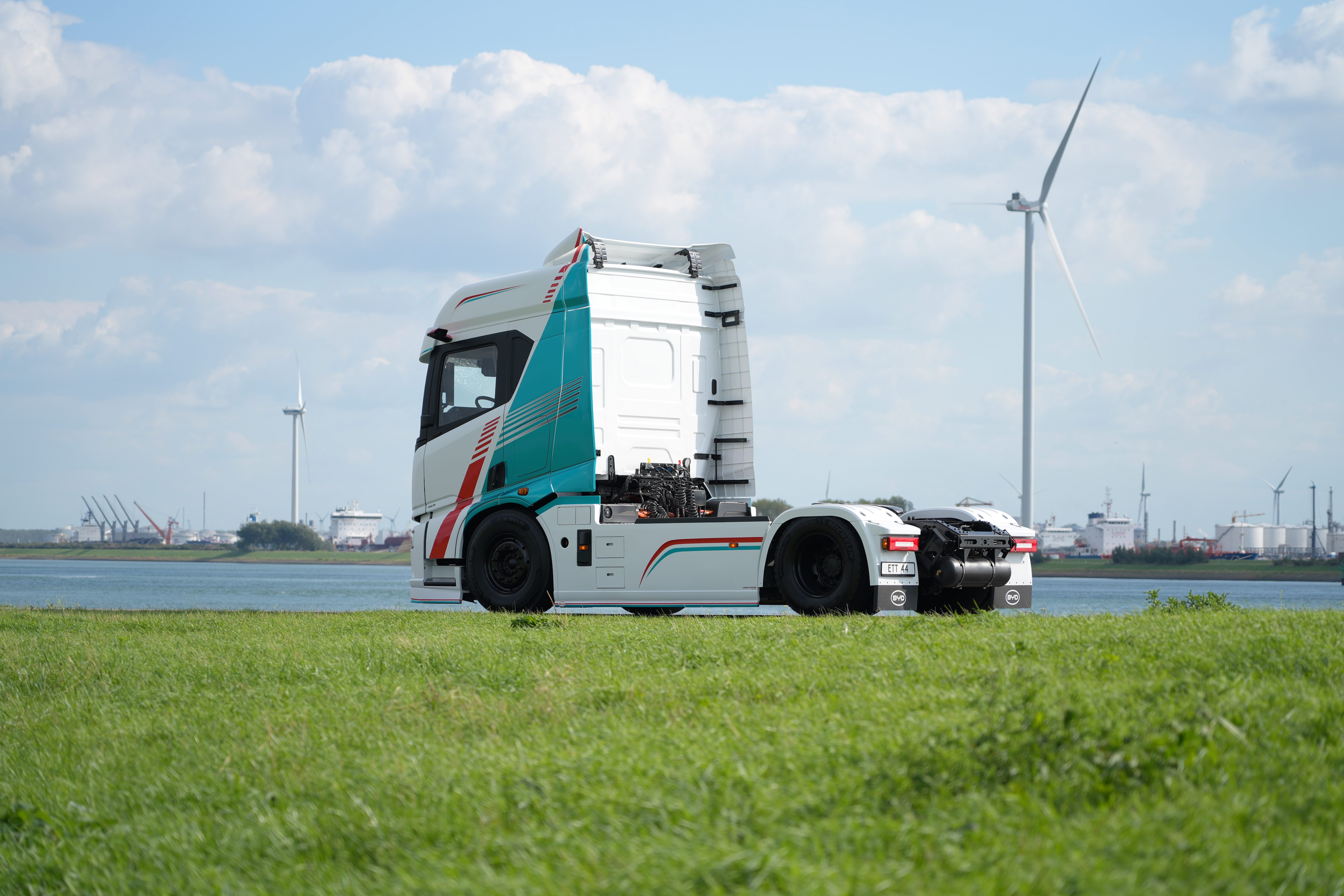
The ETT 44 also arrives with a long list of standard driver-assistance and safety systems, from adaptive cruise and autonomous emergency braking to lane-keeping and blind-spot detection.
BYD is framing all of this as a single package rather than a spec sheet. The company is pitching what it calls a “Total Cost of Mobility” model that bundles the vehicles with its Blade batteries, megawatt chargers, stationary energy storage, energy management, and financing. BYD says its commercial vehicles now operate in more than 100 countries and 400-plus cities.
The competitive picture
Europe is where the electric heavy-truck fight is actually happening. Daimler Truck’s eActros 600, Volvo’s FH Electric, Scania, and MAN are all pushing battery-electric tractors, and megawatt charging is the standard they’re all building toward. BYD’s 600 km range and 1.5 MW charging put the ETT 44 at or ahead of those trucks’ headline figures, at least on paper.
BYD also brings a charging story none of the legacy truck makers can match on their own. The company has been rolling out 1,000V megawatt charging for its cars at a pace no one else is near, installing 10,000 of its 1,500 kW units in five months and committing to 15,000 megawatt chargers across China. It’s bringing that same Flash Charging network to Canada. Owning both the truck and the charger is a real advantage in a segment where charging is the hard part.
Electrek’s Take
The ETT 44 has strong specs. What actually matters is that BYD is the only company showing up to Europe’s truck market with the vehicle, the battery, and the megawatt charger all under one roof.
Tesla plans to do the same with the Tesla Semi launch in Europe this month, but BYD looks to be positioning itself ahead of the American automaker thanks to its existing lead in charging.
That matters more in trucking than it does in cars. Fleet buyers don’t care about 0-60 times. They care about uptime, and uptime comes down to whether a charger is available and how fast it fills the battery. Daimler and Volvo build excellent trucks, but they’re depending on third parties and slow-moving public consortiums to build out the megawatt charging that makes those trucks work. BYD builds its own, and it builds a lot of them, fast.
The open question is whether Europe lets BYD do to trucks what it’s been doing to cars. The EU already slapped tariffs on Chinese EVs, and a Chinese company selling both the freight vehicles and the charging backbone underneath them is exactly the kind of dependence Brussels has been trying to avoid. BYD has the better integrated product. Whether regulators let fleets buy it is a different question.
If you’re running an EV at home, pairing it with rooftop solar is the cheapest fuel you’ll ever buy. With electricity rates up almost 10% last year and expected to keep climbing, going solar is one of the best ways to protect yourself against rising costs. And with lease and PPA options, you can do it with zero upfront cost and start saving immediately. If you want to find the best deal, check out EnergySage. It’s a free service with hundreds of pre-vetted installers competing for your business, so you save 20 to 30% compared to going it alone. No sales calls until you pick an installer. Get your free quotes here.


FTC: We use income earning auto affiliate links. More.




Comments