
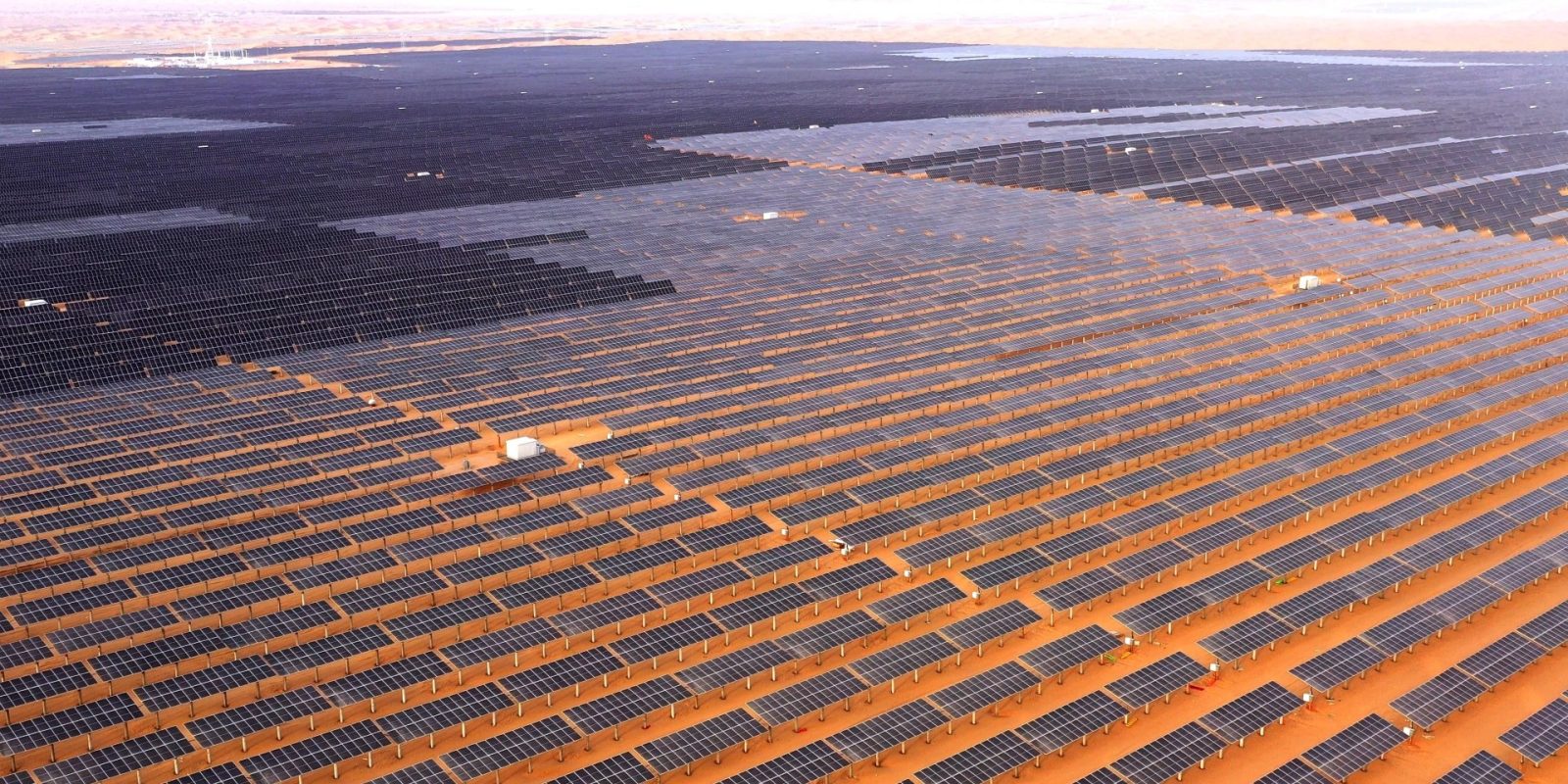
China’s clean energy machine is now moving so fast that it’s meeting soaring electricity demand and pushing coal power backward at the same time.
Coal generation has stopped growing in 17 of the 26 Chinese provinces and regions analyzed in a new report from energy think tank Ember. Those regions include industrial heavyweights such as Shandong and Hunan, and together they account for more than half of China’s thermal power capacity.
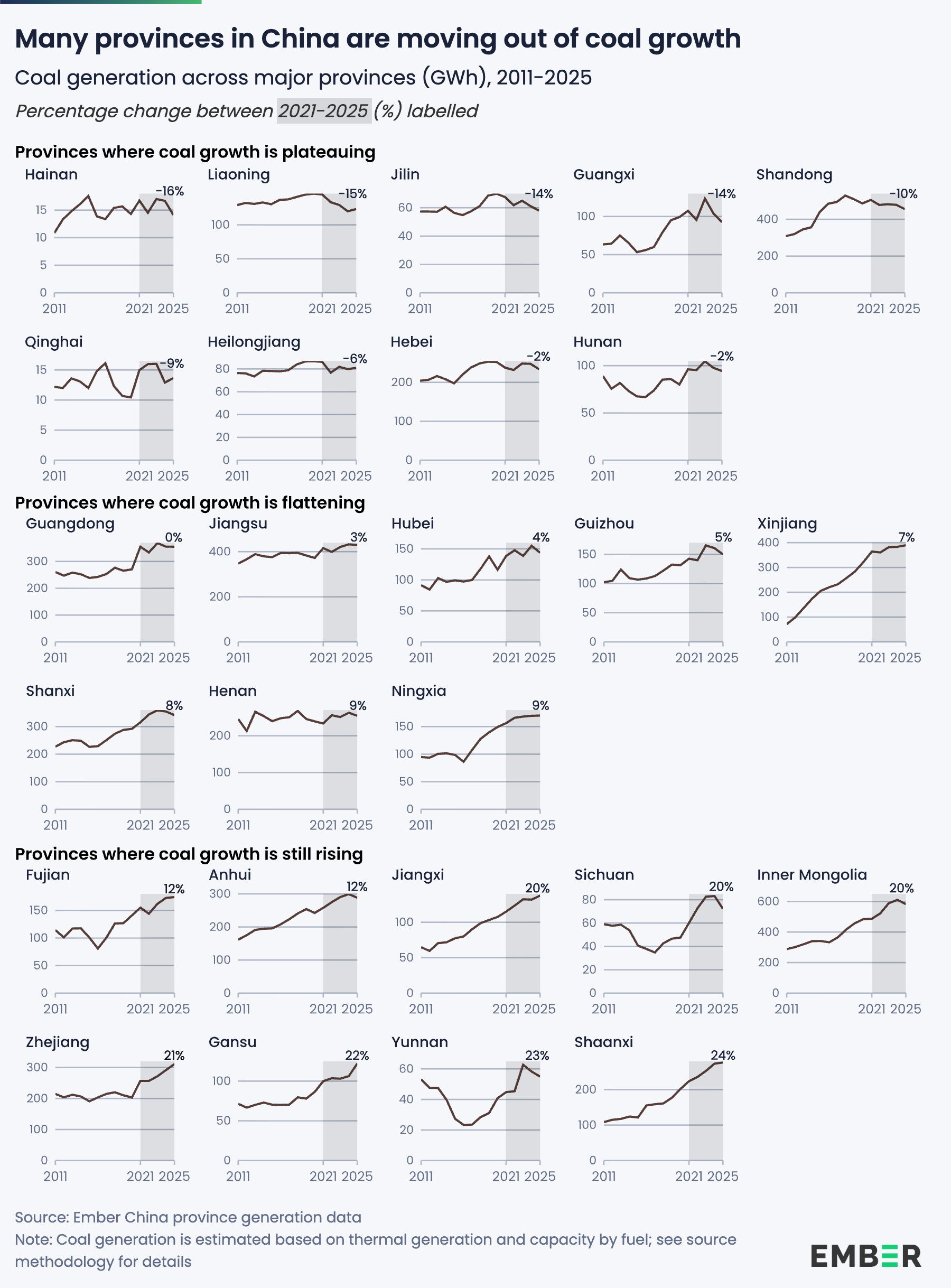
Thermal generation – most of it coal – fell 0.7% in 2025, even as electricity demand jumped 5%.
China’s thermal generation fell in 2015, when electricity demand barely moved, rising just 0.5%. That’s a very different story from what happened last year: Clean electricity grew fast enough to cover rising demand and start replacing coal.
Coal generation has also been flat on a 12-month rolling average since early 2024, according to Ember, so the 2025 drop doesn’t appear to be a one-off.
Clean power is finally eating into coal
China has spent the past decade “building before breaking” – its term for constructing a clean energy system before taking apart the fossil fuel system it will replace.
Ember says China is now entering the much trickier “building while breaking” phase. That means the clean energy system is expanding while parts of the old fossil fuel system are beginning to shrink.
“The clean electricity system is gaining both strength and scope, and the fossil fuel system is already registering the shift. You can see fossil fuel use flattening out, sector by sector and province by province,” said Dr. Muyi Yang, senior analyst at Ember.
Battery storage is playing an increasingly important role in balancing all that clean electricity. Batteries overtook pumped hydro as China’s largest source of installed energy storage capacity at the end of 2024, then grew another 84% in 2025.
Average utilization roughly doubled between 2022 and 2025, indicating that batteries are being used to help manage the grid.
Electrification moves into factories and transportation
The shift away from fossil fuels is spreading well beyond power plants. Fossil fuel use has already peaked in eight of the 11 industrial sectors tracked by Ember, mostly since 2018.
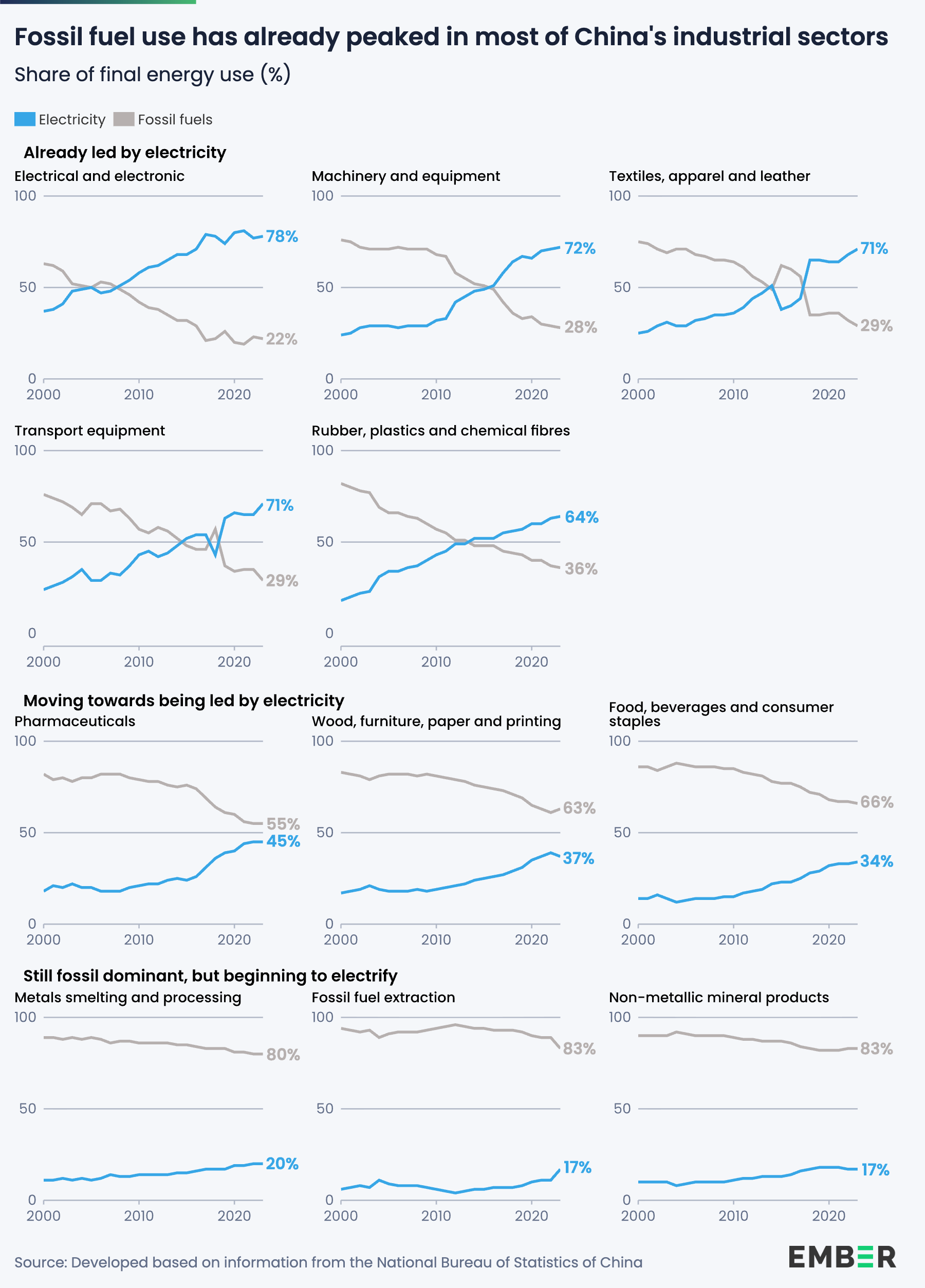
Fossil fuel use has fallen 26% in food and beverage manufacturing, 52% in transport equipment manufacturing, and 71% in fossil fuel extraction.
And that isn’t because China stopped making stuff. Industrial output per person has continued to rise while fossil fuel use per person has fallen. The country is replacing fossil fuels with electricity, not just shrinking its industrial base.
In light manufacturing sectors such as machinery, electronics, and textiles, electricity now supplies around 75% of final energy demand. Electrification is also making its way into more challenging sectors, such as metal smelting and non-metallic minerals.
Electricity supplied 29% of China’s final energy consumption in 2024, up from 22% in 2015. For comparison, it accounts for around 23% in Europe and 21% in the US.
China’s booming EV market is speeding up the shift in transportation. Electric passenger cars reached 67% of new-car sales in June 2026. Electric truck sales more than doubled in both 2024 and 2025, reaching 26% of new truck sales last year.
Nine out of every 10 electric trucks sold worldwide in 2025 were sold in China.
EVs are cutting into China’s oil habit
Electrification is also reducing one of China’s biggest energy-security headaches: its dependence on imported oil. China imports more than 70% of the oil it uses, leaving its economy exposed to disruptions in global supplies.
China’s EV fleet displaced an estimated 400,000 barrels of gasoline demand per day in 2024, up from around 100,000 barrels per day in 2020. Add in other forms of electrification, and Ember estimates that China avoided at least 1 million barrels per day of oil demand.
That’s not just a climate win. Every barrel China no longer needs to import makes it less vulnerable to an oil supply shock.
Why China’s fossil fuel slowdown matters everywhere
China has been the engine of global fossil fuel demand growth for a quarter-century. Between 2000 and 2025, it accounted for around half of the worldwide increase in oil demand and more than 90% of the growth in coal demand.
So if China’s demand stops climbing, that’s a very big problem for fossil fuel producers whose long-term plans assume it will keep doing exactly that.
China’s latest Five-Year Energy Plan calls for oil and coal consumption to peak by 2030 and for electricity to supply 35% of final energy consumption. But Ember’s findings suggest the shift is already happening.
China is also exporting more of the tech driving that shift. Its clean technology exports topped $220 billion in 2025 and accounted for 6.6% of all Chinese exports in the first half of 2026, up from 2.7% in 2020.
The ironic thing is that countries that supplied China’s huge rise in coal and oil demand are now buying Chinese EVs, batteries, and solar panels that reduce fossil fuel demand.
Top comment by MJE
China’s strategic economic investment in renewable energy is looking smarter by the day.
It improves their energy security and reduces import costs (less dependence on imported fossil fuels) and has allowed them to develop unmatched expertise in technologies they can export.
Other countries too feckless and short sighted to have a similar strategic investments now hypocritically whine about their the Chinese government doing test any sensible
China still burns enormous amounts of coal, and the transition isn’t happening evenly across the country. But clean energy is no longer simply being piled on top of a growing fossil fuel system. Across a widening share of China’s economy, it’s starting to take over.
Read more: Cratering oil use in China shows the death spiral that could end oil

If you’ve ever considered going solar, make it easy by finding a trusted, reliable solar installer near you that offers competitive pricing by checking out EnergySage. It has hundreds of pre-vetted solar installers competing for your business, ensuring you get high-quality solutions and save 20-30% compared to going it alone. Plus, it’s free to use, and you won’t get sales calls until you select an installer and share your phone number with them.
Your personalized solar quotes are easy to compare online, and you’ll get access to unbiased Energy Advisors to help you every step of the way. Get started here.


FTC: We use income earning auto affiliate links. More.




Comments