
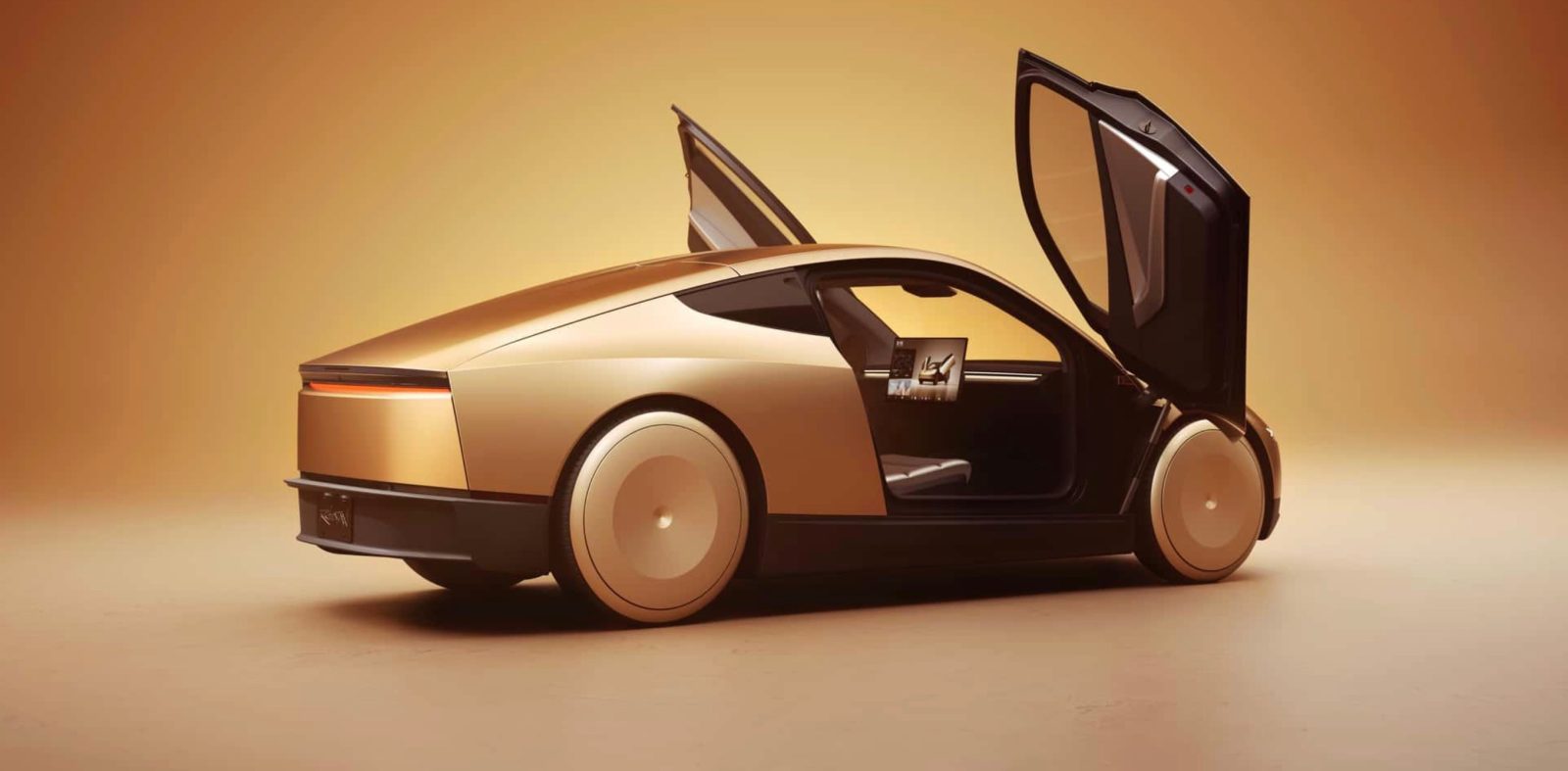
Tesla holds its Cybercab launch event in Austin on September 3, and it’s being sold as a milestone. Here’s my prediction: it’s going to look a lot like the last time Tesla launched this car, back in October 2024.
Expect a big robotaxi fleet number as the headline, a steering wheel and safety monitor finally coming out, and almost nothing that touches the one thing actually holding the program back.
Prediction 1: a relaunch of a car we’ve already seen
Tesla first unveiled the Cybercab at its “We, Robot” event in October 2024, the two-seater with no steering wheel, no pedals, butterfly doors, and a promised sub-$30,000 price. That was nearly two years ago. Now Tesla is going to stand on a stage and launch it again.
That tells you something about where Tesla is right now. The product roadmap is thin. There’s no new mass-market car shipping, the affordable model turned into a stripped-down Model Y, and the next-generation Roadster keeps sliding. So Tesla is doing an event for a vehicle it revealed in 2024, and shareholders are somehow fine treating a relaunch as fresh news because Tesla has virtually killed all its other vehicle programs.
Prediction 2: the Cybercab joins the robotaxi service in Texas and Florida
The concrete announcement will be that the Cybercab is now live in Tesla’s existing Robotaxi service. That means Austin first, and almost certainly the Florida markets, where Tesla switched on Robotaxi in Tampa and Orlando in July, plus Dallas and Houston.
Tesla might also use the stage to name a new city or two. It’s done this before every earnings call. Adding a city is a map edit and a tweet depending on the regulatory landscape, which is thin in Texas and Florida. It costs almost nothing and it makes for a good slide, which is exactly why it keeps happening while the fleet stays flat.
Prediction 3: no steering wheel, and no safety driver
For over a year, Tesla has run its Cybercabs with a steering wheel, pedals, and someone in the driver’s seat. I expect that will not be the case anymore.
That’s the visual Tesla wants: a car with nobody up front, doors opening, riders climbing in. It’s a genuinely striking image. It’s also the same FSD software stack that’s been driving the Model Y robotaxis, running on hardware Tesla says is the same as what’s in a Model Y. The seat is empty. The brain is not new.
Prediction 4: the headline will be a giant fleet number
This is the one Tesla will lead with. I expect Tesla to announce it’s more than doubling the robotaxi fleet, deploying something on the order of 1,000-plus Cybercabs at once. That’s the number the headlines will run with, and it’ll sound like the ramp everyone’s been waiting for.
Then you read the fine print, and with Tesla robotaxi the fine print changes everything.
The fine print: a fleet you announce vs. a fleet you run
Tesla already talks about its robotaxi fleet in the hundreds. But a fleet you’ve built is not a fleet that’s carrying riders.
Look at what actually runs. Across all of Tesla’s markets, our tracking and independent community trackers have never seen more than about 50 vehicles active in a single week, and on a given day the number is closer to 20. The genuinely driverless, unsupervised slice is smaller still. It peaked around 25 in the spring and has drifted sideways or down since. Tesla stretched the Austin service area to cover the entire metro with only about 20 cars running it.
So Tesla operates a fraction of the fleet it already has, at any given moment. That’s the opposite of how automated ride-hailing is supposed to work. The whole economic case for robotaxis is high utilization — cars running as many paid hours as possible. Running 20 of your cars while hundreds sit parked isn’t a fleet. It’s a demo.
I expect the exact same move with the Cybercab. Announce a huge number. Put a small fraction of it on the road. Keep the miles down, because the safety validation isn’t there to run at scale — Elon Musk has said as much himself, telling investors that “rigorous validation” is the constraint and that Tesla is waiting on an FSD rewrite before it scales. A thousand Cybercabs in a press release and 30 on the road is entirely consistent with everything Tesla has done for the past year.
Electrek’s Take
Top comment by Beario
The safety and autonomy aspects are still the most important part of the entire program and we still do not know exactly how the cybercab will perform in complex scenarios. One can only hope that goes well, but there is not going to be a large fleet of these cars on the roads until they work out the autonomy part which is still unresolved.
The Cybercab is a real efficiency gain, and I don’t want to wave that away. At 165 Wh per mile it’s the most efficient vehicle Tesla has built, it’s cheaper to run than a Model Y, and for a company operating its own fleet, a lower cost per mile is worth having. Nice. But it doesn’t change the trajectory of this program, because vehicle deployment and efficiency were never the bottleneck.
That’s the whole thing people keep getting backwards. Tesla is great at building cars, or at least it was. The wall it keeps hitting isn’t a shortage of vehicles. It’s that the driving still isn’t safe or usable enough to run a real service at scale. The supervised fleet has been crashing at roughly four times the rate of a human driver, riders keep filming missed pickups and drop-offs left blocks from the destination, and remote operators are still finishing rides the car can’t. A steering-wheel-less two-seater does nothing for any of that. Same cameras, same FSD, same problems, smaller box. That’s it.
So here’s what I’ll be watching on September 3, and it’s the only number that matters: not the fleet Tesla announces, but the fleet it’s actually running a month later. If Tesla claims a thousand-plus Cybercabs and the active, driverless count is still stuck in the dozens by October, then this launch was what the 2024 one turned out to be — a great-looking event for a program that hasn’t moved. Watch the road, not the stage.
Whatever Tesla does with robotaxis, the EV in your driveway still needs electricity, and the cheapest place to get it is your own roof. With electricity rates up almost 10% last year and expected to keep climbing, going solar is one of the best ways to protect yourself against rising costs. And with lease and PPA options, you can do it with zero upfront cost and start saving immediately. If you want to find the best deal, check out EnergySage. It’s a free service with hundreds of pre-vetted installers competing for your business, so you save 20 to 30% compared to going it alone. No sales calls until you pick an installer. Get your free quotes here.


FTC: We use income earning auto affiliate links. More.





Comments